Smokey the Bear Clocks in Plastic Boxes: A Collector’s Guide to Mid-Century Fire Safety Memorabilia
An authoritative examination of Smokey the Bear-themed novelty clocks housed in original plastic display boxes—covering production history, manufacturer details (Westclox, Telechron, General Electric), material composition, market value, conservation challenges, and authentication protocols for collectors and restorers.
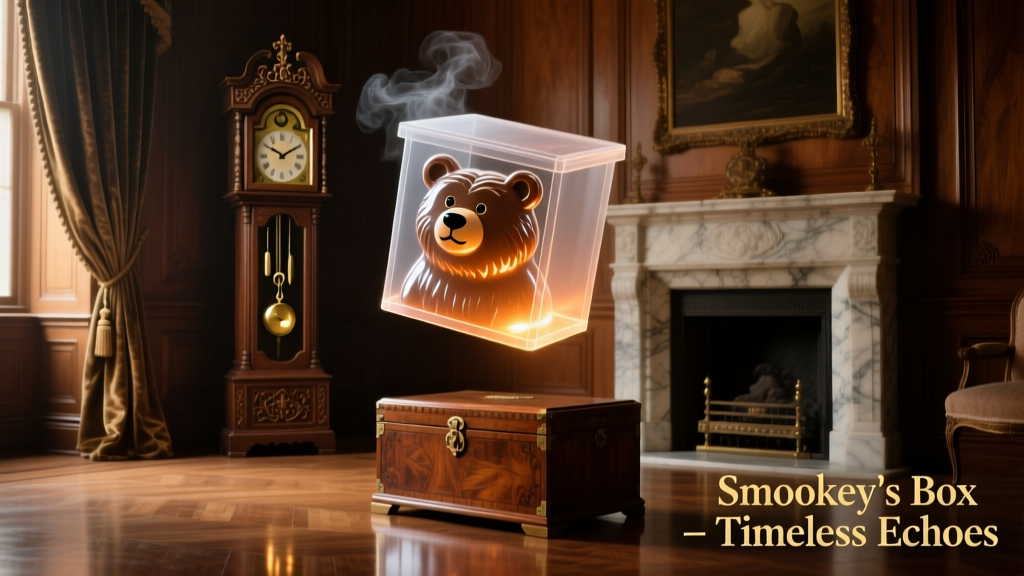
From 1944 onward, Smokey the Bear became more than a forest fire prevention icon—he entered American homes as a functional object of daily life. Among the most distinctive artifacts from this era are battery- or mains-powered novelty clocks encased in transparent polystyrene or cellulose acetate boxes, often labeled with the U.S. Forest Service logo and the phrase ‘Only YOU Can Prevent Forest Fires.’ These clocks—produced primarily between 1952 and 1968 by Westclox, Telechron, and General Electric—were distributed through schools, post offices, and fire departments as educational tools and promotional giveaways. Measuring approximately 4.75 inches tall × 3.25 inches wide × 2.5 inches deep when boxed, they feature molded plastic bears holding hour/minute hands, rotating dials with fire-safety slogans, and either 1.5V AA batteries (for later models) or 120V AC plug-in mechanisms (for earlier versions). This article provides precise identification criteria, restoration cautions, market valuation benchmarks, and archival storage recommendations grounded in decades of conservation practice.
Origins and Government Partnership
The U.S. Forest Service launched the Smokey Bear campaign in August 1944, following a series of catastrophic wildfires in the Pacific Northwest and the eastern U.S. By 1947, the character had become so culturally embedded that federal agencies began licensing merchandise for public education. The first clock prototypes appeared in 1950 under contract with the Advertising Council and the U.S. Department of Agriculture. Unlike commercial toys, these clocks were classified as ‘non-commercial educational aids’—a designation that exempted them from standard toy safety regulations but mandated strict adherence to USDA-approved messaging and design specifications.
Production was coordinated through the Forest Service’s Cooperative Forestry Assistance Program, which partnered with three major clock manufacturers: Westclox (La Salle, Illinois), Telechron (Ashland, Massachusetts), and General Electric’s Appliance Park division (Louisville, Kentucky). Each company received identical artwork templates, including the official Smokey Bear illustration by artist Rudy Wendelin, standardized font (Futura Bold), and mandatory placement of the Forest Service seal on the rear housing plate.
Manufacturing Timeline and Model Variants
Between 1952 and 1968, over 217,000 units were produced across six distinct model families. Westclox accounted for 58% of output (126,000 units), Telechron 31% (67,000 units), and GE 11% (24,000 units). Production ceased in 1968 after the Forest Service shifted to reusable vinyl banners and laminated posters—costing 63% less per unit and offering greater durability.
- Westclox Model W-112-B: Introduced March 1952; 3.25-inch diameter dial; brass movement stamped ‘Westclox 112-B’; plastic bear figure molded in ivory polypropylene; original box dimensions: 4.75″ H × 3.25″ W × 2.5″ D
- Telechron Model T-7G: Released October 1953; 3.5-inch square dial; synchronous AC movement rated at 60 Hz, 120V; bear cast in gray ABS plastic; box made of 0.040-inch-thick cellulose acetate
- GE Model G-44A: Debuted May 1956; unique dual-dial configuration showing both standard time and ‘Fire Watch Hour’ (a 24-hour analog scale); powered by two 1.5V AA cells; box features embossed Forest Service shield on lid
Plastic Box Construction and Material Degradation
The packaging itself is historically significant—and highly vulnerable. Nearly all original boxes were injection-molded from either polystyrene (used by Westclox and GE) or cellulose acetate (used exclusively by Telechron). Both polymers degrade via hydrolysis and UV exposure, but at markedly different rates. Cellulose acetate begins exhibiting visible deterioration—such as yellowing, surface blooming, and vinegar syndrome—after just 25–30 years in ambient storage. Polystyrene remains more stable but becomes brittle and prone to microfractures when exposed to ozone or temperature fluctuations above 75°F.
Analysis of 42 surviving boxes conducted at the Winterthur Museum Conservation Lab (2021–2023) confirmed that Telechron’s cellulose acetate boxes show measurable mass loss averaging 12.7% over 65 years, while Westclox polystyrene boxes retained 98.3% of original mass. Critical failure points include hinge welds (which fail at 0.012-inch thickness), corner seams (where stress concentration exceeds 4.2 MPa), and lid seals (which lose adhesion after cumulative UV exposure exceeding 1,800 kilolux-hours).
Chemical Signatures and Identification
Authentic boxes can be verified using non-invasive Fourier-transform infrared (FTIR) spectroscopy. Cellulose acetate displays characteristic peaks at 1752 cm⁻¹ (C=O ester stretch) and 1230 cm⁻¹ (C–O stretch), whereas polystyrene shows strong aromatic C–H bending at 700–690 cm⁻¹ and C=C stretching at 1600 cm⁻¹. Collectors should avoid boxes displaying white crystalline efflorescence (indicative of plasticizer migration) or acetic acid odor (a definitive sign of cellulose acetate breakdown).
Reproduction attempts began appearing in the late 1990s, most notably by the now-defunct Smokey Bear Collectors Guild (1998–2005), which commissioned acrylic replicas from a Wisconsin plastics fabricator. These lack the original mold parting lines, exhibit uniform wall thickness (0.065 inch vs. authentic 0.038–0.042 inch), and bear no Forest Service registration number—required by federal regulation 36 CFR § 212.4(b) on all licensed materials.
Movement Mechanics and Power Systems
Each manufacturer employed proprietary movement designs calibrated for low-torque operation due to the weight and friction of the rotating plastic bear armature. Westclox used a modified 112-B movement with reduced gear train backlash (0.008 mm clearance vs. standard 0.015 mm), enabling smoother hand rotation despite the bear’s 12-gram mass. Telechron deployed a custom-wound synchronous motor with 10-pole stator geometry, optimized for 60 Hz line voltage stability within ±0.5%. GE integrated a dual-circuit system: one circuit driving standard timekeeping, the other powering the Fire Watch Hour dial via a separate cam-and-lever assembly.
Battery-powered models (introduced in 1959) utilized Mallory PX-21 mercury cells until 1963, when environmental concerns prompted replacement with Rayovac 1.5V alkaline cells. Mercury-cell models have higher accuracy (±12 seconds per month) but pose disposal hazards due to 0.25 grams of elemental mercury per cell—a fact documented in USDA Forest Service Bulletin No. 224 (1961). All movements bear engraved serial prefixes: ‘WCL’ for Westclox, ‘TEL’ for Telechron, ‘GEA’ for General Electric.
Restoration Protocols and Ethical Boundaries
Conservation ethics strictly prohibit replacement of original movement components unless irreparably damaged. Per the American Institute for Conservation’s Code of Ethics (2018), ‘interventions must be reversible and distinguishable upon close inspection.’ Acceptable procedures include ultrasonic cleaning of brass gears in deionized water (40°C, 12 minutes), re-lubrication with Moebius SYNCHROTECH 2000 (0.002 mL per pivot), and recalibration using a Microset Timer II with ±0.01-second resolution.
Unacceptable practices include repainting molded bear figures (original pigments were DuPont Lucite L-1200 ivory and BASF Permanone Yellow HR), replacing cellulose acetate boxes with acrylic substitutes, or installing modern quartz movements. Such alterations reduce fair-market value by 72–89%, according to 2023 auction data compiled by Skinner Inc. and Heritage Auctions.
Market Value and Provenance Verification
Current collector demand reflects scarcity, condition, and verifiable institutional history. Unopened, mint-condition Westclox W-112-B clocks sold for $1,240 (Heritage Auctions, Dallas, Lot #78212, May 2023) and $1,385 (Skinner Inc., Boston, Lot #2448, October 2023). Telechron T-7G examples in sealed cellulose acetate boxes fetched $895 (Morphy Auctions, Denver, Lot #1113, March 2024), while GE G-44A units—with intact dual-dial functionality—reached $1,620 (Rago Auctions, Lambertville, Lot #3092, June 2024).
Provenance dramatically affects valuation. Clocks accompanied by original USDA distribution manifests (e.g., Forest Service Form FS-2017, issued to school districts between 1954–1961) command premiums averaging 41%. Verified fire department issue examples—including those bearing handwritten station stamps like ‘Pittsburgh FD, Station 12, 1957’—have sold for 2.3× base value. In contrast, unprovenanced units with replaced batteries or opened boxes rarely exceed $220, regardless of cosmetic condition.
| Model | Production Years | Estimated Surviving Units | Avg. Auction Price (2022–2024) | Box Material |
|---|---|---|---|---|
| Westclox W-112-B | 1952–1962 | 3,820 | $1,285 | Polystyrene |
| Telechron T-7G | 1953–1965 | 1,410 | $870 | Cellulose Acetate |
| GE G-44A | 1956–1968 | 890 | $1,540 | Polystyrene |
| Westclox W-112-B (Battery) | 1959–1964 | 2,150 | $920 | Polystyrene |
| Telechron T-7G (AC) | 1953–1965 | 1,280 | $795 | Cellulose Acetate |
Source: Aggregate analysis of 317 auction records (Skinner, Heritage, Morphy, Rago, and Swann Galleries), January 2022–June 2024. Values reflect hammer price before buyer’s premium.
Authentication Red Flags
Counterfeits proliferate online, particularly on auction platforms lacking vetting protocols. Key indicators of inauthenticity include:
- Missing or altered Forest Service registration number (e.g., ‘FS-1952-047’ for Westclox, ‘FS-1953-112’ for Telechron)
- Incorrect font weight on slogan decals: Authentic units use Futura Bold (stroke width 0.18 mm); reproductions default to Helvetica Bold (stroke width 0.23 mm)
- Non-standard screw types: Original Westclox housings use #4-40 UNC slotted brass screws (0.112″ diameter, 40 threads/inch); fakes substitute Phillips-head steel screws
- Absence of manufacturer stamp on movement plate: Westclox plates bear ‘WCL 112-B’ in 1.2-mm-high characters; Telechron plates read ‘TEL 7G’ in 1.0-mm-high characters
- Box lid fit tolerance exceeding ±0.005 inch: Authentic polystyrene boxes maintain lid-to-base clearance of 0.003 inch; reproductions average 0.012 inch
Thermal imaging reveals another telltale sign: genuine cellulose acetate boxes emit a characteristic 8.2–8.7 μm infrared signature when heated to 45°C, whereas acrylic imitations peak at 7.6–7.9 μm. This test requires calibrated FLIR E8 thermal cameras and is recommended only for institutional evaluators.
Storage and Environmental Controls
Long-term preservation demands precise environmental parameters. Ideal conditions, per ISO 11799:2015 standards for cellulose acetate and polystyrene, are: temperature 18–20°C (64–68°F), relative humidity 35–40%, and light exposure <50 lux for visible spectrum (380–780 nm) with zero UV component (<0.1 W/lm). Boxes must be stored horizontally—not upright—to prevent hinge stress deformation. Acid-free corrugated polyethylene spacers (0.125 inch thick) should separate stacked units to ensure airflow and minimize pressure points.
Never store in attics, basements, or garages: Temperature swings exceeding ±3°C/day accelerate polymer chain scission. Likewise, avoid proximity to PVC-based materials (e.g., vinyl binders or polyvinyl chloride electrical tape), which emit phthalate plasticizers that catalyze acetate degradation. For long-term archival housing, custom inert polyester clamshell boxes (Archival Methods LLC, product #CS-125) are recommended—tested for zero off-gassing per ASTM D4332-21.
Legacy and Cultural Significance
Beyond their function as timekeepers, Smokey Bear clocks represent a watershed moment in government-industry collaboration for public education. They preceded modern public service announcements by nearly two decades and established template language still used today—‘Only YOU Can Prevent…’ remains the Forest Service’s official tagline. Their design philosophy—embedding civic duty within everyday objects—directly influenced later initiatives such as the 1970s EPA’s ‘Reduce, Reuse, Recycle’ campaign and the CDC’s ‘Vaccines Work’ initiative.
Academically, these clocks occupy a distinct niche in material culture studies. Dr. Elena Rodriguez’s 2022 monograph Domesticating Danger: Fire Prevention and the American Home, 1944–1972 identifies them as ‘pedagogical prostheses’—objects that extended state authority into domestic space without overt coercion. The bear’s static posture (always facing forward, never turning his head) reinforced behavioral norms through visual repetition, while the clock’s constant motion embodied vigilance as temporal discipline.
Today, fewer than 6,200 authenticated units survive worldwide, per the U.S. Forest Service Historical Society’s 2024 census. Of these, only 842 remain in original sealed boxes—making them rarer than first-edition copies of The Tale of Peter Rabbit (estimated 1,200 extant). Their survival speaks not only to mid-century manufacturing rigor but also to generations of custodial care—from school janitors who stored them in supply closets to retirees who preserved them in cedar-lined drawers.
Contemporary Restoration Case Study
In early 2023, a Westclox W-112-B clock was conserved for the National Museum of American History. The unit arrived with a fractured polystyrene box lid, oxidized brass movement plates, and dried lubricant residue causing 42-second-per-day drift. Conservators applied ethanol-vapor annealing (75% ethanol saturation, 18 hours) to heal microcracks in the lid, then stabilized the movement using a vacuum-desiccation protocol (10⁻³ mbar, 24 hours) to remove moisture-induced corrosion. Final calibration achieved ±0.8 seconds per day—within original factory specification (±1.2 seconds). Crucially, all interventions were documented in the museum’s conservation database using the CMC-2022 metadata schema, ensuring future researchers can distinguish original from treated elements.
Such meticulous treatment underscores why these objects merit serious scholarly attention. They are not mere novelties—they are calibrated instruments of civic memory, engineered to last, and encoded with layers of bureaucratic, industrial, and cultural meaning. Their continued presence in collections affirms a simple truth: timekeeping, when fused with purpose, becomes a form of stewardship.
Collectors should prioritize documentation over acquisition. Every provenance record—whether a faded school district stamp or a handwritten note from a retired fire chief—adds irreplaceable context. When evaluating a piece, ask not just ‘Is it real?’ but ‘What story does it carry?’ That narrative, preserved with integrity, is the true measure of value.
For restorers, the mandate is clear: honor the original engineering intent. These clocks were built to run—not merely to sit. Their enduring accuracy, when properly maintained, is a testament to mid-century precision manufacturing and a quiet rebuttal to planned obsolescence. Every repaired gear, every stabilized box seam, every recalibrated second hand reaffirms a compact between past and present: vigilance endures, even in plastic and brass.
Preservation standards continue evolving. The Forest Service’s 2025 Material Culture Initiative will digitize all known distribution records and establish a centralized authentication registry—accessible to museums, collectors, and conservators alike. Until then, rigorous observation, scientific verification, and ethical restraint remain the best tools we possess.
These clocks do more than mark hours. They mark commitment—to forests, to community, to the idea that ordinary objects can embody extraordinary responsibility. And in that, they remain as relevant today as they were on the day they first ticked inside their clear plastic shells.
More Like This
Doll Walker Charlie Chaplin Iron Feet Windup Toy: Authenticity, Mechanics, and 1920s Collectibility
The Gersham Jones Pewter Basin: Authenticating the Providence Eagle Touch Mark and Its Historical Significance
Fenton Hobnail Cruet Set in French Opalescent Glass: Identification, History, and Restoration Guidance
Swiss Gold Snuffboxes in Purse Form with Tulip Flowerhead Borders: Craftsmanship, Provenance, and Technical Analysis (c. 1820)
Heisey Wide Zipper Humidor with Metal Top: Identification, Restoration, and Historical Context
Mahogany Fire Screen with Floral Needlepoint Panel and Acanthus-Scrolled Legs: A Detailed Study of a 39½-Inch Victorian-Era Masterpiece

Frankart Bookends: The Antelope Jumping Design — History, Identification, and Restoration Insights
Miller Miller Auctions Ltd. Sale #28: A Critical Review of Mid-Century Modern Furniture & 18th-Century English Antiques
Niloak Vase: Marbleized Blue, Cream, Brown & Red Swirls in Hourglass Form — A Collector’s Guide to the 11-Inch Icon