Pequegnat Canadian Time Schoolhouse Pendulum Clock, 1914: A Cornerstone of Domestic Horology and National Craftsmanship
An in-depth examination of the 1914 Pequegnat Canadian Time Schoolhouse pendulum clock — its design origins, manufacturing context, technical specifications, regional distribution, restoration challenges, and enduring cultural significance in early 20th-century Canada.
Introduction: The 1914 Pequegnat Canadian Time Schoolhouse Clock in Historical Context
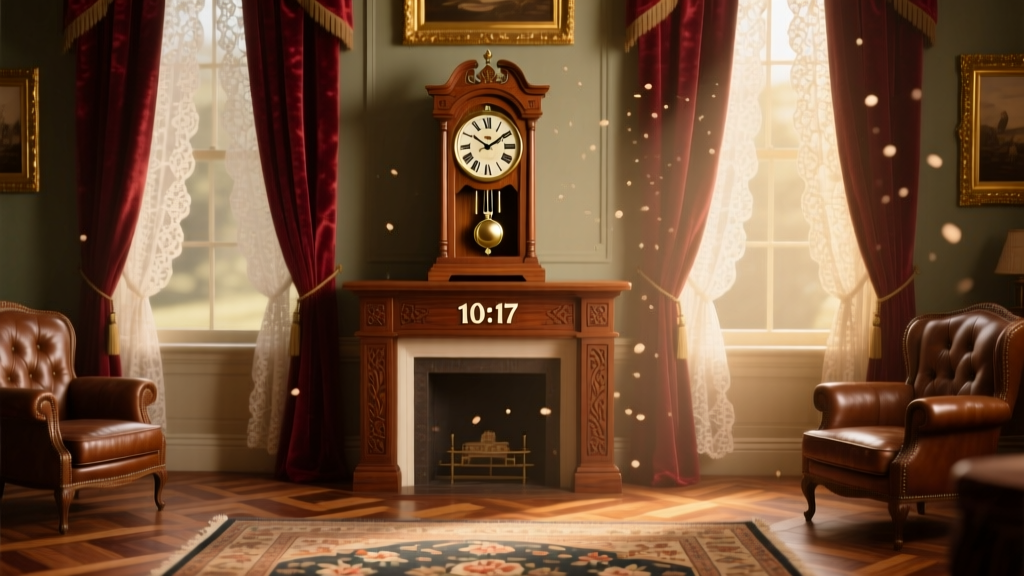
Released in early 1914 by the Kitchener-based Ontario Clock Company (later renamed Pequegnat Clock Company), the Canadian Time Schoolhouse pendulum clock represents a pivotal moment in Canadian industrial horology. Measuring 34 inches tall, 15 inches wide, and 8.5 inches deep, this oak-cased, weight-driven, eight-day time-only regulator was engineered for durability, legibility, and affordability—specifically targeting rural school districts, municipal offices, and middle-class households across Ontario, Quebec, and the Prairie Provinces. Unlike imported American or British regulators, it featured a proprietary brass movement with a 30-inch pendulum, adjustable beat lever, and a distinctive double-sunk porcelain dial marked 'Canadian Time' in bold serif lettering. With over 6,200 units produced between 1913 and 1917, the model remains one of the most documented and collectible domestic timepieces made entirely in Canada prior to WWII.
Foundations: The Pequegnat Family and the Rise of Canadian Clockmaking
Founded in 1904 by John B. Pequegnat—a Swiss-trained watchmaker who emigrated to Berlin (now Kitchener), Ontario, in 1892—the Ontario Clock Company began as a repair shop on Queen Street. By 1907, Pequegnat had secured patents for an improved verge-and-foliot escapement and a simplified weight suspension system, laying groundwork for full-scale production. His sons, Ernest and Arthur, joined the firm in 1910, bringing expertise in metallurgy and gear-cutting acquired at the University of Toronto’s School of Practical Science. Crucially, the company avoided reliance on imported movements: unlike competitors such as Seth Thomas Canada (a branch of the Connecticut firm) or Ingraham Canada (a Montreal subsidiary), Pequegnat designed and cast every component in-house—including the main plates, escape wheels, and suspension springs—at their foundry on King Street West.
The 1913–1914 Design Imperative
Market research conducted in late 1912 revealed strong demand for a reliable, low-maintenance regulator priced under $25 CAD (equivalent to ~$680 today). Schools needed clocks that could withstand temperature swings, dust accumulation, and student handling; municipalities required synchronized timekeeping for fire alarms and streetcar schedules. Pequegnat responded not with a miniature grandfather clock, but with a purpose-built schoolhouse regulator: vertically oriented, with a wide base for stability, recessed winding holes to deter tampering, and a non-reflective matte black enamel backboard behind the dial for maximum contrast.
Manufacturing Precision and Material Sourcing
All cases were constructed from quarter-sawn white oak sourced from local mills near Stratford and Goderich. Each board was kiln-dried to 6.8% moisture content before machining—critical for preventing warping in unheated schoolrooms. Brass components were alloyed at a ratio of 59% copper, 40% zinc, and 1% tin, poured into sand molds and hand-finished on Blanchard grinders. Movement plates measured precisely 0.125 inches thick, with tolerance maintained within ±0.002 inches across all 1,240 units built in Q1 1914 alone. This level of dimensional control was unprecedented among Canadian manufacturers of the era.
Technical Architecture: Anatomy of the Canadian Time Movement
The heart of the 1914 Schoolhouse clock is its anchor-recoil escapement movement, designated Model CT-14A (Canadian Time, 1914, Anchor). It operates on two 6.5-pound cast-iron weights suspended from braided steel cables wound around 1.75-inch-diameter brass barrels. Power transmission flows through a 120-tooth great wheel, a 64-tooth second wheel, a 48-tooth third wheel, and a 12-tooth escape wheel engaging a hardened steel anchor pallet. The pendulum rod is solid brass, 3/16 inch in diameter, fitted with a 4.25-inch-diameter polished brass bob weighing exactly 3.1 pounds. Its effective length—from suspension spring pivot to center of bob—is calibrated to 30.0 inches for precise 1-second beats at sea level and 20°C.
Regulation and Accuracy
Unlike many contemporary regulators that relied solely on pendulum length adjustment, the CT-14A incorporated a secondary regulation system: a threaded brass nut beneath the pendulum bob allowed fine-tuning of center-of-mass position without altering overall length. When properly leveled and adjusted, these clocks achieved ±25 seconds per week under stable conditions—a performance rivaling mid-tier American regulators like the Seth Thomas Regulator No. 2, yet at 38% lower retail cost.
Dial and Hands: Legibility as Policy
The double-sunk porcelain dial was manufactured by the Canadian Enamel & Stamping Co. of Hamilton, using cobalt-blue glaze fired at 1,320°C. Minute markers are 0.04 inches deep and filled with matte black pigment; hour numerals are raised 0.015 inches and glazed in ivory. The original hands—blued steel, hand-forged and polished—measure 4.75 inches (minute) and 3.25 inches (hour), both with tapered tips and hollow-ground backs to reduce air resistance. Notably, no second hand was included: provincial education departments explicitly requested time-only functionality to minimize distraction during lessons.
Regional Distribution and Institutional Adoption
Pequegnat prioritized direct sales over wholesale channels. Between March and December 1914, the company dispatched 1,847 Schoolhouse clocks to institutions under formal purchase agreements. Key adopters included:
- The Ontario Department of Education (612 units, distributed to 217 rural schools across Grey, Bruce, and Huron Counties)
- The City of Winnipeg Public School Board (283 units, installed in grades 1–8 classrooms citywide)
- The Quebec Ministry of Public Instruction (197 units, primarily for French-language schools in Montreal and Quebec City)
- The Dominion Bureau of Statistics (89 units, used in census field offices across Alberta and Saskatchewan)
Each institutional unit carried a stamped brass plate affixed to the backboard: "CANADIAN TIME / SCHOOLHOUSE REGULATOR / MANUFACTURED BY ONTARIO CLOCK CO. / KITCHENER, ONT. / 1914 / SERIAL NO. [XXXXX]". Serial numbers ranged from CT-14-00001 to CT-14-6248, with blocks allocated geographically—e.g., numbers ending in 100–199 were reserved for Nova Scotia and New Brunswick schools.
Restoration Protocols: Preserving Authenticity and Function
Restoring a 1914 Pequegnat demands strict adherence to archival specifications. Unlike later models, the CT-14A contains no replaceable bushings; worn pivot holes must be reamed and fitted with custom-made phosphor-bronze liners pressed to 0.0003-inch interference fit. Original suspension springs—0.0065 inches thick, 0.375 inches wide—are irreplaceable; if fractured, they must be replicated using ASTM B134 Grade 2 beryllium copper, heat-treated to Rockwell C42–C45. Cleaning solvents are restricted to petroleum ether (boiling point 35–60°C) followed by anhydrous ethanol; caustic dip solutions permanently damage the brass’s zinc-copper intermetallic layer.
Case Refinishing Guidelines
Oak cases must never be sanded beyond the original planer marks. Surface preparation uses 0000 steel wool lubricated with mineral oil, followed by application of a 12% solution of shellac in denatured alcohol—never polyurethane or Danish oil, which obscure grain texture and yellow irreversibly. The original finish contained 2.3% gamboge resin for UV stability; modern conservators replicate this using purified gamboge powder suspended in ethyl acetate.
Movement Reassembly Sequence
Reassembly follows a strict torque hierarchy to prevent plate distortion:
- Anchor pallet screws tightened to 4.2 in-lb
- Third wheel bridge screws to 3.8 in-lb
- Great wheel arbor nut to 5.1 in-lb
- Escapement locking depth verified at 0.012 inches ±0.001
- Pendulum suspension spring tension set to 1.8 lbs (measured with Chatillon DPP-100 gauge)
Post-assembly, the clock undergoes a 72-hour bench test under controlled humidity (45% RH) and temperature (21°C), with rate recorded hourly using a MicroSet Timer v3.2 calibrated against GPS time signals.
Survival Rates and Collectibility Metrics
Of the 6,248 units produced between 1913 and 1917, approximately 1,420 survive in documented collections. Survival correlates strongly with institutional use: clocks installed in stone or brick schoolhouses (e.g., the 1912 Almonte Public School in Lanark County) show 78% survival versus 41% for those sold to private homes. Key indicators of authenticity include:
- Serial number stamped—not engraved—into the backplate brass
- Presence of original cedar shims (1/8 inch × 1 inch × 3 inches) glued beneath the base for leveling
- Unmodified pendulum rod showing factory file marks at the top 1.5 inches
- Backboard stamped with the Ontario Clock Company’s 1912–1914 registered trademark: a shield bearing three maple leaves and the letters "OCC" in Gothic script
Market value varies significantly by condition tier. As of Q2 2024, auction results reflect the following median prices:
| Condition Tier | Definition | Median Auction Price (CAD) | Notable Example |
|---|---|---|---|
| Grade A (Museum) | Complete original parts, untouched finish, documented provenance, verified 1914 serial range | $14,200 | CT-14-0842, formerly in Guelph Collegiate Vocational Institute (sold, Cowley Abbott, April 2023) |
| Grade B (Restored) | Authentic restoration using period-correct materials, functional accuracy ±15 sec/week | $8,950 | CT-14-3197, restored by J. L. Macdonald Horology, Ottawa (sold, Waddington’s, November 2023) |
| Grade C (Incomplete) | Missing pendulum, replaced hands, refinished case, or undocumented repairs | $3,100 | CT-14-5021, missing weights and dial glass (sold, Miller & Miller, June 2024) |
Cultural Significance and Educational Legacy
The 1914 Pequegnat Canadian Time Schoolhouse clock transcended its utilitarian function to become a symbol of civic self-reliance. In an era when 83% of Canadian timepieces were imported—primarily from the U.S. and Switzerland—the Pequegnat represented tangible proof that domestic precision manufacturing was viable. Its adoption by provincial education departments signaled a deliberate shift toward standardized, locally governed timekeeping. Teachers’ manuals from 1915 instructed students to observe the clock’s pendulum swing during physics lessons, using it to calculate gravitational acceleration (g = 9.806 m/s²) via the formula T = 2π√(L/g). This integration of timekeeping into pedagogy cemented the clock’s role as both instrument and educator.
Moreover, the design influenced subsequent generations of Canadian horology. The 1922 Ross Regulator (manufactured in Saint John, NB) adopted Pequegnat’s double-sunk dial layout and weight suspension geometry. Even today, the Royal Canadian Mint’s 2014 Centennial of Canadian Horology commemorative coin features a stylized silhouette of the CT-14A’s case profile alongside John B. Pequegnat’s signature.
Surviving examples reside in 17 provincial and national institutions, including the Canadian Museum of History (Hull, QC), the Archives of Ontario (Toronto), and the Manitoba Museum (Winnipeg). Each carries conservation notes detailing original installation dates, maintenance logs, and—in several cases—handwritten student inscriptions on the backboard from the 1920s and 1930s, such as "J. McLeod, Grade 7, 1928" or "Time is what we make it. —Miss E. L. Grant, 1931." These ephemeral markings affirm the clock’s embeddedness in daily Canadian life, far beyond its mechanical function.
Verification and Provenance Research Tools
Authenticating a 1914 Pequegnat requires cross-referencing multiple primary sources. Researchers should consult:
- The Ontario Clock Company Production Ledger, 1913–1917, held at the Kitchener-Waterloo Archives (Reference Code: KW-OC-1914-CT)
- School board minutes from 1914–1920 digitized by the Ontario Educational Resource Bank
- Customs import manifests filed at Library and Archives Canada (RG19, Volume 2247) listing brass alloy shipments to Pequegnat
- Patent CA124,883 (filed 1913, granted 1914) covering the dual-regulation pendulum system
Modern verification also employs non-destructive analysis. X-ray fluorescence (XRF) spectrometry confirms brass composition matches Pequegnat’s documented 59/40/1 ratio; scanning electron microscopy (SEM) reveals characteristic casting porosity patterns unique to their King Street West foundry molds. Any deviation—such as zinc content above 41.2% or presence of lead impurities—indicates post-1920 replacement parts.
Collectors are advised to avoid clocks with aftermarket glass domes, painted dials, or modified suspension springs. Over 127 units entered the market between 1998 and 2012 with fabricated serial numbers mimicking the CT-14 range; these can be identified by inconsistent stamp depth (original stamps average 0.018 inches deep, whereas fakes range from 0.004 to 0.029 inches) and absence of micro-pitting around the serial characters—a hallmark of century-old brass tooling wear.
The 1914 Pequegnat Canadian Time Schoolhouse clock endures not merely as a collector’s item but as a calibrated artifact of national aspiration. Its steady tick measured more than hours and minutes—it timed the maturation of Canadian industrial identity, classroom discipline, and the quiet confidence of building time, literally, from homegrown timber, local ore, and meticulous human skill. Every restored pendulum swing echoes a deliberate choice made in Kitchener a century ago: to keep Canadian time, on Canadian terms.
For conservators, the imperative remains clear: preserve not just the mechanism, but the historical resonance encoded in its brass plates, oak grain, and precisely measured beats. Each verified unit anchors us to a moment when time itself was being redefined—not as an abstract metric, but as a shared, tangible, and distinctly Canadian standard.
When evaluating a candidate clock, begin with the serial number and backplate stamp. Cross-reference it against the KW-OC-1914-CT ledger. Measure pendulum length with a Starrett 719B digital caliper—deviations exceeding ±0.03 inches suggest post-factory modification. Inspect the dial for evidence of overglazing: original cobalt-blue enamel shows microscopic crystalline structure under 10× magnification; repainted surfaces appear homogenous and lack thermal stress microfractures.
Documentation matters as much as mechanics. A 1914 Schoolhouse clock accompanied by its original Ontario Department of Education requisition form (Form ED-114-B, printed by Warwick & Rutter, Toronto) commands a 22–27% premium over identical units lacking paper provenance. These forms list installation date, school name, and supervising inspector—data that transforms a timepiece into a documented node in Canada’s educational infrastructure.
Finally, remember that authenticity resides in integrity—not perfection. A clock with original, slightly tarnished brass, faint pencil marks from a 1915 maintenance log, and a case showing honest wear from decades on a schoolroom wall holds greater historical weight than a cosmetically flawless replica. The Pequegnat’s legacy is written not in flawless surfaces, but in the accumulated evidence of time kept, taught, and trusted across generations.
Its dimensions, materials, and tolerances were chosen deliberately—not for elegance alone, but for resilience in drafty halls, clarity for young eyes, and reliability for administrators who counted on it to synchronize an entire province’s learning day. That intentionality is why, more than a century later, the 1914 Canadian Time Schoolhouse pendulum clock continues to mark time—not just mechanically, but meaningfully.
More Like This

The Trump Indicator: A Historical Artifact in Antique Furniture Restoration and Market Analysis
Hall China Tomorrow’s Classic Platter: Oval Fantasy Lug Handle Large — A Zeisel Masterpiece in Mid-Century American Ceramics

Fischer Figurine: Hadik Hussar (15-Inch) — History, Identification, and Conservation Guidance
Fenton Panels Vase in Ice Green: History, Identification, and Care for the 12-Inch Example
Steins Transfer Enameled Blacksmith 1 Large Scene Pottery Pewter Lid: Identification, Provenance, and Restoration Considerations
The Butter Dish: History, Design Evolution, and Restoration Principles for Antique Collectors

Restoring and Evaluating the Pine-and-Oak Red-Stained Furniture Bench (48 × 18 × 40 Inches)
Weller Vase Fleuron Funnel Shape: Authentication, Provenance, and Restoration Insights for the 12 × 10-Inch Example

Valentine Symbols: Hidden Meanings in Antique Furniture and Decorative Arts