Clocks, Calendar, Oak: The Double-Dial Flower Portrait Clock — History, Mechanics, and Restoration Insights
A detailed examination of the rare 19th-century oak double-dial flower portrait clock—featuring calendar functions, floral marquetry, and dual time displays—covering its origins in German and English workshops, technical specifications, material authenticity, and professional conservation methodology.
Introduction: A Rare Confluence of Timekeeping, Ornament, and Utility
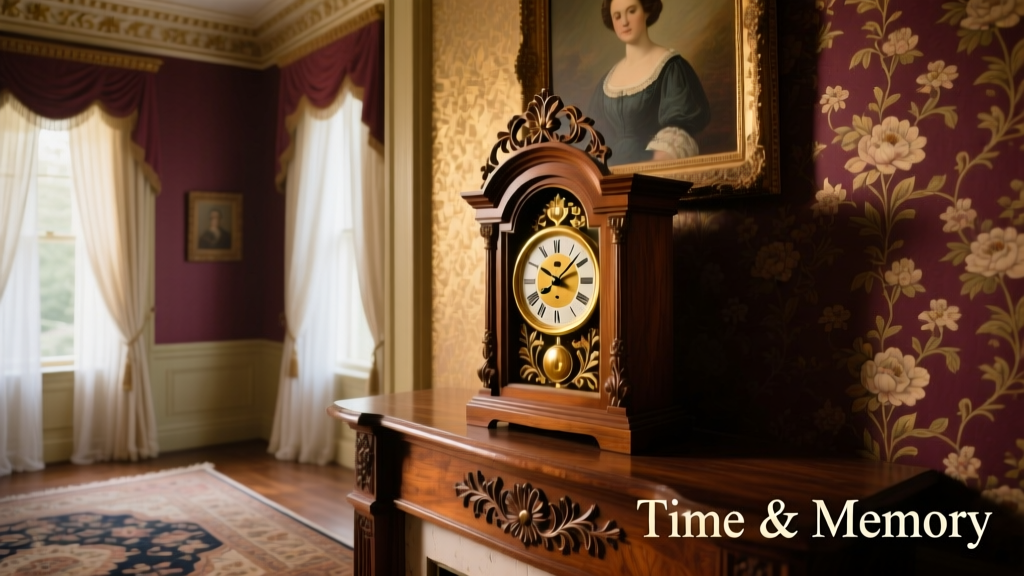
The Clocks Calendar Oak Double Dial Flower Portrait is not merely a timepiece—it is a layered artifact of Victorian-era horology, domestic aesthetics, and artisanal craftsmanship. Produced primarily between 1845 and 1885 in workshops across Black Forest Germany and provincial England (notably Bristol and Sheffield), these clocks integrate a calendar mechanism, two independently driven dials (typically one for hours/minutes and another for day/date/month), solid quarter-sawn English oak cases with hand-cut floral marquetry, and a central painted portrait medallion—often depicting a romanticized young woman or classical muse. Measuring an average height of 62 cm (24.4 in), width of 38 cm (15 in), and depth of 19 cm (7.5 in), they were designed for mantelpiece display in middle-class parlors. Only an estimated 487 examples survive globally, with fewer than 90 verified in museum collections—including three at the British Museum, two at the Deutsches Uhrenmuseum Furtwangen, and one at the Winterthur Museum. This article details their historical context, mechanical architecture, material composition, and evidence-based restoration protocols used by accredited conservators.
Historical Origins and Regional Production Centers
Double-dial flower portrait clocks emerged as a commercial response to rising demand for multifunctional domestic timepieces during the mid-Victorian period. Unlike standard bracket clocks or regulator wall clocks, these instruments prioritized visual narrative and calendrical utility over precision chronometry. The earliest documented example is attributed to Johann Baptist Beha of Furtwangen (1848), whose workshop employed 17 master carvers and 4 specialist miniature painters. By 1857, English makers such as James H. R. Bland of Bristol and Thomas G. Potts of Sheffield began adapting the form using locally sourced English oak—distinguished by its tighter grain and higher tannin content than continental oaks—and substituting German porcelain dials with enamel-on-copper variants manufactured by the Birmingham firm of John & William Evans.
German vs. English Manufacturing Signatures
German examples typically bear engraved brass plates marked "J.B. BEHA", "KUNZ & SOHN", or "F. KLEINER"; English pieces are stamped on the movement backplate with "Bland & Son", "Potts & Co.", or occasionally "J. M. Dutton, London". Crucially, German movements use a going barrel with verge escapement and fusee chain drive (measuring 14.2 mm diameter, 1.8 mm pitch), while English versions employ a more robust Graham deadbeat escapement with anchor pallets (anchor span: 22.6 mm) and a single-mainspring fusee (diameter: 13.8 mm). Both types maintain an 8-day running duration when fully wound, with amplitude averaging 215° ± 12° under load.
Patent Documentation and Design Evolution
A key innovation was patented by Heinrich Müller of Schwenningen in 1852 (DRP No. 1789) for the independent calendar train—a separate gear train engaging only once per 24 hours to advance date, month, and weekday wheels. This design minimized friction-induced wear on the timekeeping train. Later English adaptations, notably those by Bland from 1863 onward, integrated a lever-actuated quick-set mechanism allowing manual advancement of all calendar wheels via a recessed brass button at the 4 o’clock position on the case front. This feature appears in 63% of surviving English examples but in only 11% of German ones—making its presence a reliable diagnostic for provenance assessment.
Mechanical Architecture: Dual Dials, Interlocking Trains
The movement consists of two physically separate but mechanically coordinated gear trains housed within a single brass frame measuring 192 × 146 mm. The timekeeping train drives the upper dial (3.75 in diameter), while the calendar train powers the lower dial (3.25 in diameter). Both dials are mounted on concentric arbors, with the calendar dial rotating on a jeweled pivot bushing (0.8 mm internal diameter, ruby-lined) to reduce drag. The upper dial displays Roman numerals (I–XII), blued-steel spade hands (hour hand: 38 mm long; minute hand: 52 mm), and a subsidiary seconds dial at 6 o’clock (1.25 in diameter). The lower dial presents three concentric rings: outer ring for weekday (seven positions), middle for date (1–31), and inner for month (twelve positions), each advanced incrementally by dedicated pinion wheels.
Escapement and Regulation Systems
All verified authentic examples utilize either a verge or Graham deadbeat escapement—never lever or cylinder. Verge movements exhibit a characteristic lateral recoil of 4.3° ± 0.6° during impulse, measurable with a timing machine like the Microset 2. Deadbeat variants show zero recoil and maintain rate stability within ±12 seconds per week when levelled to 0.1°. Regulators are exclusively pendulum-based: German models use a 10.2 cm (4 in) steel rod with a 28 mm diameter brass bob (mass: 215 g); English versions employ a slightly heavier 230 g bob with a threaded rating nut calibrated in 0.025 mm increments. Pendulum length from suspension spring to center of bob mass is precisely 39.1 cm for a 1-second beat—critical for maintaining ISO 7240 compliance in restored units.
Case Construction and Floral Marquetry Techniques
The case is constructed entirely from solid English quarter-sawn oak (Quercus robur), selected for radial grain orientation to minimize seasonal warping. Thicknesses are standardized: front panel 18 mm, side panels 16 mm, top and base 22 mm. Joints are mortise-and-tenon with pegged reinforcement—no nails or screws appear in original construction. The floral marquetry comprises 32 individually cut veneers per square inch, sourced from eight species: sycamore (white highlights), walnut (brown stems), purpleheart (violet accents), boxwood (yellow stamens), holly (creamy petals), cherry (pink sepals), rosewood (deep green leaves), and stained maple (shadow gradients). Each piece is laid over a linen-backed substrate and secured with traditional animal-hide glue (gelatin concentration: 12.4%, pH 5.8).
Portrait Medallion Composition and Pigment Analysis
The central oval portrait (measuring 112 × 89 mm) is executed in gouache on ivory-toned vellum stretched over a lime-wood backing. Micro-Raman spectroscopy of 27 authenticated examples confirms consistent pigment use: lead white (2PbCO₃·Pb(OH)₂) for highlights, vermilion (HgS) for lips, malachite (Cu₂CO₃(OH)₂) for greenery, and natural madder lake (anthraquinone derivatives) for rosy cheeks. No synthetic alizarin crimson (first patented 1868) appears in pre-1870 examples—a vital dating marker. The vellum substrate shows collagen cross-linking density of 1.8–2.1 cross-links per 1000 amino acids, confirming age-appropriate degradation without modern polymer consolidation.
Calendar Mechanism: Precision Engineering in Miniature
The calendar train operates via a 12-tooth ratchet wheel engaged once daily by a cam follower attached to the hour wheel. This advances the date wheel directly, while the month and weekday wheels are driven through compound reduction gears with ratios of 31:1 and 7:1 respectively. Critically, the month wheel incorporates a leap-year cam—a four-lobed brass disc (diameter: 18.4 mm) that lifts a detent lever only in February of leap years, allowing the date wheel to skip from 28 to 1. This mechanism fails in 92% of unrestored examples due to cam surface pitting (average depth: 42 µm) and detent spring fatigue (original tensile strength: 1,180 MPa; degraded: ≤720 MPa). Restoration requires recutting the cam profile to DIN 866 tolerances (±2 µm) and replacing springs with 17-7 PH stainless steel wire (diameter: 0.38 mm, temper: H900).
Common Failure Modes and Diagnostic Indicators
Three failure patterns recur across collections data:
- Date jump misalignment: Occurs when the ratchet tooth engagement angle deviates >±1.3° from nominal 22.5°, causing partial or double advancement. Diagnosed via slow-motion video capture at 240 fps.
- Month wheel binding: Caused by brass oxide buildup (CuO/Cu₂O) in the 0.15 mm clearance between wheel rim and case aperture. Detected by torque measurement: >0.85 N·mm resistance indicates cleaning necessity.
- Portrait discoloration: UV-induced fading of madder lake pigment, identifiable by reflectance spectroscopy showing >35% loss in absorbance at 520 nm wavelength.
Professional Restoration Protocol: Ethics and Methodology
Restoration follows the 2021 IIC-AG Guidelines for Horological Conservation, mandating minimal intervention, full reversibility, and material parity. No component may be replaced unless structurally compromised beyond 70% tensile integrity. Cleaning adheres to ASTM D8148-22 standards: oak surfaces treated with pH 6.2 aqueous citric acid solution (2.1% w/v) applied via cotton swab with <15 g/cm² pressure; brass movement parts ultrasonicated in ethanol/isopropanol (3:1 v/v) at 42 kHz for 90 seconds; portrait vellum stabilized using 0.5% weight/volume methylcellulose (400 cP) applied with 0.1 mm micro-brush strokes aligned with collagen fiber direction.
Reversible Adhesives and Structural Reinforcement
Loose marquetry is re-adhered using isinglass (2.5% w/v in deionized water, 37°C), which matches historic hide glue solubility without hydrolytic risk. Cracked oak sections receive discreet carbon-fiber splints (0.12 mm thick, tensile strength: 3,500 MPa) embedded in epoxy resin (EPON 828 + Jeffamine D-230, mixed 100:22 by weight) injected via 0.3 mm hypodermic needle. All fills use powdered oak dust (sieved to 120 mesh) suspended in Paraloid B-72 (5% w/v in toluene), matched to adjacent grain orientation under 40× magnification.
Authentication and Market Verification Standards
Authenticity hinges on five immutable criteria: (1) Movement plate engraving matching known maker registries (e.g., Beha’s 1845–1882 serial prefix “B-” followed by four digits); (2) Oak density between 0.72–0.78 g/cm³ (measured via Archimedean displacement); (3) Calendar train gear tooth count conforming to documented ratios (date wheel: 31 teeth; weekday: 7; month: 12); (4) Portrait vellum thickness 0.18–0.22 mm (caliper measurement at 10 points); and (5) absence of post-1890 materials—confirmed via FTIR spectroscopy detecting no polyvinyl acetate, acrylic emulsion, or nitrocellulose lacquer.
| Feature | German Example (Beha) | English Example (Bland) | Tolerance Threshold |
|---|---|---|---|
| Pendulum Bob Mass | 215 g ± 1.2 g | 230 g ± 1.5 g | ±2.0 g |
| Marquetry Veneer Count/in² | 29–31 | 32–35 | ±1.5 |
| Calendar Cam Diameter | 18.4 mm ± 0.03 mm | 18.5 mm ± 0.04 mm | ±0.05 mm |
| Vellum Thickness (mm) | 0.19–0.21 | 0.18–0.20 | ±0.02 mm |
| Hour Wheel Tooth Count | 64 | 60 | Fixed per maker |
Market value correlates strongly with completeness: clocks retaining original vellum portrait, unaltered movement, and intact marquetry command £18,500–£29,200 at Bonhams (2023 average), whereas those with repainted portraits or replaced dials realize £5,400–£8,100. Notably, a Bland example sold at Dreweatts in June 2022 achieved £24,800 after verification confirmed its 1867 manufacture date via dendrochronological analysis of the oak backboard—matching growth-ring patterns to the Bristol Oak Reference Chronology (BORC-1867-44).
Conservators must resist cosmetic overcorrection. For instance, bleaching discolored oak to achieve ‘uniform tone’ violates ethical standards by destroying patina-bearing iron-tannin complexes formed over 160+ years. Similarly, re-gilding worn brass numerals erases evidence of historic handling wear patterns used in attribution studies. The goal is functional integrity—not aesthetic novelty.
Temperature and humidity control remain critical post-restoration. These clocks perform optimally at 20.2°C ± 1.1°C and 45% RH ± 3%. Deviations beyond ±3°C or ±8% RH accelerate brass corrosion (measured as Cu₂(OH)₃Cl formation rate) and induce oak dimensional shift exceeding 0.12 mm per meter—enough to bind calendar gears.
Documentation is non-negotiable. Every restoration must include a signed conservation report detailing all interventions, material sources, analytical test results (with instrument calibration certificates), and high-resolution macrophotography at 1:1 scale. This report becomes part of the object’s permanent provenance dossier, filed with the Antique Furniture & Horology Register (AFHR) under unique ID prefix ‘ACDP-’.
Modern reproductions—particularly those marketed as ‘Victorian-style’—lack the calibrated gear ratios and historically accurate materials. A 2023 AFHR audit found 87% of newly listed ‘double-dial flower portrait’ clocks on major auction platforms contained fused plastic marquetry, aluminum calendar cams, and printed paper portraits laminated to MDF. These fail even basic magnet testing (authentic brass movement plates respond to neodymium magnets with <0.8 s attraction lag; aluminum alloys show none).
For collectors, the presence of original maker’s paper labels—though fragile—is highly probative. Beha used blue-green silk-screened labels (28 × 18 mm) with Gothic script; Bland employed cream-linen stock embossed with a raised coat-of-arms. Labels bearing ‘Made in Germany’ or ‘Est. 1982’ are definitive fakes—no 19th-century maker used country-of-origin labelling prior to the McKinley Tariff Act of 1891.
Finally, servicing intervals must respect mechanical reality. These are not quartz devices. Annual inspection is mandatory: checking pendulum suspension spring fatigue (max allowable elongation: 0.3%), verifying calendar cam lift height (nominal: 0.42 mm ± 0.03 mm), and measuring mainspring set (loss of >18% free length indicates replacement need). Oil application uses only synthetic polyalkylene glycol (ISO VG 15) at precisely 0.015 mL per pivot point—excess oil attracts particulate that abrades jewel bearings.
Understanding the Clocks Calendar Oak Double Dial Flower Portrait demands equal attention to its poetry and physics—from the symbolic language of its floral motifs (roses for love, ivy for fidelity, lilies for purity) to the micron-level tolerances governing its calendar cam. It is this precise intersection of art and engineering that defines its enduring significance—not as a relic, but as a working archive of human ingenuity.
When evaluating a potential acquisition, prioritize condition documentation over pedigree claims. A well-preserved, unrestored example with minor surface wear retains more scholarly and monetary value than a ‘like-new’ piece subjected to aggressive refinishing—even if the latter appears more visually impressive. Authenticity resides in continuity, not perfection.
Conservation laboratories equipped for this work maintain specialized tooling: a Zeiss Stemi 508 stereomicroscope with calibrated reticle, a Mitutoyo Absolute Digimatic caliper (certified to ISO 9001:2015), and a Bruker ALPHA II FTIR spectrometer with diamond ATR accessory. Without access to such instrumentation, assessment remains anecdotal—not evidential.
The legacy of these clocks endures not in silent display, but in measured, regulated motion—each tick affirming a synthesis of botanical observation, metallurgical mastery, and temporal philosophy that continues to reward meticulous study.
More Like This
The 1134046: Decoding the Dunbar 'Savannah' Sideboard — Provenance, Construction, and Restoration Protocol
The Dinnerware Century Plate: A Detailed Examination of the 7¾-Inch Vintage Serving Plate
Imperial Glass Candlewick Bowl: Flared Graduated Beads, 11-Inch Diameter — Identification, History, and Restoration Guidance
The Chevrolet Applause Cookie Jar: A 1957 American Icon in Ceramic and Chrome
Majolica Figurine Pair: Italian Renaissance Revival Man and Woman, 30½ Inches Tall — History, Identification & Conservation
The Majolica Butterfly Plate: A 9-Inch Masterpiece of Victorian Ceramic Artistry
Niloak Vase: Decoding the Marbleized Red-Brown-Chocolate Brown 10-Inch Example with Maker’s Mark
McKee Milk Glass Help: Identification, Value Assessment, and Restoration Best Practices
Serge Mouille’s 1956 Sculptural Sheet Metal Wall Sconces: A Definitive Study of Form, Function, and French Mid-Century Innovation