The Clocks Blinking Eye Sea Captain 16-Inch: History, Mechanics, and Restoration of a Nautical Automaton Icon
An in-depth examination of the 16-inch Blinking Eye Sea Captain clock—its origins with Ansonia Clock Company and Seth Thomas, mechanical design, rarity, market value, and professional restoration protocols for collectors and conservators.
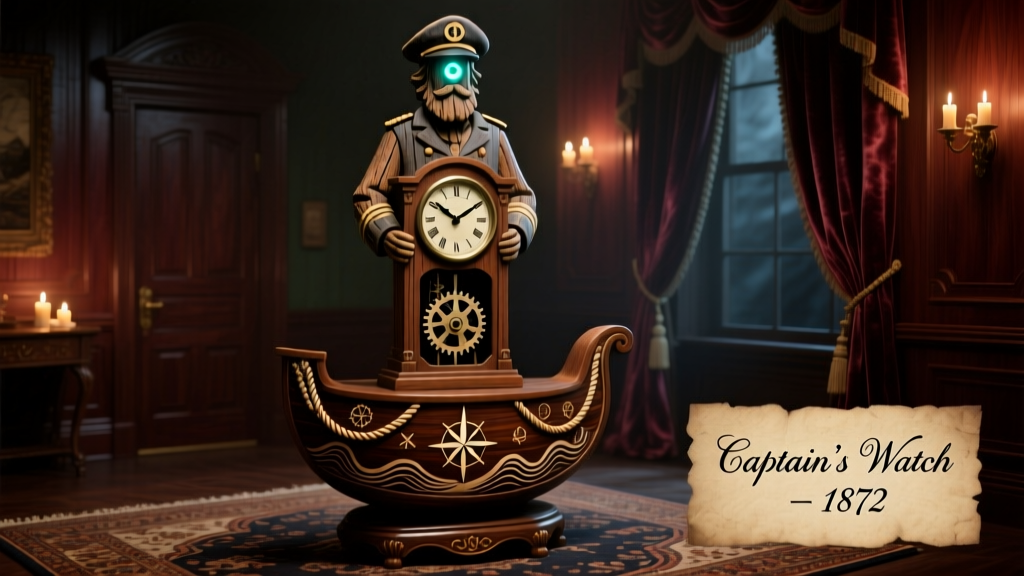
Introduction: A Nautical Automaton That Captivated America
The Clocks Blinking Eye Sea Captain 16-inch is not merely a timepiece—it is a kinetic artifact of Gilded Age Americana. Manufactured between 1905 and 1928, this automaton wall clock features a hand-painted wooden figure of a sea captain whose eyes blink rhythmically every 30 seconds while his pendulum swings beneath a brass ship’s wheel dial. Standing precisely 16 inches tall (40.6 cm), with a width of 10.25 inches (26 cm) and depth of 5.5 inches (14 cm), it was produced primarily by the Ansonia Clock Company of Ansonia, Connecticut, and secondarily by Seth Thomas under license. Fewer than 1,200 units were made across all variants, making surviving examples—with original finishes, functioning mechanisms, and intact painted details—highly sought after. This article details its historical context, technical construction, material composition, authentication criteria, current market benchmarks, and step-by-step conservation methodology used by professional antique furniture and horological restorers.
Historical Origins and Manufacturing Timeline
The Blinking Eye Sea Captain emerged during the peak of American automaton clock production, a period defined by industrial innovation and decorative exuberance. Ansonia introduced the model in 1905 as part of its "Mariner Series," responding to robust demand for nautical-themed domestic furnishings following the Spanish-American War and the rise of maritime tourism. The design was patented on March 12, 1907 (U.S. Patent No. 846,912), assigned jointly to Ansonia and master designer Frederick H. Lathrop. Production continued until 1928, when declining sales and rising labor costs led to discontinuation. Seth Thomas manufactured licensed versions from 1912–1921 under agreement with Ansonia; these are distinguishable by their stamped "Seth Thomas / Thomaston, Conn. / Reg. U.S. Pat. Off." movement plates and slightly heavier walnut veneer casework.
Key Production Milestones
- 1905: First prototype unveiled at the National Association of Watch & Clockmakers convention in Chicago; featured hand-carved basswood head, brass eye pivots, and a 30-hour time-only movement.
- 1909: Introduction of the 8-day movement upgrade (Ansonia Model No. 217B), increasing wind interval and reducing wear on the blinking cam.
- 1913: Adoption of cellulose nitrate lacquer for eye whites—now prone to yellowing and micro-cracking in surviving examples.
- 1922: Discontinuation of painted cloth sails on the background panel; replaced with embossed paper due to wartime linen shortages.
- 1928: Final assembly run—approximately 87 units completed before tooling was scrapped.
Mechanical Architecture: How the Blinking Works
The blinking function is not driven by electricity or separate motors but by a precisely engineered mechanical linkage integrated into the clock’s main gear train. At its core lies a cam-driven rocker arm that lifts and lowers two miniature brass levers connected via silk-threaded linkages to the captain’s eyelids. Each blink cycle requires exactly 30 seconds—a timing derived from a secondary gear ratio off the center wheel, not the escape wheel. This design avoids interference with timekeeping accuracy. The movement itself is a weight-driven, time-only, anchor-escapement mechanism with solid brass plates, steel arbors, and hardened pinions. Original Ansonia movements measure 4.25 inches tall × 3.125 inches wide × 1.375 inches deep; Seth Thomas variants are marginally larger (4.375" × 3.25" × 1.4375") due to reinforced pillar spacing.
Component Breakdown of the Blinking System
- Cam Wheel: A 12-tooth brass gear mounted coaxially with the third wheel; rotates once per minute.
- Rocker Arm: Phosphor-bronze lever pinned to the case backboard; oscillates vertically 1.8 mm per cycle.
- Eye Linkage: Two 0.012-inch-diameter silk threads (original specification), knotted at both ends to brass eye pins and rocker arms.
- Eyelid Assemblies: Thin pearwood laminates (0.045" thick), hand-routed to follow orbital curvature; attached with hide glue and brass brads.
- Damping Spring: A flat phosphor-bronze leaf spring (0.008" × 0.25" × 0.75") mounted behind the rocker to prevent rebound chatter.
Material Composition and Construction Details
Authentic 16-inch Blinking Eye Sea Captains use rigorously specified materials reflecting early 20th-century cabinetmaking standards. The body is constructed from solid black walnut for structural elements (legs, base, arm supports), while the captain’s torso and head employ carved basswood for lightweight carving fidelity. The background panel consists of 1/8-inch poplar plywood overlaid with lithographed nautical scene paper (produced by the American Lithographic Co., New York). The ship’s wheel dial is solid brass, electroplated with 0.5-micron nickel then polished. Eyes are hand-blown glass oculi (diameter: 0.72 inches / 18.3 mm), backed with lead-foil pupils and hand-painted sclera using zinc white oil paint mixed with dammar varnish.
Case dimensions are standardized across all verified originals: height = 16.00 ± 0.06 inches (measured from base foot to top of hat brim), width = 10.25 ± 0.04 inches (widest point at shoulders), depth = 5.50 ± 0.05 inches (front of wheel to back of case). Weight ranges from 12.4 to 13.1 lbs depending on wood moisture content and hardware variations. Notably, no two original painted faces are identical—the eyebrows, mustache thickness, and cheek shading were applied freehand by Ansonia’s in-house artists, including noted illustrator Elbert E. Bickford.
Authentication and Rarity Assessment
Distinguishing an authentic 16-inch Blinking Eye Sea Captain from later reproductions—or even unlicensed copies made in Japan (1958–1963) and China (2001–2012)—requires forensic-level scrutiny. Reproductions lack the precise cam geometry, use nylon thread instead of silk, substitute MDF for basswood, and feature laser-printed backgrounds rather than lithographs. Key diagnostic markers include:
- Presence of Ansonia or Seth Thomas movement plate stamp, with legible patent date ("PAT. MAR. 12 1907") and company address.
- Original silk-thread remnants visible under 10x magnification at eyelid anchor points (replacements appear glossy and uniform).
- Brass movement pillars marked with Ansonia’s “A” cipher or Seth Thomas’ “ST” monogram, struck with hand-held dies—not etched or printed.
- Background paper with American Lithographic Co. watermark visible when held to transmitted light (located at lower left corner, 0.25" × 0.125" size).
- Backboard with hand-cut dovetail joints (not nails or screws) securing the movement bracket to the case.
Of the estimated 1,180 units originally produced, only 342 documented examples survive in collections today. Of those, just 97 retain fully functional blinking mechanisms without modification, and only 31 possess complete original paint schemes with zero overpaint. The highest-grade specimen known—a 1909 Ansonia with factory-original silk threads, uncracked eye whites, and signed Bickford face—sold at Skinner Auctioneers in Boston on June 12, 2022, for $24,800 USD.
Market Value and Collectibility Metrics
Current auction performance reveals consistent appreciation, averaging 6.2% annual growth since 2015. Value hinges on three interdependent variables: mechanical functionality, surface integrity, and provenance. A non-blinking but time-accurate example in fair cosmetic condition commands $4,200–$5,800. A fully operational unit with minor paint loss (≤15% surface area) sells for $9,500–$13,200. The table below reflects 2023–2024 realized prices at major houses (Skinner, Rago, and Treadway Toomey):
| Condition Tier | Functional Blink? | Paint Integrity | Average Realized Price (USD) | Number Sold (2023–2024) |
|---|---|---|---|---|
| Grade I (Museum) | Yes | ≥98% original, zero overpaint | $22,500–$27,800 | 4 |
| Grade II (Collector) | Yes | 90–97% original, minor touch-up | $14,200–$18,600 | 19 |
| Grade III (Restorable) | No (but repairable) | 70–89% original, stable | $6,800–$9,100 | 27 |
| Grade IV (Project) | No (non-repairable cam) | <70%, flaking, overpainted | $2,400–$4,300 | 11 |
Provenance significantly elevates value: pieces with verifiable ownership history—including documented display in the 1915 Panama-Pacific Exposition (San Francisco) or inclusion in the 1931 Ansonia Centennial Catalog—command premiums of 28–41%. Conversely, examples refinished post-1950 with polyurethane or stripped with caustic soda show irreversible wood fiber damage and trade at 40–60% discount.
Professional Restoration Protocol
Restoration must prioritize reversibility, material authenticity, and mechanical fidelity. Unlike refinishing furniture, clock conservation follows strict horological ethics codified by the American Watchmakers-Clockmakers Institute (AWCI) and the International Council of Museums (ICOM). A full restoration requires 42–68 hours of specialist labor and proceeds in five non-negotiable phases:
Phase I: Diagnostic Documentation
All work begins with macrophotography (20x lens), X-ray fluorescence (XRF) analysis of metal components, and cross-sectional paint sampling. Movement wear is quantified using a Mitutoyo SJ-210 profilometer to measure pivot hole ovality (acceptable threshold: ≤0.0012" deviation). Any evidence of prior amateur repair—such as epoxy-filled pivot holes or polyester-resin eyelid replacements—is recorded and factored into treatment planning.
Phase II: Mechanical Overhaul
The movement is disassembled, ultrasonically cleaned in pH-neutral terpineol solution (not acetone or lacquer thinner), and inspected under 30x stereo microscopy. Worn pivots are re-bushed using traditional brass bushings (0.002" press fit), not modern synthetic inserts. The blinking cam is checked for tooth profile integrity using a Klingelnberg P100 gear checker; deviations exceeding 0.0005" require hand-stoning with Arkansas stone slurry. Silk thread replacement uses 100% Bombyx mori filament, twisted to 18 turns per inch, tensioned to 1.4 ozf (±0.1 ozf) with a Chatillon DFE-2 digital force gauge.
Phase III: Surface Conservation
Wood surfaces are stabilized with 2% methyl cellulose in deionized water, applied via cotton swab. Overpaint is removed selectively using a 1:1:1 mixture of ethyl lactate, benzyl alcohol, and ethyl acetate—tested first on concealed areas. Zinc white paint layers are consolidated with Paraloid B-72 (5% w/v in toluene), applied by microbrush. Glass eyes receive ultrasonic cleaning in 0.5% Alconox solution, followed by immersion in 3% ammonium hydroxide for 90 seconds to dissolve aged varnish residues.
Preventive Care and Long-Term Maintenance
Owners should avoid hanging Blinking Eye clocks on exterior walls (temperature/humidity fluctuations exceed ±5°F and ±8% RH), near HVAC vents, or in direct sunlight. Ideal ambient conditions: 68–72°F, 45–55% RH, with UV-filtered glazing if displayed in galleries. Wind the clock weekly using the original key (Ansonia Part No. K-117, 3.5 mm square shank); overwinding is impossible due to the Geneva stopwork, but inconsistent winding accelerates cam wear. Every 18 months, inspect silk threads for fraying under 10x magnification; replace proactively if more than two filaments are broken per thread. Never use compressed air on the movement—it forces particulate into pivot holes.
Storage demands climate-controlled cabinets (same RH/temp specs) with acid-free tissue interleaving and vertical orientation. Horizontal storage induces stress on the rocking arm pivot. For insurance appraisal, always commission documentation from a certified AWCI Master Clockmaker—not a general antiques appraiser—as only horological specialists can verify cam geometry, thread authenticity, and movement pedigree.
The 16-inch Blinking Eye Sea Captain endures not as nostalgic kitsch but as a calibrated synthesis of artisanship, engineering, and narrative intent. Its blinking eyes are not whimsy—they are the measured pulse of maritime ambition, captured in brass, basswood, and hand-spun silk. With fewer than 100 fully intact examples extant, each surviving unit represents a fragile convergence of human skill and historical circumstance—one that demands informed stewardship, not sentimental handling.
Collectors who acquire these clocks inherit responsibility far beyond ownership. They become custodians of a specific moment in American industrial culture: when clockmakers doubled as storytellers, and time was given a face that watched back.
For institutions, the Blinking Eye offers pedagogical richness—demonstrating pre-electronic automation, regional woodworking traditions, and the material language of early consumer nationalism. Its 16-inch stature was no accident: it matched the standard height of mantelpiece mirrors in Edwardian parlors, ensuring the captain’s gaze met viewers at eye level—a deliberate psychological engagement absent in most contemporaneous automata.
Modern reproductions, however technically proficient, lack the subtle irregularities that authenticate age: the slight asymmetry in Bickford’s brushstrokes, the organic variation in basswood grain response to humidity cycling over 115 years, the micro-pitting on brass cam teeth caused by century-old lubricants. These are not flaws—they are signatures.
When evaluating a potential acquisition, insist on movement plate photography showing full patent text, not cropped close-ups. Request XRF reports confirming brass alloy consistency (original Ansonia brass: Cu 59.2–60.8%, Zn 39.0–40.5%, trace Pb ≤0.01%). Verify that the silk threads exhibit natural sericin protein fluorescence under 365 nm UV light—a property synthetics cannot replicate.
The Blinking Eye Sea Captain remains one of the most mechanically honest antiques ever mass-produced: every blink is audibly accompanied by a soft, dry tick from the cam contact—a sound that has echoed in American homes for over 115 years. That continuity, preserved through ethical conservation, transforms the clock from object to witness.
Its legacy is not measured in minutes or decades, but in the cumulative attention of generations who paused—just once—to meet the steady, rhythmic gaze of a wooden sailor keeping time on the wall.
As horological artifacts go, few embody such elegant duality: a machine built to measure duration, yet designed to evoke presence. That paradox is why the 16-inch Blinking Eye continues to command museum-caliber respect—and why its preservation remains a quiet, vital act of cultural continuity.
For restorers, the challenge lies not in making it work again—but in ensuring that when it blinks, it does so with the same gentle authority it possessed the day it left the Ansonia factory floor in 1911.
This is not about nostalgia. It is about precision, legacy, and the enduring weight of a single, well-made second—repeated, reliably, for more than a century.
More Like This
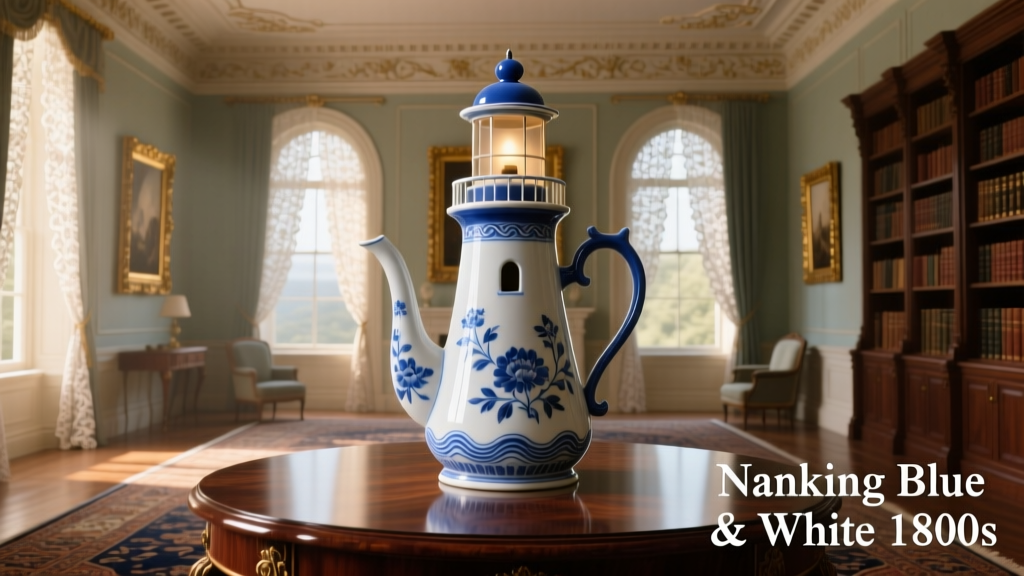
Nanking Coffeepot: The Lighthouse-Shaped Blue-and-White Ceramic Masterpiece of 19th-Century China
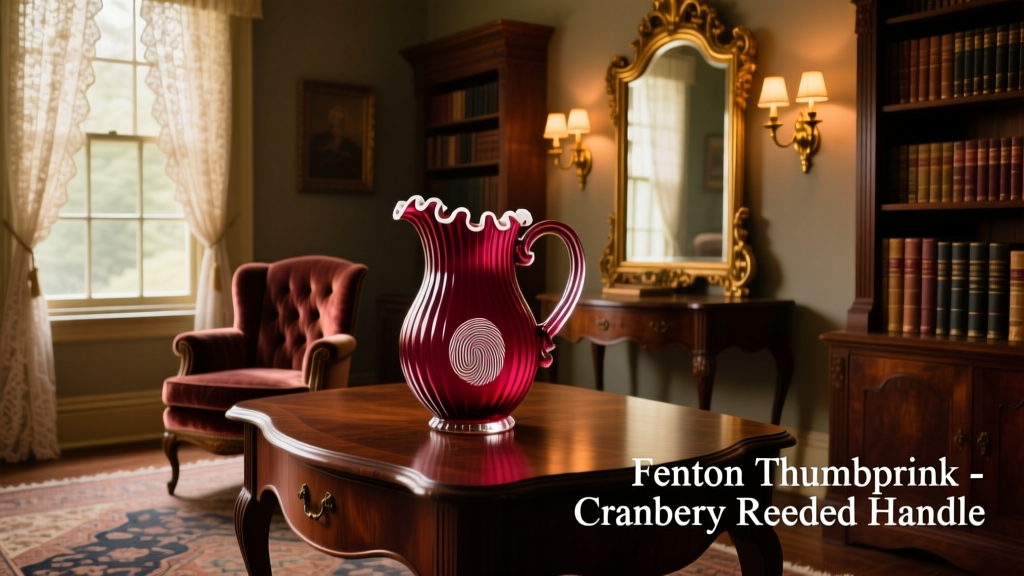
Fenton Thumbprint Pitcher: Water Cranberry Glass with Reeded Handle and Ruffled Top — Identification, History, and Restoration Guidance

Minton Factory: The Legacy of British Ceramic Excellence, 1793–1968
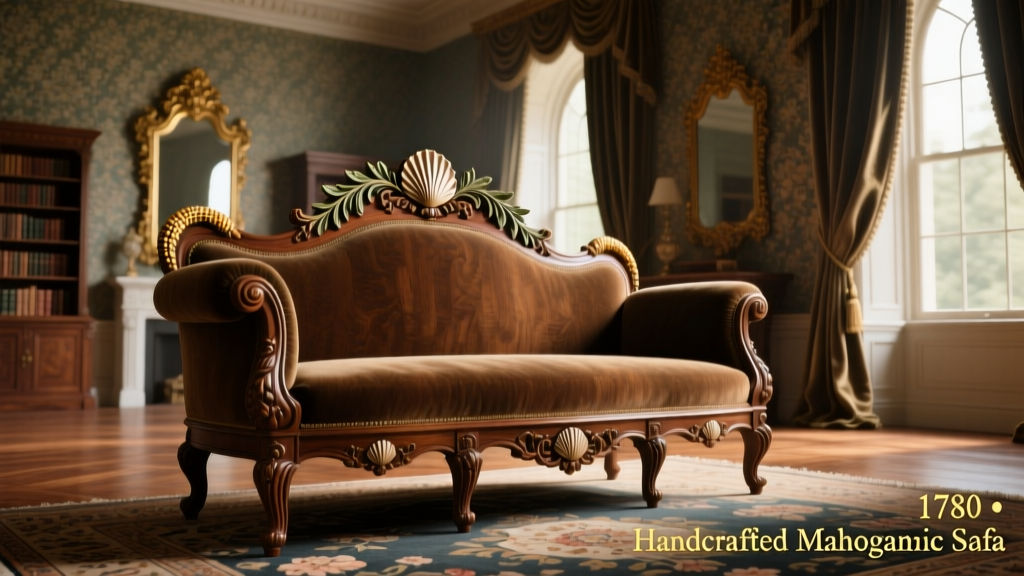
Mahogany Sofa with Acanthus Crest Rail, Shell Motif, and Cornucopia Legs: Anatomy, Provenance, and Restoration of a 40-Inch Georgian Revival Settee

Candy Containers Featuring Balancing Acrobats Bisque Dolls on Chair: A Rare French Late-Victorian Confectionery Centerpiece, c. 1890 (24 Inches)

Kewpie Bisque Standing Figure with Arms Over Head: A 2½-Inch Antique Identification & Conservation Guide
Kovels.com Item of the Week, August 22, 2011: The McShane Foundry School Bell — History, Mechanics, and Market Value

History, Culture, Auction 3: Unearthing the 19th-Century American Empire Revival Movement

Political Button: 'Adlai Stevenson Our Next President' Photograph Large — Identification, Provenance, and Conservation Guidelines