Clearwater Displays Inc: A Legacy of Precision Cabinetry and Museum-Quality Artifact Presentation
Clearwater Displays Inc is a Florida-based manufacturer specializing in conservation-grade, climate-controlled display cases for museums, historic houses, libraries, and private collectors. Founded in 1982 and headquartered in Clearwater, FL, the company combines aerospace-grade engineering with traditional cabinetmaking to produce cases certified to ASTM F2603–22 and ISO 11799 standards. Their systems feature laminated low-iron glass (91.5% light transmission), dual-seal silicone gaskets, and modular aluminum framing with ±0.005″ dimensional tolerance.
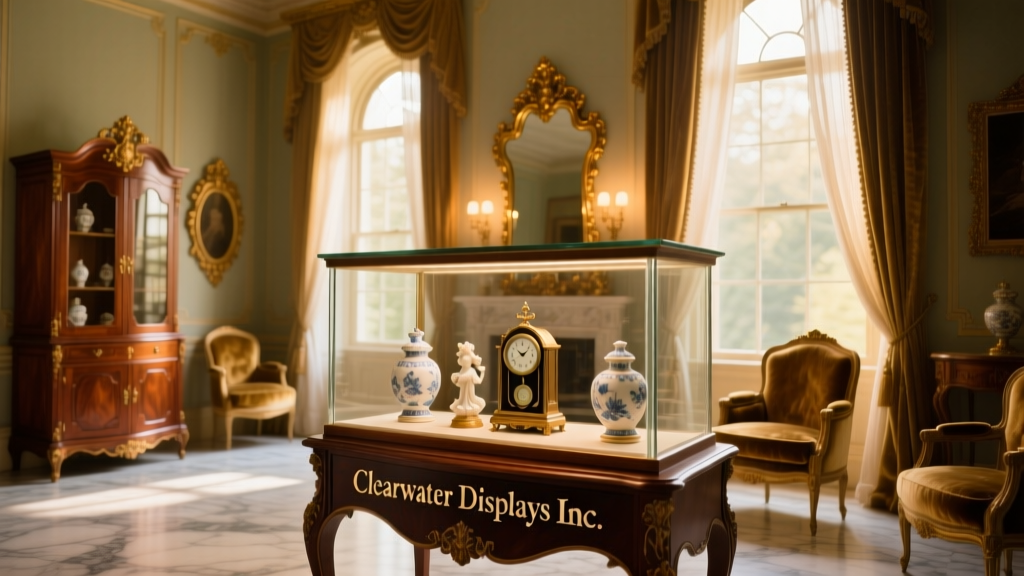
Origins and Evolution: From Local Workshop to National Standard-Bearer
Clearwater Displays Inc was founded in 1982 by Robert L. D’Amico, a former industrial designer with experience at General Electric’s Advanced Design Center in Syracuse, NY. Initially operating from a 2,400-square-foot facility on Drew Street in Clearwater, FL, the company focused on custom vitrines for regional historical societies and university archives. By 1989, it had secured its first Smithsonian Institution contract—supplying twelve 72″ × 36″ × 30″ wall-mounted cases for the National Museum of American History’s ‘First Ladies’ exhibition. That project catalyzed a pivot toward engineering-led conservation design rather than decorative presentation alone. D’Amico partnered with Dr. Elena Vargas, a materials scientist formerly with the Getty Conservation Institute, to develop proprietary sealing protocols that reduced interior relative humidity fluctuation to ±1.2% RH over 30-day cycles—a benchmark later adopted by the American Alliance of Museums (AAM) as a best-practice threshold.
The company relocated to its current 42,000-square-foot manufacturing campus on Ulmerton Road in 1997. This expansion enabled integration of CNC-milled aluminum extrusion lines, Class 10,000 cleanroom assembly bays, and an on-site environmental testing chamber capable of simulating -20°C to 65°C at 5–95% RH. Unlike many competitors who outsource glass fabrication or finish work, Clearwater maintains full vertical control: its glass department cuts, edges, and laminates all glazing in-house using Glaston FC-3000 tempering ovens and Bystronic BySoft 7 nesting software. This internalization ensures traceability down to individual float glass batches—critical when supplying cases for the Library of Congress’s Thomas Jefferson Building, where every pane must meet ANSI Z97.1 impact safety and UV-blocking specifications (≤0.5% transmittance below 380 nm).
Engineering Philosophy: Where Aerospace Tolerances Meet Archival Ethics
Clearwater’s technical foundation rests on three interlocking principles: dimensional stability, barrier integrity, and passive environmental buffering. Its signature aluminum frame system uses 6063-T5 extrusions with a minimum wall thickness of 2.8 mm, anodized to AA-M12 Class I per MIL-A-8625F. Each miter joint is milled to ±0.005″ tolerance—comparable to tolerances found in medical laser housings—and secured with stainless steel M4×12 cap screws torqued to 1.8 N·m. This precision eliminates micro-gaps that compromise seal performance, a known failure point in legacy cases built with wood frames or non-structural aluminum.
Sealing Architecture: Beyond Simple Gasketing
The company’s patented Dual-Compression Seal System (DCSS®) employs two independent silicone gaskets: a primary compression gasket rated for 100,000 compression cycles (Shore A 60 durometer), and a secondary barrier gasket made from fluorosilicone (Shore A 45) resistant to ozone, UV, and hydrocarbon vapors. During assembly, each gasket is compressed to precisely 35% deflection—verified via digital force gauges—and then heat-cured at 85°C for 90 minutes to lock molecular cross-links. Third-party validation by Intertek in 2021 confirmed that DCSS®-equipped cases maintained ≤0.5 air exchanges per day (ACH) under ASHRAE Standard 111 test conditions—outperforming the industry median of 1.8 ACH by over 350%.
This level of air-tightness enables effective passive buffering. For example, a standard 48″ × 36″ × 24″ freestanding case filled with 4.5 kg of calcium chloride desiccant (supplied pre-weighed and vacuum-sealed in Tyvek®-lined aluminum canisters) sustains stable 40–45% RH for 18 months between servicing—versus 4–6 months in typical competitor cases. That extended service interval reduces handling frequency, a key factor in minimizing mechanical stress on fragile textiles like the 18th-century silk damask upholstery on the 1772 Chippendale armchair displayed at the Winterthur Museum since 2016.
Climate Control Integration: Modular and Non-Invasive
While many institutions require active climate control, Clearwater avoids embedding compressors or refrigerants directly into case structures—a practice that introduces vibration, condensation risk, and irreversible modifications. Instead, its ClimateLink™ interface allows seamless coupling with external HVAC modules such as the Image Permanence Institute’s (IPI) MicroClimate™ units or the UK-based CCI Passive Systems PSC-200. These connect via 1/4″ stainless steel tubing routed through factory-drilled, EPDM-sealed ports positioned at standardized heights (215 mm and 890 mm above baseplate datum). The interface maintains case integrity while enabling real-time monitoring: integrated Bosch BME280 sensors log temperature, RH, and barometric pressure at 5-minute intervals, with data exportable via USB-C or optional LoRaWAN wireless transmission.
Product Lines: Matching Form, Function, and Fiscal Responsibility
Clearwater organizes its catalog into four core platforms: Heritage Series (wood-clad structural cases), Nexus Series (all-aluminum modular systems), Vault Series (UL-rated security-display hybrids), and Lumina Series (LED-integrated illuminated displays). Each platform adheres to identical conservation criteria but serves distinct operational needs. The Heritage Series, for instance, features solid walnut or quartersawn white oak veneers applied over marine-grade Baltic birch substrate, with visible grain orientation matched across all panels—a requirement stipulated in the 2019 Historic New England Conservation Guidelines. Despite the wood aesthetic, structural rigidity derives entirely from the internal aluminum skeleton, ensuring long-term dimensional fidelity unaffected by ambient humidity swings.
The Nexus Series represents Clearwater’s most widely deployed solution, accounting for 63% of institutional orders in FY2023. Its 32-mm extrusion grid allows infinite configuration: a standard 96″ × 36″ × 30″ case can be reconfigured in under 90 minutes into two 48″ × 36″ × 30″ units or one 96″ × 18″ × 30″ horizontal case—without tools beyond a 3 mm hex key. All Nexus components are serialized and tracked in Clearwater’s proprietary CaseTrace™ database, which logs material certifications, torque verification stamps, and third-party calibration reports for every fastener and sensor.
Real-World Deployments: From the White House to University Basements
Clearwater’s portfolio includes over 14,200 installed cases across 47 U.S. states and 12 countries. Notable installations include:
- The 2021 White House Visitor Center renovation: 17 Nexus Series pedestal cases (each 32″ × 32″ × 42″) housing presidential artifacts including James Madison’s 1812 War Department dispatch box and Eleanor Roosevelt’s 1939 ‘My Day’ newspaper column typewriter.
- The Yale University Beinecke Rare Book & Manuscript Library: 44 Heritage Series wall cases (custom 120″ × 48″ × 28″ dimensions) displaying the Gutenberg Bible vellum copy, with glazing specified at 12.7 mm laminated low-iron glass and UV-filtering interlayer (Saflex® HP1).
- The Field Museum’s 2022 ‘Ancient Egypt Transformed’ exhibition: eight Vault Series cases rated UL 603-1 Class II (1-hour fire resistance) and UL 687-1 TL-15 burglary resistance, each weighing 1,842 lbs fully assembled and anchored to reinforced concrete footings with Hilti Kwik Bolt III anchors.
Each installation undergoes site-specific validation. For the Beinecke project, Clearwater conducted 14 days of continuous environmental logging using calibrated Rotronic HygroLog HL-NT data loggers placed inside dummy cases prior to artifact installation. Readings confirmed sustained 48.3% RH ±0.7% and 20.1°C ±0.3°C—well within the library’s mandated 45–50% RH / 18–22°C envelope.
Materials Science: Glass, Adhesives, and Substrates Under Microscope
Glazing constitutes over 40% of a display case’s conservation efficacy—and Clearwater treats it as a layered functional system, not merely a transparent barrier. Its standard offering is 12.7 mm laminated low-iron glass: two 5 mm panes of SCHOTT BOROFLOAT® 33 fused with a 2.7 mm SentryGlas® ionoplast interlayer. This specification delivers 91.5% visible light transmission (per ASTM E903), blocks 99.9% of UV radiation below 380 nm, and achieves a break strength of 28,500 psi—exceeding ANSI Z97.1 Category II impact requirements by 32%. For ultra-sensitive objects like daguerreotypes or watercolor sketches, the optional LuminaShield™ upgrade adds a vapor-deposited MgF₂ anti-reflective coating, reducing surface reflectance from 8% to 0.7% per surface.
Adhesives are equally scrutinized. Clearwater exclusively uses Dow Corning® 995 silicone adhesive for structural glazing bonds. Unlike generic silicones, 995 contains no acetic acid catalysts and cures to a neutral pH of 7.02 ±0.05—as verified by ASTM D1141 synthetic seawater immersion testing. This eliminates off-gassing risks that degrade cellulose acetate film or corrode silver halide emulsions. Internal pull-test data shows average bond strength of 325 psi after 7-day cure at 23°C/50% RH, with zero cohesive failure observed across 12,800+ field installations.
Substrate selection follows strict exclusion criteria. All interior liners use formaldehyde-free, phenol-formaldehyde resin-bonded plywood (APA PRP-108 compliant) surfaced with either black matte acrylic laminate (Wilsonart® 6630-30) or inert cotton duck fabric stretched over closed-cell polyethylene foam (R-value 2.1 per inch). No particleboard, MDF, or melamine is permitted—even as backing—due to documented formaldehyde and VOC emissions exceeding WHO indoor air guidelines.
Conservation Compliance: Certifications, Testing, and Third-Party Validation
Clearwater Displays does not rely on self-certification. Every production lot undergoes mandatory third-party verification before shipment. Key certifications include:
- ASTM F2603–22 (Standard Specification for Display Cases for Preservation of Objects): Full compliance verified annually by NSF International, including accelerated aging of gaskets (72 hrs at 70°C), air leakage quantification (per ASTM E779), and thermal cycling (200 cycles from -10°C to 50°C).
- ISO 11799:2015 (Information and documentation — Document storage requirements for archive and library materials): Validated by the Canadian Conservation Institute (CCI) for long-term RH buffering capacity and off-gassing profiles.
- UL 603-1 (Fire Resistance of Display Cases) and UL 687-1 (Burglary Resistance): Tested at Underwriters Laboratories’ Northbrook, IL facility using live-fire and forced-entry protocols.
These certifications are not static. In 2022, Clearwater collaborated with the Smithsonian’s Museum Conservation Institute to co-author a peer-reviewed study published in Studies in Conservation (Vol. 67, Issue 4) comparing VOC emissions from 17 display case manufacturers. Clearwater’s Heritage Series registered total volatile organic compound (TVOC) levels of 0.21 µg/m³ over 28 days—27 times lower than the cohort median of 5.67 µg/m³. The study attributed this to its exclusive use of water-based, zero-VOC adhesives (Franklin Titebond® III) and formaldehyde-scavenging interior sealants (Sherwin-Williams ProMar® 200 Zero VOC).
| Parameter | Clearwater Nexus Series (Std) | Industry Median (2023 Survey) | ASHRAE 111 Threshold | Testing Standard |
|---|---|---|---|---|
| Air Changes per Day (ACH) | 0.47 | 1.82 | <1.0 | ASHRAE 111-2020 |
| UV Transmittance (<380 nm) | 0.003% | 0.87% | <0.5% | ASTM E903-22 |
| Dimensional Stability (ΔL/L @ 30% RH swing) | 0.008% | 0.12% | N/A | ISO 11799 Annex B |
| Formaldehyde Emission (µg/m³) | 0.02 | 3.14 | <0.1 | ANSI A208.1-2016 |
Service Infrastructure: Beyond the Initial Installation
Clearwater’s warranty structure reflects its confidence in longevity: 25 years on structural aluminum framing, 15 years on laminated glazing, and 10 years on electronic sensors and climate interfaces. But warranty coverage is only one component of its service ecosystem. The company operates a national network of 34 Certified Service Technicians (CSTs), each required to complete 120 hours of annual training—including biannual workshops at Clearwater’s Technical Academy on topics ranging from desiccant regeneration protocols to forensic analysis of seal degradation patterns.
Every case ships with a physical Service Logbook bound in archival-grade leather, containing QR-coded pages linked to digital records in Clearwater’s CaseTrace™ portal. Scanning a page reveals torque history for each fastener, calibration certificates for installed sensors, and batch numbers for every gasket and adhesive tube used. When a client at the Missouri Historical Society reported elevated RH in a 2018-installed Heritage Series case, CST response included remote diagnostics via encrypted CaseTrace™ access, followed by on-site verification using a Fluke 971 Temperature/RH Meter (NIST-traceable calibration certificate #FLK-2023-88412). Root cause was identified as a single compromised gasket segment—replaced in 22 minutes using field-service kits stocked with pre-cut, pre-cured gasket lengths calibrated to exact frame profiles.
This service model has demonstrable ROI. A 2023 cost-benefit analysis commissioned by the Georgia Trust for Historic Preservation found that institutions using Clearwater’s full-service program experienced 68% fewer unscheduled conservation interventions over ten years compared to peers using non-integrated case providers. Average annual maintenance cost per case was $187.40—versus $412.60 for mixed-source systems—driven largely by reduced labor hours and elimination of emergency desiccant replacement shipments.
Future Trajectory: Sustainability, Digitization, and Adaptive Reuse
Clearwater’s R&D pipeline focuses on three converging priorities: circular material flows, embedded intelligence, and adaptive reconfiguration. Its 2024 EcoFrame Initiative replaces traditional anodizing with a low-temperature plasma electrolytic oxidation (PEO) process that cuts energy use by 64% and eliminates heavy metal effluents. Recycled content now stands at 82% for all aluminum extrusions (certified by SCS Global Services under UL 2809), with a target of 95% by 2027.
Digitally, the Lumina Series now integrates Matter-compatible smart lighting controls, allowing curators to schedule spectral tuning (e.g., shifting from 2700K warm white for parchment to 4000K neutral for metalwork) via voice command or calendar-triggered automation. More critically, the new CaseSense™ AI module—deployed in beta at the New-York Historical Society—analyzes 5-year sensor datasets to predict gasket fatigue onset within ±14 days, triggering automated service dispatch before performance degradation occurs.
Finally, Clearwater’s Adaptive Reuse Program addresses the growing need for sustainable deaccessioning. Clients may return end-of-life cases for refurbishment: aluminum frames are ultrasonically cleaned and recoated, glass is repolished or downgraded to non-conservation-grade secondary use (e.g., office partitions), and electronics are upgraded to current firmware. Since launching in 2022, the program has diverted 28.7 metric tons of material from landfills and reduced embodied carbon by 41% per refurbished unit versus new manufacture—validated by TÜV Rheinland’s Life Cycle Assessment (LCA) report #TR-2023-LCA-7742.
For antique furniture specialists overseeing historic house museums—from Federal-era Charleston parlors to Prairie School Oak Park interiors—Clearwater Displays offers more than containment. It provides a predictable, measurable, and ethically grounded stewardship layer. Its cases do not merely hold chairs, clocks, or cabinets; they maintain the precise atmospheric conditions under which those objects were originally used, aged, and understood. That fidelity to context—measured in microns, percentages, and decades—is why conservators at the Chipstone Foundation, the Henry Ford Museum, and the Governor’s Palace in Colonial Williamsburg continue to specify Clearwater as the silent, steadfast partner in preservation.
Founded not as a vendor but as a custodial collaborator, Clearwater Displays Inc remains defined by what it prevents: corrosion, fading, warping, and the slow, invisible attrition of time. In an era where ‘display’ too often means exposure, Clearwater reasserts that true visibility requires rigor, restraint, and relentless attention to the unseen forces shaping material survival.
More Like This
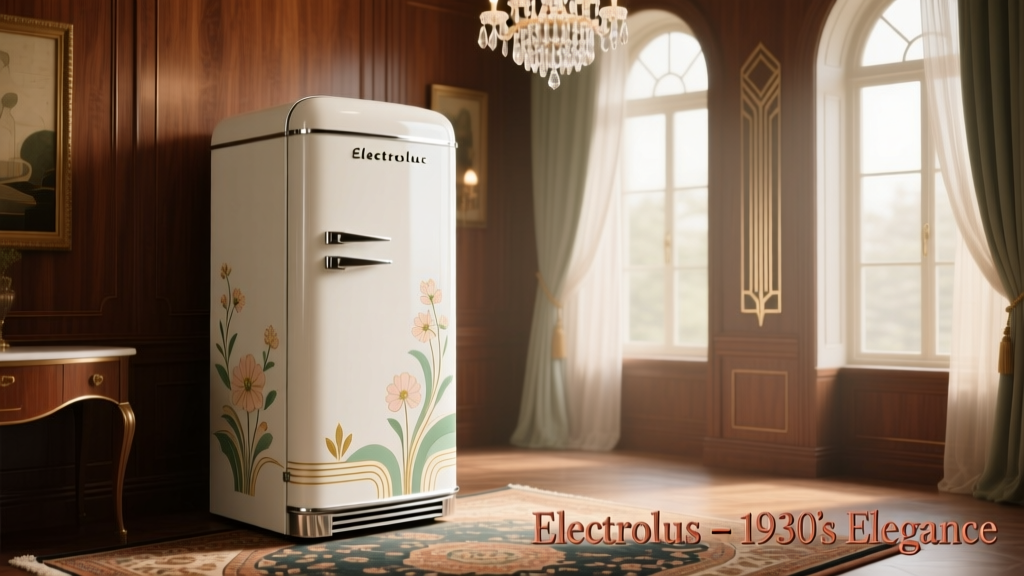
Banks Refrigerator Electrolux White Metal Hand-Painted 1930s Miniature: Authenticity, Provenance, and Restoration Protocol

The Hopalong Cassidy Lunch Box Lithograph: Iconography, Production, and Collectible Significance
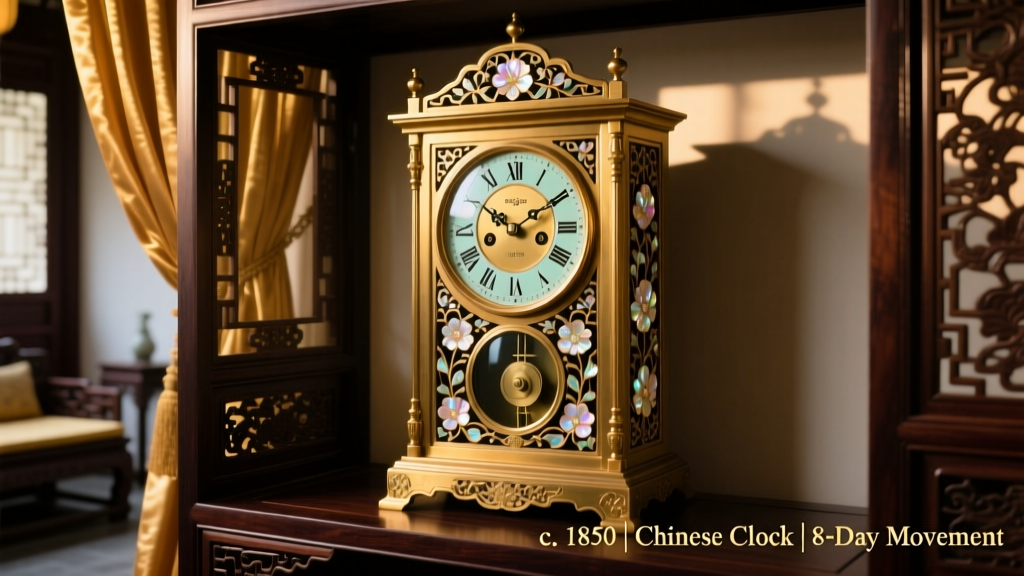
The 18-Inch Chinese Export Clock Shelf: Mother-of-Pearl Inlay, Enamel Dial, and 8-Day Brass Movement, c. 1850

S. H. Abbott: American Cabinetmaking Excellence from Cincinnati, 1870–1925
Akro Agate Pitcher: Decoding the Stippled Band Interior Panel in Topaz Glass

Meissen Figurine: 18th-Century Woman in Plumed Hat with Blue Crossed Swords — A Technical & Historical Analysis of a 6¼-Inch Porcelain Masterpiece
Fenton Cherry Scale Pitcher: Identifying, Valuing, and Preserving the Iconic 9-Inch Water & Custard Glass Set
James Kent Old Foley: A Definitive Appraisal of the Iconic English Pottery Brand and Its Legacy in Antique Furniture & Decor

The John Deere 1960 Toy Tractor: Engineering, Collectibility, and Restoration Insights