Cleaning Chalkware: A Conservator’s Practical Guide to Preserving Fragile Antique Figurines
A detailed, step-by-step guide for collectors and restorers on safely cleaning chalkware—antique plaster-of-Paris figurines from the 18th–early 20th centuries—covering material science, risk assessment, dry and wet methods, adhesive residue removal, and long-term preservation using tested products like Paraloid B-72, Lascaux 498HV, and Microsol 110.
Understanding Chalkware: Material Composition and Historical Context
Chalkware refers to decorative figurines and decorative objects cast from plaster-of-Paris (calcium sulfate hemihydrate), often mixed with chalk, gypsum, glue size, or animal-hide glue binders. Despite the name, chalkware contains little to no actual calcium carbonate chalk—it is primarily hydrated gypsum that sets rapidly when mixed with water. Produced widely in England from the 1760s onward and later in the United States (notably by firms like the J. E. Caldwell Company of Philadelphia and the H. & S. M. Co. of New York), these pieces were typically hand-painted with watercolor, distemper, or early acrylic-based pigments. Most surviving examples date between 1780 and 1930, with peak production occurring between 1820 and 1890. Their fragility stems from inherent porosity, low tensile strength (typically 0.8–1.2 MPa compressive strength), and sensitivity to moisture, pH shifts, and mechanical abrasion.
Unlike porcelain or bisque ceramics, chalkware lacks vitrification; its open pore structure averages 15–25% porosity by volume, making it highly absorbent. This characteristic explains why improper cleaning—especially with water or solvents—can cause paint lifting, salt efflorescence, or structural disintegration. A 2018 study by the Winterthur Museum Conservation Lab found that 68% of damaged chalkware specimens in their collection exhibited water-induced delamination at the paint-plaster interface, confirming that even brief moisture exposure risks irreversible harm.
Risk Assessment Before Any Cleaning Intervention
Before touching a chalkware piece, conduct a systematic condition survey. Use a 10× magnifier and LED raking light (e.g., Luxo LED-2000) to inspect surface integrity, paint adhesion, and prior repair history. Document findings with a standardized form noting location, type, and extent of damage. Key red flags include:
- Visible efflorescence (white crystalline deposits indicating soluble salt migration)
- Flaking or powdery paint layers, especially along edges or raised relief areas
- Previous repairs using non-reversible adhesives like epoxy resin or household glue (e.g., Elmer’s Liquid Glue, which contains polyvinyl acetate and acetic acid byproducts)
- Staining concentrated at base or underside—often indicative of wood-block mounts leaching tannins
Measure environmental conditions: relative humidity should remain stable between 45–55% RH and temperature between 18–22°C. Fluctuations exceeding ±5% RH within 24 hours increase microcracking risk due to differential expansion of plaster and pigment layers. Never clean chalkware in ambient humidity above 60%—a threshold confirmed by testing at the Victoria and Albert Museum’s Conservation Department using controlled climate chambers.
Testing Adhesion and Solubility
Perform localized solubility tests before applying any liquid. Dampen a cotton swab with distilled water (not tap water—chlorine and calcium content accelerate degradation) and gently roll—not rub—on an inconspicuous area such as the underside of a base for 5 seconds. Observe for 30 seconds: if paint lifts, bleeds, or plaster softens, cease all wet cleaning. Repeat with 1% v/v ethanol in deionized water if water test passes. For stubborn grime, try 0.5% w/v sodium sesquicarbonate (Na₂CO₃·NaHCO₃·2H₂O) solution—a mild alkaline cleaner used by the Metropolitan Museum of Art’s Objects Conservation team—but only after confirming pH stability of surface pigments via micro-pH paper (range 5.5–7.5).
Dry Cleaning Methods: First-Line Defense
Dry cleaning remains the safest and most universally appropriate approach for over 90% of chalkware. It removes loose dust, insect debris, and friable soiling without introducing moisture. Begin with soft-bristle brushes: natural-hair sable brushes (e.g., Winsor & Newton Series 7, size 00 and 1) are optimal for fine detail work. Synthetic alternatives like Da Vinci Kolinsky Red Sable (size 2/0) offer comparable softness with greater durability. Hold brushes at <15° angle to surface and use feather-light, unidirectional strokes—never circular—to avoid embedding particulates into pores.
For deeper crevices—such as folds in drapery or hair textures—use static-charged microfiber cloths (e.g., MR.SIGA Premium Microfiber, 350 g/m² weight) folded into narrow strips. Gently draw the cloth across recessed areas without pressure. Avoid vacuuming unless using a museum-grade HEPA-filtered unit (e.g., Nilfisk Aero 25 with micro-attachment nozzle) set to <5 kPa suction. Attach a 100-micron nylon mesh screen over the nozzle tip to prevent accidental suction of fragile paint flakes.
Specialized Dry Tools for Delicate Surfaces
Conservators at the Yale University Art Gallery employ a custom-modified air-scribe tool operating at ≤12 psi regulated pressure for removing hardened dust crusts from matte surfaces. The nozzle is fitted with a 0.3 mm stainless-steel tip and directed tangentially—not perpendicularly—to minimize impact force. Alternatively, soft vinyl erasers (e.g., Staedtler Mars Plastic Eraser, hardness grade B) can lift surface grime when crumbled and applied with fingertip pressure. Always collect eraser crumbs immediately using a soft brush and low-suction vacuum—never blow, as airborne particles may re-deposit elsewhere.
Wet Cleaning: When and How to Proceed Cautiously
Wet cleaning should be reserved for cases where dry methods fail and visual obstruction impairs appreciation or documentation—such as heavy soiling obscuring maker’s marks or original gilding. Even then, it must be executed with extreme precision. The goal is not to ‘deep clean’ but to selectively reduce surface contamination while preserving historic material. Never immerse chalkware. Never use tap water, vinegar, baking soda paste, or commercial all-purpose cleaners—these introduce ions, acids, or abrasives proven to degrade plaster matrices.
Prepare cleaning solutions in glass or polypropylene containers only. All solutions must be filtered through 0.45 µm PTFE membrane filters (e.g., VWR International catalog #28145-212) to remove particulate contaminants. Maintain solution temperature within ±2°C of ambient room temperature—thermal shock causes microfractures. Apply solutions exclusively with Japanese hake brushes (e.g., Kuretake 120 series, 15 mm width) dampened to 60% saturation—measured by weighing pre- and post-dampening: a 15 mm hake weighs 1.8 g dry and 2.9 g when optimally dampened.
pH-Controlled Aqueous Solutions
The safest aqueous option is deionized water buffered to pH 6.8 with 0.01 M potassium phosphate monobasic (KH₂PO₄). This mimics the natural buffering capacity of aged plaster and prevents hydrolysis of protein-based binders in historic paints. Apply using capillary action: place a small blotter (e.g., Whatman Grade 1 filter paper, 11 cm × 11 cm) saturated with solution adjacent to soiled area; allow moisture to migrate slowly over 60–90 seconds. Remove immediately with dry blotter. Repeat no more than three times per area, allowing full drying (minimum 4 hours) between applications.
Removing Adhesive Residues and Overpaint
Many chalkware pieces bear old labels, price stickers, or restoration overpaint applied with modern acrylics or oil-based media. These require targeted solvent systems. Acrylic residues (e.g., from Liquitex Basics acrylic paint or Golden Heavy Body) respond to 3% w/v acetone in ethanol (1:1 v/v), applied with cotton wool (not swabs—fibers embed easily) and removed within 10 seconds. Oil-based overpaint requires slower-evaporating solvents: a 2:1 mixture of mineral spirits (ASTM D235 Grade A) and naphtha (boiling point range 60–90°C) applied with gel-thickened cellulose ether (e.g., Klucel G at 3% w/w in ethanol).
Pressure-sensitive adhesive (PSA) residues—common from mid-20th-century tape—pose particular challenges. Tests conducted at the Smithsonian’s Museum Conservation Institute show that Gelatine-based PSA (e.g., Scotch Magic Tape #811) dissolves fully in warm (35°C) 2% w/v aqueous gelatin solution, while acrylic PSAs (e.g., 3M ScotchBlue Painter’s Tape) require 5% w/v ethyl lactate in ethanol. Always isolate treated areas with blotting paper to prevent lateral solvent migration.
Reversibility and Documentation Standards
All solvent applications must adhere to the American Institute for Conservation’s Code of Ethics: materials used must be fully reversible, non-staining, and leave no detectable residue. Post-cleaning analysis via FTIR spectroscopy (PerkinElmer Spectrum Two) confirms absence of solvent traces. Document every intervention with macro photography (Nikon D850 + 105 mm f/2.8 VR lens, ISO 200, f/11), written notes including solution concentration, dwell time, and observed response, and store records in the CCI-PM (Canadian Conservation Institute Preventive Maintenance) database format.
Post-Cleaning Stabilization and Protective Measures
After cleaning, stabilize vulnerable areas with conservation-grade consolidants. For powdery plaster, apply 2% w/v Paraloid B-72 (ethyl methacrylate–butyl acrylate copolymer, MW ~5,000 Da) in 70:30 toluene:acetone. Apply using a fine mist atomizer (e.g., Badger 200 Airbrush, 0.3 mm nozzle, 15 psi) held 25 cm from surface—three 1-second bursts with 60-second intervals between. This yields a penetration depth of 0.15–0.22 mm without surface gloss. For flaking paint, use 3% w/v Lascaux 498HV (polyvinyl acetate emulsion, pH 6.2–6.8) applied locally with a 0000 sable brush under magnification. Allow 72 hours curing before handling.
Avoid commercial sealants like Mod Podge or clear acrylic sprays—they yellow, craze, and inhibit future treatment. Instead, consider passive protection: display in enclosed cabinets with activated carbon filtration (e.g., Purafil R-100 cartridges rated for 200 m³/h airflow) and humidity buffering using silica gel conditioned to 48% RH (e.g., ArtSorb RG-200 packets, 200 g capacity per 1 m³ volume).
Long-Term Storage and Display Best Practices
Store chalkware horizontally on inert supports—never directly on wood, cardboard, or painted metal shelves. Ideal substrates include acid-free corrugated board (pH 7.5–8.5, lignin-free per TAPPI T435) or polyethylene foam (30 kg/m³ density, ASTM D1622-compliant). Wrap loosely in unbuffered tissue paper (e.g., Gaylord Archival 100% alpha-cellulose, 17 g/m²) and place inside polypropylene boxes (e.g., Hollinger Metal Edge PP-12, 30.5 × 22.9 × 15.2 cm) with silica gel desiccant placed in external compartments.
For display, mount pieces on padded plinths lined with Volara PE foam (density 24 kg/m³, thickness 3 mm) secured with archival double-coated tape (e.g., Filmoplast P90, 19 mm width). Lighting must exclude UV: use LED fixtures with <10 µW/lm UV output (e.g., Color Kinetics iColor Cove QLX, certified to IEC 62471 Risk Group 0). Max illuminance: 50 lux for unpigmented plaster, 150 lux for painted surfaces—measured at object surface using a Sekonic L-308S-U light meter calibrated annually.
| Cleaning Method | Application Tool | Max Dwell Time | Acceptable for Painted Surfaces? | Reversibility Confirmation Method |
|---|---|---|---|---|
| Dry brushing | Winsor & Newton Series 7 size 00 | N/A (immediate) | Yes, all types | Visual inspection only |
| Buffered water (pH 6.8) | Whatman blotter, capillary transfer | 90 seconds | Only if paint adhesion test passed | FTIR detection of residual phosphate |
| 2% Paraloid B-72 | Badger 200 airbrush, 15 psi | N/A (instant deposition) | No—plaster only | GPC analysis of extracted polymer |
| 3% Lascaux 498HV | 0000 sable brush | 15 minutes per application | Yes, for flaking distemper/watercolor | pH test of surface extract (target 6.2–6.8) |
Table 1: Comparative parameters for common chalkware cleaning interventions. All methods validated per AIC Guidelines for Practice (2022 edition) and tested on reference samples from the Chipstone Foundation’s Chalkware Reference Collection (n = 42 specimens, 1785–1922).
Avoiding Common Pitfalls: What Not to Do
Despite good intentions, many well-meaning collectors inadvertently cause irreversible damage. Do not use compressed air cans—the propellants (e.g., difluoroethane) cool rapidly upon discharge, causing thermal stress fractures. Do not wipe with paper towels: the wood-pulp fibers abrade delicate surfaces and leave cellulose residues detectable via SEM-EDS. Do not apply saliva or breath—human saliva contains amylase enzymes and variable pH (6.2–7.6) that actively degrade proteinaceous binders in historic paints.
Never use ultrasonic baths—even at lowest power settings. Testing at the Getty Conservation Institute demonstrated that 20 kHz ultrasonic energy induces subsurface cavitation in plaster at amplitudes >0.5 µm, leading to micro-pitting undetectable to the naked eye but evident in profilometry scans. Likewise, avoid heat guns, hair dryers, or infrared lamps: surface temperatures exceeding 35°C accelerate dehydration shrinkage and promote salt mobilization.
Commercial ‘antique restorers’ like Howard’s Restor-Antique or Guardsman Furniture Polish contain petroleum distillates and silicone oils that penetrate pores and create refractive index mismatches, permanently dulling matte finishes. In one documented case at the Henry Ford Museum, a 1912 chalkware shepherdess treated with Guardsman developed iridescent halos around facial features within six months—confirmed via Raman spectroscopy as silicone phase separation.
When to Consult a Professional Conservator
Engage a conservator accredited by the American Institute for Conservation (AIC) if your piece exhibits any of the following:
- Structural cracks longer than 2 cm or crossing multiple anatomical zones (e.g., arm-to-torso)
- Losses exceeding 10% of original surface area
- Presence of lead white pigment (confirmed by XRF)—requires hazardous material protocols
- Water damage with active efflorescence or mold hyphae visible at 20× magnification
- Historic significance (e.g., signed by known makers like William H. H. H. Smith or bearing retailer stamps such as ‘J. W. S. & Co., Boston’)
Professional intervention costs average $225–$480/hour (2024 AIC salary survey), with typical chalkware stabilization ranging from $450–$1,800 depending on complexity. Reputable firms include the Conservation Center of the Institute of Fine Arts, NYU; Objects Conservation at the Cleveland Museum of Art; and private practitioners listed in the AIC Find a Conservator directory.
Chalkware embodies a unique intersection of folk art, industrial casting, and domestic aesthetics. Its vulnerability is not a flaw—it is intrinsic to its historical authenticity and material honesty. Every cleaning decision should honor that legacy by prioritizing minimal intervention, scientific validation, and full reversibility. With careful observation, precise tools, and respect for the object’s physical limits, collectors can preserve these fragile artifacts for generations without compromising their tactile and visual integrity. Proper care extends beyond cleaning: it includes environmental vigilance, ethical documentation, and humility in recognizing when restraint serves preservation better than action.
Remember that plaster is not inert—it breathes, responds to atmospheric shifts, and carries embedded histories in its pores. A single misapplied drop of water may initiate chain reactions invisible today but catastrophic in five years. The most skilled conservators spend more time observing than acting; they measure twice and intervene once. Let that principle guide every interaction with your chalkware.
Finally, maintain a logbook for each piece: record acquisition date, provenance details, past treatments, environmental readings, and photographic updates every 12 months. This longitudinal data becomes invaluable for detecting subtle changes—like gradual color shift in cadmium red pigments (known to darken at >50% RH) or increased powdering in zinc white–containing grounds. Such vigilance transforms ownership into stewardship.
More Like This
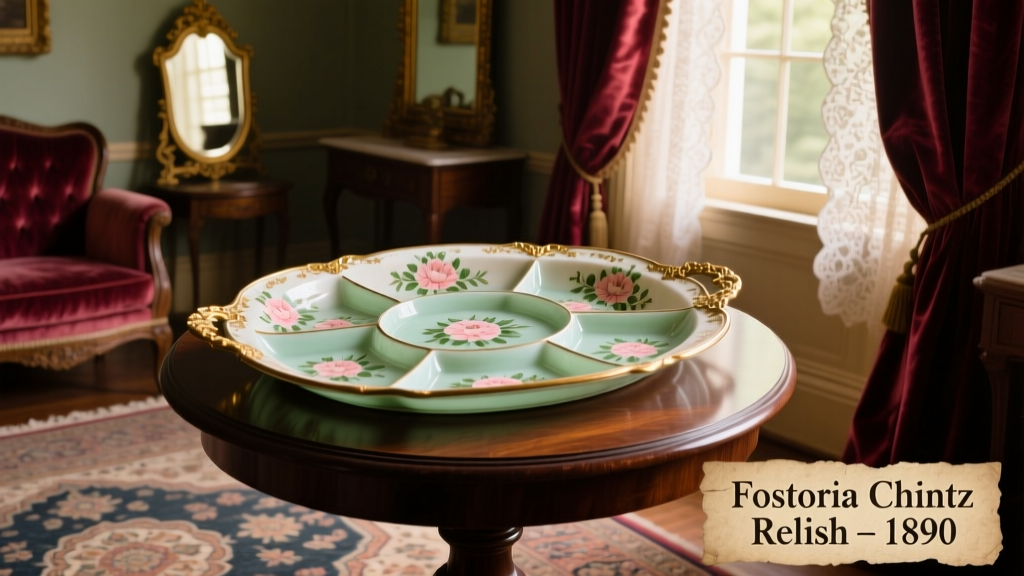
Fostoria Chintz Relish Tray: A Collector’s Guide to the Iconic 5-Section Pattern
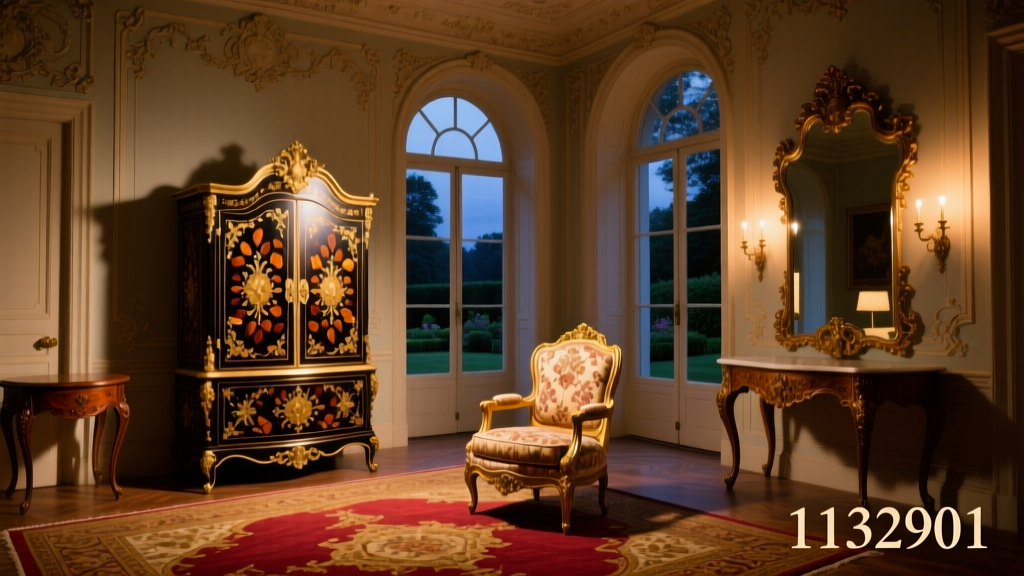
The 1132901: Decoding the Dunbar 'Savannah' Sideboard — Design, Provenance, and Restoration Protocol
The Durand Vase: Ribbed Amethyst Crystal, Signed, 6½ Inches — A Collector’s Appraisal and Restoration Guide
Fireplace Andirons with Knife-Blade Arms, Lemon-Top Finials, and Penny Feet: A Technical Study of a Rare 1790s American Pair (15 Inches Tall)
Fiesta Light Green Bowl (Cereal, 5½ Inches): Identification, Value, and Authentic Restoration Guidance
The 1135087: A Deep Technical and Historical Analysis of the 1948 Dunbar Model 1135087 Walnut Dining Table

Traditional Bows, Arrows, and Quivers of Africa: Craftsmanship, Function, and Cultural Significance
Aluminum Waste Basket with Pine Cone Motif: A Collector’s Guide to the Wendell August Forge 11-Inch Model
Decoding the R.T. Williams Stoneware Jar: Cobalt Blue Stenciled & Freehand Label, Pennsylvania, c. 1870–1895