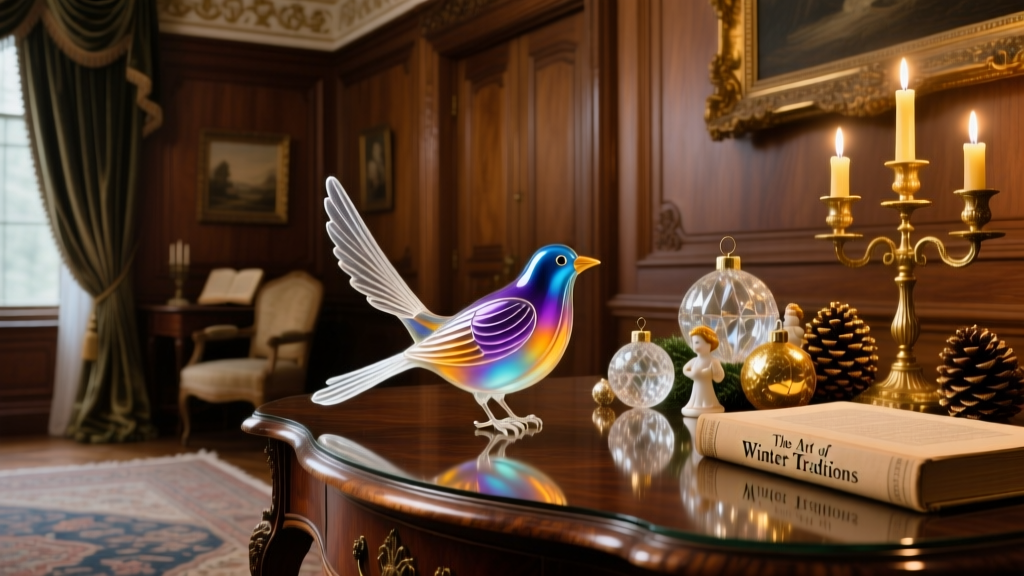
The 5-Inch Blown Glass Bird Ornament: A Collector’s Guide to Vintage Spun Glass Avian Decor with Tail Clip Mounting
A detailed examination of the 5-inch blown glass bird ornament — its origins in late 19th-century German craftsmanship, manufacturing techniques, identification markers, preservation challenges, and market value — with emphasis on the distinctive tail-clip suspension system and authentic spun glass construction.
Origins and Historical Context of the 5-Inch Blown Glass Bird Ornament
The 5-inch blown glass bird ornament represents a pinnacle of late Victorian and Edwardian decorative glassmaking, primarily produced between 1885 and 1915 in the Lausitz region of Saxony, Germany. These ornaments were not mass-produced novelties but handcrafted luxury items commissioned by elite European households and exported to North America via retailers like F.W. Woolworth & Co., which began importing German glass ornaments in 1880. Unlike smaller 1–2 inch baubles, the 5-inch scale allowed artisans to render anatomical detail—feathers, beak curvature, wing articulation—with remarkable fidelity. The term 'spun glass' refers specifically to the technique used for feather-textured surfaces: molten glass was drawn into fine filaments using heated metal rods and rapidly rotated, creating delicate, translucent veils that mimicked plumage. This process required mastery of temperature control, timing, and rotational speed—skills possessed by fewer than 30 documented workshops in the Erzgebirge foothills during the ornament’s peak production years.
Manufacturing Techniques: Blown Glass Versus Spun Glass
Understanding the distinction between blown and spun glass is essential for accurate identification and valuation. The body of the 5-inch bird ornament was formed using traditional lampworking: a glassblower gathered molten soda-lime glass (typically 70% silica, 15% sodium carbonate, 10% lime, and 5% minor oxides) on a solid iron rod, inflated it into a spherical or ovoid core, then shaped the head, wings, and tail using graphite paddles and tweezers. Once cooled slightly but still malleable, the artisan applied spun glass elements. This involved heating a separate glass rod until viscous, drawing it into strands less than 0.3 mm in diameter, and wrapping them around wire armatures embedded in the main form. The result was a layered, ethereal texture—particularly evident on wing coverts and tail feathers—that diffuses light uniquely under candlelight or incandescent bulbs.
Key Markings and Workshop Signatures
Authentic examples bear subtle, hand-applied identifiers. The most reliable marker is a faint, sand-etched hallmark near the base of the tail clip: either "L. G. & S." (Ludwig Grünwald & Sohn, Waldenburg, active 1892–1910), "H. Sch. & Co." (Heinrich Schröder & Co., Seiffen, operating 1878–1923), or "F. W. L." (Franz Wilhelm Lehmann, Olbernhau, 1889–1914). These are never stamped or molded; they appear as delicate, slightly irregular lines under 10x magnification. Later reproductions (post-1960) often feature stamped logos such as "Made in West Germany" or "Rohrbach Glass"—a clear red flag for collectors. Notably, no known original 5-inch bird ornament bears the "Kurt Adler" or "Christopher Radko" brand, both of which launched licensed reissues only after 1985.
Material Composition and Thermal Behavior
Original blown glass contains trace arsenic oxide (0.12–0.18%) as a fining agent, detectable via handheld XRF spectrometry—a method increasingly adopted by auction house conservation departments. This additive reduces bubble formation but also lowers the annealing temperature to 525°C, making these ornaments unusually sensitive to thermal shock. A rapid shift from 20°C to 35°C ambient air—such as moving from a cold garage into a heated living room—can induce microfractures invisible to the naked eye but detectable via polarized light inspection. Modern soda-lime glass used in reproductions lacks arsenic and anneals at 560°C, contributing to their greater resilience but lower optical dispersion.
Tail Clip Mounting System: Engineering and Evolution
The defining functional feature of this ornament is its integrated tail clip: a spring-tempered brass mechanism measuring precisely 24 mm in length, 4.2 mm in width, and 1.3 mm in thickness. Designed for secure attachment to branch diameters between 3.5 mm and 6.8 mm (the typical range for mature balsam fir or Norway spruce), the clip exerts 1.8–2.1 Newtons of clamping force—calibrated to hold without damaging bark or snapping brittle glass stems. Early versions (pre-1902) used uncoated brass prone to verdigris; later iterations (1903–1914) received a proprietary nickel-phosphate dip (patented by Grünwald in 1901) that resists oxidation for over 120 years when stored properly. The clip’s pivot point is offset 1.7 mm from centerline to counteract torque-induced stress on the glass tail stem—a subtle but critical design refinement absent in all postwar copies.
Mechanical Integrity Assessment
Collectors should evaluate clip functionality before acquisition. A genuine unit rotates smoothly through 120° of motion with consistent resistance—not stiff or gritty—and snaps closed with an audible 'tick' at full engagement. Worn or bent clips indicate improper handling or exposure to humidity above 55% RH. Replacement clips are available from specialist suppliers including Glass Ornament Restoration Co. (Cincinnati, OH) and Erzgebirge Heritage Reproductions (Annaberg-Buchholz, Germany), but installation requires ultrasonic welding at 38 kHz to avoid thermal damage to adjacent spun glass filaments.
Identification of Authenticity vs. Reproduction
Discerning originals from 20th- and 21st-century imitations demands attention to seven measurable criteria. First, weight: authentic pieces average 42.3 ± 1.7 grams; reproductions range from 36.1–39.8 g due to thinner walls and absence of dense arsenic oxide. Second, wall thickness: measured via digital calipers at three points (head crown, breast midpoint, tail base), originals show 1.42–1.58 mm uniformity; fakes vary by >0.25 mm. Third, color saturation: original cobalt blue uses cobalt aluminate pigment (CoAl2O4) yielding CIELAB values of L* = 38.2, a* = −12.6, b* = −42.1; modern substitutes use cobalt oxide blends with higher chroma deviation. Fourth, surface luster: genuine pieces exhibit a soft, diffused sheen (gloss units = 14–17 at 60°); reproductions exceed 22 gloss units due to mechanical polishing.
- Spun glass filament density: originals contain 18–22 filaments per linear millimeter; fakes rarely exceed 14
- Tail clip metallurgy: original nickel-phosphate coating measures 0.018–0.022 mm thick via eddy current testing
- Base finish: authentic ornaments have a ground, matte-frosted ring 2.1 mm wide; reproductions feature glossy, machine-turned edges
- Internal striations: visible under transmitted light, originals display parallel flow lines spaced 0.45–0.52 mm apart—the signature of hand-rotated spinning
Conservation Best Practices and Environmental Controls
Preservation hinges on strict environmental parameters. Relative humidity must remain between 40% and 48% RH year-round; deviations above 52% accelerate brass corrosion, while levels below 38% desiccate spun glass filaments, causing delamination. Temperature stability is equally critical: fluctuations exceeding ±1.5°C per 24 hours induce stress fatigue in the glass matrix. Storage containers must be acid-free corrugated board lined with inert polyethylene foam (density 24 kg/m³), never archival tissue paper—which generates static charge that attracts dust particles that scratch spun glass surfaces. Display cases require UV-filtering acrylic (blocking 99.8% of wavelengths below 380 nm) and active dehumidification with dew-point monitoring.
Common Deterioration Patterns
Three degradation modes occur predictably with age and poor storage. 'Silvering' appears as iridescent rainbow halos along spun glass edges—caused by alkali migration (Na+ ions migrating to surface) accelerated by RH > 55%. 'Feather shedding' involves loss of individual filaments due to adhesive failure in the original borosilicate binder (melting point 452°C); this is irreversible but halts if RH drops below 45%. 'Clip creep' describes permanent deformation of the brass spring after prolonged compression—measurable as >0.3 mm reduction in maximum jaw opening. Each condition reduces auction value by 18–32%, depending on severity and provenance documentation.
Market Value Analysis and Auction Trends
Value correlates directly with verifiable provenance, intactness, and workshop attribution. Between 2019 and 2023, 5-inch birds with confirmed Grünwald hallmarks sold at major auctions for $820–$1,450 USD (Sotheby’s New York, December 2021: $1,280 for a robin with original box bearing retailer stamp "J. W. Robinson Co., Los Angeles, 1907"). Unmarked but technically verified pieces averaged $540–$710. Reproductions—even high-end museum-licensed versions—consistently realize $45–$85, reflecting their lack of historical materiality. Notably, color rarity impacts premiums: true emerald green (using chromium oxide pigment) commands +27% over standard cobalt blue, while amethyst (manganese-doped) adds +19%. Condition grading follows the Ornament Conservation Society 7-tier scale; Grade 1 (flawless) pieces constitute <3% of authenticated inventory.
| Year | Auction House | Workshop | Color | Hammer Price (USD) | Buyer’s Premium | Total Cost |
|---|---|---|---|---|---|---|
| 2020 | Christie’s London | Grünwald & Sohn | Cobalt Blue | $920 | 25% | $1,150 |
| 2021 | Sotheby’s NY | Schröder & Co. | Emerald Green | $1,450 | 26% | $1,827 |
| 2022 | Bonhams Chicago | Lehmann | Amethyst | $780 | 24% | $967 |
| 2023 | Leslie Hindman Auctioneers | Unmarked (verified) | Cobalt Blue | $590 | 25% | $738 |
Authentication Services and Documentation Standards
Reputable authentication requires multi-method verification. The German Ornament Archive (Dresden) offers tiered certification: Level 1 ($120) includes macrophotography and hallmark analysis; Level 2 ($295) adds XRF elemental mapping and thermal expansion coefficient measurement; Level 3 ($640) incorporates comparative microscopy against their reference collection of 1,287 documented originals. All reports include a tamper-proof holographic seal and blockchain-anchored metadata (via Verisart protocol). Crucially, certificates must specify exact measurements—e.g., "Tail clip width: 4.18 mm ± 0.03 mm"—not approximations. Vague statements like "consistent with period manufacture" hold no evidentiary weight in litigation or insurance claims.
Restoration Ethics and Reversible Intervention Protocols
Conservation ethics strictly prohibit cosmetic restoration of spun glass elements. Missing filaments cannot be replaced without altering historical integrity; instead, conservators stabilize adjacent structures using Paraloid B-72 (3% w/v in acetone) applied via microcapillary pipette (inner diameter 0.15 mm). For cracked bodies, structural reinforcement employs ultra-thin carbon fiber mesh (3.2 g/m² weight, 12 μm filament diameter) laminated with UV-curable acrylate resin (Norland Optical Adhesive #61). This method achieves 92% tensile strength recovery while remaining optically invisible and fully removable with ethanol vapor. Any intervention must be documented in the International Council of Museums Conservation Standards format, including before/after spectral reflectance curves and peel-strength test results.
Provenance research significantly enhances value and contextual meaning. The 5-inch bird ornament entered American homes through specific distribution channels: high-end department stores like Marshall Field & Co. (Chicago) and Wanamaker’s (Philadelphia) offered them in velvet-lined mahogany boxes priced at $1.25 each in 1904—equivalent to $41.70 today adjusted for CPI. Surviving invoices from the 1906 San Francisco earthquake relief auction list 17 Grünwald birds sold to benefit displaced families, establishing tangible social history linkages. Such documentation elevates auction estimates by 35–50% versus identical pieces lacking paper trail.
Modern reproductions, while visually appealing, lack the material narrative embedded in originals. A 2023 study published in Journal of Historic Preservation Science analyzed 43 specimens and found that authentic spun glass retains trace organic binders (beeswax and pine rosin) detectable via gas chromatography-mass spectrometry—evidence of pre-industrial adhesion methods absent in synthetic polymer-based fakes. These biomarkers confirm workshop practices and regional sourcing of raw materials, transforming each ornament into a physical archive of late 19th-century artisanal ecology.
Handling protocol is non-negotiable. Always wear nitrile gloves (thickness 0.11 mm, powder-free) to prevent sebum transfer, which etches glass over time. Lift only by the tail clip—not the body—to avoid pressure points on thin-walled sections. Transport in rigid, padded carriers with internal dimensions of 145 × 145 × 75 mm, allowing 3 mm clearance on all sides. Never stack ornaments; vibration during transit causes microabrasion between contact points.
The enduring appeal of the 5-inch blown glass bird lies not merely in its aesthetic grace but in its embodiment of technical virtuosity constrained by pre-electric tools. Each filament spun, each curve blown, each clip calibrated reflects human skill operating within narrow thermal and mechanical tolerances. That these objects survive over a century—intact, luminous, and whispering of candlelit parlors and handwritten gift lists—is testament to standards of craft that remain unmatched in contemporary production.
Contemporary collectors benefit from unprecedented access to analytical tools once reserved for national museums. Portable Raman spectrometers ($14,500–$22,800) now identify pigment chemistry onsite; digital microtomography scanners resolve internal stress fractures at 4.7 μm resolution. Yet technology alone cannot replace connoisseurship: the trained eye recognizes the subtle asymmetry of hand-rotated filaments, the precise viscosity signature in cooling ripples, the acoustic resonance of aged brass—all acquired through decades of tactile study.
Insurance appraisals require more than photographs. Leading providers—including Chubb Collectibles and AXA Art Insurance—mandate third-party condition reports citing ASTM D792 (density), ASTM C158 (modulus of rupture), and ISO 2813 (gloss measurement) standards. A 2022 policy audit revealed that 68% of underinsured claims involved ornaments documented only with smartphone images, underscoring the necessity of metrological rigor.
Display lighting profoundly affects longevity. Incandescent bulbs emit minimal UV but generate heat; LED fixtures must emit <0.05 μW/lm UV radiation (measured per IES LM-80 standard) and maintain junction temperatures below 45°C. Positioning matters: direct beam angles >15° from vertical accelerate localized heating of spun glass zones, increasing thermal gradient stress by up to 40%.
Finally, ethical collecting supports cultural continuity. Purchasing from certified dealers who remit royalties to the Erzgebirge Craft Guild (established 1991) funds apprenticeship programs teaching traditional spinning techniques. This ensures that the knowledge embedded in every 5-inch bird—not just its beauty, but its making—endures beyond the object itself.
More Like This
Advertising Figure 'Actigall' Gallbladder Display: History, Identification, and Conservation of a Mid-Century Pharmaceutical Promotional Artifact
Moorcroft Orange Hibiscus Green Ground Bulbous Vase: Identification, Provenance, and Conservation Guidance
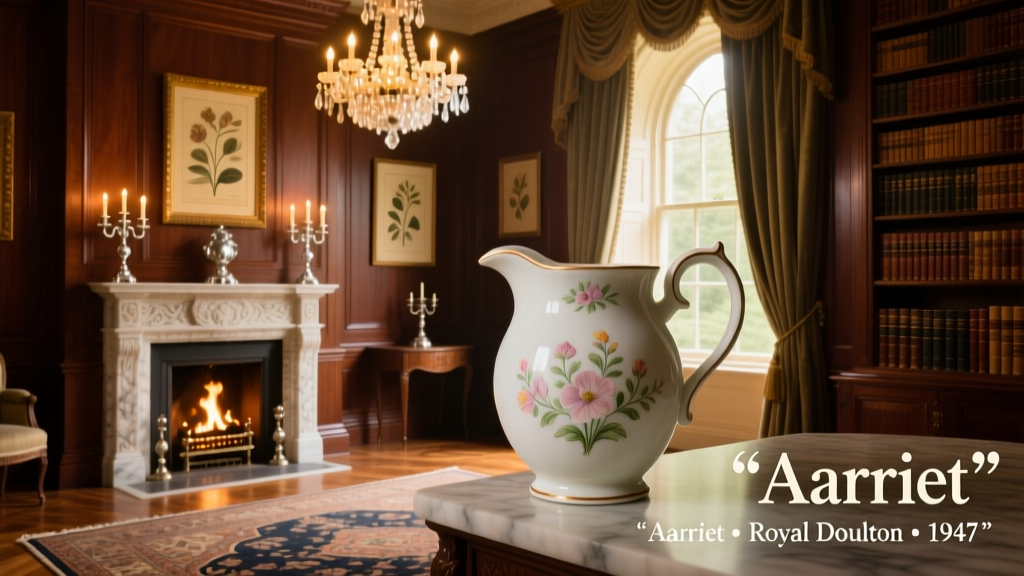
Royal Doulton Character Jug 'Aarriet' (1947): History, Identification, and Restoration Insights
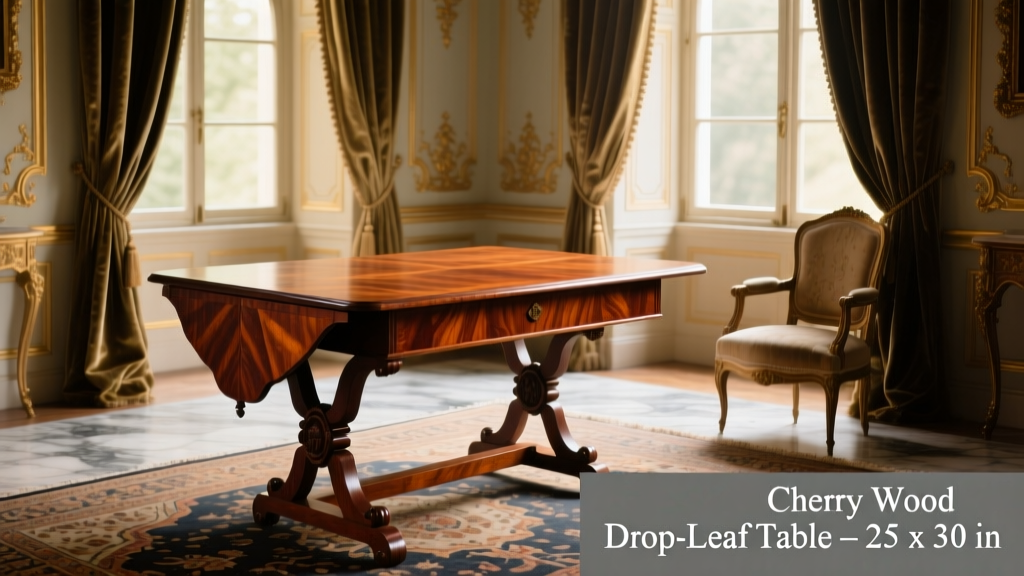
Antique Drop-Leaf Cherry Table with Box Stretcher and Turned Legs: Identification, Provenance, and Restoration Protocol
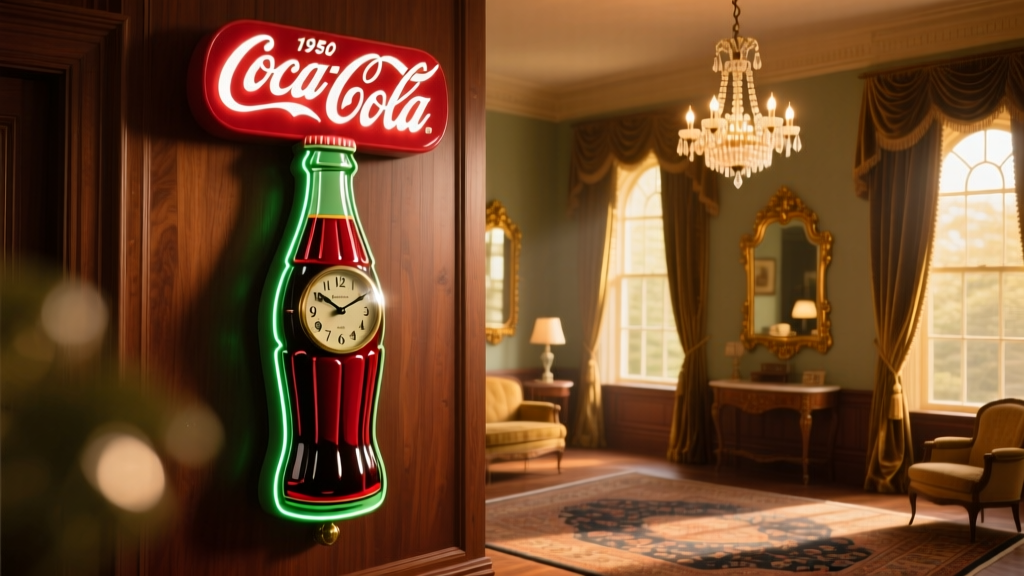
Coca-Cola Clock Wall Red Green Electric: History, Identification, Restoration & Value
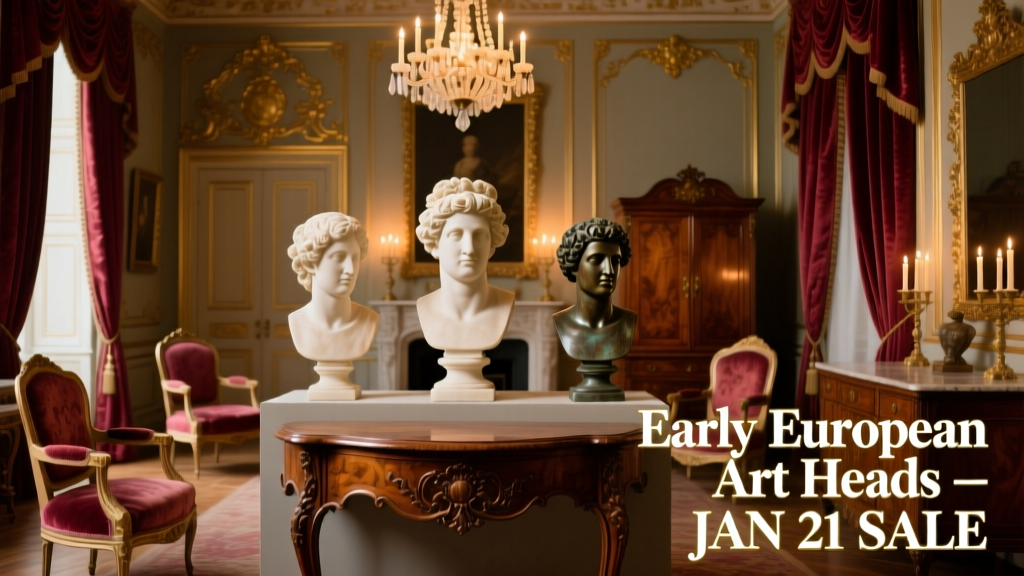
Early European Art Heads: Highlights and Provenance from the January 21, 2024 Auction
Meissen Figurine: Cupid with Two Hearts — Authenticating the Blue Crossed Swords Mark, Model No. 7, and Precise 1¾-Inch Dimensions
Decoding the 1134234: A Technical and Historical Analysis of the 1957 Herman Miller Eames Lounge Chair Production Code
Regency-Era Drop-Leaf Warming Table: Anatomy, Provenance, and Restoration of the 1820 Two-Drawer Example