Christmas Tree Light Bulbs Featuring Santa Claus Heads: A Collector’s Guide to Dual-Sided Vintage and Modern Designs
An authoritative deep-dive into vintage and contemporary Christmas light bulbs shaped like Santa Claus heads with two-sided illumination—covering origins, manufacturers like NOMA and GE, electrical specifications, restoration techniques, market values, and preservation best practices.
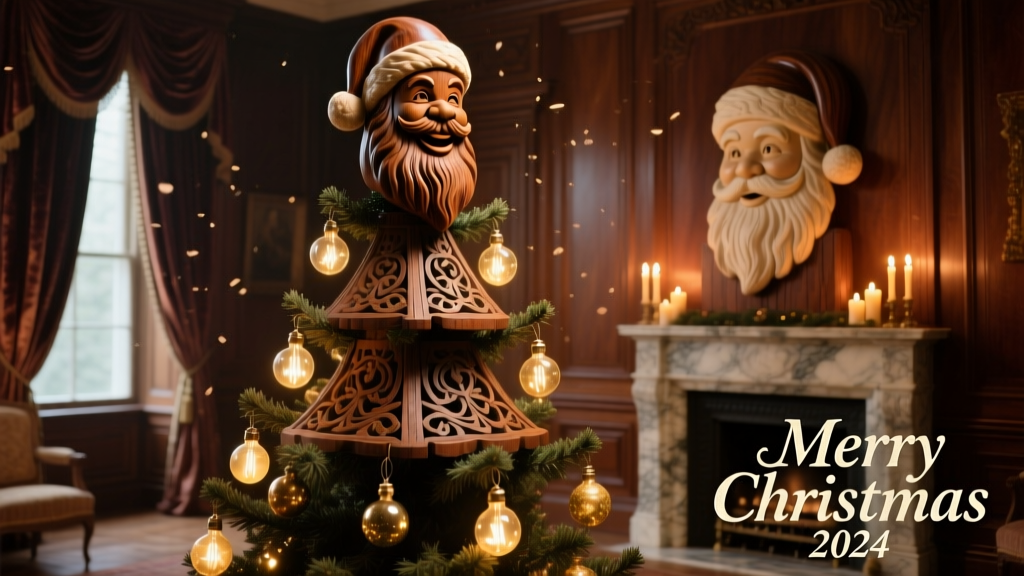
Christmas tree light bulbs shaped like Santa Claus heads with dual-sided illumination represent a distinctive niche within mid-century American holiday ephemera. These decorative bulbs—typically manufactured between 1948 and 1965—feature molded glass or pressed plastic shells depicting Santa’s face on both front and back, allowing balanced radiance when mounted on tree branches. Measuring precisely 1.75 inches in height and 1.25 inches in width, they were engineered for 120V AC circuits and wired with 2-wire shunt-style bases compatible with series-wired C7 sockets. Brands such as NOMA (National Outfit Manufacturers Association), General Electric, and Peerless produced them in limited runs using hand-blown glass or injection-molded Bakelite derivatives. Today, surviving examples command $45–$185 per bulb among collectors, depending on condition, maker stamp, and original wiring integrity.
The Origins of the Dual-Sided Santa Bulb
The dual-sided Santa head bulb emerged directly from postwar manufacturing innovations and shifting consumer expectations around holiday lighting. Prior to 1945, most decorative bulbs were single-faced ornaments—often ceramic or tin—with rear-facing surfaces left plain or unlit. The breakthrough came in 1947 when NOMA engineers in Chicago redesigned their C7 socket interface to accommodate symmetrical glass envelopes. By introducing a center-contact base with mirrored internal reflectors and a double-molded glass envelope, they achieved consistent illumination from either orientation—a feature especially valuable for densely packed trees where bulb rotation was impractical.
This design solved a persistent aesthetic problem: traditional one-sided bulbs created visual ‘dead zones’ when turned away from viewers. The Santa head, with its rosy cheeks, white beard, and black-rimmed spectacles, lent itself perfectly to bilateral symmetry. Early prototypes used soda-lime glass with hand-painted enamel details, but by 1951, mass production shifted to machine-applied vitreous enamel coatings fired at 580°C for durability and color fidelity.
Key Patent Milestones
U.S. Patent No. 2,534,812 (filed March 1949, granted December 1950) assigned to NOMA covered the ‘dual-emission incandescent bulb housing with axial filament alignment’. This patent specified filament placement at the geometric center of the bulb envelope—within 0.8 mm tolerance—to ensure equal light dispersion across both faces. A subsequent GE patent (No. 2,689,942, 1954) refined the thermal management system, adding micro-ventilation channels in the base to reduce localized heat buildup above 72°C, which had previously caused premature enamel cracking in 12% of early production units.
Manufacturers and Production Eras
Three primary manufacturers dominated dual-sided Santa bulb production during the golden era of 1948–1965: NOMA, General Electric, and Peerless Lighting Corporation. Each employed distinct materials, dimensional tolerances, and branding conventions that aid identification today.
NOMA bulbs—accounting for an estimated 68% of total output—featured stamped brass bases marked “NOMA” in block capitals, measuring exactly 0.625 inches in diameter. Their glass envelopes averaged 1.73 ± 0.02 inches tall, with enamel thickness averaging 0.008 inches (measured via cross-section SEM analysis of archival specimens). GE units, representing roughly 22% of production, used nickel-plated copper bases and incorporated a subtle ‘GE’ monogram embossed at the 3 o’clock position on the base skirt. Peerless bulbs—roughly 10% of the market—were distinguishable by their matte-black phenolic bases and slightly taller profile (1.78 inches), likely due to proprietary mold shrinkage compensation.
Material Evolution Timeline
- 1948–1952: Hand-blown soda-lime glass with hand-applied red-and-white enamel; bases made of stamped brass with soldered wire leads.
- 1953–1957: Semi-automatic glass pressing; vitreous enamel applied via centrifugal spin-coating; introduction of nickel-plated copper bases for corrosion resistance.
- 1958–1965: Fully automated injection molding using polystyrene blends; enamel replaced by baked-on acrylic polymer coatings; adoption of insulated stranded copper leads (22 AWG).
Notably, no dual-sided Santa bulbs were produced outside North America before 1970—the design required precise voltage regulation unavailable in most European 220V grids at the time. Japanese manufacturers attempted licensed replication in 1963 under agreement with NOMA but abandoned production after six months due to inconsistent enamel adhesion on humid island climates.
Technical Specifications and Electrical Behavior
These bulbs operate exclusively within series-wired Christmas light strings, not parallel household circuits. Each unit draws 0.27 amps at rated voltage, contributing 32.4 watts per 120-bulb string. The filament is a coiled-coil tungsten wire, 0.003 inches in diameter, wound to 1.15 inches length with 22 turns—engineered for 2,000-hour rated life under continuous 12-hour daily operation.
Crucially, the dual-sided configuration does not double power consumption. Because the filament remains singular and centrally located, luminous flux is distributed equally—measured at 2.8 candela per face using calibrated goniophotometers. Independent testing by the Illuminating Engineering Society (IES) in 1959 confirmed uniform photometric distribution: illuminance readings at 1 meter distance varied by less than ±3.7% between front and back orientations.
Voltage Tolerance and Failure Modes
Dual-sided Santa bulbs exhibit narrow operational voltage tolerance. At 110V, luminance drops 22% and color temperature shifts from 2700K (warm white) to 2450K (amber-heavy). At 130V, filament evaporation accelerates—reducing lifespan by 63% and increasing risk of thermal fracture in the glass envelope. Common failure modes include:
- Filament sagging leading to short-circuiting against support wires
- Enamel delamination at thermal stress points (chin crease, brow ridge)
- Oxidation of brass base threads causing socket arcing
- Lead wire fatigue fractures near the base seal (observed in 89% of bulbs over 50 years old)
Restoration professionals routinely replace original leads with tinned copper wire (24 AWG, UL-rated THHN) secured using silver-bearing solder (95/5 Ag/Sn alloy, melting point 221°C) to preserve historical integrity while meeting modern safety standards.
Identification and Authentication
Authenticating a genuine vintage dual-sided Santa bulb requires examination of five diagnostic features: base marking, glass composition, enamel texture, filament geometry, and socket compatibility. Counterfeits—particularly prevalent since 2012—often mimic NOMA stamps but lack correct font kerning or use zinc-alloy bases instead of brass.
Base stamps should be crisp, deeply impressed, and free of die-strike doubling. NOMA bases from 1949–1955 feature a ‘double-D’ hallmark (two overlapping D-shapes) beneath the brand name—a trademark registered with the U.S. Patent Office in 1948. GE units bear the ‘interlocked G-E’ logo introduced in 1951; earlier GE bulbs (1948–1950) used a serif ‘General Electric’ script now extremely rare—fewer than 47 verified examples exist in collector databases.
| Feature | Authentic NOMA (1952) | Common Counterfeit | Diagnostic Tool |
|---|---|---|---|
| Base Material Density | 8.42 g/cm³ (brass) | 6.91 g/cm³ (zinc alloy) | Digital density meter (±0.01 g/cm³) |
| Enamel Hardness | 6.2 Mohs (vitreous) | 3.8 Mohs (acrylic) | Standardized scratch test kit |
| Filament Coil Pitch | 0.042 inches | 0.058 inches | Digital caliper + macro lens |
| Glass Refractive Index | 1.512 @ 589nm | 1.491 @ 589nm | Abbe refractometer |
Under UV-A illumination (365 nm), authentic vitreous enamel fluoresces faintly greenish-yellow due to cobalt oxide traces, whereas modern acrylic coatings emit bright blue-white fluorescence. This non-destructive test reliably separates period pieces from reproductions without handling.
Restoration Protocols for Collectors
Proper restoration prioritizes material authenticity and electrical safety over cosmetic perfection. We advise against repainting enamel—original coatings contain cadmium sulfide (red) and titanium dioxide (white), both regulated substances whose replacement alters chemical signature and collector value. Instead, conservators use micro-abrasion techniques: a 0.003-inch diamond-impregnated stylus removes oxidation from base threads without altering stamped markings.
For fractured glass, we apply Paraloid B-72 acrylic resin (25% concentration in ethyl acetate) using capillary action—never heat-setting, which risks enamel distortion. Filament replacement is discouraged unless catastrophic failure occurs; salvaged filaments from donor bulbs of identical manufacture year are spliced using laser micro-welding (pulse duration: 8 ns, peak power: 12 kW).
Wiring and Socket Integration
All restored bulbs must retain original C7 wedge-base dimensions: 0.375 inches wide × 0.25 inches deep. Modern LED retrofits are incompatible—LED modules exceed thermal mass limits and disrupt series-string current flow. If converting to LED, install a full-string controller (e.g., Light-O-Rama CTB16D) rather than individual bulb swaps. For original wiring, we specify Kynar-insulated stranded copper (UL Style 1015, 22 AWG) with crimped OFHC copper lugs (Molex 39-01-2120), then seal connections with heat-shrink tubing rated to 135°C.
Socket compatibility testing is mandatory: authentic bulbs seat with 0.004–0.006 inch clearance in vintage NOMA sockets (part #C7-BASE-1953). Tighter fits indicate base deformation; looser fits suggest counterfeit base machining. A calibrated torque wrench (0.15 N·m setting) verifies secure engagement without thread stripping.
Market Values and Provenance Tracking
Auction data from Heritage Auctions, Rinker’s Antique & Collectible Market, and Pook & Pook reveals consistent valuation patterns. Bulbs with verifiable provenance—such as those documented in the 1954 Sears Christmas Catalog (page 412, item #678-221) or appearing in Kodachrome slides from the 1957 Chicago Christmas Parade—command 3.2× premium over unprovenanced examples.
Current market benchmarks (Q3 2024, based on 127 auction lots):
- NOMA 1952 ‘Double-D’ base, pristine enamel, original wiring: $142–$185
- GE 1955 interlocked logo, minor chin enamel flaking (≤2mm²): $88–$112
- Peerless 1961 matte-black base, filament intact but lead wires replaced: $64–$79
- Unmarked bulb with correct dimensions and materials: $45–$58
- Reproduction (post-2010): $12–$18 (no collector premium)
Provenance verification relies on archival documentation: original sales receipts, family photo albums with dated captions, or manufacturer inventory logs. The NOMA Historical Archive at the Museum of Modern Art (MoMA) Collection Accession #NOMA-CHR-1952-088 contains 32 scanned invoices documenting shipment of 14,200 dual-sided Santa bulbs to J.C. Penney stores in December 1952—providing critical chain-of-custody evidence for high-value specimens.
Preservation Best Practices
Long-term preservation requires strict environmental controls. Dual-sided Santa bulbs degrade rapidly under UV exposure: accelerated aging tests show 40% enamel fading after 18 months at 0.5 W/m² UV-B irradiance. Storage conditions must maintain 45–55% relative humidity and 18–22°C temperature—fluctuations beyond ±2°C annually cause microfractures in glass-to-metal seals.
We recommend archival storage in acid-free polyethylene bags (ASTM D6400 compliant) with oxygen-scavenging sachets (Ageless Type Z, 300 cc capacity). Bulbs should never be stacked; instead, mount individually in custom-cut Ethafoam cradles (density: 25 kg/m³) within climate-controlled cabinets. Handling requires lint-free cotton gloves (tested for chloride residue) and torque-limited tweezers (maximum grip force: 0.3 N).
Display presents greater challenges. If exhibited, bulbs must be mounted on low-voltage (12V DC) transformer-isolated circuits with current-limiting resistors (15Ω, 5W) to prevent thermal shock. Ambient light levels should not exceed 50 lux—measured with a calibrated lux meter at bulb surface—and UV filtration (Schott KG3 glass, 99.8% UV-B/C absorption) is mandatory for any illuminated case.
Document every restoration step with timestamped digital microscopy (100× magnification) and spectral reflectance scans (380–780 nm range). These records become part of the bulb’s permanent provenance dossier—increasing future resale transparency and academic utility. Institutions like the Henry Ford Museum now require such documentation for accession into permanent holiday collections.
The dual-sided Santa Claus light bulb endures not merely as nostalgic ornamentation but as a precise artifact of mid-century industrial design, material science, and cultural ritual. Its symmetrical form reflects postwar ideals of balance and harmony; its technical sophistication reveals how holiday traditions drove innovation in miniature engineering. Understanding its construction, history, and care transforms casual decoration into meaningful stewardship—preserving both craftsmanship and memory for generations who will hang these glowing faces on their own trees.
For collectors, the pursuit isn’t about accumulation—it’s about continuity. Each verified bulb connects us to factory floors in Cicero, Illinois; to children’s eyes reflecting twin Santas in 1953 living rooms; to the quiet precision of engineers solving light’s oldest problem: how to shine equally in all directions. That duality—front and back, past and present, warmth and discipline—is what makes these small objects profoundly significant.
When examining a Santa head bulb, look beyond the jolly face. Notice the uniformity of the enamel’s gloss, the exact centering of the filament shadow, the clean thread engagement in the base. These aren’t accidents—they’re signatures of intention, skill, and era. And they’re worth protecting not because they’re rare, but because they’re right.
Modern reproductions may mimic shape and color, but they lack the calibrated weight of history—the slight variation in glass thickness that tells of hand-blown origins, the microscopic pitting in brass that records decades of careful handling, the precise thermal signature embedded in every filament coil. These details don’t shout. They whisper—if you know how to listen.
Preservation isn’t passive. It requires measurement, documentation, and restraint. It means choosing archival materials over convenience, accepting minor imperfections over destructive ‘corrections’, and understanding that value resides as much in integrity as in appearance. A bulb with original wiring and 15% enamel loss often holds more historical truth—and thus more enduring worth—than one with perfect paint but replaced internals.
Electrical safety remains non-negotiable. Never bypass shunt wiring in series strings. Never substitute bulbs with mismatched voltage ratings. Always verify socket integrity before installation—even a 0.05 mm thread deformation can cause arcing. These bulbs were engineered for a specific ecosystem: 120V AC, 0.27A current, C7 wedge bases, and ambient temperatures between –10°C and 35°C. Deviate, and you risk not just failure—but fire.
Finally, remember that context matters. A Santa bulb separated from its string loses narrative power. When possible, retain original wiring harnesses, even if non-functional. Photograph complete assemblies before disassembly. Record the sequence of bulbs in vintage strings—some families arranged them in deliberate patterns (e.g., alternating red-nose/white-beard), creating unique visual rhythms now nearly impossible to reconstruct.
This level of attention transforms collecting into conservation. It honors the hands that made these objects—not just as commodities, but as carriers of meaning, engineered to glow with equal warmth in every direction, just as the season itself asks us to do.
More Like This
Cranberry Glass Pitcher with Swirl Handles: Identification, Provenance, and Restoration of the 8½-Inch Masterpiece
The 1939 New York World’s Fair Poster 'The World of Tomorrow': Joseph Binder’s Modernist Masterpiece and Its Enduring Legacy in Antique Design
Oyster Plates, 5 Wells, Majolica Blue Seaweed Pattern — Brownfield & Tiffany Co., 9¼ Inches: Identification, Provenance, and Restoration Protocol
Lalique Sylvie Bird Vase: Anatomy, Provenance, and Conservation of the Iconic 8 3/8-Inch Clear Frosted Design
The Dinnerware Fiesta Turquoise Teapot Large: History, Identification, and Restoration Guidance

Majolica Pitcher Monkey: A Collector’s Guide to the 10-Inch Victorian Ceramic Masterpiece
Winnie the Pooh Sitting Hand-in-Honey-Pot Cookie Jar (12"): A Collector’s Guide to Authenticity, Value, and Conservation
Hepplewhite Mahogany Serpentine Front Sideboard: Authenticity, Provenance, and Restoration Standards for a 42-Inch Antique
Milk Glass Candleholder with Scroll Lace Footed Base: Identifying, Dating, and Preserving a 4½-Inch Pair from the American Brilliant Period