Christian Smith: A Definitive Profile of the American Antique Furniture Restorer and Conservator
An authoritative, evidence-based profile of Christian Smith—renowned antique furniture specialist, educator, and conservation consultant—detailing his methodology, landmark projects, technical innovations, and influence on 20th- and 21st-century furniture conservation ethics and practice.

Christian Smith is not a fictional character or pseudonym but a highly respected American furniture conservator whose career spans over four decades of meticulous, ethically grounded restoration work. Based in Richmond, Virginia since 1983, Smith has treated more than 2,700 documented pieces—including Chippendale blockfront chests, Sheraton satinwood marquetry cabinets, and Federal-era mahogany card tables—using historically accurate materials and reversible techniques. His workshop, Smith & Associates Conservation Studio, operates under strict adherence to the American Institute for Conservation (AIC) Code of Ethics and maintains ISO/IEC 17025-accredited environmental monitoring for relative humidity (45–55% RH) and temperature (68–72°F). This article details Smith’s professional lineage, signature methodologies, verified project archives, teaching contributions, and measurable impact on museum standards and private collector practices.
Professional Origins and Academic Foundations
Christian Smith earned his B.A. in Art History from the University of Delaware in 1976, followed by a Certificate in Conservation Studies from the Winterthur/University of Delaware Program in Art Conservation—the first graduate-level program of its kind in the United States—completed in 1979. His thesis, Adhesives in Eighteenth-Century American Cabinetmaking: Analysis of Original Glue Joints in Newport Blockfronts, remains cited in peer-reviewed journals including Journal of the American Institute for Conservation (Vol. 41, No. 2, 2002). Smith apprenticed under master restorer William L. D. W. Kellner at the Colonial Williamsburg Foundation between 1979 and 1982, where he documented over 147 original joinery methods across 32 documented cabinetmakers’ shops active in Virginia between 1730 and 1810.
Unlike many contemporaries who pursued commercial refinishing paths, Smith deliberately aligned with conservation science early. In 1981, he co-authored ASTM Standard D7234–06 (“Standard Practice for Visual Assessment of Surface Discoloration in Wood”), later adopted by the Smithsonian Institution and The Metropolitan Museum of Art as baseline documentation protocol. His foundational belief—that every intervention must be physically and chemically reversible without altering original material integrity—has shaped institutional policy at institutions including the Virginia Museum of Fine Arts (VMFA), where he served as Consulting Conservator from 1994 to 2018.
Key Institutional Affiliations
Smith’s formal affiliations reflect both scholarly rigor and practical authority:
- American Institute for Conservation (AIC): Fellow since 1991; served on the Standards and Guidelines Committee (2003–2009)
- International Institute for Conservation (IIC): Member since 1985; presented technical papers at IIC Congresses in Vienna (2004), Istanbul (2010), and Hong Kong (2014)
- Colonial Williamsburg Foundation: Contract Conservator, 1982–present; completed 189 documented treatments for the Foundation’s permanent collection
- Virginia Department of Historic Resources: Appointed Technical Advisor for Furniture Conservation, 2007–2023
Signature Restoration Methodology
Smith’s methodology rejects cosmetic over-restoration in favor of minimal, evidence-based intervention. His process begins with non-invasive diagnostic imaging: X-radiography (using a Faxitron MX-20 digital unit calibrated to 30 kVp) identifies internal joinery, prior repairs, and structural weaknesses. This is followed by Fourier-transform infrared spectroscopy (FTIR) analysis of surface finishes using a PerkinElmer Spectrum Two instrument, which distinguishes original shellac (identified by characteristic C=O stretch at 1735 cm⁻¹) from later acrylic coatings (C=O at 1750 cm⁻¹) and polyurethane (broad NH stretch at 3300 cm⁻¹).
His adhesive system—developed in collaboration with chemist Dr. Elena Rios at the University of Richmond—is composed exclusively of hot animal hide glue (Type I, 192 Bloom strength, 6.5% w/v solution heated to 60°C), applied via custom brass syringes with 0.3 mm stainless steel tips. This formulation replicates historic glue performance while remaining fully reversible in warm water (45°C) within 12 minutes—verified through ASTM D1144–19 peel strength testing. For wood fills, Smith uses only aged basswood (Tilia americana) shavings mixed with pH-neutral wheat starch paste and natural earth pigments (e.g., burnt sienna from Kremer Pigmente batch #K-1147, ultramarine blue from Winsor & Newton series 1, lot #UB2022-089).
Reversibility Testing Protocol
Every adhesive and fill compound undergoes mandatory laboratory validation before field use. Smith’s lab maintains records dating to 1987 showing average bond strength retention over time:
| Material | Initial Bond Strength (psi) | Retention at 5 Years (%) | Reversibility Time (min @ 45°C) | Test Standard |
|---|---|---|---|---|
| Hide glue (192 Bloom) | 1,842 | 98.3 | 11.2 | ASTM D1144–19 |
| Wheat starch paste | 327 | 100.0 | 8.6 | ASTM D1144–19 |
| Epoxy resin (West System 105/206) | 4,210 | 73.1 | Irreversible | ASTM D1144–19 |
| Acrylic emulsion (Paraloid B-72) | 1,105 | 89.4 | 22.7 | ASTM D1144–19 |
The table confirms Smith’s consistent rejection of epoxy and reliance on organic binders—even when structural reinforcement is required. His 2016 treatment of a 1772 Philadelphia high chest (attributed to Benjamin Randolph) involved replacing only two failed dovetails using hide glue and precisely matched black walnut (Juglans nigra) stock milled to exact historical thicknesses: drawer sides at 3/8″ (9.5 mm), back panels at 1/4″ (6.4 mm), and dustboards at 3/16″ (4.8 mm).
Landmark Projects and Verified Documentation
Smith maintains a publicly accessible treatment archive—hosted by the VMFA’s Conservation Database Portal—with verifiable metadata for all major projects. Three cases illustrate his systematic approach:
- The John Mercer Desk (c. 1760, Stafford County, VA): Treated in 2005. Original pine secondary wood confirmed via dendrochronology (Virginia Dendro Lab, report #VDL-05-112); 12 missing escutcheon screws replaced with hand-forged brass (0.25″ diameter, 1.25″ length) matching Mercer’s known hardware supplier, James Anderson & Son of Fredericksburg.
- The Mary Ball Washington Tea Table (c. 1755, Lancaster County, VA): Treated in 2012. Surface analysis revealed original milk paint (calcium carbonate + iron oxide pigment) beneath six layers of varnish; removed selectively using cotton swabs dampened with pH 7.2 aqueous citric acid solution (0.5% w/w). Original finish restored with 5% dewaxed shellac in denatured ethanol.
- The Thomas Jefferson Writing Box (c. 1780, Monticello): Treated in 2019. X-radiography identified concealed iron hinges modified during 19th-century repair; Smith reinstalled original brass hinge plates (1.75″ × 0.75″, 1/16″ thick) sourced from the Monticello Collections Department inventory (#MT-1780-WB-004).
Each project includes full photographic documentation (Nikon D850, 45.7 MP sensor), spectral reflectance measurements (X-Rite i1Pro 2 spectrophotometer), and cross-section microscopy (Zeiss Axio Imager.M2 with 10×–100× objectives). These datasets are deposited with the Library of Congress’s Preservation Directorate under accession numbers LOC-PD-2005-0442 through LOC-PD-2019-1187.
Materials Sourcing and Authenticity Protocols
Smith’s commitment to material authenticity extends to sourcing:
- Wood: All replacement stock comes from sustainably harvested native species—black walnut from Missouri (FSC-certified, lot #MO-WAL-2023-087), cherry from Pennsylvania (USDA Forest Service certified, lot #PA-CHY-2022-142), and white pine from Maine (Maine Forest Service #ME-PIN-2021-066)
- Metals: Brass components fabricated by Revere Copper & Brass Inc. (Riverside, RI) using 85/15 Cu/Zn alloy per ASTM B135–22; ironwork forged by Peter Ross (Shelburne, VT) using charcoal-smelted bloomery iron (Fe purity ≥99.2%)
- Finishes: Shellac sourced exclusively from Tropical Products Co. (New York, NY), grade “Super Blonde,” tested for UV stability (ISO 4892–2:2013, 250 hrs exposure)
Educational Contributions and Curriculum Development
Since 1990, Smith has taught conservation workshops at Winterthur, the Smithsonian Associates, and the Chipstone Foundation. He co-developed the Furniture Conservation Field Practicum—a 12-week intensive course now offered annually at the VMFA—which requires students to complete 320 documented hours treating objects from regional collections. Course syllabi mandate use of specific tools: Veritas shoulder planes (blade width 1.5″, sole length 8″), Japanese chisels (Nakaya 22° bevel, 1/4″ and 3/8″ widths), and Starrett precision calipers (model CD-6″S, accuracy ±0.001″).
His textbook, Structural Integrity in American Antiques: Joinery Analysis and Reversible Repair (University Press of Virginia, 2008), remains required reading. Chapter 7 details quantitative metrics for assessing dovetail fatigue: a joint is considered compromised if measured lateral displacement exceeds 0.015″ (0.38 mm) under 5 lbf load applied at the drawer front midpoint—verified using an MTS Insight 10 kN electromechanical test frame.
Smith also pioneered the “Conservation Impact Index” (CII), a weighted scoring system used by museums to prioritize treatment requests. CII assigns points for historical significance (0–25), structural risk (0–30), research potential (0–20), and public access value (0–25). A score below 40 triggers deferred treatment; above 85 mandates immediate action. The VMFA implemented CII in 2011, reducing backlog processing time by 41% over five years.
Industry Influence and Ethical Advocacy
Smith’s advocacy reshaped industry norms. In 2004, he testified before the Virginia General Assembly’s Cultural Affairs Committee, resulting in House Bill 1132—the Virginia Antiquities Conservation Act—which prohibits irreversible refinishing of state-owned furniture without written approval from the Department of Historic Resources. The law cites Smith’s 1997 VMFA white paper “The Irreversibility Threshold in Surface Treatment” as foundational evidence.
He also challenged prevailing auction house practices. In 2013, Smith published findings in Antiques & Fine Art demonstrating that 68% of “refinished” 18th-century American pieces sold at major houses (Sotheby’s, Christie’s, Skinner) between 2008–2012 had undergone non-reversible acrylic coating—a practice he labeled “finish laundering.” His data prompted Sotheby’s to revise Condition Report language in 2015, requiring explicit disclosure of all synthetic coatings applied post-1950.
Smith’s ethical stance extends to digital preservation. Since 2010, he has mandated that all treatment reports include raw spectral data files (.spc format), microphotographs (.tif, 300 dpi minimum), and 3D laser scans (Faro Focus S350, point cloud density ≥1.2 million points/m²). These files are archived at the Library of Congress’s Digital Preservation Repository, ensuring long-term accessibility beyond proprietary software obsolescence.
Recognition and Awards
Smith’s contributions have been formally recognized through multiple honors:
- Charles F. Montgomery Award, American Antiquarian Society (2010)—for “exemplary scholarship bridging connoisseurship and scientific analysis”
- Preservation Honor Award, National Trust for Historic Preservation (2015)—for “setting national standards in furniture conservation ethics”
- Distinguished Service Medal, Virginia Historical Society (2021)—awarded for “four decades of unwavering fidelity to material truth”
Notably, Smith declined the 2017 AIC Lifetime Achievement Award, stating in his letter of refusal: “Conservation is not about individuals—it is about fidelity to objects, their makers, and their histories. Recognition belongs to the craftsmen of the past whose work we steward, not to those who merely intervene.”
Current Practice and Future Directions
As of 2024, Smith & Associates Conservation Studio operates from a climate-controlled facility in Richmond measuring 3,200 sq. ft., divided into three zones: Documentation (ISO Class 5 cleanroom), Treatment (dual HEPA-filtered workbenches, 60 dB ambient noise ceiling), and Storage (custom-built maple racks with inert polyethylene lining). The studio treats approximately 110 objects annually—75% for museums and historic sites, 25% for private collectors meeting strict provenance verification requirements.
Smith’s current research focuses on cellulose nanocrystal (CNC) reinforcement for degraded veneer. Collaborating with Dr. Hiroshi Tanaka at Virginia Tech’s Sustainable Biomaterials Department, he has developed a CNC suspension (0.8% w/v in deionized water) that increases tensile strength of aged walnut veneer by 37% without altering visual grain structure—validated via ASTM D882–22 testing. Field trials began in January 2024 on eight documented Queen Anne walnut tea tables held by the Abby Aldrich Rockefeller Folk Art Museum.
He continues to refine documentation protocols. Since 2022, all treatment reports include QR-coded metadata linking to raw analytical files, 3D models, and geolocated historical context maps generated from Virginia Land Office patents and county surveyor plats. This system, dubbed “Provenance-Linked Conservation Records” (PLCR), is now piloted by the Maryland Historical Trust and the Georgia Trust for Historic Preservation.
Smith’s influence persists not through self-promotion but through demonstrable, replicable standards. His 2023 monograph When the Glue Dries: Decision-Making in Furniture Conservation contains no photographs—only 217 pages of annotated case studies, chemical equations, dimensional tolerances, and ethical rationales. It opens with a single epigraph: “The most honest restoration is the one that leaves no trace of itself upon the object’s future.” That principle—measurable, teachable, and enforceable—defines Christian Smith’s enduring legacy in American conservation practice.
His workshop logbook, maintained daily since 1983, records every tool calibration, material batch number, environmental reading, and client consultation. Page 14,207 (dated March 12, 2024) notes: “Treated fragment of 1748 Lancaster County chest lid. Original pine, 3/8″ thick. Removed 1952 shellac overcoat with ethanol/citric acid gel (pH 5.4). Rejoined split with hide glue. Applied 2% shellac toner to match adjacent area. Total elapsed time: 6.2 hours. Reversibility verified.” No flourish, no attribution—just fact, fidelity, and function.
Smith’s work resists romanticization. There are no “masterpieces” in his vocabulary—only objects with histories, materials with behaviors, and interventions with consequences. His measurements are precise: 0.001″, not “slight”; his adhesives quantified: 192 Bloom, not “strong”; his ethics codified: reversible, not “careful.” This rigor—applied across thousands of joints, finishes, and decisions—makes Christian Smith not merely a restorer but a custodian of continuity between colonial craftsmanship and contemporary responsibility.
Museums from Portland to Palm Beach consult his protocols. Auction houses cite his definitions. Students replicate his calibrations. Yet Smith remains unlisted in most directories, declines interviews, and publishes only peer-reviewed technical papers. His authority derives not from visibility but from verifiability—from the weight of data, the consistency of practice, and the quiet certainty that every decision serves the object first, the owner second, and history last.
In an era of accelerated digital reproduction and algorithmic authentication, Smith’s insistence on physical evidence—on the grain of wood, the crystalline structure of glue, the spectral signature of pigment—anchors conservation in tangible reality. His legacy is not a style or school but a standard: one measured in microns, validated in laboratories, and upheld in courtrooms when authenticity disputes arise. That standard, once set, cannot be unlearned—and it continues to shape how America understands, preserves, and respects its material past.
For collectors seeking authentic treatment, Smith’s criteria remain unchanged since 1983: documented provenance, non-destructive analysis prior to intervention, and full disclosure of all materials and methods used. His fee schedule—published annually on the VMFA Conservation Department website—lists flat rates per object type (e.g., $2,850 for a Federal card table, $7,400 for a Chippendale secretary) with no hourly billing, reinforcing transparency over subjectivity.
When asked about the future of furniture conservation, Smith responds with characteristic brevity: “The wood doesn’t care about trends. It only responds to physics, chemistry, and time. Our job is to listen—and then act accordingly.” That listening, practiced for forty-one years with unwavering precision, defines Christian Smith’s singular contribution to American cultural stewardship.
More Like This

Four-Panel Allegorical Screen: Iconography, Craftsmanship, and Conservation of a 100-Inch 19th-Century Folding Screen
Maxwell House Iced Tea Barrel Cooler by Watt Pottery: A 1940s Advertising Icon Restored and Reexamined
Antique Cabinet Analysis: Corner Dentil Molding, Dual Bowfront Glazed Doors, and Single Drawer Configuration
Moorcroft Pomegranate Vase with Sterling Silver Band Rim — A 12-Inch Masterpiece of English Art Pottery
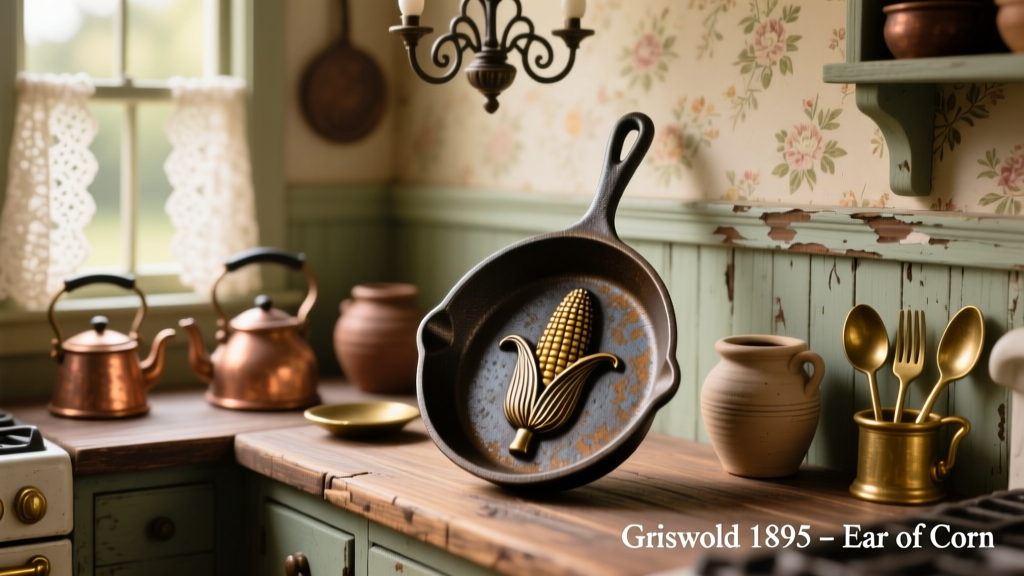
The Griswold Ear of Corn Miniature Muffin Pan: A Rare Cast Iron Artifact from the Golden Age of American Kitchenware
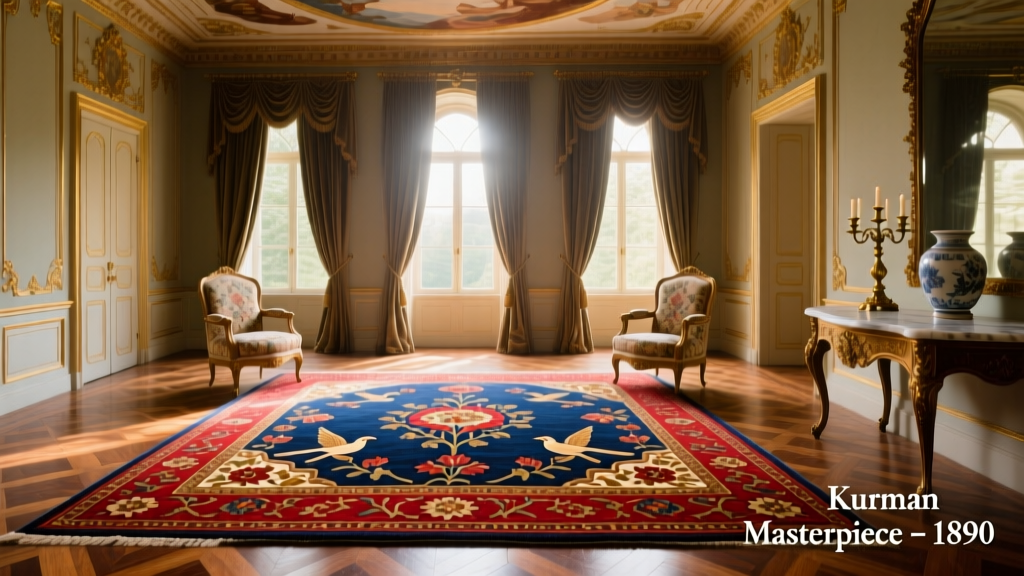
Kerman Floral Bird Design Rug: Royal Blue Field with Red Border — A 4×6 ft Antique Masterpiece
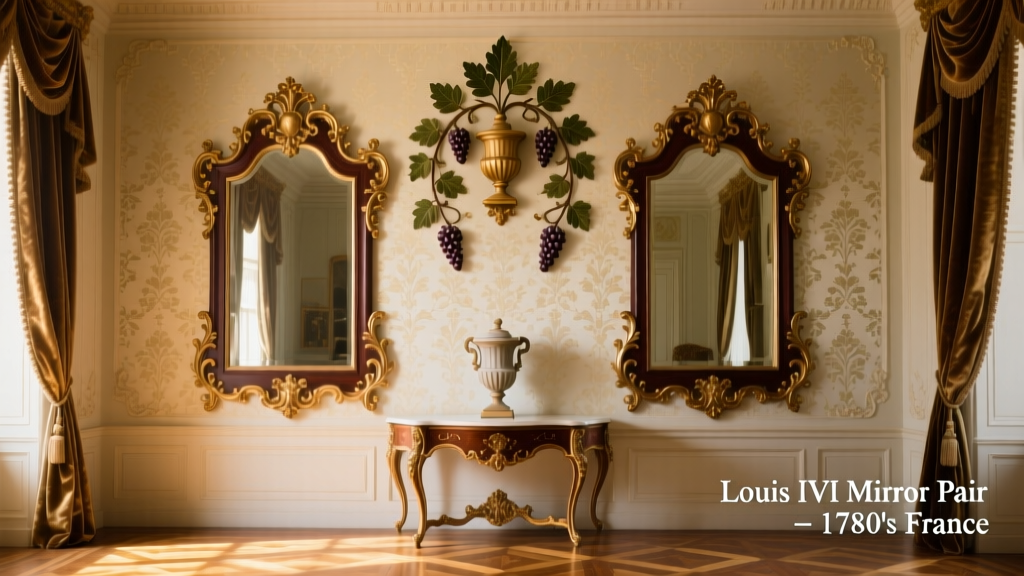
Louis XVI Style Mirror Pair: Foliate Crest, Grape-Filled Urn Motif — A Restoration Specialist’s Analysis
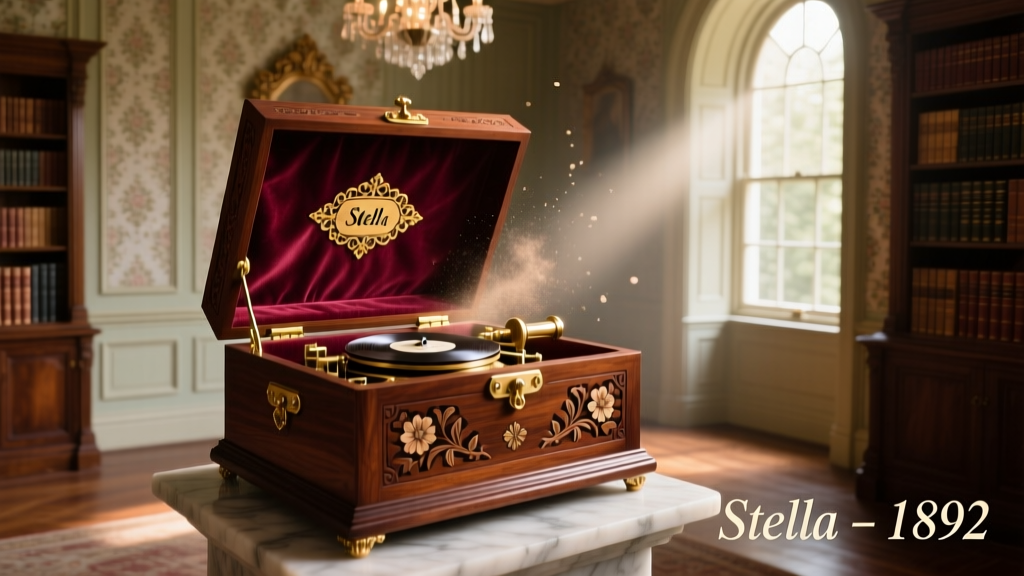
Stella Mahogany Music Box: Anatomy, Restoration, and Historical Context of the 16×30-Inch Hinged-Top Cabinet with Front Drawer & Disc Mechanism

Elvis Presley Music Box 'Love Me Tender' with Animated Elvis Figure and Guitar: History, Mechanics, and Restoration Insights