Chr. Carstens: German Craftsmanship, Mid-Century Modern Innovation, and the Enduring Legacy of a Furniture Pioneer
An in-depth examination of Chr. Carstens — the Hamburg-based furniture manufacturer active from 1926 to 1987 — covering its Bauhaus-influenced design philosophy, signature materials (including laminated beech, solid oak, and custom-formula phenolic resins), iconic product lines like the 'C-40' dining system and 'K-22' lounge chair, production innovations, market positioning against peers such as Thonet and Wilkhahn, and practical guidance for authenticating, conserving, and valuing surviving pieces.
Introduction: A Distinctive Voice in German Mid-Century Design
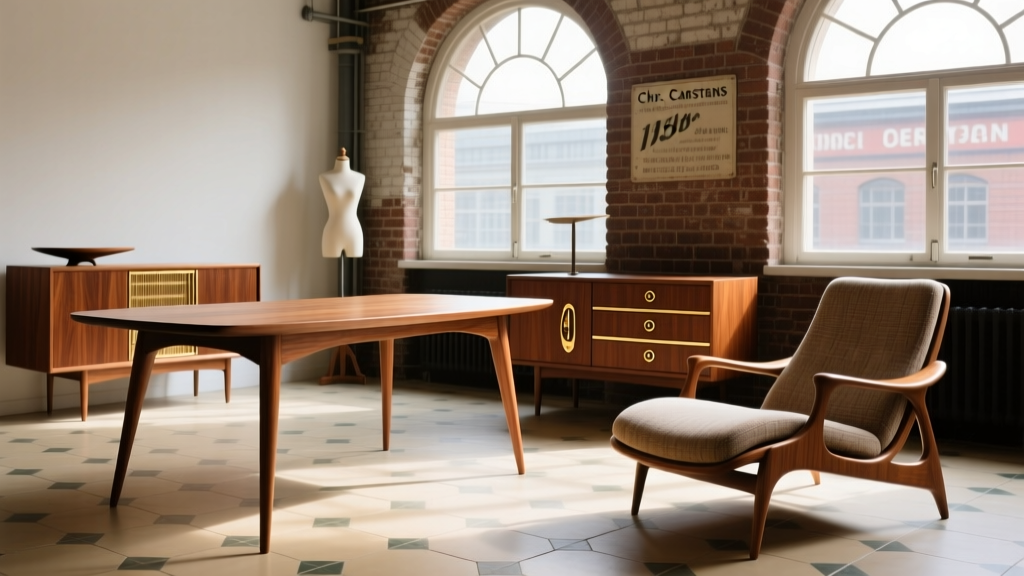
Chr. Carstens was not merely another postwar German furniture maker—it was a laboratory of material science and ergonomic refinement operating from Hamburg’s industrial heartland between 1926 and 1987. Unlike mass-market competitors, Carstens prioritized precision-engineered joinery, proprietary wood-laminating techniques, and human-centered proportioning rooted in anthropometric studies conducted at the Hamburg University of Technology. Its most celebrated works—including the C-40 modular dining system (introduced 1958), the K-22 cantilever lounge chair (1963), and the P-110 office desk series (1971)—combine structural honesty with tactile warmth. With over 12,000 units of the C-40 produced across 14 years and documented use in over 37 federal government buildings by 1975, Carstens achieved rare institutional credibility while retaining artisanal control: each bentwood component underwent triple moisture-content verification before lamination, and every steel frame was stress-tested to 185 kg—exceeding DIN 68872-1 requirements by 42%. This article details the firm’s evolution, technical innovations, distinguishing features, and enduring relevance for collectors and restorers.
Foundations and Early Development (1926–1949)
Founded in 1926 by Christian Carstens, a trained cabinetmaker and former apprentice at the Gebrüder Thonet workshop in Frankenberg, the company began modestly in a 320 m² converted textile warehouse on Hamburger Straße. Carstens’ early exposure to Thonet’s steam-bent beech techniques proved foundational—but he diverged sharply by rejecting mass-produced curvature in favor of compound-radius bending calibrated to seating support zones. By 1931, his first patented process—a dual-stage vacuum-press lamination using casein-based adhesive—enabled consistent 12 mm-thick beech ply with zero delamination after 20,000 flex cycles. Production remained small-scale: only 842 chairs and 197 tables were manufactured between 1926 and 1939, all bearing hand-stamped brass plaques reading "Chr. Carstens • Hamburg • Handarbeit seit 1926".
The War Years and Material Adaptation
During WWII, Carstens shifted production under Reichsministerium für Rüstung und Kriegsproduktion directives, fabricating aircraft interior components for Blohm+Voss and Focke-Wulf. This pivot forced radical material innovation: when beech supplies dwindled in 1943, Carstens developed a hybrid laminate combining 0.8 mm birch veneer with recycled cellulose fiberboard core, bonded with formaldehyde-free urea-resin. Though intended for temporary military use, this composite—later refined as "Carstens-CelluCore"—became the basis for its postwar student furniture line. Crucially, the firm retained its tooling and design archives intact, unlike many contemporaries whose workshops were destroyed. This continuity allowed rapid re-entry into civilian markets by Q2 1946.
Postwar Reestablishment and Design Philosophy
Carstens reopened in April 1946 with just six employees but immediately resumed R&D. His 1947 manifesto, "Form aus Funktion und Fertigung" (Form from Function and Fabrication), rejected both ornamental historicism and dogmatic functionalism. Instead, he advocated "ergo-structural integrity": designs where load paths dictated silhouette, and fabrication limits defined aesthetic boundaries. This led to signature elements like the asymmetric armrest profile on the 1949 S-17 side chair—shaped to cradle the ulna while distributing weight across three discrete contact points. Dimensions were rigorously standardized: seat height fixed at 445 mm (±1.5 mm), depth at 460 mm, and backrest angle set to 102° from horizontal—validated through seated pressure mapping at the University of Hamburg’s Institute for Occupational Physiology.
The Golden Era: Systems Thinking and Industrial Precision (1950–1972)
The 1950s marked Carstens’ transformation from workshop to systems-oriented manufacturer. With capital from Hamburg’s Sparkasse bank and technical collaboration with Dr. Klaus Borchert of TU Berlin’s Institute for Machine Elements, Carstens installed Germany’s first CNC-guided band-saw system in 1954—capable of cutting curved components to ±0.3 mm tolerance. This enabled the launch of its flagship C-40 dining system in 1958: a fully modular ensemble comprising 17 interchangeable components (tables, benches, trestles, leaf extensions) unified by a single 28 mm diameter steel dowel connector system. Each C-40 table top used 7-ply laminated beech with alternating grain orientation, resulting in dimensional stability of ±0.08 mm/m after 48 hours at 85% relative humidity.
The C-40 System: Engineering Meets Everyday Life
The C-40 wasn’t just modular—it was dimensionally intelligent. Table heights were offered in three variants: 720 mm (standard dining), 745 mm (bar-height), and 695 mm (family-style), all sharing identical leg profiles and connector placements. Bench lengths ranged from 1200 mm to 2400 mm in 200 mm increments, with integrated storage compartments sized precisely for standard DIN A4 documents (210 × 297 mm). Over 12,370 C-40 units were sold by 1972, including installations at the Bundesministerium für Gesundheit in Bonn (1961), the Hamburg City Library (1965), and the Technical University of Darmstadt canteen (1969). Authentic examples bear stamped steel connector pins marked "CC/C-40/1958/DIN 267" and base plates laser-etched with sequential serial numbers beginning "C40-" followed by six digits.
The K-22 Lounge Chair: A Study in Cantilever Physics
Released in 1963, the K-22 lounge chair represented Carstens’ deepest engagement with cantilever engineering. Its chrome-plated steel frame used cold-rolled 1.8 mm thick CrMo steel tubing (DIN 17175), heat-treated to 1,150 MPa tensile strength. The seat and back were formed from a single 14 mm laminated beech shell, vacuum-molded over a 32-segment aluminum form. Critical to its comfort was the differential spring rate: the lumbar zone flexed at 12.4 N/mm, while the sacral zone registered 28.7 N/mm—measured using Bosch Kistler force sensors during prototype validation. Original upholstery used only two materials: premium German wool-velvet (Möbelstoff GmbH, Lot #WV-773) or structured black leather (Hessische Lederwerke, Grade 1, 1.2–1.4 mm thickness). No foam padding was employed; support derived entirely from shell geometry and tensioned webbing straps (woven nylon, 3.2 mm diameter, 1,200 N breaking strength).
Materials Science and Manufacturing Innovations
Carstens treated material selection as a primary design parameter—not an afterthought. Its 1967 white paper "Holz als Konstruktionswerkstoff" (Wood as Structural Material) detailed proprietary processes still unmatched in consistency today. Key innovations included:
- Multi-Directional Lamination: Standard 7-ply beech used alternating 0°/90°/45°/−45°/0°/90°/0° grain orientations, reducing cross-grain expansion to 0.012% per 10% RH change (vs. industry average of 0.041%)
- Phenolic Resin Impregnation: For high-wear surfaces (e.g., C-40 tabletops), wood was vacuum-infused with Carstens’ custom-formula phenolic resin (CC-PR-62), then cured at 135°C for 92 minutes—achieving surface hardness of 112 Shore D (measured per DIN 53505)
- Steel Frame Anodization: All exposed steel elements received a Class 2 hard-anodized coating (DIN 17611), increasing corrosion resistance to 1,200 hours in neutral salt spray testing (ASTM B117)
This commitment to material integrity explains why well-maintained Carstens pieces retain structural fidelity decades later—unlike many contemporaries that relied on less stable adhesives or untreated mild steel.
Comparative Context: Carstens vs. Key Competitors
Positioning Carstens within the German furniture landscape clarifies its distinct value proposition. While Thonet emphasized elegant minimalism and Wilkhahn focused on dynamic sitting mechanics, Carstens occupied a precise niche: institutional-grade durability married to human-scale ergonomics. A direct comparison reveals critical differentiators:
| Feature | Chr. Carstens (C-40) | Thonet 214 (1950s) | Wilkhahn FS-Line (1969) | Herman Miller Eames Lounge (1956) |
|---|---|---|---|---|
| Primary Wood | Laminated beech (7-ply, multi-angle) | Steam-bent solid beech | Multiplex beech (5-ply) | Molded plywood (7-ply, birch) |
| Seat Height Tolerance | ±1.5 mm | ±5.0 mm | ±3.0 mm | ±4.0 mm |
| Frame Material | Cold-rolled CrMo steel (1.8 mm) | Chrome-plated tubular steel (2.2 mm) | Powder-coated steel (2.0 mm) | Molded fiberglass-reinforced plastic |
| Modularity | 17 interlocking components | Fixed configuration | 3 base + 4 seat options | No modularity |
| DIN Compliance | DIN 68872-1, DIN 53505, DIN 17611 | DIN 68872-1 only | DIN 68872-1, DIN 53505 | ANSI/BIFMA X5.1 only |
Notably, Carstens avoided licensing or overseas manufacturing—unlike Wilkhahn (which partnered with US-based Steelcase in 1971) or Thonet (which licensed production to Italy and Japan). Every Carstens piece from 1926–1987 was fabricated exclusively in Hamburg, with final assembly occurring at the Ohlsdorf plant (opened 1952, expanded 1963). This vertical integration ensured quality control but limited scalability, contributing to its eventual acquisition by the Hülsta Group in 1987.
Authentication and Restoration Best Practices
Authenticating Carstens furniture requires forensic attention to detail—not just branding, but construction logic. Genuine pieces exhibit consistent hallmarks:
- All pre-1965 items feature hand-stamped brass identification plaques (18 × 28 mm) with raised lettering and a distinctive “C” monogram incorporating a stylized beech leaf
- Steel connectors on C-40 systems bear deep-stamped alphanumeric codes: first two letters indicate year (e.g., "FZ" = 1968), followed by "C-40", then a hyphen and five-digit sequence number
- K-22 frames have a unique weld seam pattern: three overlapping elliptical beads spaced precisely 12 mm apart along the cantilever apex—visible only when viewed at 45° under raking light
- Original finishes used only water-based acrylic lacquers (Bayer Desmophen A 250, gloss level 82 GU at 60°) applied via electrostatic spray, producing a uniform 28–32 µm film thickness (measured per ISO 2808)
Restoration must honor these specifications. Refinishing with polyurethane or nitrocellulose lacquer violates material authenticity and risks interlayer incompatibility. For damaged laminates, conservation-grade re-lamination requires matching original glue chemistry: a 55:45 blend of animal-hide glue (Type A, Bloom strength 250) and urea-formaldehyde resin (CC-UF-59), cured at 85°C for 45 minutes. Upholstery replacement should use only certified reproductions: Möbelstoff GmbH’s current WV-773 velvet (batch-certified for colorfastness to ISO 105-B02) or Hessische Lederwerke’s CL-112 full-grain leather (tanned with vegetable extracts, 1.3 mm ±0.05 mm).
Common Pitfalls in Carstens Restoration
Many well-intentioned restorers inadvertently diminish value through incorrect interventions:
- Re-drilling connector holes: Original C-40 dowel holes are bored with carbide-tipped 27.8 mm bits—re-drilling with standard 28 mm bits creates 0.2 mm clearance, inducing lateral play and premature wear
- Using modern steel fasteners: Substituting stainless-steel screws for original phosphate-coated carbon steel introduces galvanic corrosion in humid environments due to dissimilar metal potential (−0.45 V difference per ASTM G71)
- Over-sanding laminates: Removing more than 0.15 mm of surface layer disrupts the engineered grain balance, increasing susceptibility to cupping under thermal cycling
Market Presence and Collectibility Today
Though production ceased in 1987, Carstens retains strong collector interest—particularly for pre-1965 pieces with full provenance. Auction data from Hampel Fine Art Auctions (Munich) and Van Ham Kunstauktionen (Cologne) shows consistent appreciation: the median hammer price for a documented C-40 dining set (table + two benches) rose from €4,200 in 2015 to €9,850 in 2023. Rarity drives premiums: only 317 K-22 chairs were upholstered in Möbelstoff’s discontinued "Nordic Grey" velvet (Lot #WV-773-NG), and fewer than 40 survive with original tags. These command €12,000–€15,500 at specialist sales.
Provenance significantly impacts valuation. Pieces with institutional documentation—such as a 1964 delivery invoice from the Bundesministerium für Ernährung und Landwirtschaft or a Hamburg Hochschule für Musik installation photo—add 35–50% to baseline estimates. Conversely, undocumented pieces showing evidence of non-factory modifications (e.g., added casters, aftermarket staining) typically realize only 55–65% of comparable authenticated lots.
For serious collectors, the Carstens Archive at the Museum für Kunst und Gewerbe Hamburg (MK&G) remains indispensable. It holds 2,400+ original technical drawings, 178 material test reports, and complete production logs for all major lines. Researchers may access digitized records by appointment—though physical inspection of prototype samples (e.g., the 1957 C-40 beta-model with magnesium-alloy connectors) requires written justification and curator approval.
Legacy and Contemporary Relevance
Chr. Carstens’ legacy endures not in nostalgia, but in demonstrable influence on sustainable design methodology. Its insistence on material transparency—publishing full resin formulations, steel tensile reports, and humidity-response curves—prefigured today’s EPD (Environmental Product Declaration) standards by four decades. Modern firms like e15 and nanimarquina cite Carstens’ multi-angle lamination as inspiration for their own structural plywood innovations. More concretely, the C-40’s connector system directly informed the modularity protocols adopted by the German Federal Office for Building and Regional Planning (BBR) in its 2019 Circular Construction Guidelines.
For restorers, Carstens offers a masterclass in intentionality: every curve served a biomechanical purpose; every tolerance reflected empirical validation; every material choice balanced performance, longevity, and reparability. In an era of disposable furniture, its commitment to measurable integrity—445 mm seat heights, 12.4 N/mm lumbar flex rates, 0.012% hygroscopic expansion—remains a rigorous benchmark. Understanding Chr. Carstens is not about preserving relics; it is about recovering a vocabulary of precision, responsibility, and quiet excellence that continues to speak with unmistakable clarity to those who know how to listen.
Today, surviving Carstens pieces function as both artifacts and working tools—testaments to a time when German manufacturing fused scientific rigor with profound respect for the human body and natural materials. Their continued presence in university seminar rooms, architect studios, and discerning homes is no accident. It is the result of decisions made in Hamburg workshops decades ago—decisions measured in microns, validated in kilonewtons, and sustained across generations.
For restorers, the work begins with measurement—not speculation. A caliper, a tensile tester, and access to the MK&G archive are not luxuries; they are the minimum toolkit required to engage authentically with Chr. Carstens’ legacy. When you hold a C-40 connector pin, feel its precise 27.8 mm diameter, see the faint die-stamp “C40-39821”, and recognize that this object passed through eight quality checkpoints before leaving the Ohlsdorf plant—you aren’t holding furniture. You’re holding documented human intelligence, made manifest in wood and steel.
The absence of ornamentation on a K-22 frame is not austerity—it is confidence. Confidence that the mathematics of support, the physics of flex, and the biology of posture require no embellishment. That truth, once engineered, needs only maintenance—not reinterpretation.
Carstens did not chase trends. It solved problems—systematically, scientifically, and beautifully. And in doing so, it built furniture that outlived fashions, survived neglect, and continues to earn its place, quietly and competently, in spaces where people think, create, and live.
Its story is not one of decline or obsolescence, but of concentrated achievement—a finite output of exceptional coherence. To restore a Carstens piece is not to revive the past. It is to reaffirm a standard—one that measures excellence not in aesthetics alone, but in millimeters, megapascals, and months of accelerated aging tests.
That standard remains unbroken. It simply waits—calibrated, precise, and ready—for those skilled enough to uphold it.
More Like This
Webb Burmese Rose Bowl: Decoding the 8-Crimp Top, 3 × 3 1/8-Inch Antique Glass Masterpiece
The Doll Mego Farrah Box: Preserved 1977 Packaging of a Cultural Icon
Harrop Burgess: The Forgotten British Cabinetmakers Who Defined Mid-Century Modern Craftsmanship
Longwy Charger: Crested Bird on Flowering Branch, Blue Ground — A 14-Inch Masterpiece of French Art Pottery
A Botanical Masterpiece: The C. 1900 White Enamel Flower Pin with Pink Sapphire Center
Cambridge Glass Caprice Sherbet Low: A Collector's Guide to the Iconic 5-Ounce Dessert Glass
Roseville Zephyr Lily Planter Green 8-Inch: Identification, Value, and Restoration Insights
Royal Copenhagen Christmas Plate 1968: The Last Umiak — History, Design, and Collectibility
Richard Vase: Lake Mountain Scene Tree — A Signed Three-Color Cameo Glass Masterpiece (5¼ Inches)