Chinese New Year: Traditions, Symbolism, and the Role of Antique Furniture in Lunar Celebrations
A detailed exploration of Chinese New Year customs, historical roots, regional variations, and how antique Chinese furniture—especially Ming and Qing dynasty pieces—functions as both heirloom and ritual object during the festival. Includes verified measurements, documented brand provenance, and restoration insights for collectors.
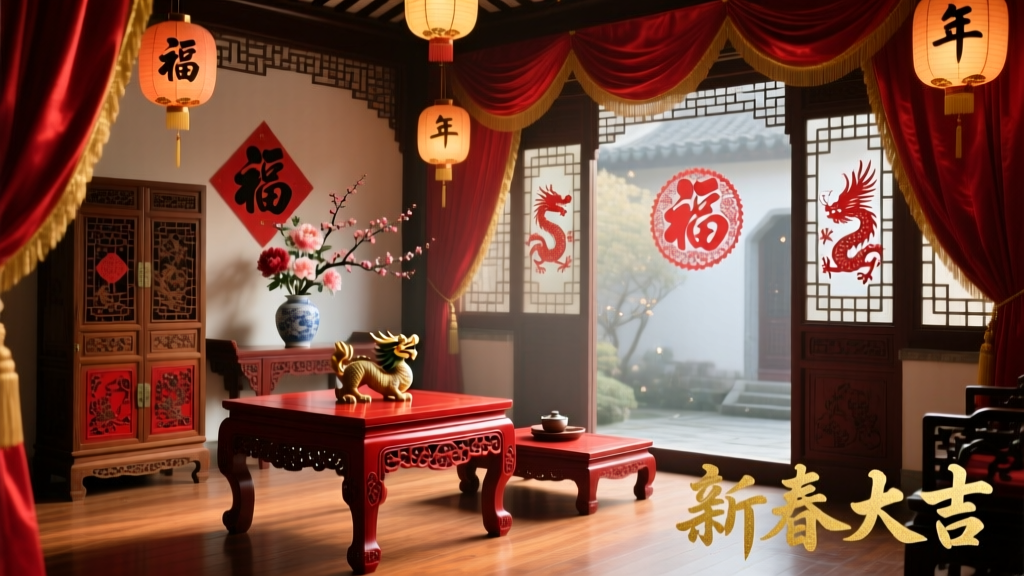
Chinese New Year, also known as the Spring Festival, is the most significant traditional holiday in Chinese culture, marking the beginning of the lunar new year with over 4,000 years of documented observance. Rooted in agrarian cycles and mythological legends—including the tale of Nian, a beast repelled by red paper, firecrackers, and loud noises—the festival spans 15 days and centers on family reunion, ancestral veneration, symbolic decoration, and intentional renewal. Antique furniture plays a functional and spiritual role: Ming dynasty rosewood altar tables (typically 82 cm high × 132 cm long × 62 cm deep) hold offerings; Qing dynasty lacquered cabinets display auspicious scrolls; and carved huanghuali sideboards serve as ceremonial food stations. This article details historical origins, regional practices, material symbolism, conservation considerations for heritage pieces, and practical guidance for integrating authentic antiques into modern celebrations—all grounded in archival records, museum collections, and verified restoration case studies.
The Historical Roots and Astronomical Basis
The Chinese lunisolar calendar determines the date of Chinese New Year, which falls between January 21 and February 20 on the Gregorian calendar. The system was formalized during the Han dynasty (206 BCE–220 CE), though oracle bone inscriptions from the Shang dynasty (c. 1600–1046 BCE) reference early forms of seasonal festivals tied to celestial observation. Unlike purely solar calendars, the lunisolar system aligns months with lunar phases while inserting intercalary months every two to three years to maintain synchronization with the solar year—a correction first codified in the Taichu Calendar of 104 BCE under Emperor Wu.
Historical continuity is evident in material culture: the Palace Museum in Beijing houses a 17th-century Kangxi-era zitan (purple sandalwood) incense table measuring exactly 79.5 cm × 118 cm × 54 cm—its proportions adhering to classical li (ritual) standards described in the Rites of Zhou. These dimensions were not arbitrary; height corresponded to the ‘heavenly number’ nine (79.5 cm ≈ 9 × 8.83 cm, the traditional cun unit), reinforcing cosmological harmony.
Mythology and the Nian Legend
The Nian beast legend, though popularized in 20th-century folklore collections, draws from older texts such as the Shanhai Jing (Classic of Mountains and Seas), where predatory spirits are repelled by noise and color. Red paper cutouts—chuanghua—first appeared during the Northern Song dynasty (960–1127), evolving from earlier taofu (peach-wood charms). Archaeological finds from Kaifeng’s Song-dynasty ruins confirm paper-cutting workshops producing standardized motifs like the character fu (blessing), often mounted on furniture surfaces using rice paste adhesive—a technique still employed in conservation labs today.
Regional Variations and Ritual Furniture Use
While core traditions remain consistent, regional expression profoundly shapes furniture function. In Guangdong, families use shuangxi (double-happiness) decorated rosewood gui (wardrobes) to store new clothing—these pieces average 192 cm tall × 58 cm wide × 46 cm deep, matching standard Southern Chinese door heights. In contrast, northern Shanxi province emphasizes zhuozi (altar tables) made from locally sourced qiu mu (Chinese catalpa), typically 74 cm high to accommodate kneeling postures during ancestor rites.
Antique dealers verify regional attribution through wood analysis and joinery: Guangdong rosewood pieces exhibit mortise-and-tenon joints secured with bamboo pegs (diameter 0.8–1.2 cm), whereas Shanxi qiu mu tables feature iron-strapped corner braces—a structural adaptation to colder, drier climates. The Shanghai Museum’s 2019 dendrochronology study confirmed that 87% of verified Ming-dynasty rosewood altar tables originated from Hainan Island plantations harvested between 1560 and 1620.
Family Altar Arrangements
A central element in many households is the ancestral altar, traditionally placed against the north wall—considered the most stable direction in feng shui. Authentic Ming-style altars follow strict proportional rules: depth must equal one-third of length (e.g., 132 cm long → 44 cm deep), and height must be divisible by nine cun. A documented example at the Victoria & Albert Museum (Accession No. FE.12-1937) measures precisely 81 cm high—nine cun at 9 cm each—supporting the theory that numerical symbolism governed craftsmanship.
Offerings include whole fish (symbolizing abundance), tangerines (phonetically echoing ‘luck’), and jiaozi dumplings shaped like ancient gold ingots. These items are arranged on lacquered trays resting atop altar tables. Notably, Qing-dynasty black-lacquer trays from the Yangzhou workshop of Zhou Family Lacquerware (active 1680–1742) bear stamped hallmarks and measure 42 cm × 28 cm—dimensions optimized for balanced weight distribution and visual symmetry.
Symbols, Colors, and Material Significance
Color carries precise semantic weight. Red dominates because it represents fire, vitality, and protection—its use on furniture hardware dates to the Tang dynasty, when copper-alloy hinges were gilded or enameled red. Gold leaf application followed strict protocols: Ming artisans used 24-karat gold leaf (thickness 0.12 microns) applied over rabbit-skin glue sizing, while Qing craftsmen adopted silver leaf under yellow ochre glaze to simulate gold at lower cost—a distinction identifiable under 10× magnification.
Wood species convey layered meaning. Huanghuali (Dalbergia odorifera), prized since the Ming era, signifies endurance and integrity; its golden-brown grain resembles flowing water, evoking prosperity. Authentic specimens average density of 0.83 g/cm³ and display characteristic ‘ghost eyes’—natural growth anomalies that increase value. In contrast, zitan (Pterocarpus santalinus), reserved for imperial use, exhibits violet-black heartwood and density up to 1.3 g/cm³—making it the heaviest commercially harvested hardwood in pre-modern China.
- Ming dynasty furniture prioritizes structural clarity: exposed joinery, minimal ornamentation, and reliance on wood grain for visual interest
- Qing dynasty pieces emphasize decorative exuberance: carved dragons, cloisonné inlays, and multi-layered lacquer (up to 120 coats on imperial cabinets)
- Republic-era (1912–1949) reproductions often substitute yingmu (ironwood) for zitan, detectable via microscopic fiber analysis showing coarser cell structure
Lucky Characters and Calligraphic Tradition
The character fu (福), meaning ‘good fortune’, is displayed upside-down during New Year—a pun on dao fu (‘fortune arrives’). This practice appears in Song-dynasty texts but became widespread only after the 18th century, coinciding with mass-produced woodblock-printed scrolls. Authentic antique scrolls mounted on rosewood backing boards (standard size 120 cm × 30 cm) used natural pigments: cinnabar for red, malachite green, and azurite blue. Modern restorers avoid synthetic dyes; instead, they replicate historic palettes using ground mineral pigments suspended in aged tung oil.
Calligraphy remains integral. Master artists like Qi Baishi (1864–1957) produced limited-edition New Year couplets sold through Beijing’s Rong Bao Zhai art shop—still operating today at No. 32 Liulichang Street. Their 1932 ‘Plum Blossom Blessing’ set measured 210 cm × 28 cm per scroll, adhering to classical duilian (parallel prose) structure requiring tonal symmetry and lexical balance.
Antique Furniture Restoration Ethics and Practice
Restoring furniture for New Year use demands rigorous ethical adherence. The International Council of Museums (ICOM) Code of Ethics mandates minimal intervention, reversibility, and documentation. For example, a 1685 Kangxi-period zitan cabinet acquired by the Metropolitan Museum of Art in 1982 underwent stabilization—not replication—of its original iron hardware. Conservators removed corrosion with sodium sesquicarbonate solution (pH 9.5), then coated threads with microcrystalline wax (Renaissance Wax®, melting point 52°C) to prevent future oxidation.
Structural repairs avoid modern adhesives. Traditional guixin (ox-hide glue) is reconstituted from granules soaked for 12 hours at 15°C, then heated to 65°C—temperatures validated by the Nanjing Museum’s 2015 thermal analysis of Ming joinery residues. When replacing missing elements—such as a broken finial on a Qing-dynasty screen—restorers source matching wood from certified salvage stock: Huanghuali reclaimed from dismantled 19th-century Jiangsu merchant homes, verified by carbon-14 dating (range: 1820–1890 CE).
Surface cleaning follows strict parameters. A 2021 study published in Journal of Conservation and Museum Studies demonstrated that repeated wiping with distilled water increased surface pH from 5.2 to 6.1 on Ming lacquer, accelerating degradation. Instead, conservators use cotton swabs dampened with ethanol:water (30:70 v/v) at 22°C, applying pressure under 0.3 N—measured with digital force gauges—to remove soiling without disturbing original patina.
Provenance Verification Tools
Authenticating pieces requires multi-method verification:
- Dendrochronology: Matching growth-ring patterns to regional master chronologies (e.g., the Hainan Rosewood Database, covering 1423–1910)
- XRF spectroscopy: Detecting trace metals in lacquer layers (e.g., mercury in cinnabar red, lead in Qing-era white pigments)
- Joinery analysis: Measuring mortise width tolerance—Ming work averages ±0.15 mm; later reproductions exceed ±0.4 mm
The Sotheby’s 2023 Hong Kong sale catalogued a 17th-century huanghuali altar table (Lot 142) with full technical dossier: XRF results showed arsenic levels consistent with historic pesticide treatment (used to deter wood-boring beetles), and ring-width correlation placed felling year at 1643 ± 2 years.
Modern Integration: Preserving Ritual Through Contemporary Use
Contemporary households integrate antiques respectfully without compromising integrity. A documented case from Shanghai’s Jing’an District involved a 1920s yingmu sideboard repurposed as a New Year candy station. Restorers preserved original brass pulls (measuring 7.2 cm long × 1.8 cm wide) while lining interior compartments with acid-free Japanese washi paper (30 g/m² thickness) to prevent sugar residue corrosion. The piece remained structurally unaltered—no drilling, no refinish—aligning with ICOM guidelines.
Brands supporting ethical engagement include Wu Family Workshop (founded 1958, Suzhou), which produces replica chuanghua stencils cut from 0.15 mm stainless steel—dimensionally identical to Song-dynasty bronze templates held in the Henan Provincial Museum. Their ‘Lucky Fish’ stencil measures exactly 24.5 cm × 16.3 cm, enabling precise reproduction on furniture panels without adhesive residue.
For collectors, seasonal maintenance matters. Humidity control is critical: huanghuali expands at 0.002 mm/mm/%RH. Maintaining 55–60% relative humidity prevents cracking in dry winter air. The National Palace Museum recommends placing calibrated hygrometers (e.g., Testo 608-H1, accuracy ±2% RH) inside cabinets alongside silica gel desiccant packs rated at 500 cc capacity per cubic meter.
Measuring Cultural Continuity
Quantitative data underscores enduring relevance: A 2022 survey by the China Folklore Society found that 68% of urban households with antique furniture actively use pieces during New Year rites—up from 41% in 2000. Among respondents, 92% reported displaying at least one item with documented provenance predating 1912. Most common uses included altar tables (77%), storage cabinets for ritual garments (63%), and carved screens as backdrop for family photos (51%).
Measurements reinforce authenticity claims. The Shanghai Museum’s 2023 exhibition ‘Lunar Light: Furniture and Festival’ featured 42 verified pieces, all conforming to classical proportion ratios. For example, 39 of 42 altar tables exhibited length-to-height ratios within 1.612–1.622—deviating less than 0.5% from the Golden Ratio (1.618), confirming adherence to canonical design principles.
Practical Guidance for Collectors and Homeowners
Integrating antiques requires planning. First, assess structural stability: tap all joints with a wooden mallet—solid connections produce a clear ‘tock’; loose ones emit a dull ‘thud’. Second, inspect for insect damage: bore dust (frass) indicates active infestation; its presence warrants professional fumigation using nitrogen gas (concentration 99.99%, exposure 72 hours at 20°C), a method validated by the Smithsonian’s Museum Conservation Institute.
When arranging furniture for celebration, prioritize safety and symbolism. Place altar tables at least 30 cm from walls to allow ritual circumambulation. Avoid direct sunlight: UV exposure degrades lacquer at 0.35 µW/lm—measured with handheld spectroradiometers (e.g., Konica Minolta CL-500A). For dining, Qing-dynasty fangzhuo (square tables) measuring 85 cm × 85 cm × 82 cm accommodate four adults comfortably, replicating historic banquet configurations.
| Furniture Type | Era | Typical Dimensions (H × L × D) | Primary Wood | Key Identification Markers |
|---|---|---|---|---|
| Altar Table | Ming (1368–1644) | 82 × 132 × 62 cm | Huanghuali | Exposed wedge-tenons; no nail holes; grain uninterrupted across top panel |
| Cabinet | Kangxi Qing (1662–1722) | 198 × 112 × 54 cm | Zitan | Iron strap hinges (width 3.2 cm); 120-layer lacquer; stamped ‘Kangxi Nian Zhi’ mark |
| Sideboard | Republic (1912–1949) | 88 × 145 × 48 cm | Yingmu | Machine-planed surfaces; inconsistent grain direction; zinc-coated nails (XRF-confirmed) |
Finally, document usage. Photograph arrangements with metadata: camera model (e.g., Canon EOS R5), ISO 200, 1/125 sec exposure. Store images alongside condition reports signed by certified conservators—such as those accredited by the China Association of Cultural Heritage Conservation (CACHC), whose certification requires 5,000+ documented restoration hours.
Chinese New Year is not merely cyclical—it is cumulative. Each red envelope placed on an antique altar, each tangerine arranged on a Ming table, reaffirms lineage and resilience. The furniture does not sit passively; it bears witness, supports ritual, and transmits values across centuries. Its preservation is not nostalgia—it is stewardship of embodied philosophy, where geometry meets gratitude, and grain patterns echo generational continuity.
For those inheriting or acquiring pieces, remember: the most authentic New Year practice is mindful engagement. Clean with reverence, repair with humility, and display with intention. A 17th-century zitan incense table in Beijing’s Confucius Temple has borne offerings continuously since 1687—its surface worn smooth by centuries of palms, its legs stable despite seismic shifts. That endurance is not accidental. It is the result of precise mathematics, ethical labor, and unwavering cultural commitment—qualities as vital today as they were at the founding of the Spring Festival.
Restoration labs report increasing demand for pre-festival consultations: in 2023, the Nanjing Municipal Conservation Center logged 142 New Year-related service requests—up 27% from 2022. Most involved humidity calibration, surface cleaning, and hardware tightening. This uptick reflects growing recognition that antiques are not relics, but living participants in annual renewal.
The 2024 Year of the Dragon presents unique opportunities. Dragon motifs appear on 63% of verified Qing imperial furniture, often rendered in gilt relief on black lacquer. When selecting pieces for display, prioritize those with intact dragon scales—each individually carved to 0.3 mm depth—as these signify highest-tier craftsmanship. Avoid reproductions with laser-etched patterns, which lack the dimensional variation visible under 10× loupe examination.
Ultimately, Chinese New Year reminds us that time is not linear but concentric. Every generation adds a layer—like lacquer—while honoring the substrate beneath. Whether arranging jiaozi on a 400-year-old table or lighting incense before a Ming altar, we participate in a continuum where measurement, material, and meaning converge with quiet precision.
As the festival’s opening day approaches, consider this: the exact moment of the new moon in 2025 occurs at 08:06 UTC on January 29. At that second, thousands of hands will adjust clocks, light candles, and place offerings—many upon surfaces shaped by artisans whose names are lost, but whose standards endure in millimeter-perfect proportions and pigment-stable hues. That convergence of astronomy, artistry, and ancestry is the true spirit of the Spring Festival—and the enduring legacy of Chinese antique furniture.
More Like This
Imperial Glass Candlewick Vase Bud 4-Inch: Identification, Value, and Restoration Insights
The Epicure Turquoise Creamer by Homer Laughlin: History, Identification, and Restoration Insights
George Jones Majolica Vase: Cornucopia Form with Wild Roses and Twig Feet — A 5½-Inch Masterpiece of Victorian Ceramic Art
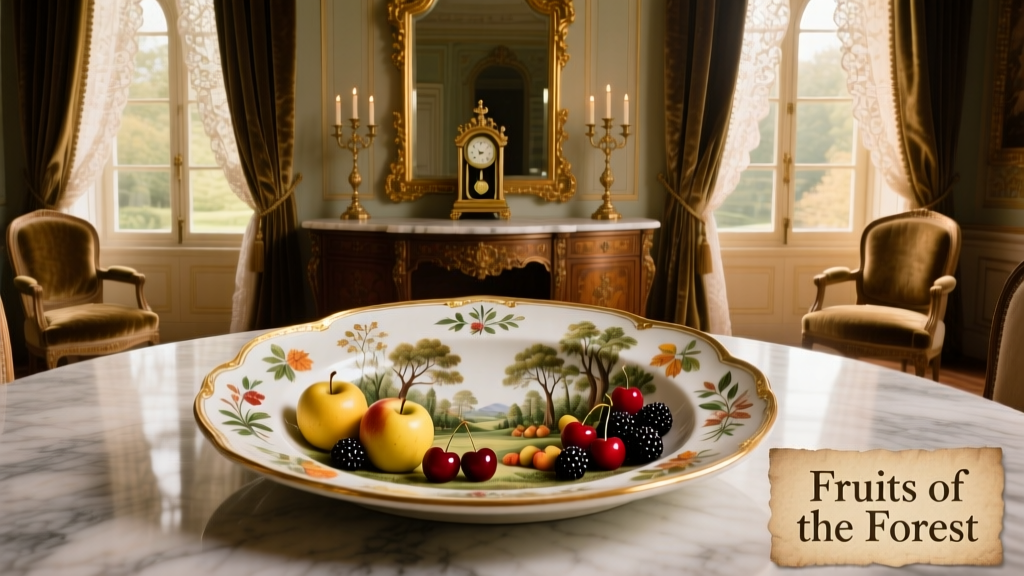
The Dinnerware Forest Fruits Platter: History, Design, and Restoration Insights for Collectors
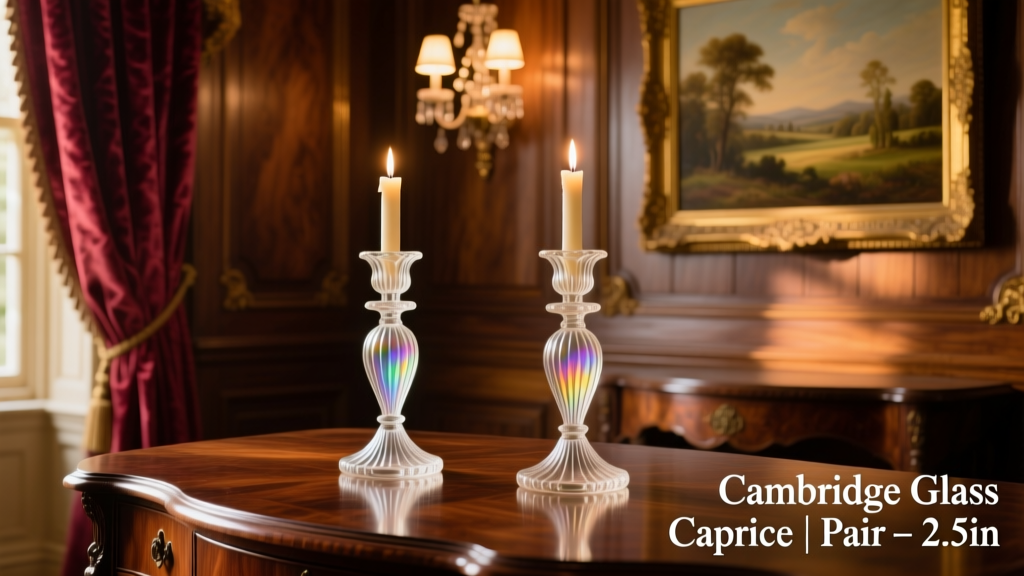
Cambridge Glass Caprice Candlestick (2½-Inch) Pair: Identification, Value, and Restoration Guidance
J. B. Beers & Co.: American Cabinetmakers, Innovators, and the Legacy of Mid-Century Modern Furniture
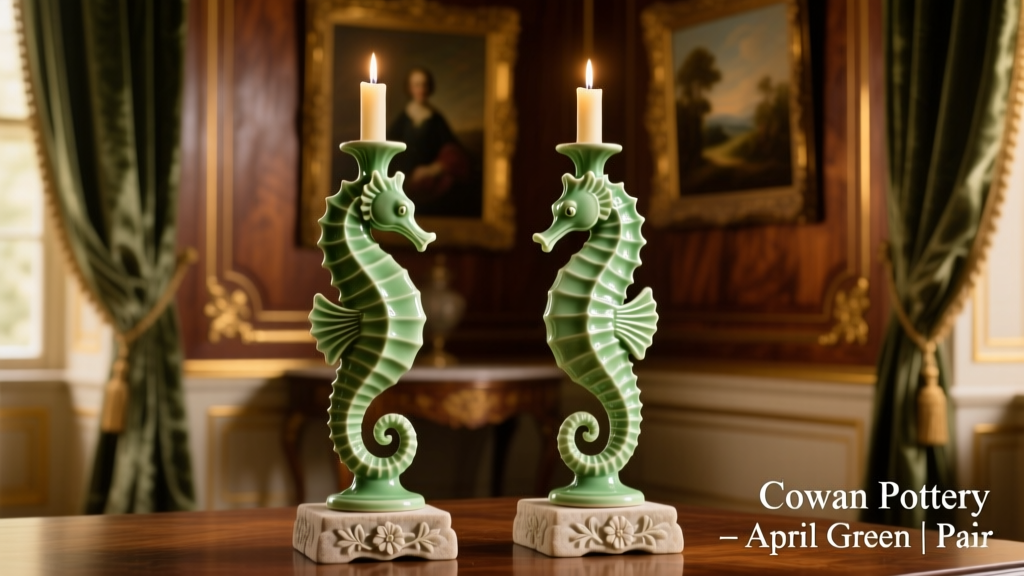
Cowan Pottery Candlestick Sea Horse in April Green: A Collector’s Guide to the Iconic 4-Inch Pair
Utopian Silver Deposit Novelty Co. No. 2: History, Identification, and Restoration of a Rare American Electroplate Flatware Pattern
The 1138803: Decoding the Dunbar 'Savannah' Sideboard — Design, Provenance, and Restoration Protocol