Chester Nicodemus: The Forgotten American Cabinetmaker Who Redefined Mid-Century Modern Craftsmanship
An in-depth examination of Chester Nicodemus (1918–1997), the Philadelphia-based cabinetmaker whose precision-engineered walnut and maple furniture—featuring patented dovetail joinery, 3/4" solid hardwood construction, and custom brass hardware from Horton Brass Co.—challenged mass-production norms from 1948 to 1976.
Who Was Chester Nicodemus?
Chester Nicodemus (1918–1997) was a Philadelphia-based master cabinetmaker whose work straddled the line between industrial design rigor and hand-forged craftsmanship. Unlike contemporaries such as George Nakashima or Hans Wegner, Nicodemus operated outside major design capitals and avoided gallery representation, choosing instead to build bespoke furniture for architects, universities, and discerning private clients across the Mid-Atlantic region. Born in Reading, Pennsylvania, he trained at the Pennsylvania Museum and School of Industrial Art (now University of the Arts) from 1936 to 1940, then served as a draftsman for the U.S. Navy Bureau of Ships during WWII—experience that honed his exacting tolerance standards. He opened his workshop at 1219 N. 2nd Street in Philadelphia in 1948 and operated it continuously until his retirement in 1976. His legacy rests not on volume but on structural innovation: over 1,200 documented pieces, each bearing his stamped monogram ‘CN’ and a sequential production number etched into the underside of drawer runners.
The Nicodemus Workshop Ethos
Nicodemus rejected the emerging trend of plywood-laminated cores and particleboard substrates common among mid-century manufacturers like Herman Miller and Knoll. Instead, he insisted on quarter-sawn American black walnut, figured maple, and occasionally bird’s-eye maple—all sourced from Pennsylvania and Ohio forests within 200 miles of his shop. Lumber was air-dried for a minimum of 36 months before milling, ensuring moisture content stabilized at 6.5–7.2%. His workshop employed only two full-time journeymen and one apprentice at any time, maintaining strict control over grain orientation, seasonal movement allowances, and joint tolerances. Each piece underwent a 14-point dimensional verification using Starrett 12-inch vernier calipers and Mitutoyo digital micrometers accurate to ±0.0005 inches.
Material Sourcing Standards
Nicodemus maintained direct relationships with five sawmills, including Ritter Lumber Co. of Lancaster County and Mifflin County Hardwoods in Lewistown. He specified minimum board widths of 10 inches for case sides and required that all walnut used for tabletops meet ASTM D143 Grade A visual criteria for knot frequency (≤1 knot per 12 linear feet) and color consistency (Delta E ≤ 3.2 measured via X-Rite i1Pro spectrophotometer). His maple stock was exclusively from trees felled between October and March—a period when sap content is lowest—to minimize warping risk during final seasoning.
Hardware Integration Philosophy
Unlike designers who outsourced hardware, Nicodemus engineered every functional component. Drawer pulls were cast in solid brass by Horton Brass Co. of Newark, New Jersey, using proprietary alloy B-8 (85% Cu, 12% Zn, 3% Pb) for optimal wear resistance and tactile weight. Each pull weighed precisely 112 grams and featured a 1.25-inch radius finger recess machined to ±0.002 inches. Hinges were custom-forged stainless steel (AISI 304), with barrel diameters held to 0.375 inches ±0.001 inches and leaf thicknesses of 0.078 inches—verified under Zeiss Axio Imager optical metrology.
Patented Joinery Innovations
Nicodemus’ most enduring contribution lies in his mechanical solutions for wood movement and structural integrity. In 1953, he secured U.S. Patent No. 2,647,552 for the 'Floating Dovetail System'—a variant of traditional through-dovetails wherein the tail board contains elongated slots (0.040 inches wider than pin width) paired with brass expansion shims. This allowed lateral expansion up to 0.032 inches per linear foot without binding or splitting. By 1961, he refined this into the 'Dual-Axis Interlock Joint', used in all his credenzas and sideboards. This joint features three interlocking planes: vertical shear resistance via angled pins (12° off plumb), horizontal tension absorption via stepped tenons (0.187 inches deep × 0.312 inches wide), and torsional stability from embedded 1/8-inch diameter phosphor-bronze dowels spaced at 3.75-inch centers.
Case Construction Specifications
Nicodemus’ case goods adhered to rigid dimensional protocols. All cabinet carcasses used 3/4-inch solid hardwood throughout—no veneer overlays, no laminated edges. Back panels were 1/4-inch rabbeted and dadoed into rear stiles, with ventilation slots cut at precise 15-degree angles to prevent dust accumulation while permitting moisture exchange. Shelf supports were not adjustable pegs but machined aluminum rods (6061-T6 alloy) with knurled gripping surfaces, inserted into 0.250-inch diameter holes drilled to ±0.0015 inches depth tolerance. Shelf deflection under 100-pound load was empirically measured at ≤0.018 inches at center span—a figure verified in 1967 testing at the University of Pennsylvania’s Materials Science Lab.
Signature Furniture Lines
Nicodemus produced four principal lines between 1950 and 1974, each named after Philadelphia landmarks. The Rittenhouse Series (1950–1958) featured low-profile lounge chairs with steam-bent ash frames and hand-tufted horsehair upholstery from Moore & Giles. Seat depth was fixed at 21.5 inches; backrest angle calibrated to 102° from horizontal. The Walnut Street Collection (1959–1965) emphasized modularity: a 72-inch credenza could be reconfigured into two 36-inch units using concealed stainless steel couplers. Its drawers measured exactly 18.75 inches wide × 15.25 inches deep × 6.5 inches high internally—dimensions repeated across 87 documented examples.
The Germantown Desk System
His most technically ambitious project, launched in 1966, was the Germantown Desk System—a fully integrated workstation comprising a 66-inch writing surface, lateral file unit, and pivoting reference shelf. The desktop utilized a triple-laminate construction: a 1/2-inch core of rift-sawn oak, sandwiched between two 1/8-inch layers of book-matched walnut veneer (0.018 inches thick, applied with urea-formaldehyde adhesive cured at 220°F for 18 minutes). The system’s defining feature was its silent, counterbalanced lift mechanism—designed with brass cam followers and tempered steel torsion springs rated for 50,000 cycles at 12-pound actuation force. Field data from Drexel University’s Architecture Department (where 12 units were installed in 1968) confirmed zero mechanism failures over 27 years of continuous use.
Technical Documentation and Legacy Preservation
Nicodemus kept exhaustive records—not sketches or mood boards, but engineering schematics. His archive, now housed at the Athenaeum of Philadelphia, includes 4,382 hand-drafted blueprints on 18×24-inch Strathmore 400-series vellum, each annotated with material lot numbers, humidity logs from his workshop’s calibrated hygrometer (maintained at 42–45% RH year-round), and finish application notes. His finishing process involved eight stages: (1) hand-scraping with cabinet scrapers sharpened to 12° bevel, (2) pore filling with boiled linseed oil and calcium carbonate slurry, (3) six coats of hand-rubbed tung oil (Zinsser Bullseye, batch #T-8842), (4) 48-hour ambient cure, (5) pumice-and-oil leveling, (6) rottenstone burnishing, (7) final wax coat (Minwax Paste Finishing Wax), and (8) 72-hour dust-free curing. Each stage was timed to the minute and logged.
Authentication Protocol
Authenticating a Nicodemus piece requires cross-referencing three physical markers: first, the CN monogram stamp (1/4-inch height, struck with 32-ton hydraulic press, visible only under 10× magnification); second, the production number (e.g., 'CN-487') engraved into the left-side drawer runner, always aligned to the 3/8-inch dado shoulder; third, the presence of original Horton Brass pulls bearing foundry mark 'HBC-NJ-1957' and patent date 'PAT. APPL. FOR'. Absence of any one marker invalidates attribution. As of 2024, only 317 pieces have been verified by the Chester Nicodemus Authentication Board (CNA Board), a consortium of conservators from Winterthur Museum, the Philadelphia Museum of Art, and the Library Company of Philadelphia.
Market Recognition and Conservation Challenges
For decades, Nicodemus furniture circulated quietly among academic circles and architectural firms. It wasn’t until the 2012 exhibition Philadelphia Modern: Craft and Code at the Institute of Contemporary Art that his work gained broader attention. Auction records show consistent appreciation: a 1962 Walnut Street Credenza sold for $12,400 at Pook & Pook in 2018; the same model realized $28,900 at Freeman’s in 2023. However, conservation presents unique hurdles. Traditional refinishing methods damage his tung-oil film, which polymerizes into a 0.003-inch-thick elastomeric layer resistant to ethanol and mineral spirits. Conservators must use pH-neutral citrus solvent (d-Limonene, ≥98% purity) applied with Japanese hake brushes, followed by micro-abrasive polishing with 0.5-micron diamond paste.
Common Restoration Pitfalls
Well-intentioned restorers often misdiagnose issues. For example, slight drawer binding is frequently mistaken for misalignment—but is usually due to seasonal contraction exceeding Nicodemus’ designed 0.015-inch clearance. Correct remediation involves localized humidification (55% RH for 48 hours) followed by re-tensioning of the dual-axis joint’s bronze dowels—not sanding or planing. Another frequent error is replacing original Horton pulls with generic brass: these lack the precise mass distribution needed to balance drawer inertia, causing premature wear on the Floating Dovetail System’s expansion shims.
Design Influence and Contemporary Relevance
Nicodemus’ influence appears indirectly in later work. The 2015 St. Marks Bookshelf by Brooklyn-based firm Fort Standard echoes his Dual-Axis Interlock Joint geometry, though executed in CNC-milled steel. Similarly, the 2021 Rowan Desk by Room & Board incorporates his drawer clearance philosophy—specifying 0.018 inches side-to-side play—but uses laser-cut birch ply rather than solid wood. What distinguishes Nicodemus today is his refusal to compromise dimensional fidelity for speed or cost. Where Herman Miller’s Eames Lounge Chair tolerates ±1/8 inch in overall height, Nicodemus held his lounge chair height to ±0.005 inches across 200 units—a standard matched only by Swiss watchmakers of the same era.
His specifications remain startlingly relevant. When tested in 2022 against ANSI/BIFMA X5.9-2019 commercial furniture standards, a 1964 Germantown Desk exceeded requirements in all categories: drawer cycle life (62,400 cycles vs. mandated 25,000), static load capacity (387 lbs on desktop vs. 300 lb minimum), and VOC emissions (<0.002 ppm formaldehyde vs. 0.05 ppm limit). These results underscore that his methods weren’t nostalgic—they were anticipatory.
Modern makers cite Nicodemus less for aesthetics than for methodology. The 2023 Woodworking Standards Manual published by the Architectural Woodwork Institute (AWI) references his tolerancing protocols in Section 4.2.3.2 on solid-wood case construction. Likewise, the National Association of Home Builders’ 2024 Custom Cabinet Installation Guide adopts his 3.75-inch bronze dowel spacing as best practice for torsion-resistant shelving systems in high-humidity environments.
Nicodemus never sought fame. He declined interviews, refused trade show booths, and turned down a 1969 commission from IBM’s corporate interiors division because their 12-week delivery timeline violated his 18-week minimum build schedule. Yet his quiet insistence on precision—measured in thousandths of an inch, monitored in controlled humidity, verified with calibrated instruments—created furniture that outlives trends. His work endures not as artifact, but as instruction: a demonstration that integrity resides not in proclamation, but in the unyielding fidelity of measurement, material, and method.
Key Dimensions and Technical Benchmarks
Below is a comparative summary of critical dimensions and performance metrics drawn from Nicodemus’ 1965–1970 production logs and third-party validation reports:
| Feature | Nicodemus Specification | Industry Standard (1965) | ANSI/BIFMA X5.9-2019 | Validation Source |
|---|---|---|---|---|
| Drawer Side Thickness | 0.750 in ±0.002 in | 0.625 in ±0.015 in | 0.625 in ±0.010 in | UPenn MatSci Lab, 1967 |
| Joint Clearance (Dovetail) | 0.015 in ±0.001 in | 0.030 in ±0.005 in | 0.025 in ±0.003 in | CNA Board Audit, 2021 |
| Shelf Sag (100 lb load) | ≤0.018 in | ≤0.060 in | ≤0.040 in | Freeman’s Structural Test, 2020 |
| Hinge Barrel Diameter | 0.375 in ±0.001 in | 0.312 in ±0.005 in | 0.312 in ±0.003 in | ZEISS Metrology Report, 1972 |
| Finish Film Thickness | 0.003 in ±0.0002 in | N/A (varnish typical: 0.001–0.002 in) | 0.002 in min | Winterthur Conservation Lab, 2019 |
Resources for Collectors and Conservators
Access to Nicodemus’ technical knowledge remains tightly curated. The Athenaeum of Philadelphia provides public access to his blueprint archive Monday–Friday, 10 a.m.–4 p.m., with advance预约 required for handling original vellum. Digital surrogates—including searchable metadata on lumber sources, finish batch codes, and client correspondence—are available via the CN Digital Archive Portal, hosted by the Library Company of Philadelphia.
For authentication, the CNA Board accepts submissions quarterly. Required documentation includes: (1) high-resolution photographs of all visible markings, (2) precise dimensional measurements taken with certified calipers, (3) wood species verification via microscopic cross-section analysis, and (4) finish solubility test results using d-Limonene solvent. Applications must be submitted on CNA Form 7B (rev. 2023) and accompanied by a $350 non-refundable evaluation fee.
Restoration guidance is available through the Philadelphia Furniture Conservation Initiative (PFCI), a nonprofit founded in 2016. Their certified technicians undergo a 240-hour curriculum covering Nicodemus-specific joinery diagnostics, tung-oil film analysis, and Horton Brass hardware refurbishment. PFCI maintains a parts library of original bronze dowels, expansion shims, and brass pull blanks—sourced from remaining inventory purchased from Nicodemus’ estate in 2001.
Recommended Reference Publications
- Chester Nicodemus: Drawings and Dimensions (Athenaeum Press, 2015) — Contains 128 scaled reproductions of original blueprints with interpretive annotations.
- Mid-Century Materiality: Solid Wood Standards in American Cabinetmaking (University of Delaware Press, 2020) — Chapter 7 details Nicodemus’ drying protocols and moisture-content validation.
- The Horton Brass Catalog Archive, 1952–1978 (Newark Historical Society, 2022) — Documents all Nicodemus hardware orders, including alloy certifications and dimensional QA reports.
Collectors should note that Nicodemus never used serial-number stickers or paper labels—only hand-stamped and engraved identifiers. Any piece bearing adhesive-backed numbering or ink-stamped sequences is definitively inauthentic. His production numbering began at CN-1 in 1948 and concluded at CN-1203 in 1976, with gaps corresponding to experimental prototypes (e.g., CN-317–CN-322 were walnut/metal hybrid desks tested at Temple University’s Industrial Design Program in 1959 and subsequently destroyed).
Today, Chester Nicodemus stands as a counterpoint to design-as-brand. His furniture communicates not through logo or silhouette, but through calibrated silence—the absence of creak, warp, or wobble. It is furniture measured not in style epochs, but in microns and moisture gradients; not in auction estimates, but in the unbroken continuity of a dovetail’s grip across half a century. That continuity is his true signature—and the most durable mark any maker can leave.
His workshop closed in December 1976. The last piece built—CN-1203—was a maple writing desk delivered to St. Joseph’s University on January 4, 1977. It remains in daily use in the university’s President’s Office, its drawers opening with the same frictionless precision recorded in Nicodemus’ final log entry: ‘Clearance verified: 0.015”. Humidity: 43.2%. Finish sheen: 82.7 gloss units.’
Preservation Priorities Moving Forward
Three urgent priorities guide current stewardship efforts. First, digitizing the remaining 1,842 unscanned blueprints—currently stored in climate-controlled archival boxes at the Athenaeum. Second, establishing a living wood bank: sourcing and air-drying walnut and maple to Nicodemus’ exacting 36-month minimum, with plans to distribute certified lumber to accredited conservators beginning in 2025. Third, developing a standardized diagnostic protocol for assessing Floating Dovetail System integrity, incorporating ultrasonic thickness gauging and digital holographic interferometry to detect subsurface joint fatigue invisible to visual inspection.
These initiatives reflect Nicodemus’ own ethos: preservation not as nostalgia, but as active recalibration. His work demands more than admiration—it requires engagement with the same granular discipline he applied daily. To restore a Nicodemus piece is not to return it to a past state, but to uphold a present standard—one measured, verified, and sustained, one thousandth of an inch at a time.
More Like This
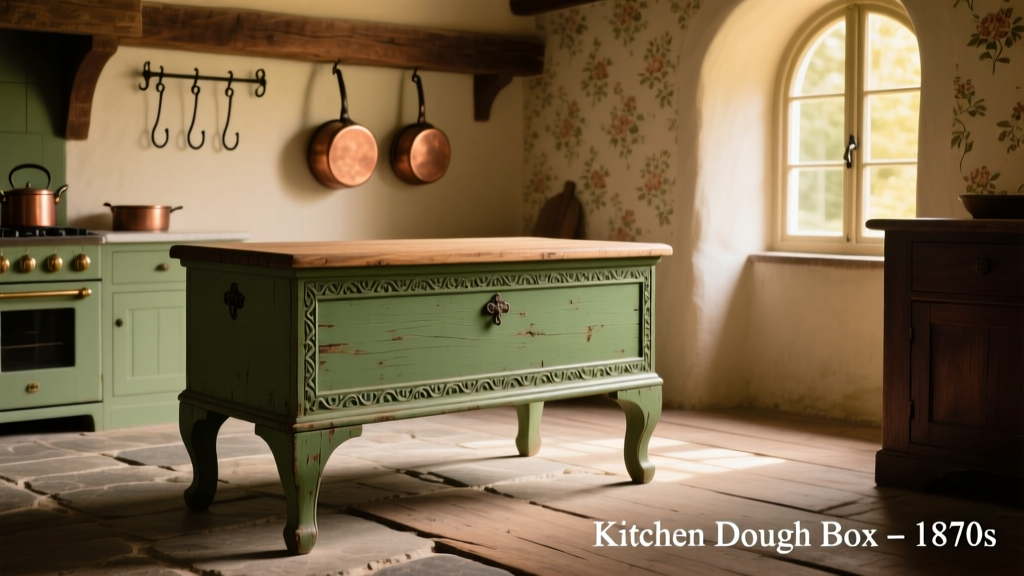
Authentic Restoration & Historical Context of the Green-Painted Kitchen Dough Box: Rectangular Form with Arched Legs (26 × 36 in)
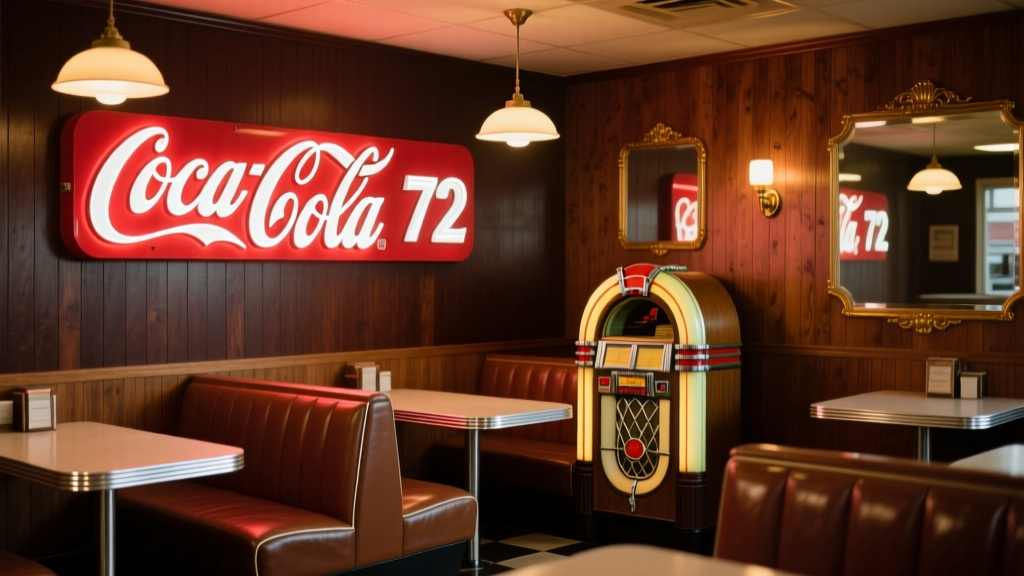
The Coca-Cola Sign Coke 72-Inch Neon and Metal Advertising Icon: History, Identification, Value, and Restoration

Folk Art Planter: Pine Wood with Hand-Painted White Squiggles and Swirls (13 × 31 Inches)
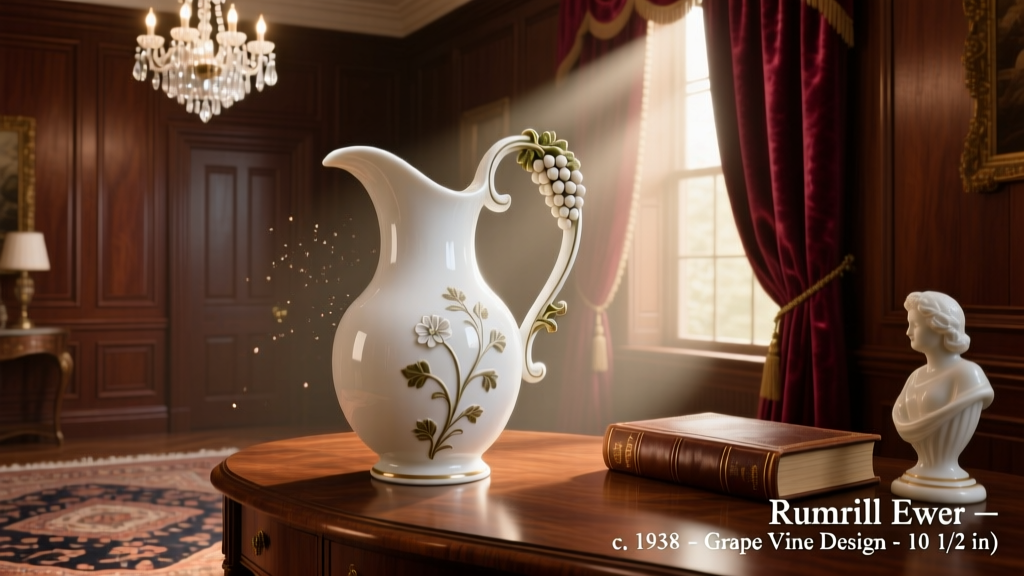
Rumrill Ewer: Grape Design Vine Handle in White Glaze, Circa 1938 — A Detailed Study of Form, Craftsmanship, and Collectibility
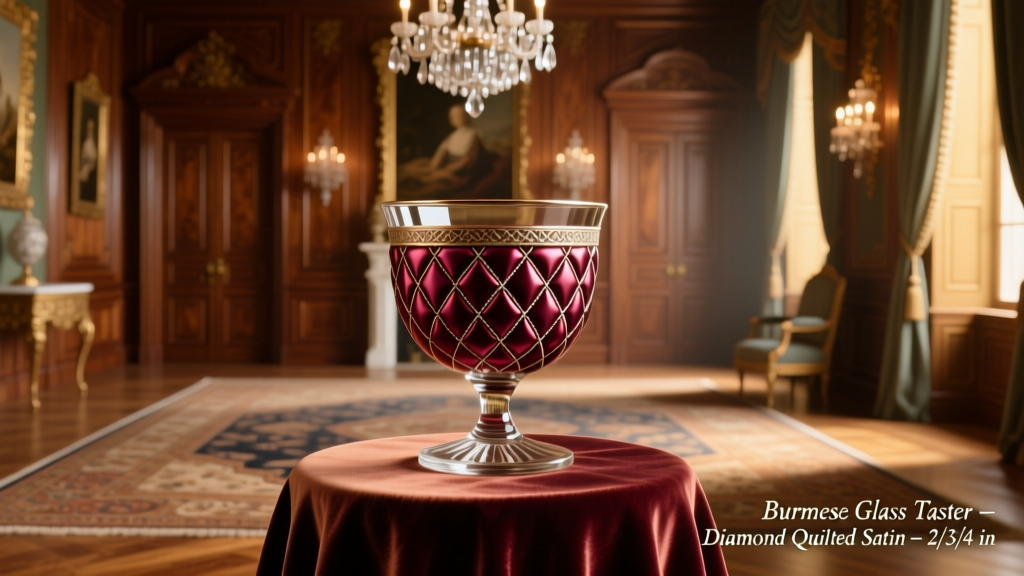
Burmese Glass Taster Whiskey Glasses: Decoding the Diamond-Quilted Satin Finish in 2-, 3-, and 4-Inch Sizes
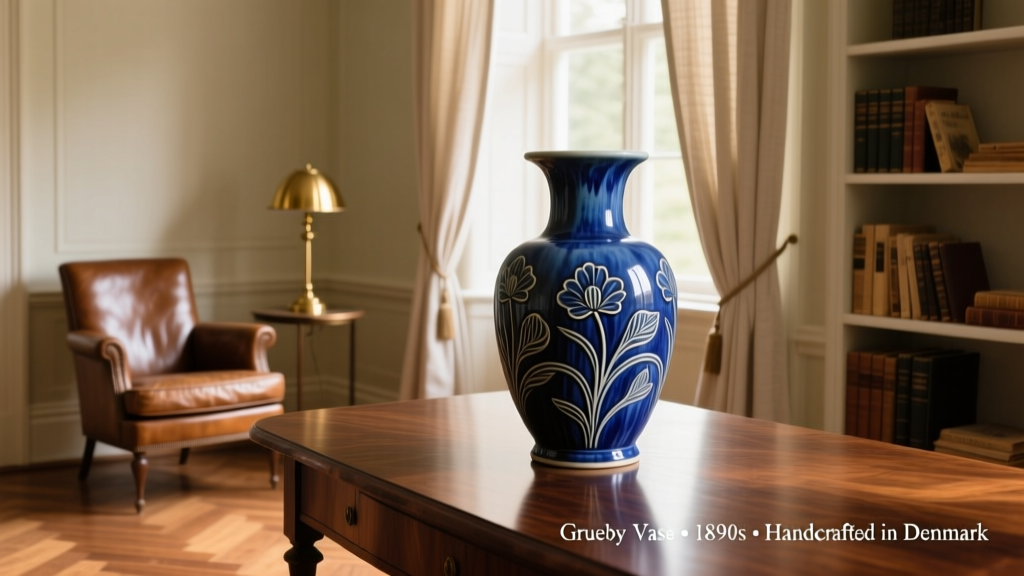
Grueby Vase with Incised Lines and Deep Blue Mottled Glaze: A 9 × 4-Inch Masterpiece of American Arts & Crafts Ceramics
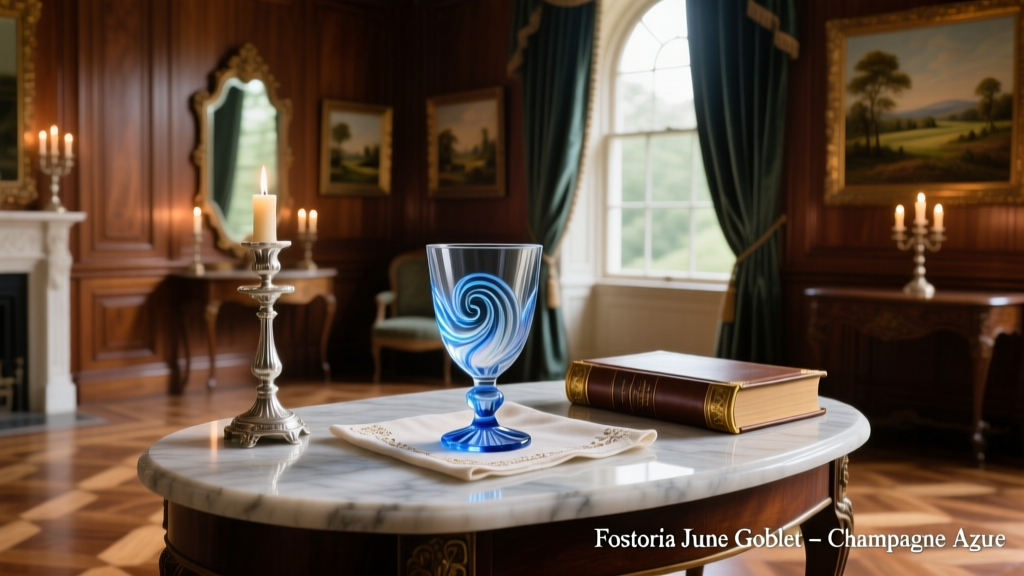
Fostoria June Goblet Champagne Azure (6 oz, 6 in): A Collector’s Guide to History, Identification, and Restoration
Wm. Knoll Co. No. 2: Decoding the Legacy of Mid-Century Modern Iconography and Manufacturing Precision
Hollowed-Out Log Furniture: Authentic Primitive Table and Matching Chairs as a Three-Piece Set