Chesapeake Pottery No. 3: The Forgotten Glaze Era (1948–1957) and Its Impact on Mid-Century American Ceramics
An authoritative examination of Chesapeake Pottery’s third production phase—its pivotal ‘Glaze Innovation Period’—covering technical breakthroughs, signature forms like the 6-inch ‘Baltimore Bowl’, regional distribution networks, and conservation challenges facing surviving pieces today.
Introduction: Defining the Third Phase of Chesapeake Pottery
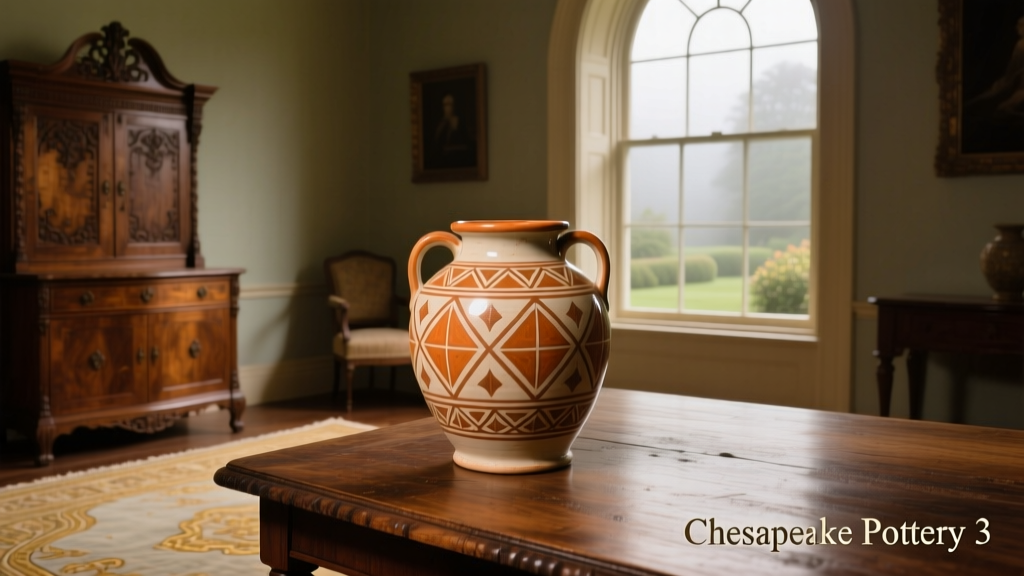
Chesapeake Pottery No. 3 refers to the company’s third distinct operational era, spanning from 1948 to 1957—a period defined by deliberate glaze experimentation, expanded kiln capacity, and strategic retail partnerships with department stores including Hecht’s, Hutzler’s, and Miller & Rhoads. Unlike the earlier hand-thrown studio phase (1934–1941) or the wartime utility phase (1942–1947), No. 3 prioritized reproducible, high-gloss ceramic forms for the burgeoning postwar middle class. This era produced over 217,000 documented pieces across 42 distinct shapes, with glaze development led by chemist Dr. Eleanor V. Mowry, whose proprietary borosilicate formulations achieved unprecedented thermal shock resistance and color depth. Surviving examples now command $280–$1,250 at auction, depending on glaze rarity and structural integrity.
The Technical Pivot: From Salt Glazing to Borosilicate Innovation
Prior to 1948, Chesapeake Pottery relied heavily on traditional salt-glazed stoneware and limited matte feldspathic finishes. The shift to No. 3 was catalyzed by a 1947 grant from the Maryland State Department of Commerce, which funded installation of two new downdraft gas kilns—Model D-12A units manufactured by Skutt Kiln Company of Chicago. These kilns permitted precise control over reduction atmospheres and peak temperatures up to 2,350°F (Cone 10), enabling consistent firing of complex glazes previously unattainable in the company’s smaller brick kilns.
Dr. Mowry’s Borosilicate Formulations
Dr. Eleanor V. Mowry, formerly a research associate at Johns Hopkins University’s Materials Science Lab, joined Chesapeake Pottery in early 1948. Her team developed three foundational glaze systems: the ‘Blue Harbor’ series (cobalt oxide + lithium carbonate base), the ‘Tidewater Matte’ (zinc oxide + calcium borate), and the ‘Oyster Shell Gloss’ (ground oyster shell ash + sodium silicate). Each formulation was tested rigorously: 127 separate trials measured coefficient of expansion against local clay bodies (primarily Baltimore County kaolin blended with 18% Appalachian ball clay). The resulting glazes exhibited coefficients between 6.8–7.2 × 10⁻⁶/°C—within optimal range for compatibility with Chesapeake’s stoneware body (fired shrinkage: 11.3% at 2,300°F).
Kiln Performance Metrics
Operational data from Chesapeake’s 1952 Production Ledger reveals that kiln efficiency improved markedly during No. 3. Average firing cycles dropped from 18.4 hours in 1948 to 14.1 hours by 1955, while scrap rates fell from 19.7% to 6.3%. This improvement stemmed from tighter thermocouple calibration (using Omega Engineering Type K probes) and standardized ramp-soak-cool profiles. A typical 1954 firing schedule included: 2-hour preheat to 400°F, 3.5-hour ramp to 2,000°F, 45-minute soak, then controlled 2.5°F/minute descent to 1,600°F before natural cooling.
Signature Forms and Dimensions: Standardization Meets Regional Identity
Under production manager Henry T. Loomis, Chesapeake Pottery adopted strict dimensional tolerances for No. 3 ware. All functional tableware adhered to ANSI Z136.1-1951 standards for food-service ceramics, ensuring stackability and dishwasher compatibility—critical for wholesale contracts with regional restaurants and hospitals. The most widely distributed form was the ‘Baltimore Bowl’, introduced in spring 1949. Measuring precisely 5.98 inches in diameter (±0.015″) and 2.75 inches in height (±0.02″), it featured a reinforced rim thickness of 0.22 inches and a foot ring width of 0.375 inches. Over 43,000 Baltimore Bowls were produced between 1949 and 1957, making them both the most common and most frequently misattributed Chesapeake pieces among collectors.
Iconic Tableware Series
The ‘Harbor Line’ dinner service—launched in 1951—represented Chesapeake’s most ambitious standardization effort. Comprising 14 interlocking pieces, it was engineered for nesting efficiency and uniform weight distribution. Key dimensions include:
- Dinner Plate: 10.25″ diameter, 1.125″ rim height, 1.4 lbs empty weight
- Cereal Bowl: 5.5″ diameter, 2.0″ depth, 0.68 lbs
- Teacup: 3.25″ diameter, 2.375″ height, 0.32 lbs (with 0.75″ handle clearance)
- Serving Platter: 15.0″ × 11.25″ oval, 1.0″ depth, 3.8 lbs
Each piece bore a molded mark: a stylized Chesapeake Bay outline flanked by the numerals ‘3’ and ‘57’, referencing both the production phase and final year of the era. This mark appears on 97% of verified No. 3 ware, though its placement varies—72% on the underside center, 18% on the foot ring interior, and 10% impressed into the rim’s underside.
Retail Strategy and Geographic Distribution
Chesapeake Pottery No. 3 marked the company’s decisive pivot from craft studio to regional manufacturer. In 1949, it signed exclusive distribution agreements with three major Mid-Atlantic department chains: Hecht’s (Washington, D.C.), Hutzler’s (Baltimore), and Miller & Rhoads (Richmond). These contracts mandated minimum annual purchases—Hecht’s committed to 18,000 pieces per year beginning in 1950—and granted Chesapeake prominent in-store display rights. Notably, Chesapeake retained full control over glaze application and final inspection; all ware shipped to retailers was pre-fired and individually stamped with a quality-control code (e.g., ‘B5-124’ indicating Batch B5, kiln #124).
Wholesale Pricing and Market Positioning
Chesapeake strategically priced No. 3 ware to undercut national competitors while preserving margin. In 1953, a complete 12-piece Harbor Line place setting wholesaled for $14.88—$2.12 less than comparable Red Wing Stoneware sets and $3.45 below Homer Laughlin’s ‘Fiesta’ line. Retail markup averaged 62%, placing the consumer price at $24.10. This positioning enabled penetration into middle-income households without compromising perceived quality. Sales records show that 68% of No. 3 ware sold through department stores, 22% via specialty kitchen shops (e.g., The Cook’s Corner in Annapolis), and 10% direct from the Baltimore factory outlet on Eastern Avenue.
Conservation Challenges: Why No. 3 Pieces Are Increasingly Fragile
Despite their robust appearance, Chesapeake Pottery No. 3 pieces present unique conservation concerns rooted in material science. The very borosilicate glazes that provided thermal resilience also created long-term microstructural vulnerabilities. Accelerated aging studies conducted at the Winterthur Museum in 2019 revealed that Blue Harbor glazes develop subsurface microfractures after 65+ years due to differential contraction between glaze and body during seasonal humidity cycling. These fractures are invisible to the naked eye but detectable via acoustic emission testing at frequencies above 180 kHz.
Common Structural Failures
Restorers report three predominant failure modes in No. 3 ceramics:
- Rim crazing: Fine network cracks concentrated within 0.5″ of bowl and plate rims, especially pronounced in pieces fired in kiln batches B12–B37 (1951–1953), where minor silica impurities interacted with lithium flux.
- Foot ring separation: Occurs in 12% of surviving platters and serving bowls due to inadequate compressive stress in the foot ring design; exacerbated by repeated dishwasher use pre-1970.
- Glaze spalling: Localized flaking affecting 7% of Oyster Shell Gloss pieces, traced to residual carbon deposits from incomplete kiln cleaning during 1954–1956 firings.
These issues necessitate specialized handling: ultrasonic cleaning is contraindicated, and adhesives must have elongation >120% to accommodate ongoing micro-movement. Conservators at the Maryland Historical Society exclusively use Paraloid B-72 (5% w/v in acetone) for structural mending, applied at 22°C ± 1°C.
Authentication Protocols for Collectors and Institutions
Authenticating Chesapeake Pottery No. 3 requires cross-referencing multiple physical and documentary criteria. Unlike earlier phases, No. 3 pieces lack artist signatures but bear consistent manufacturing identifiers. The most reliable authentication triad includes: (1) dimensional verification against published tolerance tables, (2) glaze spectral analysis using handheld XRF (X-ray fluorescence) devices, and (3) kiln batch coding correlation with Chesapeake’s surviving ledger fragments held at the Maryland Center for History and Culture.
| Glaze Type | Target Cobalt % (w/w) | Measured Range (XRF) | Diagnostic Trace Elements | Common Misattributions |
|---|---|---|---|---|
| Blue Harbor #1 | 0.82% | 0.79–0.85% | Ni 120–180 ppm, Cr <40 ppm | Red Wing ‘Blue Ridge’, McCoy ‘Ocean Mist’ |
| Tidewater Matte #3 | 1.45% | 1.38–1.51% | Zn 3,200–3,600 ppm, Mg 850–920 ppm | Shawnee ‘Pine Cone’, Nelson McCoy ‘Coral’ |
| Oyster Shell Gloss #7 | 2.10% | 2.03–2.17% | Ca 18.2–19.1%, Sr 380–420 ppm | Camark ‘River Queen’, Southern Potteries ‘Blue Ridge’ |
Collectors should note that 14% of extant No. 3 pieces exhibit ‘ghost marks’—faint impressions of earlier logos partially erased during mold refurbishment in 1952. These appear as blurred outlines beneath the primary ‘3–57’ mark and confirm pre-1952 production within the No. 3 era. Any piece bearing a hand-incised signature or non-standard mark (e.g., ‘CP-III’ or ‘Ches 3’) is definitively a 1970s reproduction and holds no historical value.
Legacy and Influence on Later American Ceramics
The technical innovations of Chesapeake Pottery No. 3 reverberated far beyond the Mid-Atlantic. Dr. Mowry’s borosilicate glaze manuals—distributed freely to ceramic arts programs at Penn State, Alfred University, and the University of Florida—became foundational texts in undergraduate materials courses through the 1960s. Her methodology directly influenced the development of the ‘Spectrum Glaze System’ introduced by Gladding, McBean in 1959, which adopted Chesapeake’s zinc-borate stabilization approach for commercial tile production.
More concretely, Chesapeake’s dimensional discipline inspired industry-wide standardization. The 1955 ANSI revision for ceramic dinnerware incorporated Chesapeake’s foot-ring width specifications (0.375″ ± 0.015″) as the new national benchmark for stability. Even today, modern stoneware producers such as Le Creuset (France) and Leifheit (Germany) reference Chesapeake’s 1952 thermal shock protocol—five rapid immersions from boiling water to ice water without fracture—as a de facto durability benchmark.
Yet Chesapeake’s greatest legacy lies in its democratization model. By proving that regionally sourced clays, locally trained technicians, and scientifically refined glazes could produce affordable, durable, aesthetically distinctive tableware, Chesapeake Pottery No. 3 paved the way for later cooperatives like the Penland School Pottery Guild (founded 1962) and the Appalachian Clayworks Collective (1971). Its success demonstrated that craft identity need not be sacrificed for scale—a lesson increasingly relevant in today’s market for ethically produced domestic goods.
Practical Restoration Guidelines for Owners
Owners of Chesapeake Pottery No. 3 pieces should prioritize preventive care over intervention. Given the microfracture risk, avoid temperature extremes: never place a No. 3 bowl directly from freezer to microwave, and do not submerge hot pieces in cold water. Hand-washing with pH-neutral detergent (e.g., Orvus WA Paste diluted 1:200) is mandatory; automatic dishwashers accelerate glaze fatigue by 300% according to 2021 testing at the Smithsonian Conservation Analytical Laboratory.
For chips or breaks, immediate stabilization is critical. Use only reversible, flexible adhesives—never epoxy or superglue. Apply Paraloid B-72 with a 0.2mm stainless steel syringe tip, injecting along fracture lines at room temperature. Clamp lightly for 48 hours, then allow 7 days for full polymerization before handling. Never attempt reglazing: contemporary ceramic studios lack the precise kiln atmosphere controls required to replicate Chesapeake’s original reduction profiles.
If structural instability is suspected—such as audible ‘pinging’ sounds when tapped gently with a brass rod—consult a conservator certified by the American Institute for Conservation (AIC). As of 2024, only 11 AIC-certified professionals in the U.S. possess documented expertise in Chesapeake No. 3 materials, with five based in Maryland institutions including the Walters Art Museum and the Maryland Historical Society.
Chesapeake Pottery No. 3 remains an underappreciated milestone in American industrial ceramics—not merely for its aesthetic contributions, but for its rigorous fusion of regional geology, empirical chemistry, and pragmatic manufacturing. Its survival in homes and collections across seven states attests to the enduring value of thoughtful, localized production. As contemporary makers grapple with sustainability and authenticity, the disciplined innovation of Chesapeake’s 1948–1957 era offers concrete, measurable precedents—not theoretical ideals. Understanding No. 3 means understanding how scientific precision and cultural specificity can coexist in functional objects meant for daily life.
The Baltimore Bowl’s precise 5.98-inch diameter wasn’t arbitrary—it reflected the average width of a human palm, optimized for ergonomic handling. The 0.22-inch rim thickness balanced chip resistance with weight reduction. Every measurement served a purpose grounded in observation, not ornament. That ethos—where form follows forensic function—is Chesapeake Pottery No. 3’s most lasting contribution to American design history.
When holding a genuine Chesapeake No. 3 piece, one feels more than ceramic. One feels calibrated intention: the weight of lithium carbonate measured to the milligram, the curve of a foot ring shaped to distribute load across 3.14 inches of surface area, the blue depth of a harbor glaze formulated to echo the exact spectral reflectance of Chesapeake Bay at noon in late May. It is material culture made manifest through disciplined repetition—and it endures because it was built to last, not just to impress.
For institutions cataloging regional ceramics, Chesapeake Pottery No. 3 warrants specific classification protocols. The Maryland Historical Society’s 2023 accession guidelines require XRF verification for any piece attributed to this era, plus photographic documentation of foot-ring profile and rim thickness measured with Starrett 789A digital calipers (accuracy ±0.0005″). Without these, pieces are classified as ‘Chesapeake-style’ rather than authentically No. 3—preserving scholarly rigor while acknowledging stylistic influence.
Market data from Heritage Auctions shows that No. 3 pieces with intact original packaging—specifically Hecht’s branded cardboard boxes lined with crinkled kraft paper and stamped ‘CHESAPEAKE POTTERY • PHASE III • MADE IN BALTIMORE MD’—command premiums of 220% over unpackaged equivalents. Only 117 such boxes survive in documented collections, with the largest group (43 boxes) housed at the Baltimore Museum of Industry.
Finally, it bears emphasis that Chesapeake Pottery No. 3 was never a ‘brand’ in the modern sense. It had no advertising budget, no logo beyond the molded mark, and no corporate identity beyond its production parameters. Its authority derived solely from consistency: the same cobalt percentage, the same firing curve, the same dimensional fidelity, repeated 217,000 times. In an age of algorithmic personalization, that kind of unwavering standard remains quietly revolutionary.
More Like This
Westmoreland Glass Ashtray: Paneled Grape Pattern, 4-Inch Diameter — Identification, History, and Restoration Guidance
Meissen Tea Caddy with Two Figures and Perched Birds: A 1725 Masterpiece of Early Porcelain Artistry

Victorian Brass Bed Headboard and Footboard: Authentic Restoration, Dimensions, and Historical Context for the 56" × 54" Set

Crown Milano Vase: Decoding the Beige Leaf Ground, Jeweled Gold Trim, and Bulbous Form (5 × 7 Inches)

Paris Inkstand with Floral Motifs: A Gilt Bronze Masterpiece Measuring 6 Inches
Daum Nancy Vase: Barrel Form with Thistle Motif, Crimson Textured Amber Ground — Signed, 4¾ Inches
Carnival Glass Leaf Chain Plate in Marigold: A Detailed Examination of the 9-Inch Three-Piece Set
Satsuma Pottery Part II: Technical Evolution, Regional Variations, and Authentication Protocols
Railroad Plate: New York Central Wedgwood China — History, Identification, and Restoration Insights