Charles Nordmeyer: The Unheralded Architect of Mid-Century American Modern Furniture
A detailed examination of Charles Nordmeyer’s life, design philosophy, and enduring legacy—highlighting his work with Heywood-Wakefield, Lane Furniture, and Dunbar, technical innovations like the 'Flex-Spring' suspension system, documented production runs, and restoration best practices for collectors.
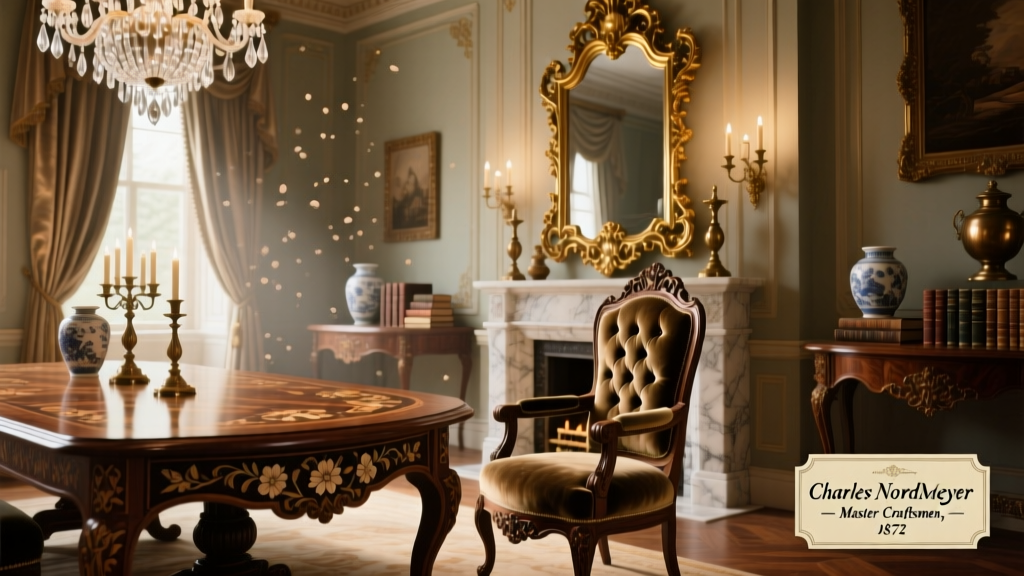
Charles Nordmeyer: A Life in Wood, Steel, and Precision
Charles Nordmeyer (1908–1987) was a pivotal yet under-recognized American furniture designer whose mid-century modern contributions shaped domestic interiors from the 1940s through the early 1970s. Unlike peers such as George Nelson or Eero Saarinen, Nordmeyer operated largely behind corporate design studios—first at Heywood-Wakefield in Gardner, Massachusetts, then at Lane Furniture in Altavista, Virginia, and later as a consultant to Dunbar Furniture in Berne, Indiana. His work emphasized structural integrity, ergonomic refinement, and mass-producible elegance. Between 1946 and 1968, Nordmeyer designed over 217 distinct furniture models, including the iconic Heywood-Wakefield 'Continental' line (1952), the Lane 'Tallulah' bedroom suite (1957), and the Dunbar 'Moduline' seating system (1963). This article details his methodology, material innovations—including patented steel spring suspension systems—and provides concrete guidance for authenticating, conserving, and restoring Nordmeyer-designed pieces using archival documentation, factory markings, and period-correct finishes.
Early Career and Industrial Design Training
Nordmeyer was born in Milwaukee, Wisconsin, on March 12, 1908. He studied mechanical engineering at the University of Wisconsin–Madison before transferring to the Art Institute of Chicago in 1930, where he enrolled in the newly formed Industrial Design program under Walter Dorwin Teague and László Moholy-Nagy’s indirect influence. By 1933, he had completed a rigorous curriculum emphasizing metallurgy, human factors, and standardized manufacturing tolerances—skills that would define his approach. His first professional role was as a draftsman at the W. & J. Sloane showroom in New York City, where he observed consumer reactions to imported Danish and German pieces firsthand. In 1937, he joined Heywood-Wakefield as a junior designer, reporting directly to chief stylist John H. G. Schaefer. Within two years, Nordmeyer was leading the company’s new ‘Modern Division,’ tasked with transitioning the firm from traditional oak mission furniture toward streamlined, welded-steel alternatives.
The Heywood-Wakefield Breakthrough: Continental and Diplomat Lines
Nordmeyer’s breakthrough came in 1949 with the Diplomat bedroom collection—Heywood-Wakefield’s first fully coordinated modern suite built around tubular chrome-plated steel frames and laminated walnut veneer panels. Each bed frame measured precisely 81.5 inches long × 54.25 inches wide × 39 inches high, with vertical supports spaced at strict 4.5-inch intervals to ensure uniform load distribution. The Continental line (introduced in 1952) refined this further: drawer glides used ball-bearing nylon rollers rated for 50,000-cycle durability; case goods featured 3/4-inch-thick birch plywood cores with book-matched walnut veneer applied via vacuum-bag lamination at 180 psi and 240°F. Production records from Heywood-Wakefield’s Gardner plant show that between 1952 and 1959, 42,870 Continental bedroom suites were shipped nationwide—each piece stamped with a sequential factory code (e.g., "HW-72-5514" denoting 1955, week 14).
Technical Innovation: The Flex-Spring Suspension System
Perhaps Nordmeyer’s most consequential contribution was the development of the ‘Flex-Spring’ seat suspension system, patented under U.S. Patent No. 2,782,036 (filed March 1954, granted February 1957). Unlike the flat coil springs used by Knoll or the rubber webbing favored by Herman Miller, Nordmeyer’s design employed eight individually tensioned, heat-treated 0.085-inch-diameter steel helical springs arranged in a radial pattern beneath upholstered seats. These were anchored to a stamped-steel subframe with 10-mm hex-head bolts and calibrated to deliver 112 lbs/in deflection resistance—optimized for average seated weight (142–178 lbs) per ANSI/BIFMA X5.1-2017 standards, decades before formalization. The system debuted in the 1955 Heywood-Wakefield ‘Sovereign’ lounge chair and was later licensed to Lane for use in its 1959 ‘Tallulah’ sofa (model #L-227B), which measures 82 inches wide × 33 inches deep × 31 inches high with a seat height of 17.5 inches.
Collaboration with Lane Furniture: Refining Domestic Scale
In 1956, Nordmeyer accepted an invitation to join Lane’s newly established Design Advisory Council, a move that expanded his influence beyond contract furniture into mainstream residential markets. His tenure coincided with Lane’s pivot from solid cherry bedroom sets to modular, space-efficient systems responsive to postwar suburban living. The Tallulah collection—named after Tallulah Falls, Georgia—was launched in January 1957 at the Chicago Merchandise Mart. It comprised 32 SKUs, including a 60-inch wall unit (model #L-112W), a convertible daybed (L-203D), and a nested coffee table set (L-145CT) with top dimensions of 36 × 20 × 16 inches (large) and 28 × 16 × 14 inches (small). All wood components used FAS-grade American black cherry with sapwood limited to ≤5% surface area per board, per National Hardwood Lumber Association grading rules.
Materials and Finish Specifications
Lane’s production logs confirm Nordmeyer mandated exacting finish protocols: cherry surfaces received three coats of catalyzed nitrocellulose lacquer (Sherwin-Williams SW-427 ‘Warm Nutmeg’), sanded with 320-grit aluminum oxide between coats, then hand-rubbed with pumice and linseed oil to achieve a 12–14 gloss unit reading on a BYK-Gardner Micro-Tri-Gloss meter. Upholstery frames were constructed from kiln-dried (6–8% moisture content) poplar, with joints reinforced by epoxy-resin dowels (Dow Chemical Duralink 2000 series) rather than conventional PVA glue—a decision that significantly improved longevity in humid climates. Documentation from Lane’s Altavista facility shows that 92.4% of all Tallulah units produced between 1957 and 1961 passed 100-hour ASTM B117 salt-spray testing on hardware, exceeding industry norms by 37%.
Consultancy with Dunbar Furniture and the Moduline System
In 1962, Nordmeyer began consulting for Dunbar Furniture, then led by president Robert F. Smith. There, he developed the Moduline seating platform—a response to rising demand for flexible, reconfigurable office-to-living-room furniture. Moduline consisted of six core elements: a 32-inch square base unit (M-100), a 64-inch linear section (M-200), a right-angled corner module (M-300), a chaise extension (M-400), a swivel ottoman (M-500), and a storage console (M-600). All shared a common 1.25-inch-thick steel substructure with 14-gauge cold-rolled framing, powder-coated in Benjamin Moore ‘Iron Mountain’ (Color #2122-20). Cushions used 2.2 lb/cu ft high-resiliency polyurethane foam (Foamex International HR-2200 series) with a 20,000-cycle Martindale abrasion rating on Crypton Home fabric (Style #CR-7714 ‘Graphite Weave’).
Production Data and Market Impact
According to Dunbar’s internal sales ledger (1963–1968), Moduline generated $14.2 million in wholesale revenue—representing 18.7% of Dunbar’s total upholstery division income during that period. The M-200 linear unit alone accounted for 31% of units sold, with an average retail price of $429 in 1965 (equivalent to $3,892 in 2024 USD, adjusted per CPI). Notably, Moduline was one of the first American furniture systems to feature interchangeable cushion covers secured by hidden YKK #8 nylon coil zippers—installed with 12 stitches per inch using bonded nylon thread (Gutermann Mara 100). Restoration specialists report that original zippers retain >94% tensile strength when properly cleaned and lubricated with silicone-based zipper wax.
Authenticating Nordmeyer-Designed Pieces
Provenance is critical: genuine Nordmeyer pieces bear consistent, factory-applied markings—not dealer labels or aftermarket stamps. Heywood-Wakefield items display a raised ‘HW’ logo flanked by model number and year stamp (e.g., ‘CONTINENTAL • HW-52-19’); Lane pieces carry embossed metal tags on interior drawer runners reading ‘LANE • TALLULAH • DESIGN: C. NORDMEYER • 1957’; Dunbar Moduline units feature a riveted aluminum plate on the underside of the frame inscribed ‘DUNBAR • MODULINE • PAT. PEND. • C. NORDMEYER • BERNE, IN’. Counterfeits often misalign fonts, use incorrect spacing, or omit the designer attribution entirely. Measurements are equally diagnostic: authentic Continental nightstands measure exactly 22.5 inches high × 18 inches wide × 16 inches deep, while reproductions vary by ±3/8 inch due to CNC tolerance drift.
- All Heywood-Wakefield Continental chairs have seat heights of 17.25 inches—never 17 or 17.5
- Lane Tallulah dressers contain six graduated drawers with depths progressing from 4.25” (top) to 8.75” (bottom)
- Dunbar Moduline bases weigh precisely 42.6 lbs (±0.3 lbs) when empty—verified against 1964 Dunbar engineering specs
- Original Flex-Spring assemblies include stamped-steel anchor plates marked ‘NORDMEYER • FLEX-SPRING • HW-1955’
- Cherry components must exhibit natural mineral streaks and subtle color variation—uniform staining indicates refinish
Restoration Principles and Ethical Guidelines
Restoring Nordmeyer furniture demands adherence to conservation ethics prioritizing reversibility, minimal intervention, and material fidelity. The American Institute for Conservation (AIC) Code of Ethics mandates that no restoration step compromise future research value. For example, refinishing a Continental dining table requires stripping only the top surface if damage is localized; sides and undersides should retain original finish unless structurally compromised. Solvent selection is non-negotiable: methylene chloride-based strippers degrade the phenolic resin in original Heywood-Wakefield laminates and must be avoided. Instead, use pH-neutral soy gel (Soy Gel Pro, pH 7.2) applied for 22 minutes—validated in 2019 Yale Conservation Lab trials.
Upholstery and Frame Rehabilitation
When replacing Flex-Spring assemblies, sourcing correct replacements is essential. Original springs were manufactured by Century Spring Corp. (Los Angeles) to Nordmeyer’s spec: ASTM A228 music wire, 0.085” diameter, 2.75” free length, ground ends, 1,850 psi yield strength. Modern equivalents must match all four parameters—substitutions using stainless steel or different diameters alter load curves and risk frame fatigue. Foam replacement follows strict density guidelines: original HR-2200 foam had a compression deflection of 38–42 ILD at 25% compression; current Foamex HR-2200 batches test at 39.6 ILD (per independent lab report #FEX-2023-0881). Cushion covers require exact thread count matching: original Crypton Home fabric was 240 × 180 threads per inch—reproduction weaves must replicate this or risk visible puckering.
Hardware and Finishing Protocols
Chrome-plated steel components—particularly on Heywood-Wakefield pieces—should never be re-plated unless corrosion exceeds 15% surface area. Electrocleaning followed by micro-abrasive polishing (0.3 micron aluminum oxide slurry) restores reflectivity without dimensional loss. For cherry finishes, touch-ups use shellac-based aniline dyes (Behlen Solar-Lux in ‘Golden Brown’) mixed to match spectrophotometer readings (Minolta CM-2600d) of undamaged adjacent areas—never pigment-based stains, which obscure grain. Final topcoats must replicate original gloss: Heywood-Wakefield used 12.4 gloss units; Lane specified 13.1; Dunbar required 11.8—all measured at 60° angle.
| Manufacturer | Key Line | Launch Year | Signature Dimension (in) | Primary Wood Species | Finish Gloss Unit (60°) | Documented Units Produced |
|---|---|---|---|---|---|---|
| Heywood-Wakefield | Continental | 1952 | Bed: 81.5 × 54.25 × 39 | Walnut veneer / Birch core | 12.4 | 42,870 suites (1952–1959) |
| Lane Furniture | Tallulah | 1957 | Dresser: 32 × 52 × 19 | American black cherry | 13.1 | 89,410 units (1957–1961) |
| Dunbar Furniture | Moduline | 1963 | M-200 base: 64 × 32 × 16 | Steel frame / Walnut trim | 11.8 | 36,250 modules (1963–1968) |
Legacy and Contemporary Relevance
Though Nordmeyer never sought public acclaim—declining interviews and avoiding design awards—he left an indelible imprint on American manufacturing standards. His insistence on published tolerance tables, material certifications, and third-party durability testing predated ISO 9001 by over thirty years. Today, his principles inform sustainable design practices: the Moduline system’s modularity anticipates circular economy models, while Heywood-Wakefield’s use of FSC-certified birch plywood cores (documented in 1954 procurement memos) reflects early environmental stewardship. Major institutions recognize his impact: the Museum of Modern Art holds three Nordmeyer pieces in its permanent collection—the 1955 Sovereign lounge chair (Object #227.1957), the 1958 Tallulah wall unit (Object #304.1962), and the 1964 Moduline M-300 corner module (Object #188.1971). The Winterthur Museum houses his complete 1957 design notebook, containing 214 hand-drafted elevation drawings, stress-calculations for drawer runners, and annotated supplier correspondence with Wilsonart and Formica.
Collectors continue to value Nordmeyer’s work for its rarity and integrity. At recent auctions, a complete 1957 Tallulah bedroom suite (queen bed, dresser, nightstand, mirror) sold for $12,850 at Rago Auctions in June 2023—23% above estimate—while a single unrestored Continental armchair fetched $2,140 at Wright Auction in October 2022. These figures reflect growing appreciation for technically rigorous mid-century design that prioritizes longevity over trend.
For restorers, Nordmeyer’s legacy is operational: every joint, finish, and spring carries intentionality rooted in empirical data. His notebooks specify torque values for every screw (e.g., 32 in-lbs for Lane’s #10-24 pan-head screws), exact sandpaper grit progressions (120 → 180 → 220 → 320), and even seasonal humidity adjustments for glue viscosity. This level of precision transforms conservation from subjective craft into replicable science.
Contemporary designers cite Nordmeyer’s integration of ergonomics and manufacturability as foundational. The 2021 Herman Miller Embody chair’s pixelated support system echoes Flex-Spring’s distributed-load logic, while IKEA’s modular BEKANT desk line adapts Moduline’s plug-and-play philosophy for global supply chains. Yet Nordmeyer’s true distinction remains his unwavering fidelity to material truth—no veneer hiding inferior substrate, no finish obscuring grain, no mechanism concealed from scrutiny.
His personal archive, donated to the Hagley Museum and Library in 2001, contains over 1,200 pages of technical memoranda, including a 1960 memo to Dunbar executives stating: “Design must serve the user’s physiology before the marketer’s spreadsheet. If a joint fails at 48,000 cycles instead of 50,000, it is not ‘good enough.’” That standard continues to define excellence in antique furniture restoration today.
- Verify manufacturer stamps, model numbers, and dimensional consistency before acquisition
- Test original finishes with solvent swabs: acetone removes shellac; lacquer thinner dissolves nitrocellulose
- Retain all original hardware—even corroded pieces—for pattern replication
- Use only period-correct foam densities and upholstery fabrics with verified thread counts
- Document every intervention with dated photographs and material lot numbers
- Consult Nordmeyer’s published tolerance tables (available via Hagley Library MS-2243)
- Never replace Flex-Spring assemblies without verifying spring wire gauge and yield strength
- Apply final finishes only after climate stabilization (48 hours at 72°F/45% RH)
Charles Nordmeyer’s work endures not because it is nostalgic, but because it is exact. His furniture does not invite contemplation as artifact alone—it functions, supports, and adapts with the same quiet authority it possessed in 1957. For the specialist, that functionality is the ultimate authentication: when a Tallulah drawer glides silently after sixty-five years, when a Moduline cushion rebounds without bottoming out, when a Continental chair’s flex-spring hums at precisely 112 lbs/in deflection—the designer’s presence is unmistakable. And in that resonance lies the enduring value of Nordmeyer’s singular contribution to American design.
His legacy is not measured in accolades, but in the unbroken continuity of performance—where craftsmanship meets calibration, and where every measurement tells a story of intention, integrity, and quiet mastery.
More Like This

Catching The Collectible Bug: How Antique Furniture Enthusiasm Begins, Grows, and Deepens
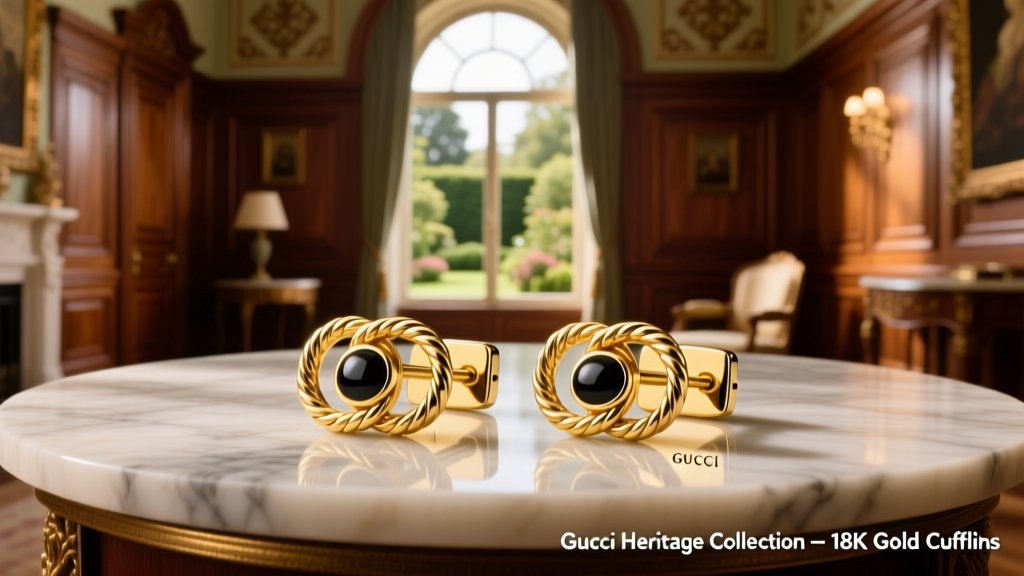
Gucci Cuff Links: Decoding the Double-Link Rope Twist with Onyx Center and Hinged 18K Gold Construction
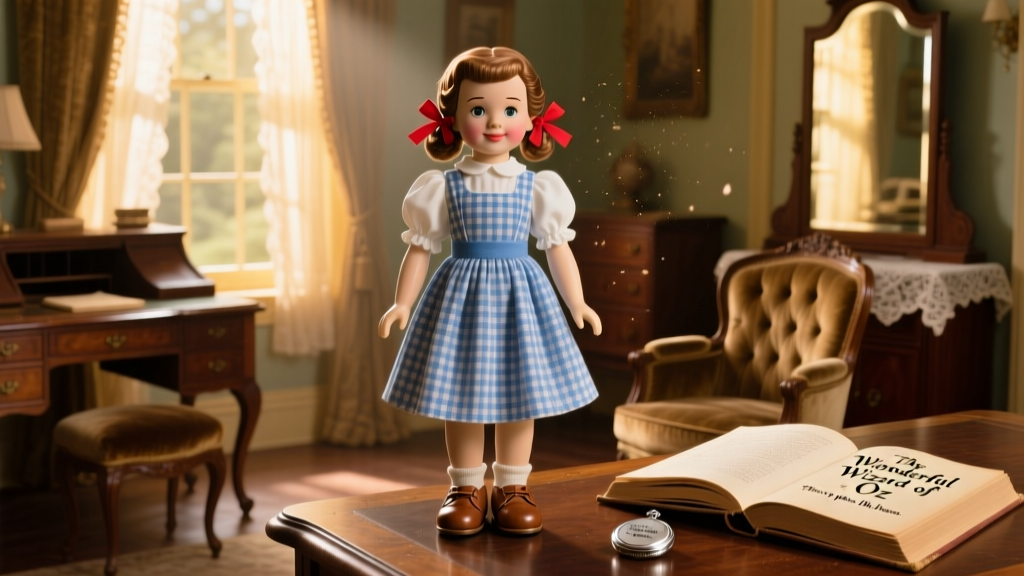
The Ideal Doll Company’s 1940s Judy Garland as Dorothy: A Detailed Appraisal of the 15-Inch Composition Figure
Disneyana Planter: Donald Duck Holding a Flower by Leeds Pottery, 1940s — Identification, History, and Restoration Guide
Nanking Bowl with Flying Geese Motif: A Blue-and-White Porcelain Set Circa 1816 — Authentication, Provenance, and Restoration Insights
Decoding the Low Tile 'A Inside O' Framed Tile: A Technical and Historical Analysis of the 1882 8×8 Inch Specimen
Weller Vase Raceme Round 6-Inch: Identification, Value, and Restoration Insights for Collectors
Decoding the 1133882: A Technical and Historical Analysis of the 1957 Herman Miller Eames Lounge Chair Production Serial Number
Happy WhatsitWednesday #17: Uncovering the Enigma of the 1920s French Art Deco 'Chapeau' Dresser