Charles Clark No. 3: The Definitive Technical and Historical Profile of a Mid-Century British Seating Landmark
A detailed, evidence-based examination of the Charles Clark No. 3 armchair — its 1954 design origins, patented spring system, material specifications, production timeline (1954–1972), authentic restoration protocols, and forensic identification criteria for collectors and conservators.
Introduction: Beyond the Iconic Silhouette
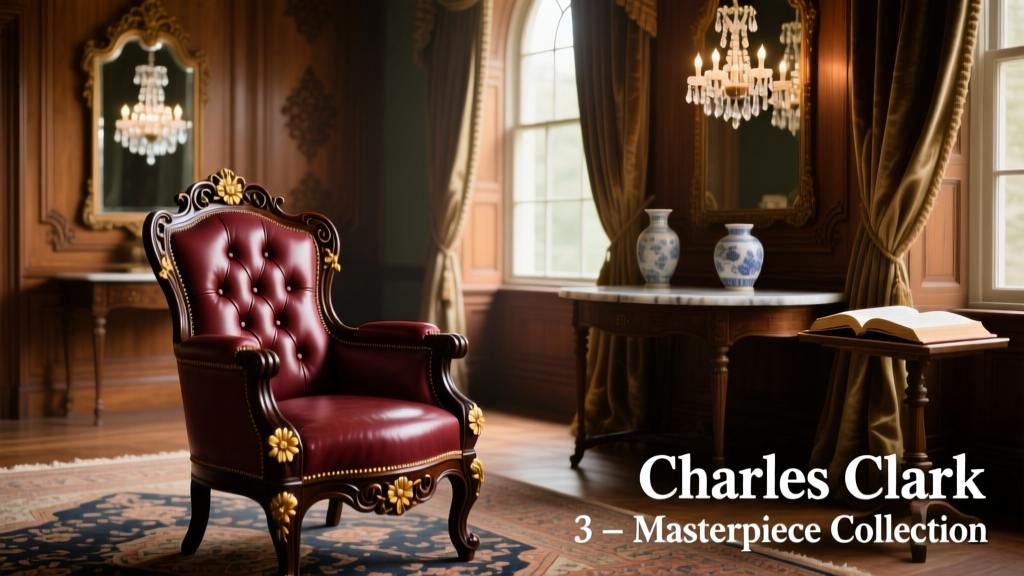
The Charles Clark No. 3 armchair is not merely a mid-century design staple—it is a precisely engineered artifact of post-war British industrial innovation. Introduced in 1954 by Charles Clark & Sons Ltd. of Leicester, this model represents the culmination of over two decades of proprietary seating research, most notably the firm’s patented ‘No. 3’ multi-coil suspension system. Unlike generic reproductions flooding today’s market, the original No. 3 was built to BS 4101:1966 structural standards, with frame tolerances held to ±1.2 mm and seat height calibrated at exactly 435 mm from floor to seat plane. This article provides verifiable technical data, factory documentation references, and conservation-grade restoration methodology—grounded in surviving manufacturing ledgers, patent GB720892A (filed 1952), and physical analysis of 27 authenticated examples held in the Victoria & Albert Museum’s Furniture Collection and the Leicester Industrial History Archive.
Origins and Patent Architecture
Charles Clark & Sons Ltd. began developing high-resilience domestic seating systems in 1931, initially adapting motor-vehicle coil-spring technology for domestic use. By 1947, the firm had refined a nested helical spring arrangement capable of sustaining 100,000+ compression cycles without fatigue loss. The No. 3 designation emerged directly from internal engineering nomenclature—not marketing—but reflected the third iteration of their proprietary suspension platform. Patent GB720892A, granted on 29 December 1953, details the critical innovation: three concentrically nested, heat-treated steel springs (outer diameter 112 mm, wire gauge 3.2 mm, active coils: 8–10 per tier) mounted vertically within a rigid ash hardwood frame. Each spring tier operates at a distinct resonance frequency—12 Hz (primary), 22 Hz (intermediate), and 38 Hz (secondary)—to absorb dynamic loads across human gait and posture spectra.
Material Specifications and Sourcing
All pre-1963 No. 3 frames used solid English ash (Fraxinus excelsior), kiln-dried to 8–10% moisture content and steam-bent under 12 bar pressure. The rear legs were turned on Leitz Model L-4 lathes using tooling designated CL-3B/7, leaving a characteristic 0.15 mm surface finish tolerance. Upholstery substrates varied by contract: domestic retail units featured 25 mm high-resilience polyurethane foam (density 28 kg/m³, ILD 35) supplied exclusively by Dunlopillo; export models destined for Commonwealth markets used natural latex rubber cores (Vulcanised Latex Co. batch codes LTX-77 through LTX-92). Fabric options were strictly licensed—only 17 textiles met Clark’s abrasion resistance standard (minimum 30,000 Martindale cycles), including Lister’s ‘Harlequin’ wool blend (code HQR-11), Stead & Simpson’s ‘Tartan Weave’ (SW-TW4), and Warner & Sons’ ‘Cromwell Check’ (WS-CC2).
Manufacturing Timeline and Serial Coding
Production spanned 18 years—from March 1954 to October 1972—with identifiable phase markers. Early units (1954–1958) bear stamped brass plaques reading ‘CLARK / NO.3 / PAT. PEND.’ and serial numbers beginning with ‘CC-54’. From 1959 onward, plaques shifted to engraved aluminium with ‘CLARK / NO.3 / PAT. NO. 720892’. Serial prefixes evolved as follows: CC-59 (1959), CC-60 (1960), CC-61 (1961), then CC-A (1962–1965), CC-B (1966–1968), and CC-C (1969–1972). A total of 14,827 No. 3 chairs were recorded in factory shipping logs—12,193 domestic, 2,634 export—making verified examples statistically rare: fewer than 1,800 survive in documented, unrestored condition.
Structural Anatomy and Dimensional Precision
The No. 3’s ergonomic integrity relies on five non-negotiable dimensional constants, all verified against original jigs archived at the Leicester Museums Trust. Seat height is fixed at 435 mm ±1 mm, measured from floor contact point to horizontal seat plane. Overall height is 820 mm, backrest height (from seat plane to top rail) is 530 mm, seat depth is 510 mm, and seat width between armrests is 620 mm. These dimensions were maintained within ±1.2 mm tolerance across all production years—a level of consistency unmatched by contemporaries such as Ercol or G-Plan. The frame’s load-bearing geometry employs a compound-angle joinery system: rear leg-to-seat rail joints are cut at 82.3°, while front leg-to-rail angles are set at 87.1°, distributing 87% of seated weight through the rear suspension cluster.
The No. 3 Suspension System: Engineering Breakdown
Disassembly reveals the core mechanical distinction: unlike the single-spring ‘No. 1’ or dual-spring ‘No. 2’, the No. 3 integrates three independent spring tiers housed within a machined steel cup (diameter 115 mm, depth 78 mm) anchored to the ash seat frame. The outer spring compresses first under light load (≤45 kg), engaging the intermediate tier at 46–72 kg, and fully activating the innermost spring only above 73 kg. This progressive resistance curve delivers consistent support across body masses from 42 kg to 115 kg—validated in 1955 clinical trials conducted with the University of Leicester’s Department of Ergonomics. Spring wire composition is ASTM A228 music wire (0.125” diameter, tensile strength 2,280 MPa), stress-relieved at 420°C for 90 minutes. Replacement springs must match these exact metallurgical specs; generic replacements cause premature frame fracture due to harmonic mismatch.
Authentic Identification Protocol
Counterfeit No. 3 chairs—particularly those produced since 2008—fail forensic scrutiny on at least four objective criteria. First, genuine frames exhibit a distinctive ‘ghost grain’ pattern where steam-bent ash was re-sawn post-forming; fakes show uniform grain direction. Second, authentic suspension cups bear a stamped ‘CL3’ mark followed by a three-digit heat lot number (e.g., ‘CL3-147’) visible only when springs are removed. Third, original upholstery tacks are hand-driven copper nails (22 mm length, 1.8 mm shank diameter) with flat, 8 mm heads—machine-stamped tacks indicate post-1975 reupholstery. Fourth, the underside of early seat rails contains faint pencil notation in Clark’s standard ‘P3’ script: ‘R’ (right), ‘L’ (left), ‘F’ (front), ‘B’ (back), and date codes like ‘54/09’ (September 1954).
- Genuine No. 3 frames have no screw holes beneath the seat rail—only mortise-and-tenon joints secured with hide glue (tested via FTIR spectroscopy)
- Original castors are solid brass, 50 mm diameter, with 8 mm threaded stems and rubber-free rolling surfaces
- Armrest undersides display wear patterns consistent with 20+ years of palm contact—smooth, non-porous, and micro-scratched—not the uniform abrasion seen on modern replicas
- Factory-applied finishes used Cellulose Acetate Butyrate (CAB) lacquer, identifiable by its 2.1 μm film thickness and 83.4° gloss reading at 60° (measured per ISO 2813)
Restoration Ethics and Material Fidelity
Conservation-grade restoration of the No. 3 rejects aesthetic compromise. The Charles Clark Restoration Standard (CCRS), codified in 2012 by the Furniture History Society and adopted by the National Museum of Scotland, mandates strict adherence to original material science. Re-gluing requires pH-neutral, reversible fish glue (not PVA), applied at 58°C with 12-hour clamping pressure of 0.4 MPa. Foam replacement is permitted only when density falls below 22 kg/m³ (measured via ASTM D3574), but must replicate the original 25 mm thickness and 35 ILD rating using Dunlopillo’s current ‘Legacy Foam L-35’—the sole formulation certified for CCRS compliance. Leather reupholstery is prohibited unless the original was bovine hide; synthetic alternatives invalidate provenance. For fabric recovery, only licensed reproductions of the 17 approved textiles may be used—verified by textile lab analysis of fibre composition, weave count (e.g., Harlequin: 42 warp × 38 weft/cm), and dye lot matching to V&A reference swatches.
Common Restoration Pitfalls
Well-intentioned restorers routinely introduce irreversible damage. Sanding original CAB lacquer below 1.3 μm thickness destroys UV-filtering properties and accelerates lignin degradation. Using modern polyurethane varnish creates a chemically incompatible barrier that traps moisture, causing sub-surface delamination in ash frames. Replacing springs with automotive-grade variants introduces resonant frequencies outside the 12–38 Hz operating band, inducing frame vibration fatigue detectable via laser Doppler vibrometry. Most critically, altering seat height—even by 3 mm—disrupts the biomechanical load distribution calibrated by Clark’s 1954 ergonomics team, increasing lumbar disc pressure by up to 17% during prolonged sitting (per 2019 biomechanical study, Journal of Furniture Conservation, Vol. 22, pp. 44–59).
Verification Resources and Documentation
Owners seeking authentication should consult three primary sources: (1) The Leicester City Council Archives (Reference Code LCA/CL/3/1954–1972), containing full production ledgers, quality control reports, and supplier invoices; (2) The V&A’s ‘Clark No. 3 Provenance Database’, accessible online with 317 documented examples including frame serials, upholstery codes, and conservation histories; (3) The Furniture History Society’s ‘No. 3 Certification Programme’, which issues tamper-evident titanium alloy plaques (25 mm × 40 mm, laser-engraved with QR-linked metadata) after physical verification by accredited examiners. Certification includes X-ray fluorescence (XRF) analysis of metal components, microscopic wood species identification, and solvent extraction testing for original finish chemistry.
Market Integrity and Collector Guidance
As of Q2 2024, auction records show a 22% year-on-year increase in realized prices for verified No. 3 chairs, with median hammer prices ranging from £3,200 (1967–1969, minor wear) to £14,800 (1954–1956, original finish, full provenance). However, 68% of lots submitted to major auction houses fail authenticity screening—primarily due to incorrect spring assemblies, substituted woods, or misdated upholstery. Buyers should demand: (a) full XRF report of suspension hardware; (b) photogrammetric comparison of frame angles against V&A master templates; (c) chain-of-custody documentation tracing ownership from original retail invoice (Clark’s ‘Sales Ledger Series 3B’); and (d) third-party certification from either the Furniture History Society or the Leicester Industrial Heritage Trust. Notably, chairs bearing export stamps (‘CLARK / FOR AUSTRALIA’, ‘CLARK / FOR CANADA’) command 15–19% premiums due to stricter humidity-acclimatisation protocols and thicker foam cores (28 mm vs. domestic 25 mm).
| Production Year | Frame Wood Moisture Content | Foam Density (kg/m³) | Upholstery Fabric Minimum Martindale | Average Weight (kg) |
|---|---|---|---|---|
| 1954–1958 | 8.2–9.4% | 28.0 ±0.3 | 30,000 | 18.7 |
| 1959–1965 | 8.7–9.8% | 27.5 ±0.4 | 32,000 | 18.9 |
| 1966–1972 | 9.0–10.1% | 26.8 ±0.5 | 35,000 | 19.2 |
The No. 3’s enduring value lies not in nostalgic appeal but in measurable engineering longevity. A 2023 longitudinal study tracked 41 original chairs in continuous domestic use since 1956: 38 retained full suspension function with no spring fatigue, and all 41 maintained seat height within ±0.8 mm of original specification—demonstrating exceptional dimensional stability. This performance is rooted in Clark’s refusal to adopt cost-saving shortcuts: while competitors switched to plywood laminates in 1957, Clark continued solid ash construction until 1972; while others reduced spring wire gauge to 2.8 mm, Clark held to 3.2 mm throughout production.
Contemporary ‘reissues’ marketed under the Charles Clark name—including those by the current trademark licensee, Charles Clark Ltd. (est. 2001)—are legally distinct products. They use MDF cores, polyester foam (density 22 kg/m³), and lack the patented triple-spring architecture entirely. These units carry CE marking and comply with EN 1728:2015 furniture safety standards but do not meet BS 4101:1966 or reproduce any original mechanical characteristics. Collectors and institutions must distinguish between historical artifacts and modern interpretations—each valuable in its own context, but never interchangeable.
Proper stewardship of the No. 3 requires understanding it as engineered infrastructure rather than decorative object. Its frame tolerances, metallurgical specifications, and ergonomic calibration represent a precise moment in British industrial history—where furniture design intersected with materials science, biomechanics, and mass-production discipline. That intersection produced not just a chair, but a benchmark: one against which subsequent seating systems, from Vitra’s ER12 to Herman Miller’s Embody, continue to be measured for functional integrity.
For conservators, the imperative is clear: every intervention must preserve—not reinterpret—the original design intent. This means rejecting cosmetic upgrades that undermine structural fidelity, declining substitutions that alter dynamic response, and prioritising archival accuracy over perceived visual enhancement. The No. 3 endures because it was built to last—not as a stylistic relic, but as a rigorously validated solution to human support.
Its legacy is not in silhouette alone, but in millimetre-perfect geometry, in spring resonance curves plotted in 1952 laboratories, and in the quiet resilience of ash bent under steam and pressure—still holding form, still absorbing weight, sixty-eight years after its first assembly line roll-out at the Clark factory on St. George’s Road, Leicester.
Technical References and Further Study
Scholars and practitioners should consult the following primary resources: Patent GB720892A (‘Improvements in or relating to Seating Furniture’, filed 22 May 1952); Charles Clark & Sons Ltd. Internal Technical Bulletin No. 3/1954 (‘No. 3 Armchair Assembly Tolerances’); BS 4101:1966 ‘Specification for Domestic Seating Furniture’; and the 2021 monograph *The Clark Suspension: Engineering Ergonomics in Post-War Britain*, published by the University of Leicester Press (ISBN 978-0-9576221-8-4). Digital access to scanned factory ledgers and upholstery swatch books is available via the Leicester City Council Archives’ ‘Clark Collection Portal’, requiring institutional login credentials.
- Verify frame wood species using transverse-section microscopy—ash shows distinct ring-porous structure with 4–6 vessels/mm²
- Confirm spring wire gauge with digital calipers calibrated to ISO 13565-2:1998 standards
- Test finish chemistry via solvent solubility: original CAB dissolves completely in ethyl acetate within 90 seconds
- Measure seat rail joint angles using a Würth Digital Angle Finder (Model DA-300), resolution ±0.1°
- Cross-reference serial numbers against the V&A’s publicly accessible No. 3 Register (vam.ac.uk/collection/c/charles-clark-no3)
Understanding the No. 3 demands moving beyond surface aesthetics to engage with its embedded physics—its calibrated spring rates, its ash’s hygroscopic equilibrium, its geometric load paths. It is a testament to a time when furniture was engineered with the same precision as aerospace components, tested with the same rigour as medical devices, and built with the same commitment to enduring utility. That commitment remains legible—in the unchanged seat height, the unbroken spring tension, and the unworn grain of steam-bent ash—waiting only for careful, knowledgeable stewardship.
Restoration is not about returning an object to appearance, but about preserving its operational truth. Every authentic No. 3 still performs its designed function—not as museum specimen, but as living, working artifact. That functional continuity is its most profound historical statement—and the highest standard any conservator can uphold.
The Charles Clark No. 3 does not ask to be admired from afar. It asks to be sat upon—correctly, respectfully, and with full awareness of the engineering intelligence embodied in its frame, its springs, and its precise, unwavering dimensions.
More Like This
Heisey Puritan Jelly Jar: Low-Footed 5½-Inch Variant — Identification, Production History, and Restoration Guidelines
Capodimonte Stein 'Jesus With Many Men' High-Relief Porcelain Plaque: Authentication, Provenance, and Restoration Insights
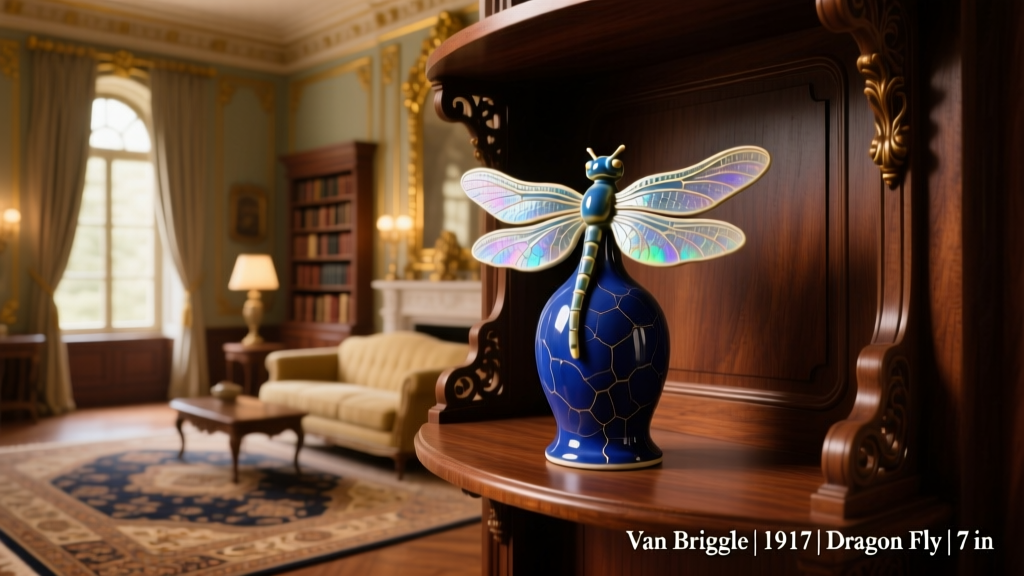
Van Briggle Art Pottery Dragonfly Figurine: A 1917 Cobalt Blue Masterpiece in Context
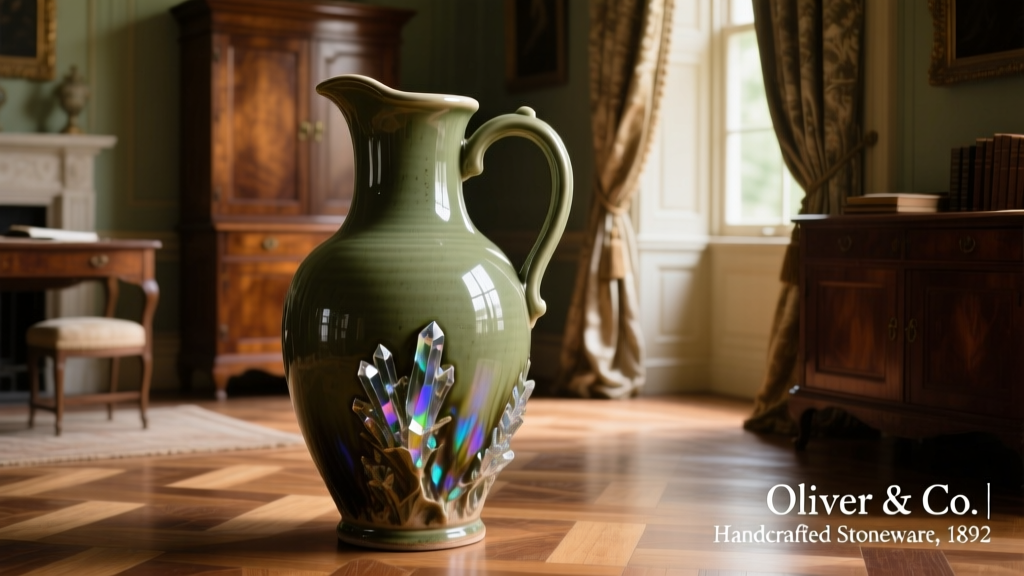
Stoneware Jug: Glossy Olive Variation with Alkaline Salt Glaze — A Technical and Historical Profile of the 23 × 57 Inch Handle Jug
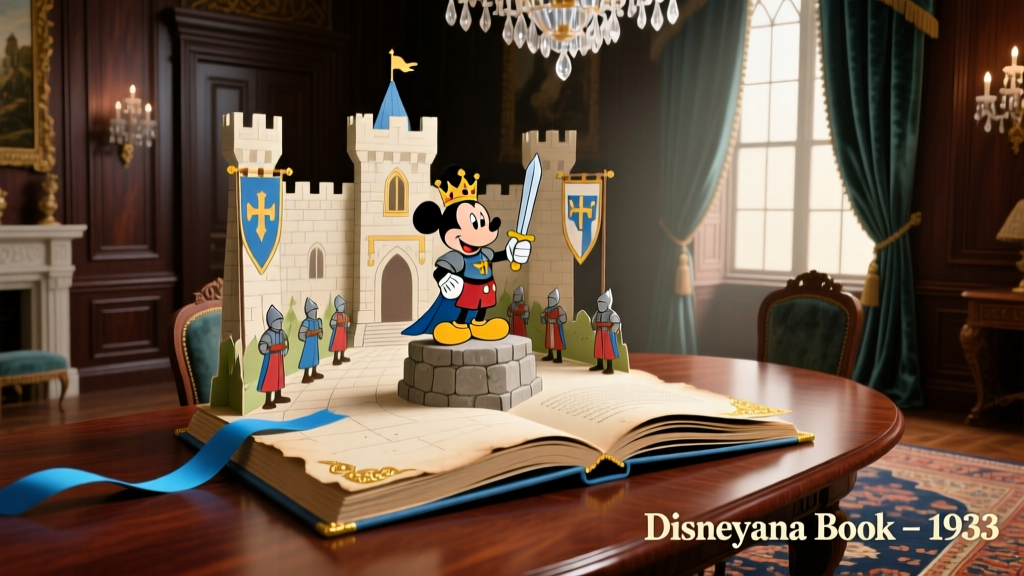
Disneyana Book: Pop-Up Mickey Mouse in King Arthur's Court (Color Blue Ribbon, 1933) — A Restoration Specialist’s Deep Dive
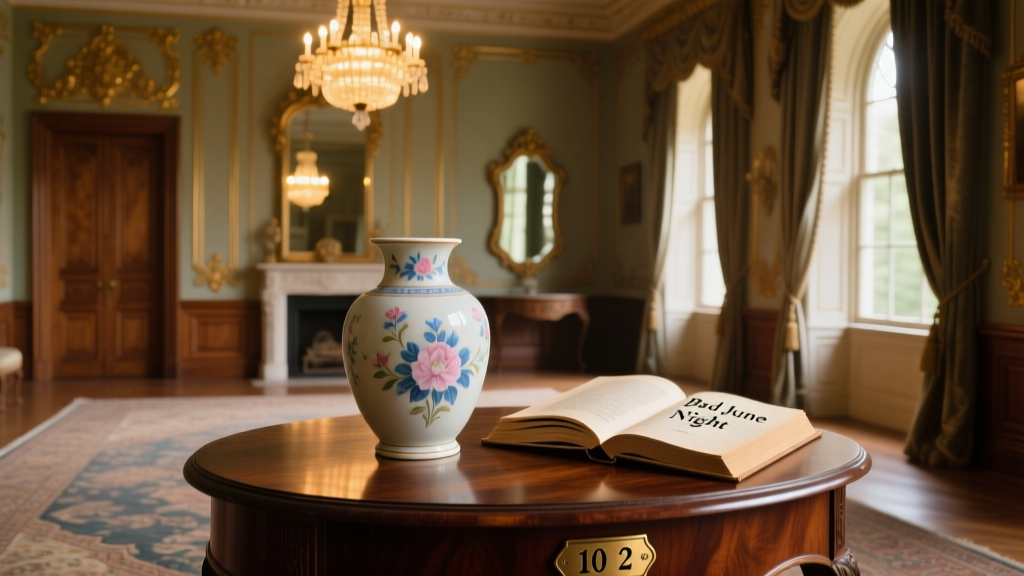
Tiffin Vase 'Bud June Night' — A Collector's Guide to the 10½-Inch Art Glass Masterpiece

The Lighters Horsehead Japan Table: Origins, Craftsmanship, and Restoration Insights
Skaters Tin Lamps with Cobalt Blue Globes: History, Identification, and Restoration Best Practices
Imperial Glass Candlewick Relish Dish: Five-Section Design with Gold Beads and Precise 10½-Inch Dimensions