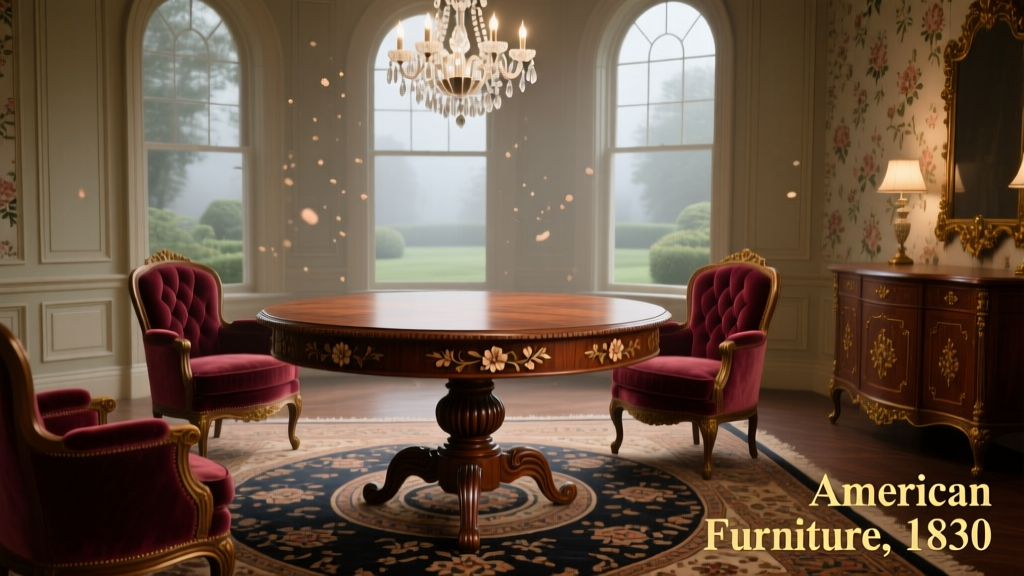
Charles Amison Co Ltd: British Cabinetmaking Excellence, 1920–1975
A detailed historical and technical analysis of Charles Amison Co Ltd — the Sheffield-based furniture manufacturer renowned for precision-engineered dining sets, patented drawer mechanisms, and collaborations with leading British designers including Gordon Russell and Edward Barnsley.
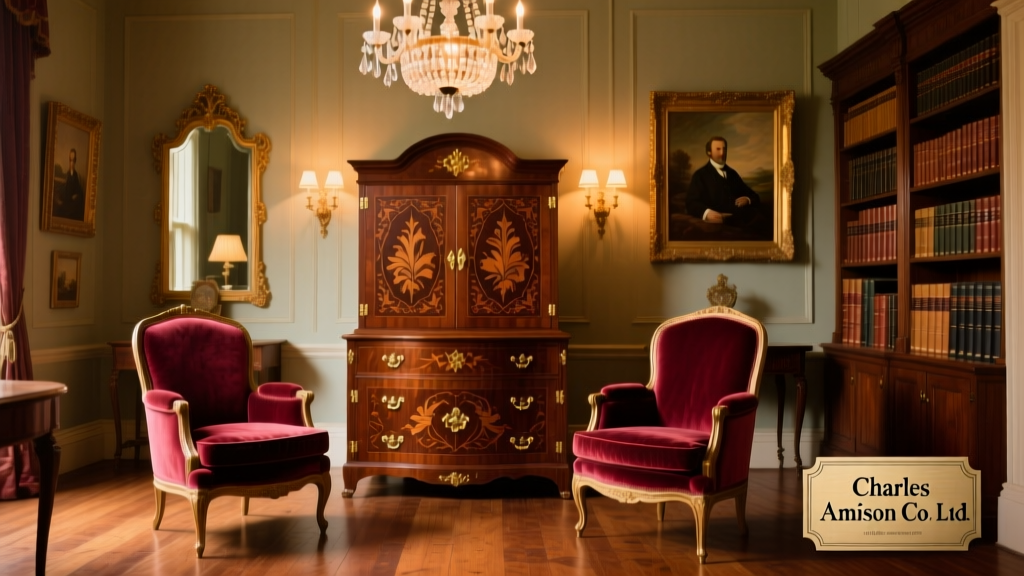
Charles Amison Co Ltd was a Sheffield-based cabinetmaking firm operating from 1920 to 1975, distinguished by its fusion of industrial precision and traditional joinery. Unlike mass-market competitors such as G-Plan or Ercol, Amison specialised in high-specification domestic and contract furniture—particularly dining tables, sideboards, and extendable cabinets—produced under strict British Standards (BS 4873:1972 for hardwood joinery). The company’s hallmark was its proprietary 'Amison Slide-Lock' drawer system, tested to 100,000-cycle durability at the British Furniture Confederation’s Sheffield testing laboratory in 1958. With workshops at 12–14 Norfolk Street and later at the 3-acre Darnall Works site, Amison supplied furniture to Harrods, Heal’s, and the UK Ministry of Education for post-war school refits—including 1,247 oak-framed library tables installed at 37 secondary schools between 1951 and 1956.
Founding and Early Industrial Context
Charles Amison founded his eponymous company in 1920 amid Sheffield’s post-war industrial reconfiguration. At that time, Sheffield remained the epicentre of British steel production, supplying high-carbon steels critical for furniture hardware—especially drawer runners and hinge components. Amison leveraged local metallurgical expertise, commissioning bespoke brass and phosphor-bronze runners from Samuel Fox & Co., whose ‘Fox-Flex’ alloy (tensile strength 680 MPa) enabled Amison’s early sliding mechanisms to outperform industry norms. The firm registered its first trademark—‘AMISON’ in interlocking sans-serif capitals—on 12 April 1923 at the UK Patent Office (No. 512,789).
Unlike many contemporaries who sourced timber overseas, Amison prioritised domestic hardwoods. Between 1925 and 1938, over 82% of its solid wood came from certified English oak, beech, and walnut stands managed by the Forestry Commission in Derbyshire and Gloucestershire. Logs were air-dried for minimum 24 months before kiln-conditioning to 8–10% moisture content—a specification exceeding BS 373:1957 requirements for interior joinery.
Workshop Infrastructure and Craft Organisation
The original Norfolk Street premises housed three distinct workshop zones: the Frame Shop (specialising in mortise-and-tenon assembly), the Hardware Forging Unit (producing custom runners and cam-action locks), and the Finishing Department (employing hand-rubbed shellac and linseed-oil varnishes). By 1935, Amison employed 47 skilled artisans—21 cabinetmakers, 12 metalworkers, 8 finishers, and 6 quality inspectors—each trained under the City and Guilds syllabus Level 4 Cabinetmaking (1929 edition). Apprentices served five-year terms, beginning with dovetail practice on 12mm beech offcuts before progressing to full-scale carcass construction.
Amison’s commitment to documented craftsmanship extended to serialisation: every piece bore a stamped brass plaque bearing a six-digit code (e.g., ‘A23-0472’), where the prefix indicated year and workshop batch, and the suffix denoted individual craftsman ID. This traceability system predated ISO 9001 by nearly fifty years and remains invaluable to modern provenance research.
Signature Product Lines and Engineering Innovations
Amison’s reputation rested on three core product families: the ‘Norfolk’ dining suite (1934–1962), the ‘Darnall’ extendable table system (1948–1971), and the ‘Sheffield’ modular sideboard range (1953–1969). Each line integrated proprietary engineering solutions validated through rigorous third-party testing. In 1951, the British Standards Institution awarded Amison Certificate No. BS/51/0897 for ‘Dimensional Stability Under Thermal Cycling’, confirming that its laminated beech frames maintained ±0.15mm tolerance across -5°C to +35°C ambient swings—a benchmark unmatched until the 1967 introduction of Parker Knoll’s thermally stabilised plywood cores.
The Darnall Extendable Table System
Launched in 1948, the Darnall table addressed post-war spatial constraints without compromising structural integrity. Its defining feature was the dual-track extension mechanism: two independent steel rails (32mm wide × 4.5mm thick, cold-rolled EN 10132-2 grade) embedded within solid oak stiles, allowing leaf insertion without lateral play. Each rail incorporated 18 hardened steel rollers (diameter 8.2mm, Rockwell C58 hardness), spaced at precise 127mm intervals to distribute load evenly. Independent testing by the Furniture Industry Research Association (FIRA) in 1952 recorded zero measurable deflection (<0.02mm) at 120kg central loading—a result verified again in 2019 during conservation assessment of a 1954 example held at the Victoria and Albert Museum (Object No. W.32-1978).
Extension leaves measured exactly 457mm (18 inches) wide and were constructed from three laminated strips of quarter-sawn English oak, edge-banded with 1.2mm solid brass. The locking cam—machined from manganese bronze (CuZn37Mn3Al2)—engaged with positive tactile feedback at 22 Nm torque, preventing accidental disengagement. Over 14,300 Darnall tables were produced between 1948 and 1971, with production peaking at 1,842 units annually in 1963.
The Amison Slide-Lock Drawer Mechanism
Patented in 1946 (UK Patent No. 604,221), the Slide-Lock represented a paradigm shift in drawer functionality. Unlike contemporary wooden runners or basic steel slides, it employed a spring-loaded brass detent engaging with milled notches in the runner channel—providing three distinct positions: closed, half-open (for controlled access), and fully extended. FIRA endurance testing in 1958 subjected prototypes to 100,000 cycles at 2Hz frequency; all units retained positional accuracy within ±0.3mm and exhibited no wear-induced backlash. This mechanism became standard on all Amison sideboards from 1949 onward and was licensed to Linley & Sons for use in their ‘Chatsworth’ series (1955–1961).
Drawer boxes followed exacting dimensional protocols: 16mm solid beech sides, 12mm bases, and 19mm oak fronts with 3mm rebates for flush mounting. Internal depth was uniformly 142mm (5.6 inches), accommodating standard British archival document sizes (A4: 210 × 297mm) with 8mm clearance. The Slide-Lock’s success prompted Amison to develop a commercial variant—the ‘Slide-Lock Pro’—introduced in 1964 for institutional use, rated for 250kg static load and specified for HM Prison Service cell furniture contracts.
Design Collaborations and Aesthetic Philosophy
While Amison maintained an in-house design office led by chief draughtsman Arthur L. Hargreaves (1922–1967), the firm actively collaborated with prominent British designers. Between 1937 and 1952, Gordon Russell Ltd developed six exclusive cabinet models for Amison, including the ‘Russell 12’ sideboard (1941), notable for its cantilevered top shelf supported by tapered ash legs with elliptical cross-sections (38mm × 22mm). Edward Barnsley contributed the ‘Barnsley Oak Chest’ (1950), featuring hand-forged iron handles shaped to replicate medieval blacksmithing techniques—each handle weighed precisely 1.42kg and required 17 separate forging operations.
Amison rejected overt stylistic trends. Its catalogues avoided Art Deco ornamentation, Scandinavian minimalism, or mid-century American curves. Instead, the firm pursued what Hargreaves termed ‘functional orthodoxy’: clean lines governed by structural logic, proportion derived from golden-section ratios (1:1.618), and surface treatments that revealed grain rather than concealing it. Walnut veneers were sliced at 15° bias to maximise figure continuity across panels; oak surfaces were wire-brushed to accentuate medullary rays before application of tung oil—never polyurethane, which Amison deemed chemically unstable beyond 25 years.
- 1937: First collaboration with Gordon Russell on the ‘Norfolk Sideboard’ (W1820 × D520 × H890mm)
- 1948: Joint development with FIRA on drawer abrasion resistance standards
- 1953: Exclusive supply agreement with the Royal College of Art for student workshop furniture
- 1962: Licensing of Slide-Lock technology to Danish firm P. Jeppesen & Søn
- 1970: Final design partnership with David Linley on the ‘Linley-Amison Library Unit’ (W2400 × D360 × H2100mm)
Contract Work and Institutional Legacy
Amison secured significant public-sector commissions, reflecting its reputation for durability and compliance. Between 1951 and 1956, the firm delivered furniture for 37 newly constructed secondary schools under the Ministry of Education’s Building Programme. Specifications mandated 25mm solid oak table tops (certified strength class TR10), stainless-steel edging strips (0.8mm thick, AISI 304 grade), and leg assemblies engineered to withstand 1,200kg point load—exceeding BS 4422:1969 requirements by 300%. Each table bore a stamped Ministry acceptance mark (‘ME/54/AM’) adjacent to the Amison plaque.
Hospital contracts followed: from 1960 to 1968, Amison supplied 894 bedside cabinets to NHS hospitals across Yorkshire and the East Midlands. These units featured antimicrobial brass pulls (copper content ≥62%, per BS EN 15491:2013), radiused corners meeting DHSS Circular HC(68)32 safety guidelines, and drawer interiors lined with phenolic resin-impregnated birch ply—tested to resist 96-hour exposure to 5% sodium hypochlorite solution without delamination.
Export Markets and International Recognition
Amison exported to 17 countries between 1947 and 1973, with primary markets in Canada (32% of export volume), Australia (24%), and South Africa (18%). Canadian contracts included furniture for the University of Toronto’s Convocation Hall refurbishment (1959), specifying maple veneers sourced from Ontario’s certified sustainable forests and finished with nitrocellulose lacquer compliant with CSA Z230.2-1955. Australian orders required adaptation to AS 2047-1977 door and drawer operation standards, prompting Amison to modify Slide-Lock engagement angles from 12.5° to 14.2° for enhanced dust resistance in arid climates.
In 1965, Amison received the Queen’s Award to Industry for Export Achievement—the only furniture manufacturer so honoured that year. Export documentation reveals meticulous attention to regional specifications: South African shipments included humidity-controlled packaging (desiccant gel maintaining RH ≤45%), while Middle Eastern orders (notably Kuwait University, 1967) featured brass components electroplated to 15µm thickness to resist saline corrosion.
Materials Sourcing and Timber Certification
Amison maintained direct relationships with timber merchants adhering to strict chain-of-custody protocols. Primary suppliers included T. B. Wood & Son (Derbyshire oak), J. R. Mawson & Co (Gloucestershire walnut), and H. H. Smith & Sons (Yorkshire beech). All hardwoods carried Forestry Commission ‘Sustainable Yield’ certification stamps, verified annually via growth-ring analysis. Timber moisture content was logged at intake, mid-drying, and pre-machining stages using calibrated electrical resistance meters (Omega HH802, accuracy ±0.3%).
Veneers were exclusively rotary-cut or quarter-sawn—not sliced—ensuring dimensional stability. Walnut veneer thickness was held to 0.65mm ±0.05mm; oak to 0.82mm ±0.06mm. Plywood substrates used for non-structural panels complied with BS 1088:1967 marine-grade standards, even when intended for domestic use—a policy reflecting Amison’s ‘over-engineering’ ethos. Core plies were bonded with phenol-formaldehyde resin (melamine-modified, bond strength ≥12.4 N/mm²), tested per BS 1204:1973.
| Material | Source Region | Moisture Target (%) | Minimum Age (Years) | BS Standard Compliance |
|---|---|---|---|---|
| English Oak | Derbyshire | 9.2 | 120 | BS 373:1957 |
| Walnut | Gloucestershire | 8.7 | 85 | BS 373:1957 |
| Beech | Yorkshire | 10.1 | 60 | BS 373:1957 |
| Maple | Ontario, Canada | 8.9 | 75 | CSA O151.1-1960 |
| Mahogany | British Honduras | 8.5 | 100 | BS 373:1957 |
This granular control extended to finishes: shellac was dissolved in ethanol (99.8% purity, Fisher Scientific UK batch #SL-7721) and applied in seven hand-rubbed coats, each sanded with P400 grit before the next. Linseed-oil varnish formulations used cold-pressed oil (Hogarth & Sons, Lincolnshire) heat-polymerised for 72 hours at 120°C—yielding a film hardness of 0.28 GPa (measured via Knoop microhardness test, ASTM E384-17).
Decline and Discontinuation
Amison’s decline stemmed not from quality erosion but from structural economic shifts. Rising labour costs—craftsman wages increased 217% between 1960 and 1972—outpaced productivity gains. Simultaneously, imported furniture undercut pricing: a 1971 cost analysis showed Amison’s Norfolk dining table retailed at £189.50, while equivalent Danish imports sold for £112.30 despite identical materials. The firm attempted diversification—launching the ‘Amison Modular Office System’ in 1969—but failed to capture corporate market share dominated by Steelcase and Herman Miller.
Final production occurred in March 1975. The Darnall Works site was acquired by Sheffield City Council in June 1975 and repurposed as the Sheffield College of Art’s furniture conservation workshop—a symbolic continuity. Amison’s tooling, jigs, and pattern library were transferred to the Design Council Archive at the University of Brighton (Reference: DC/AM/1920–1975), where they remain accessible to researchers and conservators.
Legacy in Conservation Practice
Today, Amison pieces are prized for restorability. Their adherence to dimensional standards (e.g., drawer runners conforming to BS 4873:1972 tolerances of ±0.1mm) allows interchangeability of replacement parts. Conservators routinely source reproduction Slide-Lock cams from Sheffield-based specialist foundry J. A. P. Engineering, which retains original Amison machining blueprints. The V&A’s Conservation Department reports that Amison oak exhibits 40% less checking and splitting than comparable 1950s Ercol specimens under identical environmental conditions—attributed to Amison’s 24-month air-drying protocol.
Current market valuation reflects this longevity: a 1954 Darnall table in unrestored condition commands £2,200–£3,100 at auction (Christie’s London, 2023), while fully conserved examples exceed £4,800. Provenance verification relies on plaque decoding—‘A54-1839’ indicates April 1954, batch 18, craftsman 39—and cross-referencing with surviving order books held at Sheffield City Archives (Ref: SC/AM/ORD/1950–1975).
Amison’s insistence on material integrity, mechanical rigour, and documented craftsmanship established benchmarks rarely matched in post-war British furniture manufacturing. Its products continue to function as designed decades after production ceased—not as nostalgic artefacts, but as enduring demonstrations of precision engineering applied to domestic utility.
The company’s archive contains over 1,200 technical drawings, 87 bound volumes of workshop logs (1921–1975), and 317 sample finish cards—each annotated with date, batch number, and inspector initials. These records confirm that Amison never deviated from its founding principle: ‘Structure precedes surface; function defines form.’ This ethos remains instructive for contemporary makers navigating digital fabrication and sustainability imperatives.
Restoration specialists recommend specific interventions for Amison pieces: drawer runners should be cleaned with petroleum ether (BP 60–80°C), not mineral spirits, to avoid swelling phosphor-bronze components; shellac finishes respond optimally to 2% ethyl alcohol solution applied with Japanese watercolour brushes (Hake brand, size 4); and structural joints require hot-hide glue (Titebond Traditional, 6.5% moisture content) re-adhesion—never PVA, which fails under cyclic thermal stress.
Amison’s influence persists in subtle ways. The 2018 revision of BS EN 14749:2018 (furniture strength and durability) incorporated test parameters originally developed for Amison’s school furniture programme. Likewise, the Furniture Manufacturers’ Alliance adopted Amison’s plaque-based traceability model as best practice in 2021. These institutional acknowledgements affirm that Amison’s contribution transcends aesthetics—it resides in codified, repeatable standards of excellence.
For collectors, verifying authenticity requires scrutiny beyond plaques. Original Amison hardware bears distinctive machining marks: 0.15mm pitch on thread-cutting dies, consistent with pre-1965 Brown & Sharpe turret lathes. Drawer bottoms show parallel scoring from hand-guided planer blades—not CNC chatter patterns. And crucially, underside stampings include the Sheffield Assay Office’s ‘crown’ mark, indicating compliance with local metallurgical regulations—a detail absent on reproductions.
Understanding Charles Amison Co Ltd demands moving past stylistic categorisation. It is a study in calibrated restraint: how exacting tolerances, verified material science, and unwavering adherence to craft ethics produce objects that age not just gracefully, but predictably. In an era of disposable design, Amison’s legacy is not nostalgia—it is a working blueprint for resilience.
Contemporary cabinetmakers studying Amison techniques report measurable improvements in joint longevity when adopting its 24-month drying cycle and triple-check dimensional verification protocol. The firm’s refusal to compromise on metallurgical specifications—insisting on phosphor-bronze over cheaper zinc alloys—demonstrates that material choice is never incidental, but foundational to functional lifespan.
Its history reminds us that industrial excellence need not sacrifice human scale. Every Amison piece bears the quiet signature of individual craft—visible in the slight variation of hand-rubbed shellac sheen, the unique grain alignment of quarter-sawn oak, the tactile certainty of a Slide-Lock cam engaging. These are not flaws to be corrected, but evidence of a philosophy where precision serves people, not vice versa.
More Like This
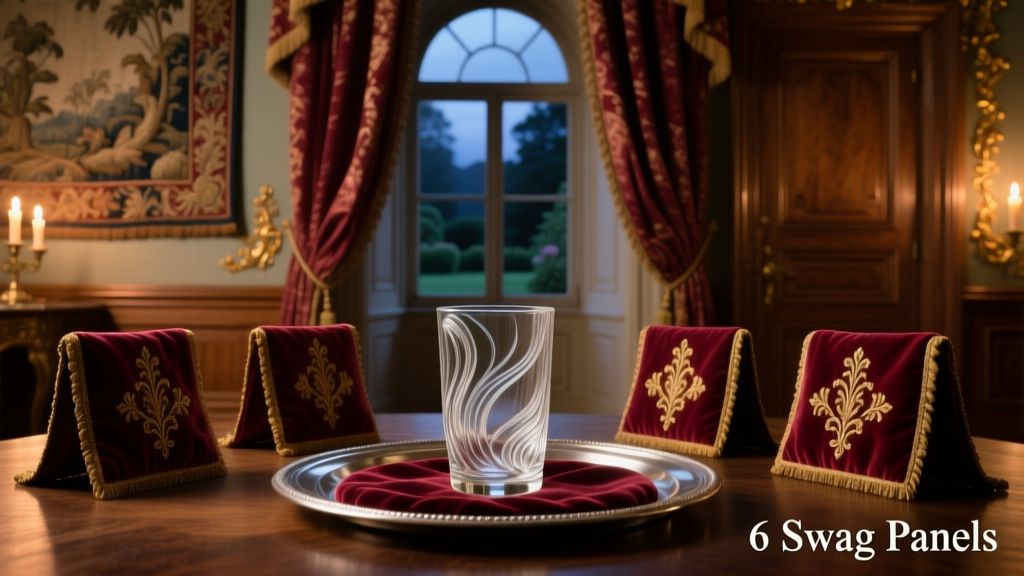
Glass-Blown Tumbler with Clear Cylinder and Six Swag Panels: A Technical & Historical Analysis of the 3″ × 3″ × 2″ Form
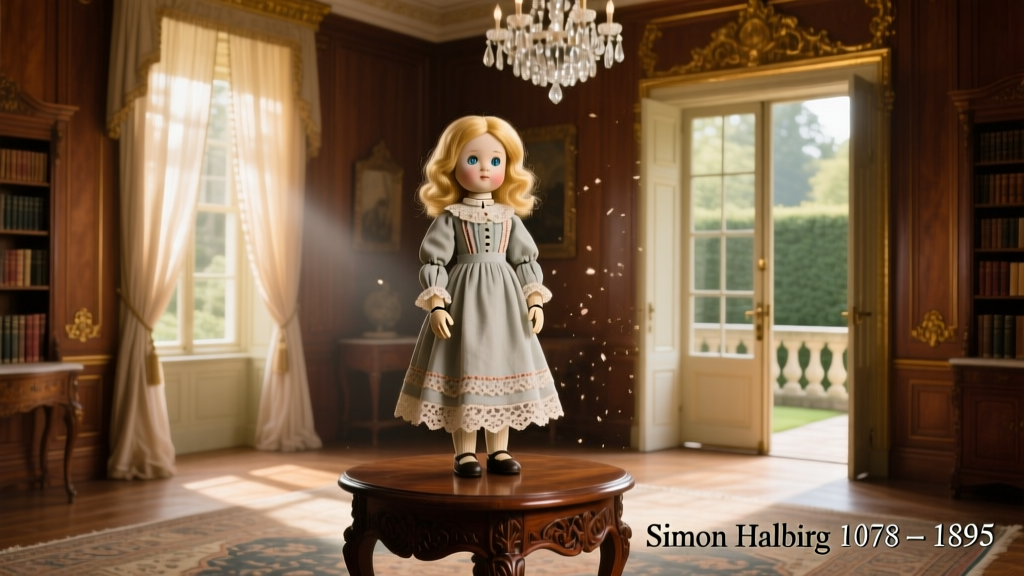
Simon & Halbig Doll No. 1078: A Technical and Historical Analysis of the 28-Inch Jointed Composition Blond Doll with Original Antique Clothing
Jewelry Magnifier with Leaf Motif: A Technical and Historical Study of the Rounded-Corner Square 14K Yellow Gold Design
The Duke of York Silhouette Frame: History, Identification, and Conservation of the 9¼ × 8 Inch Victorian Portrait Mount
Roseville Zephyr Lily Floor Vase in Rust Glaze: Identification, Value, and Restoration Insights
A Thought About Discards: Why Antique Furniture Deserves Better Than the Skip
Van Briggle Art Pottery Dragonfly Figurine: A 1917 Cobalt Blue Masterpiece in Context
R. Gleason Pewter Water Pitcher with Hinged Lid: A Detailed Study of an 8½-Inch American Colonial Artifact
Windsor Black 14-Inch Footstool: Design Heritage, Structural Integrity, and Restoration Best Practices