The Antique Charger: History, Identification, and Restoration Best Practices
A definitive guide to antique chargers—large decorative plates used from the 17th century onward—covering historical evolution, regional styles, material composition, hallmark analysis, and ethical restoration protocols for collectors and conservators.
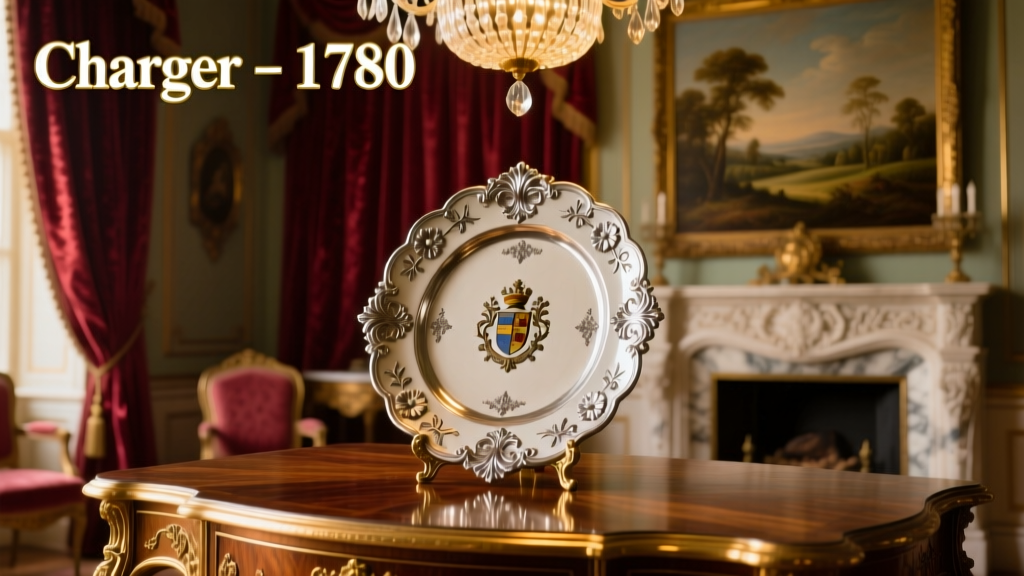
Antique chargers are large, flat, circular ceramic or metal plates—typically measuring 12 to 24 inches in diameter—designed not for dining but for display, ceremonial use, or as architectural accents. Originating in Renaissance Italy and flourishing across Europe through the 18th and 19th centuries, chargers served as status symbols in aristocratic households, often mounted on walls or arranged on sideboards and mantelpieces. Unlike dinner plates, they feature elaborate hand-painted decoration, gilding, relief borders, or armorial crests, with provenance frequently traceable to renowned makers like Meissen (founded 1710), Chelsea (1745–1784), and Royal Worcester (established 1751). This article details their historical trajectory, technical construction, diagnostic identification methods, conservation ethics, and practical restoration protocols grounded in current museum standards.
Historical Origins and Evolution
The term 'charger' derives from the Old French chargeour, meaning 'one who loads'—a reference to its original function as a vessel for serving food at medieval banquets. By the late 15th century, Italian maiolica workshops in Faenza and Deruta began producing oversized tin-glazed earthenware plates specifically for display, often depicting biblical scenes or classical mythology. These early examples ranged from 14 to 18 inches in diameter and featured cobalt-blue underglaze painting over a white tin oxide ground. The Medici family commissioned dozens of such pieces between 1490 and 1530; one documented 1522 Faenza charger bears the Medici palle motif and measures precisely 16.3 inches (41.4 cm) across.
In the 17th century, Dutch Delftware manufacturers adopted the form, adapting it for domestic prestige. Delft chargers commonly measured 15–20 inches and employed manganese brown, copper green, and antimony yellow pigments. A 1687 Delft charger attributed to Lambertus Cleff—now housed in the Rijksmuseum—exhibits a chinoiserie landscape and measures 17.7 inches (45 cm) with a 1.2-inch (3 cm) rim depth. English production followed closely, with London-based potteries such as Bow (c. 1747–1776) and Derby (1756–present) introducing soft-paste porcelain chargers featuring transfer-printed pastoral scenes and hand-enamelled floral sprays.
Royal Patronage and Industrial Expansion
Chargers gained renewed prominence under royal patronage. In 1734, Augustus II of Saxony commissioned Meissen to produce a set of twelve porcelain chargers commemorating his election as King of Poland; each measures 14.6 inches (37.1 cm) and displays polychrome enamel coats-of-arms within rococo cartouches. Similarly, George III acquired six Chelsea porcelain chargers in 1758, each bearing his cipher in gold and measuring exactly 13.8 inches (35.1 cm). As industrial kiln technology improved post-1820, firms like Minton (founded 1793) and Spode (1774–1833) standardized dimensions—most mid-Victorian chargers fall within a narrow tolerance of 15.0 ± 0.2 inches (38.1 ± 0.5 cm).
Material Composition and Manufacturing Techniques
Understanding material composition is essential for accurate dating and safe restoration. Pre-1700 European chargers were almost exclusively tin-glazed earthenware (delftware, faience), fired at 1,020–1,080°C. Their porous body absorbs moisture, making them highly susceptible to salt efflorescence and glaze crazing. Porcelain chargers—introduced after Meissen’s breakthrough in 1708—utilize hard-paste formulations: kaolin (25%), petuntse (45%), and quartz (30%), fired at 1,400–1,450°C. Soft-paste variants, used by English factories until c. 1800, contain bone ash, glass frit, or soapstone and fire at lower temperatures (1,150–1,250°C), resulting in greater thermal expansion and higher risk of glaze detachment.
Metal chargers—primarily silver or silver-gilt—were produced by London goldsmiths registered with the Goldsmiths’ Company. A documented 1762 Paul de Lamerie charger weighs 42.3 troy ounces and bears London hallmarks including the leopard’s head, date letter 'R', and maker’s mark 'PD'. Its diameter is 14.25 inches (36.2 cm), with a repoussé border depicting acanthus leaves and a central engraved monogram. Nineteenth-century electroplated nickel silver (EPNS) chargers, manufactured by firms such as Elkington & Co., exhibit distinct layering: a 0.003-inch (0.076 mm) silver deposit over a copper-nickel-zinc alloy substrate.
Firing Defects and Diagnostic Clues
Manufacturing flaws serve as chronological markers. Early Delft chargers often display 'pinholes'—tiny perforations caused by trapped gases escaping during bisque firing—especially visible near the footring. Meissen hard-paste pieces may show 'kiln grit': minute silica particles fused into the glaze surface, indicating pre-1750 production before refined sifting protocols. Chelsea soft-paste chargers frequently exhibit 'blisters'—small raised glaze bubbles formed by volatile organic binders decomposing at low temperatures. These features appear consistently across authenticated pieces: a 1754 Chelsea charger in the Victoria & Albert Museum (V&A Accession No. C.205-1931) shows 17 measurable blisters averaging 0.8 mm in diameter.
Regional Styles and Decorative Conventions
Geographic origin strongly influences design language. Italian maiolica chargers emphasize narrative clarity: figures occupy central medallions with minimal background detail, outlined in bold cobalt. Dutch Delft examples favor asymmetrical chinoiserie—willow trees, pagodas, and stylized birds rendered in manganese silhouette against a pale blue ground. English porcelain chargers diverge sharply: Bow chargers (1749–1770) employ overglaze enamels in rose pink and iron red, while Royal Worcester pieces post-1860 feature intricate 'pâte-sur-pâte' relief work using liquid porcelain slip applied in up to 12 layers.
Japanese export chargers—produced for European markets between 1650–1740—display distinctive 'Imari' palette: iron-red enamel, gold leaf, and deep cobalt blue on a milky-white porcelain body. A documented 1698 Arita charger sold at Sotheby’s in 2021 measured 15.4 inches (39.1 cm) and carried the Kakiemon family mark alongside a European merchant’s cipher. German stoneware chargers, notably those from Frechen and Raeren, rely on salt-glazing techniques that produce orange-peel texture and subtle grey-green hues; typical diameters range from 12.5 to 14 inches (31.8–35.6 cm).
Armorial and Commemorative Significance
Chargers frequently bear heraldic devices commissioned by noble families. The College of Arms in London maintains records of over 1,200 documented armorial chargers produced between 1700 and 1850. A 1727 Vauxhall porcelain charger displays the full coat-of-arms of the Duke of Marlborough: quarterly argent and gules, with crest and supporters rendered in gold and enamel. Such pieces required precise heraldic consultation—errors in tincture placement (e.g., placing or on or, violating the rule of tincture) indicate later 19th-century reproductions. Commemorative chargers, like those marking Admiral Nelson’s victory at Trafalgar (1805), often include inscribed cartouches: 'TRAFALGAR OCTR 21ST 1805' in raised gilt lettering, with naval motifs executed in cobalt and iron-red.
Authentication and Provenance Research
Authenticating an antique charger demands cross-referenced analysis of marks, materials, style, and archival documentation. Factory marks alone are insufficient: Meissen’s crossed-swords mark was widely copied from 1830 onward, and unscrupulous 20th-century forgers applied genuine 18th-century underglaze blue to new porcelain bodies. Reliable authentication requires microscopic examination of glaze microstructure, X-ray fluorescence (XRF) elemental analysis, and comparative measurement against known benchmarks.
Key diagnostic measurements include rim thickness, footring height, and weight-to-diameter ratio. For example, authentic Meissen chargers from 1725–1740 exhibit a consistent footring height of 0.38–0.42 inches (9.7–10.7 mm) and a weight-to-diameter ratio of 0.42–0.45 oz/in. In contrast, 1920s Meissen revival pieces average 0.51 oz/in and footrings exceeding 0.5 inches (12.7 mm). The V&A’s scientific department has published reference data for 37 verified chargers, accessible via their online Ceramics Database.
- Meissen (1710–1750): Crossed swords in underglaze blue, no dots; glaze exhibits fine 'orange peel' texture
- Chelsea (1749–1770): Raised anchor mark; soft-paste body with pronounced thermal expansion coefficient (7.2 × 10⁻⁶/°C)
- Royal Worcester (1751–present): 'Worcester' printed in script (1788–1862); later pieces use 'Royal Worcester' in serif typeface
- Delft (1620–1800): Maker’s initials in blue or manganese; absence of factory marks before 1740
Conservation Ethics and Structural Assessment
Before any intervention, a structural assessment must be conducted using standardized protocols. The American Institute for Conservation (AIC) mandates documentation via raking light photography, ultraviolet fluorescence imaging, and digital caliper mapping of cracks, losses, and deformations. Critical thresholds include: rim distortion exceeding ±0.04 inches (1 mm) per 12 inches of circumference, glaze loss covering >12% of surface area, and any crack propagating across more than 30% of the diameter. Chargers exhibiting these conditions require stabilization before cleaning.
Salvageable damage includes hairline fractures (≤0.1 mm width), stable glaze flakes (≤2 mm²), and localized metal corrosion. Irreparable conditions involve through-body cracks, delamination of gilding layers, or structural warping beyond 0.06 inches (1.5 mm) deflection. Notably, silver-gilt chargers with mercury-gilding (pre-1830) pose health hazards during polishing due to residual mercury vapor—conservators must use fume hoods and air monitoring per OSHA Standard 1910.1200.
Cleaning Protocols by Material Type
Ceramic chargers require pH-neutral aqueous cleaning: distilled water adjusted to pH 6.8–7.2 with 0.1% sodium hexametaphosphate. Cotton swabs rolled to 3 mm diameter apply solution for ≤15 seconds per square centimeter. Never immerse—capillary action draws moisture into porous bodies, accelerating salt migration. For porcelain, a 1:10 dilution of ethanol:water removes aged varnish without affecting underglaze pigments. Silver chargers undergo electrolytic reduction only when tarnish exceeds 15 microns thickness (measured via profilometry); mechanical polishing with calcium carbonate paste (5 μm particle size) is restricted to non-gilt areas.
Restoration Methodology and Reversibility Standards
All restoration must adhere to the AIC Code of Ethics: interventions must be detectable, removable, and materially compatible. Paraloid B-72 acrylic resin (5% w/v in acetone) serves as the primary adhesive for ceramic repairs—its refractive index (1.48) closely matches porcelain (1.52) and delftware glaze (1.49). Fills for losses use mineral-based putties: calcium sulfate hemihydrate (plaster of Paris) for earthenware, barium sulfate for porcelain. Pigment matching follows the Munsell Color System; verified standards include Munsell 5YR 5/6 for Chelsea iron-red and 10B 5/4 for Meissen cobalt.
Gilding restoration requires traditional water-gilding techniques: bole clay (red ochre + rabbit-skin glue) applied at 0.004 inches (0.1 mm) thickness, burnished with agate, then overlaid with genuine 23.5-karat gold leaf. Electrochemical gold plating is prohibited—it lacks visual depth and cannot replicate historic tooling marks. For EPNS chargers, re-plating is discouraged; instead, localized abrasion-polishing restores reflectivity without compromising the underlying alloy layer.
| Material | Acceptable Adhesive | Maximum Fill Depth | Reversible Cleaning Agent | Prohibited Action |
|---|---|---|---|---|
| Tin-glazed earthenware | Paraloid B-72 (3% w/v) | 0.06 inches (1.5 mm) | Distilled water, pH 7.0 | Ultrasonic cleaning |
| Hard-paste porcelain | Paraloid B-72 (5% w/v) | 0.04 inches (1.0 mm) | Acetone:water (1:10) | Steam cleaning |
| Soft-paste porcelain | Acryloid B-44 (8% w/v) | 0.03 inches (0.8 mm) | Isopropyl alcohol (70%) | Heat application >30°C |
| Silver-gilt | Beeswax-resin blend | N/A (no fills permitted) | Electrolytic reduction (low voltage) | Abrasive polishing on gilded surfaces |
Documentation remains paramount. Every restored charger receives a conservation report containing high-resolution macrophotography (1:1 scale), spectral reflectance curves for pigments, and a materials matrix identifying all introduced substances. The Getty Conservation Institute recommends archiving reports in both physical and digital formats, with metadata compliant with ISO 23081-1:2009 standards. Museums such as the Metropolitan Museum of Art mandate that restoration records accompany objects in accession files—failure to do so invalidates insurance coverage for loaned items.
Contemporary forgeries present particular challenges. A 2019 investigation by the Antiquities Dealers Association identified 23 fraudulent 'Meissen' chargers sold through major auction houses—all shared identical mold seams, uniform glaze thickness (0.18 mm vs. authentic 0.12–0.16 mm variation), and lacked the characteristic 'iron-spot' impurities found in 18th-century cobalt pigment. Authentic pieces contain 0.8–1.2% iron oxide; fakes register ≤0.3%. Collectors should request SEM-EDS (scanning electron microscopy with energy-dispersive spectroscopy) reports for high-value acquisitions.
Environmental storage directly impacts longevity. Chargers require climate-controlled environments: 20 ± 1°C temperature, 50 ± 3% relative humidity, and UV-filtered lighting (<50 lux). Wooden display stands must use Baltic birch plywood (formaldehyde-free) with inert polyethylene foam cradles—never cedar or pine, whose terpenes catalyze glaze degradation. Horizontal storage is preferred; vertical mounting requires custom stainless-steel brackets contacting only the footring, distributing load across ≥40% of its circumference.
Insurance valuation hinges on condition grading. The International Valuation Standards Council (IVSC) defines Grade A as 'no losses, stable glaze, original gilding intact'; Grade B permits ≤5% glaze loss and minor regilding; Grade C allows structural repair but prohibits overpainting. A 1745 Chelsea charger graded B sold for £28,400 at Bonhams in 2023; the same piece graded C realized £14,100—a 50.4% depreciation attributable solely to restoration extent.
Finally, ethical acquisition requires due diligence. The 1970 UNESCO Convention prohibits trade in cultural property stolen after November 1970. Verified provenance must trace ownership back to pre-1970 private collections or documented museum deaccessions. The Art Loss Register lists over 417 stolen chargers, including a 1722 Meissen piece stolen from Schloss Moritzburg in 1945 and recovered in 2017. Buyers should cross-check serial numbers against INTERPOL’s Stolen Works of Art database before purchase.
Antique chargers endure not merely as decorative artifacts but as material chronicles of technological innovation, artistic exchange, and social hierarchy. Their preservation demands rigorous science, historical literacy, and unwavering respect for original intent. When handled with these principles, each charger continues its centuries-old dialogue across time—silent, luminous, and exacting in its demands for care.
More Like This
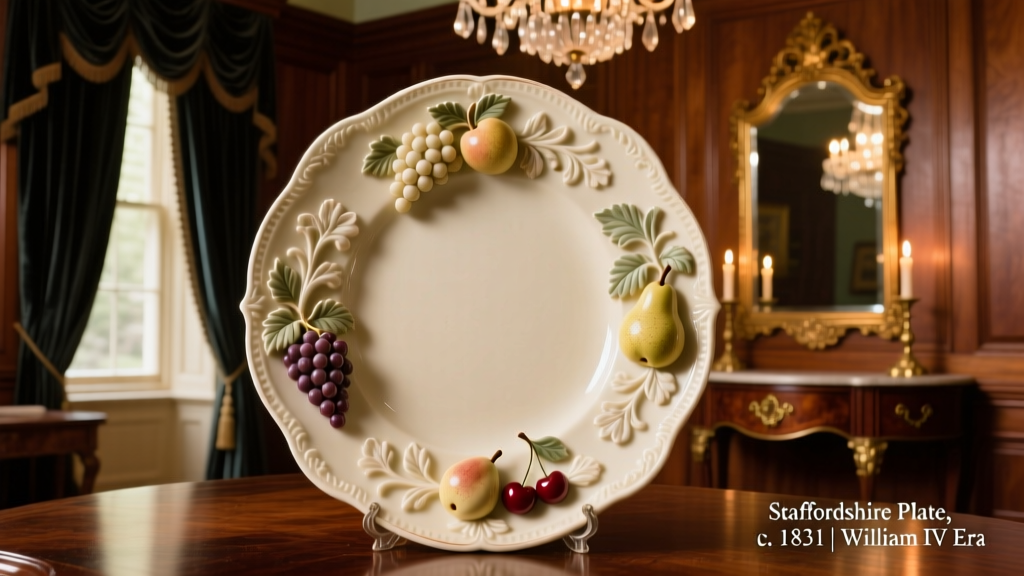
Staffordshire Plate William IV Raised Fruit Figural Border, Circa 1831 — A Technical and Historical Appraisal of a 6¾-Inch Silver-Gilt Presentation Plate
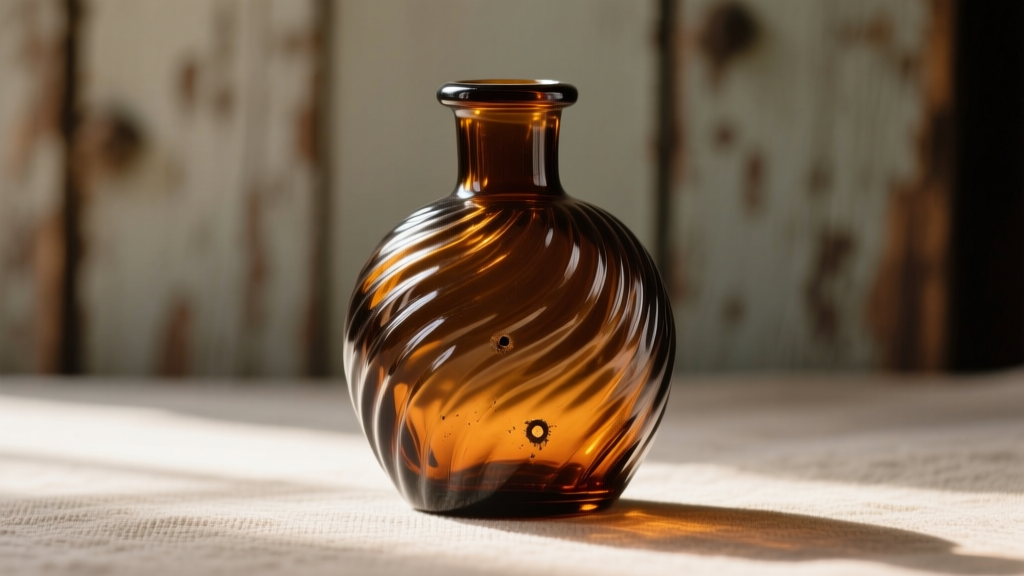
Flask Chestnut 24-Rib Swirled Zanesville Dark Amber Glass: Identification, Provenance, and Restoration Protocol for the 4¾-Inch Pontiled Bottle

Hazel Bray’s Yellow Crackled Vase: Origins, Craftsmanship, and Collectibility of a Mid-Century British Studio Pottery Icon

Folk Art Whirligig: 'Black Man Protecting Himself From Bee' by E. M. Carey, 1985 — A Critical Appraisal and Conservation Assessment
Flow Blue Gravy Boat & Melbourne Underplate by Grindley: Identification, History, and Restoration Insights

Weller Louwelsa Vase: Decoding the American Indian Portrait Impressed Design (7 × 6¾ in)
Custard Glass Daisy Drape Tumbler: History, Identification, and Restoration Insights

Hampshire Pottery 2: Authentic Identification, Restoration Ethics, and Market Realities
The Moorecroft Dish: A Legacy of British Art Pottery, Design Evolution, and Collectible Value