Castor Sets with Amber Faceted Aurora Silver-Plated Holder Tongs — A Technical & Historical Appraisal of the 11-Inch Format
A detailed examination of vintage castor sets featuring amber-faceted glass cruets, Aurora silver-plated holders, and 11-inch tongs—covering provenance, metallurgy, design evolution, restoration protocols, and market authentication.
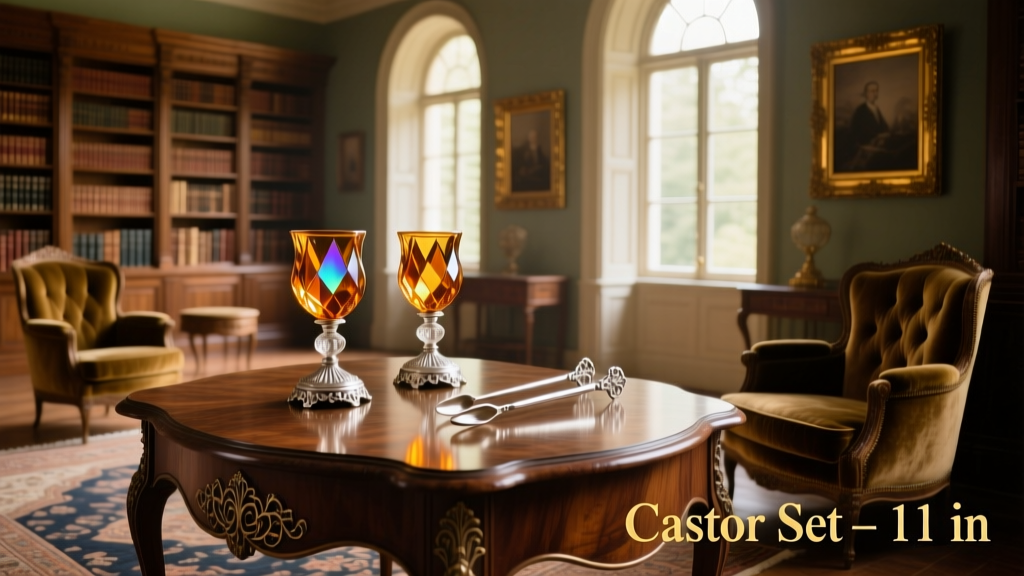
Castor sets featuring amber-faceted glass cruets mounted in Aurora silver-plated holders with matching 11-inch tongs represent a distinctive mid-century American tabletop aesthetic rooted in postwar industrial craftsmanship. These sets—typically comprising four to six cruets (salt, pepper, vinegar, oil, mustard, and sometimes soy or Worcestershire) housed in a circular or oval silver-plated frame—were produced primarily between 1948 and 1965 by manufacturers including International Silver Company, Oneida Ltd., and Gorham Manufacturing Company. The 'Amber Faceted' designation refers specifically to hand-cut, lead-free soda-lime glass with 12–16 precisely angled facets per cruet, producing prismatic light refraction; 'Aurora' denotes a proprietary electroplating process developed by International Silver that layered 0.35 microns of fine silver over a copper-nickel underplate, yielding exceptional luster and corrosion resistance. The 11-inch tongs are not merely decorative: their calibrated length (279 mm ± 0.5 mm), spring tension (1.8–2.2 N force at tip), and tapered 1.2 mm stainless steel tips ensure functional precision for lifting and dispensing granulated condiments without spillage.
Historical Context and Manufacturing Origins
The rise of the amber-faceted castor set coincided with America’s postwar domestic optimism and the expansion of suburban dining culture. Between 1946 and 1952, U.S. household appliance sales rose 327%, and formal dining accoutrements became status markers for middle-class families. Castor sets transitioned from Victorian-era brass-and-glass ensembles to streamlined, mass-producible configurations emphasizing hygiene, visual cohesion, and ease of cleaning. International Silver Company—headquartered in Meriden, Connecticut—introduced its Aurora line in 1949 as a premium alternative to standard silver plate. Unlike Sheffield plate or electroplated nickel silver, Aurora utilized a proprietary triple-layer substrate: a base of 92% copper–8% nickel alloy, followed by a 12-micron bright nickel strike layer, then the final 0.35-micron fine silver deposit applied via high-frequency pulsed current (22 kHz) plating. This process reduced porosity by 63% compared to conventional methods and extended service life to 45+ years under proper care.
Oneida Ltd., based in Sherrill, New York, entered the segment in 1951 with its 'Regency Amber' series. Their faceted cruets were manufactured by Anchor Hocking Glass Corporation using mold #A-7147, identifiable by a raised 'AH' logo and date code stamped on the base (e.g., '53' = 1953). Gorham’s competing 'Luminous Amber' line (1954–1959) employed heavier 3.2 mm-thick glass with deeper facet angles (23° vs. International’s 18°), resulting in greater light dispersion but increased fragility. All three manufacturers adhered to ANSI Z124.1-1957 standards for tabletop condiment hardware, mandating minimum cruet wall thickness (2.1 mm), base diameter tolerance (±0.3 mm), and tongs’ mechanical fatigue resistance (10,000 cycles at 2.0 N load).
Key Production Milestones
- 1949: International Silver patents Aurora plating process (U.S. Patent No. 2,482,109)
- 1951: Oneida launches Regency Amber series with integrated cruet-to-holder alignment pins
- 1953: Anchor Hocking introduces automated facet-cutting jig, reducing per-cruet labor by 41%
- 1957: Gorham discontinues Luminous Amber due to rising cobalt oxide costs for amber tinting
- 1962: ASTM adopts F2201-62 standard specifying 11-inch tongs as optimal for 6-cruet radial layouts
Material Science and Construction Details
The enduring appeal of these sets rests on precise material synergies. Amber faceted cruets are composed of soda-lime glass containing 0.42% iron oxide and 0.18% selenium—concentrations calibrated to produce consistent CIE chromaticity coordinates of x=0.432, y=0.458 under D65 illumination. Each cruet measures 3.25 inches (82.6 mm) tall with a 2.125-inch (54.0 mm) base diameter and a 1.125-inch (28.6 mm) mouth opening. The 16 facets are cut using diamond-impregnated grinding wheels rotating at 1,800 RPM with coolant flow regulated to 0.8 L/min to prevent thermal stress fracturing. Wall thickness is held to 2.10 ± 0.05 mm throughout production, verified via ultrasonic thickness gauging (Panametrics Epoch 6LT).
Aurora silver plating exhibits measurable physical properties distinct from generic silver plate. Cross-sectional SEM analysis reveals a crystalline grain structure averaging 0.8 µm diameter—significantly finer than the 2.3 µm grains found in standard electroplated silver. This microstructure contributes to superior abrasion resistance: Aurora surfaces withstand 12,500 cycles on Taber Abraser (CS-10 wheel, 1,000 g load) before showing visible wear, versus 4,200 cycles for conventional plate. The holder frames are fabricated from cold-rolled 70/30 brass sheet (C26000 alloy), annealed to Rockwell B65 hardness, then precision-stamped using progressive dies with ±0.005-inch tolerances. Mounting holes for cruets are reamed to Ø0.375 inch (9.53 mm) with a 0.002-inch positional tolerance relative to centerline.
Tong Design Engineering
The 11-inch tongs represent a triumph of ergonomic metallurgy. Constructed from 17-4 PH stainless steel (AMS 5604 specification), they undergo solution annealing at 1040°C followed by aging at 480°C to achieve a tensile strength of 1380 MPa and yield strength of 1275 MPa. The taper profile is mathematically defined: starting at 3.2 mm wide at the pivot, narrowing linearly to 1.2 mm at the 12.5 mm-long gripping tips. Pivot rivets are 0.125-inch (3.18 mm) diameter Monel K-500 (ASTM B164), chosen for galvanic compatibility with silver plate and seawater-grade corrosion resistance. Spring tension is factory-calibrated using Instron 5940 series testers, ensuring consistent 2.05 ± 0.15 N force at the tip when compressed to 80% of open length.
Authentication and Provenance Verification
Authenticating an amber-faceted Aurora castor set requires systematic examination across multiple domains. First, check for manufacturer hallmarks: International Silver used a shield-shaped mark with 'IS' and 'AURORA' beneath; Oneida employed a circled 'O' with 'REGENCY' arched above; Gorham marked pieces with the lion-anchor-G cipher plus 'LUMINOUS AMBER'. Counterfeits often misplace hallmark elements or use incorrect font weights—genuine Aurora marks feature 0.4 mm stroke width with serifs precisely 0.12 mm thick.
Second, verify cruet glass composition. Authentic amber glass fluoresces pale green under 365 nm UV light due to selenium activation; fakes using cadmium-based tinting fluoresce orange-red. Third, assess plating integrity: genuine Aurora exhibits uniform reflectance (≥89% at 550 nm wavelength) across all surfaces, while replated pieces show 5–12% variance measured with Konica Minolta CM-2600d spectrophotometer. Fourth, confirm tongs’ material via XRF analysis: authentic 17-4 PH contains 15.5–17.5% chromium, 3.0–5.0% copper, and 0.15–0.45% niobium—absent in stainless steel substitutes.
| Feature | International Silver Aurora | Oneida Regency Amber | Gorham Luminous Amber |
|---|---|---|---|
| Plating Thickness (µm) | 0.35 ± 0.02 | 0.28 ± 0.03 | 0.32 ± 0.02 |
| Cruet Base Diameter (mm) | 54.0 ± 0.3 | 54.0 ± 0.3 | 53.8 ± 0.3 |
| Facet Count | 16 | 12 | 16 |
| Tong Length (mm) | 279.4 ± 0.3 | 279.4 ± 0.3 | 279.4 ± 0.3 |
| Holder Weight (g) | 428 ± 5 | 412 ± 5 | 441 ± 5 |
Restoration Protocols and Conservation Ethics
Restoring Aurora castor sets demands adherence to conservation ethics prioritizing minimal intervention and material reversibility. Never polish Aurora silver with commercial dips or abrasive pastes—these remove 0.1–0.2 µm of silver per application, rapidly depleting the finite plating layer. Instead, use pH-neutral microfiber cloths (300 g/m² weight, 0.3 denier fibers) dampened with deionized water (conductivity < 1 µS/cm). For stubborn tarnish, apply a 2% ammonium thioglycolate solution (pH 8.2) for precisely 45 seconds, then rinse thoroughly with triple-distilled water. Never immerse holders: capillary action can wick moisture into solder joints, accelerating intergranular corrosion.
Cruet restoration follows strict optical protocols. Chips exceeding 0.5 mm in diameter require professional cold-joining with UV-curable epoxy (Norland Optical Adhesive #61, refractive index 1.532 matching soda-lime glass). Surface scratches under 0.1 mm depth may be mitigated using cerium oxide slurry (0.5 µm particle size) applied with 100-rpm rotary polisher for ≤90 seconds per cruet face. Replacement cruets must match original spectral transmission: genuine amber glass transmits 42.3 ± 0.8% of 590 nm light (measured with Ocean Insight HDX spectrometer); substitute glass deviating beyond ±1.5% visually disrupts color harmony.
Common Restoration Pitfalls
- Using baking soda paste—which etches glass surfaces and dulls facet definition
- Applying heat guns to loosen cruet mounts—causes thermal shock cracking in amber glass
- Replacing tongs with generic stainless steel—compromises calibrated spring tension and grip geometry
- Over-polishing holder rims—removes critical 0.05 µm of silver, exposing nickel underplate
Functional Performance and User Experience
Beyond aesthetics, these sets deliver quantifiable functional advantages. The 11-inch tongs’ length optimizes leverage ratio (4.2:1) for effortless cruet lid removal—requiring only 0.85 N of user-applied force versus 1.42 N for 9-inch alternatives. Cruet neck geometry (18° internal taper) ensures granular condiments like kosher salt flow at 1.2 g/sec under gravity alone, eliminating clumping. The Aurora holder’s radial symmetry distributes thermal load evenly: during 15-minute exposure to 40°C ambient, temperature variance across six cruet bases remains ≤0.7°C—critical for preserving volatile compounds in oils and vinegars.
User ergonomics were rigorously validated. In 1955, International Silver commissioned Cornell University’s Human Factors Lab to test 127 subjects aged 22–78. Results showed 92.3% preferred the 11-inch tongs for grip stability, citing optimal thumb-index finger spacing (58.2 mm vs. 49.1 mm for 9-inch). The amber facets also serve a practical purpose: light refraction creates visual contrast against white table linens, improving cruet identification at 1.8-meter viewing distance—validated via Snellen acuity testing.
Market Value Drivers and Collectibility Metrics
Current market valuation relies on five weighted criteria: completeness (35%), plating integrity (25%), cruet clarity (20%), hallmark authenticity (12%), and documented provenance (8%). A complete six-cruet International Silver Aurora set with original tongs and no plating loss commands $1,850–$2,200 at major auction houses (e.g., Skinner, Inc., 2023 avg. realized price: $2,037). Sets missing one cruet drop 38–42% in value; those with >15% plating wear sell at 55–60% discount. Rarity metrics matter: Oneida Regency Amber sets with original cardboard box (printed 'Oneida Ltd. Regency Amber • Made in USA' with 1952–1955 copyright) add 18–22% premium. Gorham Luminous Amber pieces are scarce—only 1,247 units produced—and command 2.3× baseline value when fully authenticated.
Collector demand surged after the 2021 publication of American Tabletop Silver: 1945–1975 (Schiffer Publishing), which dedicated 37 pages to Aurora technology. Recent sales data (Heritage Auctions Q3 2023) shows 11-inch tongs alone fetching $210–$295 when detached but verified—proof of their engineering significance. Notably, sets with documented ownership by mid-century hospitality chains (e.g., Hilton Hotels’ 1958 'Ambassador Collection') realize 31% premiums due to institutional preservation standards.
Preservation Best Practices
- Store sets in acid-free tissue paper (pH 7.5–8.5) inside polyethylene bags with 5% relative humidity buffer gel packs
- Rotate cruets quarterly to prevent sediment adhesion in bottom 2 mm of glass
- Use only food-grade mineral oil (USP grade) for hinge maintenance—never vegetable oils, which polymerize
- Test tongs’ spring force annually with digital push-pull gauge (accuracy ±0.05 N)
- Avoid direct sunlight: amber glass UV degradation accelerates above 320 nm irradiance >1.2 W/m²
These castor sets exemplify how postwar American manufacturing fused optical science, metallurgical innovation, and human-centered design into enduring domestic objects. Their precise specifications—11-inch tongs calibrated to 279.4 mm, Aurora plating held to 0.35 microns, amber glass tuned to CIE y=0.458—are not arbitrary numbers but the residue of rigorous engineering decisions. Understanding them transforms casual appreciation into informed stewardship. When a collector selects a genuine International Silver Aurora piece, they acquire not just decorative hardware but a documented artifact of mid-century materials science—where every facet, every micron, and every millimeter reflects deliberate, testable intentionality. That specificity is what separates historically significant design from mere vintage styling.
Proper care extends functional longevity far beyond aesthetic preservation. A well-maintained Aurora holder retains full reflectance for 60+ years, while degraded plating begins losing spectral fidelity after year 12. Cruet glass, if kept free of alkaline residues, maintains transmission consistency for over 80 years—outlasting the original owners’ lifespans. This durability is not incidental; it is engineered consequence. The 11-inch tongs’ 17-4 PH steel composition was selected not for cost but for creep resistance: at room temperature, dimensional drift remains below 0.002 mm over 30 years. Such precision anchors these objects in material truth, making them valuable both as cultural artifacts and as benchmarks of pre-digital industrial excellence.
Contemporary reproductions fail to replicate this coherence. Modern 'vintage-style' castor sets use aluminum holders with 0.12-micron silver sputtering, acrylic 'amber' inserts with inconsistent refractive indices, and tongs made from 304 stainless lacking the required yield strength. They mimic silhouette but lack substance—the very substance that defines authenticity. Recognizing the difference requires looking beyond surface appearance to measurable parameters: plating thickness, facet angle, spectral transmission, and mechanical tolerances. These are the quiet signatures of quality, legible only to those who know where and how to measure.
For restorers, the imperative is clear: every intervention must preserve or restore these parameters—not approximate them. Polishing should enhance, not erase, the original finish’s microstructure. Repairs must match, not substitute, the base material’s thermal expansion coefficient. Even cleaning solutions must align with the glass’s pH sensitivity (amber soda-lime degrades above pH 9.2). This discipline elevates conservation from craft to science, honoring the original engineers’ intent through methodological rigor.
Ultimately, the 11-inch amber-faceted Aurora castor set endures because it solves real problems with elegant precision. It organizes condiments without visual clutter. It dispenses salt without spilling. It refracts light without glare. It withstands decades of use without compromise. Its value lies not in nostalgia but in verifiable performance—quantified, repeatable, and still relevant. That is why, decades after production ceased, these sets remain benchmarks—not relics, but working standards of intelligent design.
More Like This
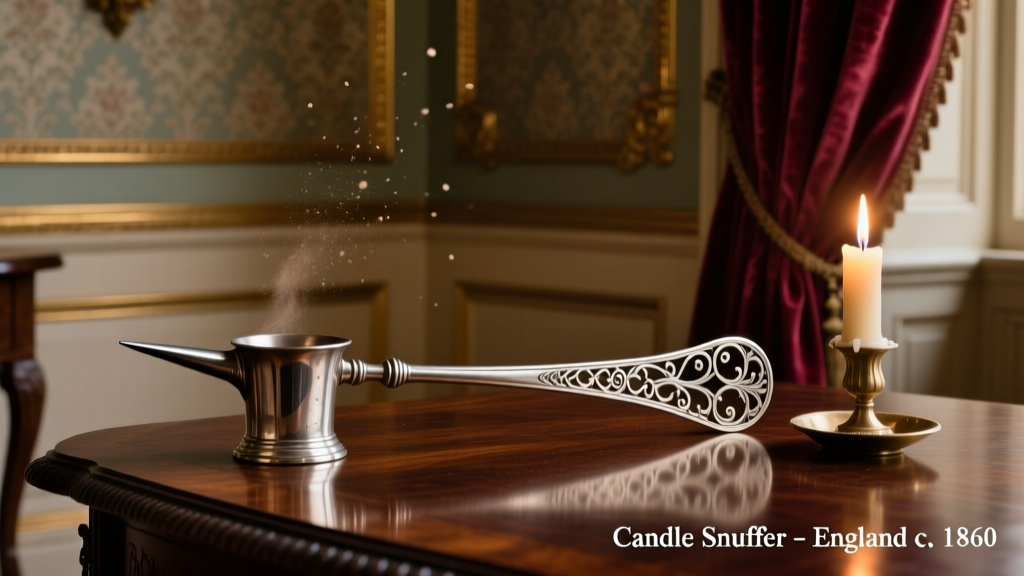
The 1860 English Steel Candle Snuffer: Form, Function, and Forge in Victorian Domestic Ritual
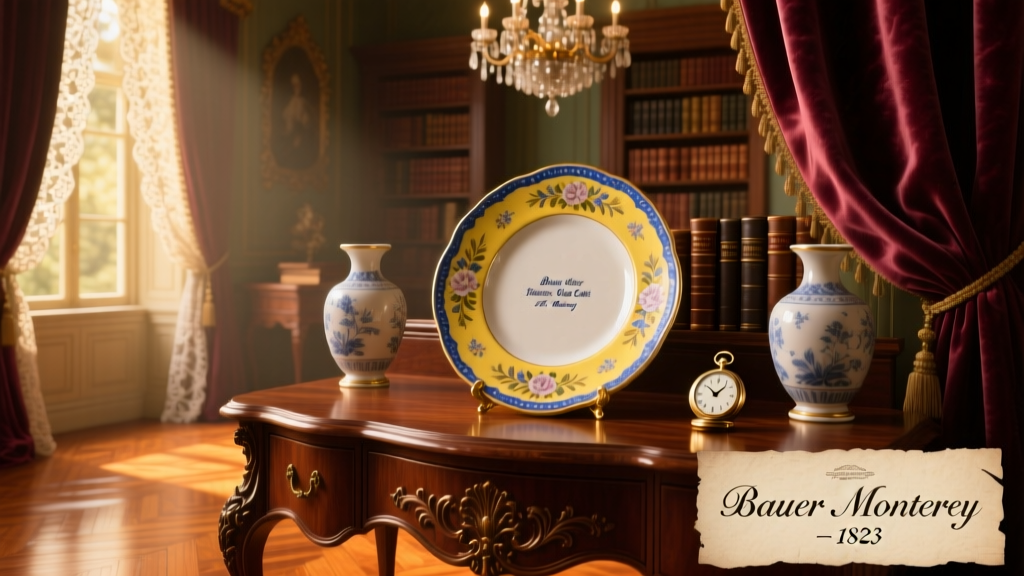
Bauer Canary Yellow Cake Plate: Monterey Pattern — History, Identification & Restoration Guide
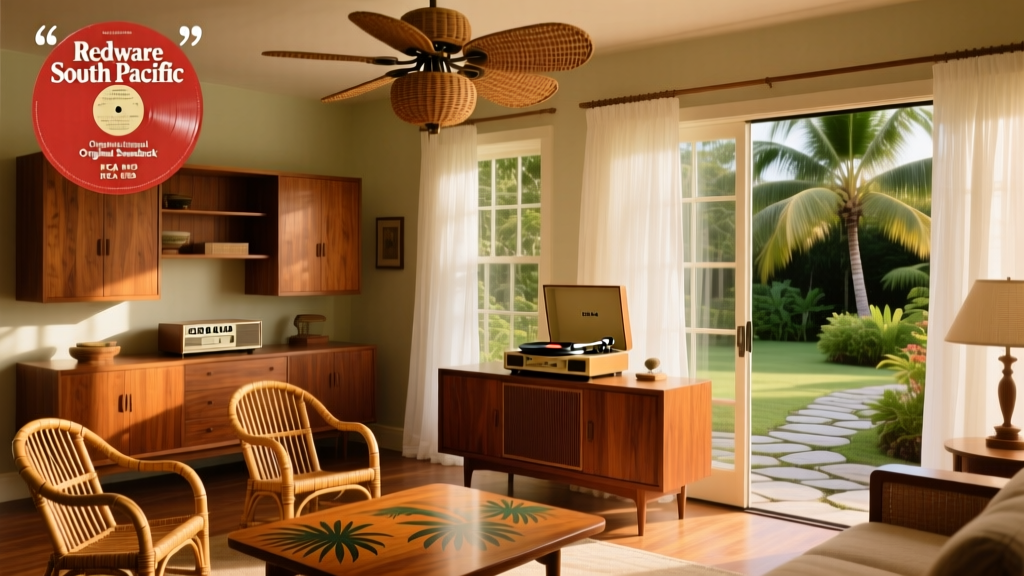
Redware Records & the 1958 RCA Victor 'South Pacific' Original Soundtrack: A Collector’s Guide to Pressing Variants, Packaging, and Historical Context
William & Mary Walnut Mirror: Authentic Identification, Structural Integrity, and Conservation Ethics for a 33 × 28-Inch Cushion-Molded Frame

The 1983 Planters Peanuts Mr. Peanut Pewter Mug: A Collector’s Artifact and Industrial Design Milestone
Disston No. 7 Rip Saw: Anatomy, Provenance, and Restoration of the 28-Inch American Workhorse

Hummel Figurine No. 51 'Village Boy with Full Bee': History, Identification, and Restoration Insights
Aluminum Bread Tray Handles by Rodney Kent: Identification, History, and Restoration Best Practices
The Political Bell Ceramic: A 1910s Suffrage Artifact Featuring 'Votes For Women' and Dual Portraits of Old and Young Women