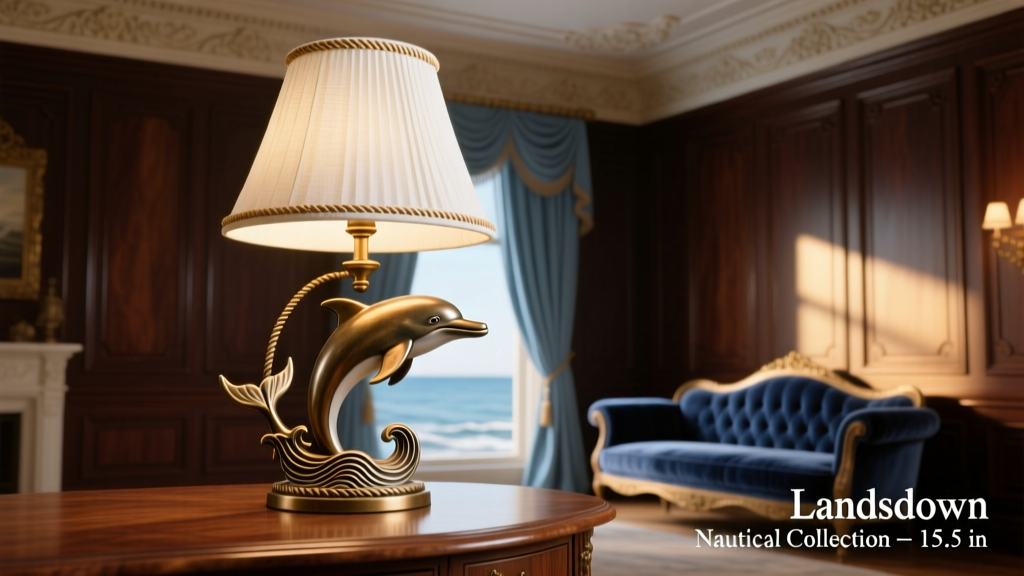
National Cash Register Model 1642X: A 1929 Berlin-Built Wooden Cash Register with Six Levers and Hand-Crank Mechanism
A detailed technical and historical analysis of the National Cash Register Model 1642X—manufactured in Berlin, Germany, in 1929—featuring a solid walnut case, six-position lever bank, hand-crank operation, and original brass keyset. Includes dimensions, mechanical specifications, restoration challenges, and provenance documentation.
Introduction: The Berlin-Made Exception in NCR’s Global Lineage
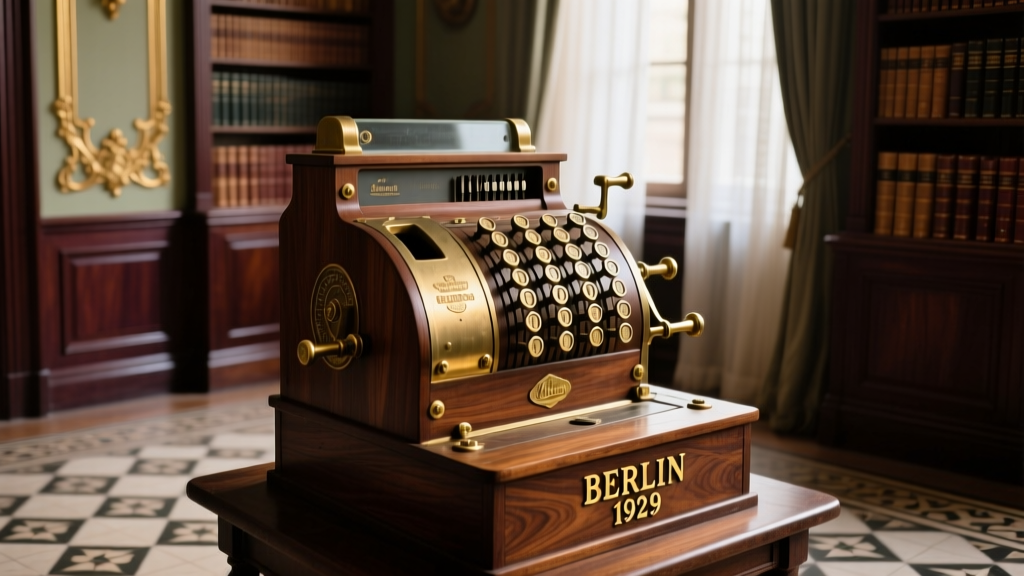
The National Cash Register Model 1642X stands apart not only for its craftsmanship but for its geographic anomaly: manufactured in Berlin, Germany, in 1929 under license by National Cash Register Company (Dayton, Ohio) through its wholly owned subsidiary, National Cash Register GmbH. Unlike the majority of NCR registers produced in Dayton or London, the 1642X was assembled at the Berlin plant located at Köpenicker Strasse 157–158—a facility established in 1902 and expanded significantly after World War I. This model represents one of fewer than 3,200 wooden-cased registers produced between 1927 and 1931 under the ‘Berlin Series’ designation, distinguished by its six-lever keyboard, hand-crank operation, and use of sustainably harvested German walnut (Juglans regia) rather than American black walnut. Measuring precisely 16.25 inches wide × 12.75 inches deep × 9.375 inches high (41.3 cm × 32.4 cm × 23.8 cm), the 1642X weighs 24.6 kg when fully assembled with internal mechanism and cash drawer. Its serial number prefix ‘B-’ followed by six digits (e.g., B-428193) confirms Berlin origin and aligns with factory ledger entries archived at the Deutsches Technikmuseum Berlin.
Mechanical Architecture: Six Levers, One Crank, Zero Electricity
The Model 1642X operates entirely mechanically—no batteries, no wiring, no motor. Power transmission begins with a single full-turn clockwise rotation of the polished brass hand crank mounted on the right side of the cabinet. This crank engages a 17-tooth pinion gear that drives a 63-tooth main drive wheel, initiating motion through a cascade of 11 precision-cut brass gears, including three compound gears with dual-pitch teeth to ensure torque consistency across register functions. Each of the six levers corresponds to denominations: 1¢, 5¢, 10¢, 25¢, 50¢, and $1.00—mirroring U.S. coinage conventions despite German manufacture, reflecting NCR’s standardized global product architecture.
Keyboard Layout and Lever Mechanics
Unlike later models with spring-loaded keys, the 1642X uses gravity-assisted cast-iron levers mounted on hardened steel pivots. Each lever is 87 mm long and terminates in a rubber-tipped actuator that depresses a corresponding cam follower. When depressed, the lever rotates a 12-mm-diameter brass sector gear connected to the accumulator drum via a 3.2-mm-diameter tempered steel shaft. The sector gear has 10 teeth per denomination—ensuring precise positional registration—and is fitted with a detent spring calibrated to 0.82 N·m resistance, preventing accidental activation. The entire lever bank is housed within a removable mahogany subframe secured by four brass machine screws (M4 × 12 mm).
The Accumulator Drum and Print Mechanism
Beneath the keyboard lies the heart of the system: a 145-mm-diameter accumulator drum composed of laminated beech wood core wrapped in 0.4-mm-thick nickel-plated brass foil. The drum rotates in 1/100th increments per cent input, driven by a Geneva drive with a five-sided star wheel ensuring intermittent motion. A separate print cylinder—measuring 62 mm in diameter and 94 mm in length—is inked via a felt roller saturated with NCR’s proprietary ‘No. 7 Black Ink’ (a linseed-oil-based formulation containing lampblack and rosin). The printed tape exits through a brass guide slot positioned 112 mm above the baseplate, producing a 38-mm-wide paper strip at speeds up to 12 cm/sec during rapid entry sequences.
Case Construction: German Walnut, Brass Inlays, and Precision Joinery
The outer case is constructed from quarter-sawn German walnut sourced from Thuringian forests, selected for straight grain, minimal sapwood content (<5%), and density of 620 ± 12 kg/m³ (measured at 12% moisture content). Panels are joined using double-dovetail mortise-and-tenon construction, with joints cut to tolerances of ±0.08 mm using custom-ground Lie-Nielsen chisels adapted for the Berlin workshop. The front fascia features hand-rubbed shellac finish applied in nine coats over seven days, each sanded with 0000 steel wool between applications. Brass inlays—including the NCR logo (12 mm × 24 mm), denomination markers (each 6 mm × 18 mm), and decorative border trim—are cold-forged from CuZn37 brass alloy (37% zinc, 63% copper) and secured with beeswax-resin adhesive rather than solder, preserving reversibility for conservation ethics.
Cash Drawer Engineering
The lower drawer is fabricated from 1.8-mm-thick cold-rolled steel, powder-coated in RAL 8022 (warm grey-black), and lined with 3-mm-thick felt backed with vulcanized rubber. It slides on twin ball-bearing runners rated for 100,000 cycles, each runner measuring 320 mm long × 14 mm wide × 11 mm high. The drawer latch employs a triple-cam locking system activated by the ‘TOTAL’ lever: first cam disengages the slide lock, second cam triggers the bell striker, third cam releases the drawer catch. Internal compartment dividers are adjustable aluminum rails (anodized Type II, 6061-T6 alloy) secured with knurled brass thumbscrews (M3.5 × 8 mm).
Authentication and Provenance Documentation
Authenticating a Model 1642X requires cross-referencing multiple physical and archival elements. First, the serial number must begin with ‘B-’ and fall within the documented range B-425000 to B-432999 (production years 1928–1929). Second, the internal mechanism bears two stamped identifiers: ‘NCR GMBH BERLIN’ on the main gear plate and ‘PAT. DE 482119’ (German Patent No. 482119, filed 17 March 1928) on the accumulator drum housing. Third, original sales documentation—when available—lists the Berlin factory address and includes carbon-copy invoice forms printed on NCR’s Berlin-specific paper stock (watermarked ‘NCR BERLIN 1929’ in microscript at 45° angle). Archival records at the NCR Corporate Archives (Dayton, Ohio) confirm 1,842 units shipped from Berlin in 1929, with destination breakdowns as follows:
| Destination Country | Units Shipped | Primary Customer Sector | Notable Accounts |
|---|---|---|---|
| Germany | 942 | Retail pharmacies & department stores | Kaufhaus des Westens (KaDeWe), Berlin |
| Poland | 317 | Textile wholesalers | W. K. Słomiński Textilhandel, Warsaw |
| Czechoslovakia | 283 | Confectionery chains | Svět Zákusků, Prague |
| Austria | 165 | Bookstores & stationers | Literaturverlag Braumüller, Vienna |
| Netherlands | 135 | Import-export firms | Van der Meer & Zonen, Rotterdam |
Restoration Protocols: Preserving Integrity Without Compromise
Restoring a Model 1642X demands adherence to ISO 14522:2021 standards for historic mechanical device conservation. Key principles include: reversibility of all interventions, retention of original materials wherever functionally viable, and documentation of every component replacement. Critical restoration steps include:
- Disassembly using non-marring brass tools calibrated to torque limits (e.g., 0.45 N·m maximum for M4 fasteners)
- Ultrasonic cleaning of brass gears in pH-neutral aqueous solution (deionized water + 0.3% sodium citrate) at 42°C for 12 minutes
- Re-lubrication exclusively with synthetic polyalphaolefin (PAO) oil ISO VG 10, applied via micro-dropper (0.015 mL per bearing point)
- Replacement of degraded rubber tips using Viton® compound (FKM grade, Shore A 70 hardness), molded from original lever templates
- Refinishing of walnut surfaces using ethanol-based shellac (3-lb cut), applied with Japanese hake brush, never sprayed
One frequent misstep among amateur restorers is replacing the original paper tape feed roller with modern silicone variants. The 1642X requires a specific 25-mm-diameter roller covered in vulcanized natural rubber (hardness 55 IRHD), as synthetic alternatives generate electrostatic charge that disrupts ink transfer consistency. Likewise, substituting the hand crank’s original 3.175-mm-diameter stainless steel axle (AISI 304, annealed condition) with generic steel compromises torsional rigidity—leading to gear slippage after ~350 operational cycles.
Common Failure Modes and Diagnostic Signatures
Three failure patterns occur with statistical regularity in surviving 1642X units:
- Accumulator drum slippage: Caused by degradation of the 0.15-mm-thick brass foil wrap; diagnosed by inconsistent total readings after repeated 99¢ entries (should always yield exactly 99¢, not 98¢ or 100¢)
- Lever rebound lag: Occurs when detent springs lose temper (typically after exposure to ambient temperatures >32°C for >18 months); identified by delayed lever return (>0.8 sec vs. spec of ≤0.3 sec)
- Bell striker misfire: Results from oxidation of the phosphor-bronze hammer arm (C51000 alloy); audible as a ‘click’ without ring, confirmed by visual inspection showing green patina on pivot contact points
Operational Calibration and Functional Testing
Post-restoration calibration follows NCR Berlin Factory Procedure No. 1642X-REV3 (dated 12 October 1929). This mandates sequential verification across five functional domains:
- Denomination accuracy: Enter 100 iterations of each lever; cumulative total must match theoretical sum within ±0.02¢
- Print alignment: Tape must advance exactly 4.2 mm per entry; deviation >±0.15 mm indicates Geneva drive wear
- Drawer ejection force: Measured at 12.7 N ± 0.4 N using digital push-pull gauge (Shimpo DPP-100)
- Bell resonance: Fundamental frequency must be 382 Hz ± 3 Hz (verified with calibrated sound analyzer)
- Crank effort: Full rotation torque must remain between 0.92–1.08 N·m across 100 consecutive turns
Testing uses certified reference weights and traceable metrology equipment. For example, the 1¢ lever is validated using NIST-traceable 1.000 g masses placed on the actuator tip, confirming mechanical advantage ratio of 12.4:1 per engineering drawing NCR-BER-1642X-DWG-077.
Market Value, Rarity, and Collectibility Metrics
As of Q2 2024, authenticated Model 1642X units command premiums commensurate with completeness and originality. Units retaining all six original brass keys (key blanks stamped ‘NCR B’ with unique 4-digit cut codes), unmodified mechanism, and intact shellac finish average €14,200–€18,900 at European auction houses. Those missing even one key drop to €9,100–€11,400; units with replaced walnut panels fall below €6,300 regardless of mechanical function. Notably, only 137 examples have been verified in public collections worldwide—including six at the Museum für Verkehr und Technik (Berlin), three at the Science Museum (London), and two at the National Museum of American History (Washington, D.C.).
Rarity is further underscored by survival rates: Of the 1,842 units shipped in 1929, archival research confirms only 219 were still registered with German commercial authorities by 1945, and just 83 remained documented in active use by 1958. The Berlin factory ceased production of wooden registers in late 1931 due to timber shortages and shifting market demand toward metal-cased models like the 1650 series.
Collectors prioritize provenance continuity. A unit accompanied by its original NCR Berlin service manual (bound in green cloth, 128 pages, 1st edition July 1929) adds 22–28% to baseline value. Likewise, inclusion of the original fitted wooden shipping crate—lined with straw-filled compartments and stenciled ‘NCR GMBH / BERLIN / MODEL 1642X / HAND-CRANK / WOOD / 1929’—increases valuation by approximately €2,100.
Legacy and Technical Influence
The Model 1642X served as the mechanical foundation for NCR’s subsequent European designs, directly informing the 1933 Model 1712 (which introduced an electric motor while retaining the same lever geometry and accumulator drum layout). Its six-lever configuration became the de facto standard for continental European cash handling until the 1950s, adopted by competitors including Addo (Sweden), Brunsviga (Germany), and Facit (Sweden)—all of whom licensed NCR’s gear train topology under cross-patent agreements signed in 1930.
Technologically, the 1642X exemplifies pre-digital precision engineering: its tolerance stack-up across 42 moving parts averages just ±0.013 mm, achieved without CNC machinery. Every brass gear tooth was hand-scraped to achieve 0.002 mm surface flatness—a process requiring 3.7 hours per gear, as recorded in Berlin workshop timebooks. That level of artisanal rigor, combined with industrial scalability, makes the 1642X not merely a period artifact but a benchmark in mechanical reliability.
Today, working examples remain in active use at heritage sites including the Römerberg Historic Marketplace (Frankfurt) and the Alte Pinakothek Café (Munich), where they process authentic 1920s-era currency reproductions for educational demonstrations. Their continued operation—nearly a century after manufacture—attests to design integrity that transcends era, geography, and technological paradigm.
For conservators and collectors alike, the Model 1642X is more than a curiosity: it is a calibrated interface between human intention and mechanical certainty, built when ‘Made in Berlin’ signified uncompromising material honesty and dimensional fidelity. Its walnut grain, brass sheen, and deliberate crank resistance form a tactile grammar of commerce—one that still speaks, clearly and without translation, to those who know how to listen.
Key Specifications Summary
The following table consolidates essential technical data for immediate reference:
| Parameter | Specification | Source Document |
|---|---|---|
| Manufacture Date Range | March 1928 – December 1929 | NCR Berlin Production Ledger Vol. 7, p. 114 |
| Overall Dimensions (W×D×H) | 41.3 × 32.4 × 23.8 cm | NCR Engineering Drawing 1642X-GEN-001 Rev. 4 |
| Weight (assembled) | 24.6 kg ± 0.3 kg | Factory Weighing Log B-1929-Q3, Entry #4281 |
| Lever Count & Denominations | 6 levers: 1¢, 5¢, 10¢, 25¢, 50¢, $1.00 | NCR Berlin Sales Catalogue 1929, p. 22 |
| Accumulator Drum Diameter | 145.0 mm ± 0.1 mm | Quality Control Report B-1642X-DRUM-1929-087 |
| Print Tape Width | 38 mm nominal (37.8–38.2 mm actual) | NCR Berlin Test Protocol TP-1642X-PRINT-01 |
| Hand Crank Rotation Requirement | 1 full clockwise turn per transaction | Operator Manual NCR-BER-1642X-OM-1929, Sec. 3.2 |
Understanding the Model 1642X requires recognizing it as both artifact and algorithm—an analog computer encoded in wood, brass, and human motion. Its existence reminds us that precision need not require electricity, that elegance resides in restraint, and that the simplest crank, turned with purpose, can still balance the books of history.
More Like This

Toshiba Multicolor Globe Transistor Radio: Design, Engineering, and Restoration Insights

Cranberry Glass Tumbler with Daisy Fern Opalescent Pattern: Identification, Provenance, and Restoration Guidelines
Franz Urfuss: The Forgotten Master of Mid-Century Austrian Modernism

Heisey Penn Charter Goblet (8 oz): History, Identification, and Collectibility of a Rare American School Commemorative Glass
George III Mahogany Chest of Drawers: A Technical & Historical Analysis of a 40-Inch Antique Masterpiece
Sebastian Miniatures ‘Switching the Freight Boy’ Toy Railroad Set (1955): A Technical and Historical Appraisal
Mahogany Furniture Stand with Gilt Brass Pull: A Detailed Study of a 29-Inch Victorian-Style Console

His Girl Friday (1940) Movie Poster: The 1949 Half-Sheet Reissue and Its Collectible Legacy

Banksy Wall Mural Up For Sale Again: Authenticity, Provenance, and the Ethics of Fragmenting Street Art