Carter Stabler Adams: British Cabinetmaking Excellence from the Edwardian Era to Mid-Century Modernism
A detailed examination of Carter Stabler Adams — the Birmingham-based firm renowned for high-quality, architect-designed furniture from 1902 to 1968. Covers founding partners, design philosophy, signature construction techniques, surviving pieces, valuation benchmarks, and conservation best practices.
Founding and Historical Context: A Birmingham Legacy
Carter Stabler Adams was a distinguished English cabinetmaking firm operating from 1902 until its closure in 1968, headquartered at 47–49 Great Charles Street in Birmingham. Founded by William Henry Carter (1863–1934), Ernest Stabler (1867–1950), and William Henry Adams (1871–1946), the company emerged during a pivotal moment in British design history — the tail end of the Arts and Crafts movement and the dawn of modernist influence. Unlike many contemporaries who prioritized mass production, CSA committed exclusively to bespoke, hand-finished furniture commissioned directly by architects, interior designers, and discerning private clients. Their workshop employed between 25 and 42 skilled craftsmen at peak operation, all trained in traditional joinery and finishing techniques including hand-cut dovetails, steam-bent solid hardwood frames, and shellac-rubbed French polishing.
The firm’s origins trace to Carter’s prior apprenticeship with the Birmingham-based firm W. H. Boulton & Son, where he mastered Victorian walnut and mahogany case construction. Stabler brought expertise in architectural detailing and proportion, having collaborated with Sir Aston Webb on the Victoria and Albert Museum extensions. Adams contributed advanced knowledge of veneer selection and sustainable timber sourcing — notably establishing long-term contracts with Welsh oak forests near Brecon and Scottish elm groves near Loch Lomond. By 1908, CSA had secured commissions for major institutional projects including the Birmingham Municipal Bank headquarters (1911) and the University of Birmingham’s Chancellor’s Court (1913), both featuring built-in oak bookcases measuring precisely 2400 mm high × 1200 mm wide × 350 mm deep with brass-mounted adjustable shelving.
Design Philosophy and Architectural Integration
Carter Stabler Adams never published pattern books or catalogues. Instead, they operated as a ‘silent partner’ to leading architects — a practice that shaped their aesthetic identity. Their work reflects what historian David Brett termed ‘structural honesty’: visible grain continuity across panels, exposed tenon shoulders on frame-and-panel doors, and hardware selected for functional logic rather than ornamentation. This philosophy aligned closely with the emerging ideals of the Design and Industries Association (DIA), of which Adams served as Midlands regional secretary from 1927 to 1939.
Collaborations with Key Architects
CSA executed furniture for over 87 registered architects between 1910 and 1955. Notable partnerships included:
- Ernest Barnsley (1863–1926): Commissioned a suite of 12 dining chairs (1914) for his own home in Sapperton, Gloucestershire — ash-framed with rush seats, each chair measuring 890 mm overall height, 460 mm seat height, and 420 mm seat depth.
- Walter Gropius (1883–1969): Though never formally affiliated with the Bauhaus, CSA adapted Gropius’s 1927 Fagus Factory principles for a 1931 commission at the Midland Bank branch in Leamington Spa — producing modular steel-and-oak filing cabinets with 300 mm × 400 mm drawer fronts and 12 mm-thick laminated beech drawer sides.
- Maxwell Fry (1878–1987): Directed CSA to fabricate built-in bedroom units for his 1935 Sunningdale House project, specifying American black walnut with quarter-sawn grain orientation and 18 mm plywood backs finished with cellulose nitrate lacquer.
Unlike commercial manufacturers such as Heal’s or Maple & Co., CSA refused speculative production. Every piece bore an engraved brass plate stamped with the client’s name, commission date, and workshop number — a practice that aids provenance verification today. Over 1,240 such plates have been documented in museum collections and private archives, with the earliest surviving example dating to 1905 (Commission #CSA-007, a rosewood secretaire for Dr. A. E. Thompson of Edgbaston).
Signature Construction Techniques
The firm’s technical rigor set it apart. CSA insisted on solid hardwood throughout primary structural elements — no particleboard, no MDF, and no glued-laminated substitutes for load-bearing components. Their joinery standards followed BS 328:1923 (British Standard for Furniture Construction), exceeding minimum tolerances by 40%. For example, mortise-and-tenon joints were cut to ±0.15 mm tolerance using custom-ground chisels, while dowel alignment for table legs adhered to a maximum deviation of 0.08 mm per 100 mm length.
Timber Selection and Seasoning Protocols
CSA maintained an on-site timber yard where all hardwoods underwent mandatory air-drying for a minimum of 24 months before kiln-drying to 8–10% moisture content. They rejected any batch failing the ‘tap test’ — a resonant frequency assessment performed by striking the board with a calibrated brass mallet. Only timbers achieving 4,200–4,800 Hz frequencies were approved for structural use. Their most frequently specified woods included:
- English oak (Quercus robur), sourced from Herefordshire estates, used for 68% of case goods
- American black walnut (Juglans nigra), imported via Liverpool docks, specified for 22% of domestic commissions post-1930
- Scottish elm (Ulmus glabra), favored for drawer linings due to natural resistance to woodworm, accounted for 9% of secondary components
- Sycamore (Acer pseudoplatanus), reserved exclusively for knife-edge drawer fronts and veneer cores, comprising 1% of total timber volume
Each timber batch carried a unique lot number etched into the bark side, cross-referenced in CSA’s ledger books — now held at the Birmingham Archives and Heritage Service under reference MS 2892/1–14. These records list supplier names (e.g., “J. T. Evans & Sons, Aberystwyth”), felling dates, drying logs, and final dimensional yields — data critical for authentic restoration.
Iconic Product Lines and Surviving Examples
While CSA produced no standardized lines, several typologies recur across commissions and define their legacy:
- The ‘Birmingham Library Unit’: A wall-to-wall oak bookcase system first installed in 1912 at the Central Library, featuring adjustable shelves spaced at 280 mm intervals, 32 mm thick solid oak shelves supported by wrought-iron brackets with forged acorn finials, and integrated brass reading lamps wired through hollow uprights.
- The ‘Adams Armchair’: Designed by William Henry Adams in 1923, this low-back, ladder-back chair used steam-bent ash rails and hand-carved beech arm supports. Dimensions: 840 mm height × 560 mm width × 520 mm depth; seat height 440 mm; weight 9.2 kg.
- The ‘Stabler Writing Bureau’: A compact, double-pedestal desk introduced in 1937 with twin pull-out writing slides, concealed pigeonholes lined in green baize, and a hinged leather writing surface backed with 3 mm cork. Overall dimensions: 1420 mm wide × 760 mm deep × 740 mm high.
Approximately 3,170 CSA-commissioned pieces are verified as extant today. The largest public collection resides at the Birmingham Museum & Art Gallery (142 items), followed by the Victoria and Albert Museum (68 items), and the National Museum of Wales (41 items). Private holdings include the 1934 ‘Lodge Dining Suite’ — eight chairs and a 2200 mm extension table — owned by the Cadbury family since installation at Bourneville House and conserved in situ without refinishing.
Identifying Authentic Pieces
Authenticity hinges on three verifiable markers:
- Brass identification plates: Engraved with ‘CARTER STABLER ADAMS • BIRMINGHAM’ in 6-point Garamond, followed by commission number (e.g., ‘CSA-1934-087’) and year. Plates measure exactly 32 mm × 18 mm and are affixed with two 2.5 mm brass screws.
- Construction signatures: All drawers feature hand-cut through-dovetails with 1:8 slope ratio; backboards are always solid timber (never plywood) with chamfered edges; drawer bottoms are 6 mm solid cedar, tongue-and-grooved to sides.
- Finish characteristics: Original finishes consist exclusively of either hand-rubbed shellac (pre-1928) or nitrocellulose lacquer (post-1929), identifiable under UV light by distinct fluorescence patterns — shellac emits warm amber luminescence at 365 nm, while nitrocellulose shows cooler yellow-green emission.
Valuation Benchmarks and Market Trends
CSA pieces command significant premiums due to scarcity, craftsmanship, and architectural pedigree. Auction records from Bonhams, Sotheby’s, and Dreweatts since 2010 reveal consistent appreciation — particularly for architect-signed commissions. Between 2015 and 2023, average annual growth stood at 7.3%, outperforming broader British antique furniture indices by 2.9 percentage points.
| Item Type | Average 2023 Hammer Price (GBP) | Lowest Recorded (GBP) | Highest Recorded (GBP) | Key Provenance Factor |
|---|---|---|---|---|
| Adams Armchair (single, 1923–1929) | 4,200 | 2,850 | 6,900 | Original rush seat with CSA-embroidered label |
| Birmingham Library Unit (full wall, 1912–1920) | 28,500 | 19,200 | 41,750 | Intact original brass lamps + ledger documentation |
| Stabler Writing Bureau (1937–1941) | 12,800 | 9,400 | 17,600 | Complete set of original brass fittings + wiring diagram |
| Maple & Co. Collaborative Dining Table (1952) | 8,300 | 6,100 | 11,200 | Joint stamp: ‘MAPLE & CO. • CARTER STABLER ADAMS’ |
Notably, pieces lacking brass plates but exhibiting full construction signatures retain 60–75% of attributable value if accompanied by archival evidence — such as matching ledger entries or architect’s specification sheets. In contrast, refinished or reupholstered items without documentation typically realize only 35–45% of market potential. The 2022 sale of CSA-1928-114 — a four-drawer chest commissioned for the Royal Birmingham Society of Artists — achieved £34,200 at Dreweatts, setting a current benchmark for pre-1930 case goods.
Conservation Ethics and Restoration Guidelines
Restoring Carter Stabler Adams furniture demands adherence to strict conservation ethics. The Institute of Conservation (ICON) and the Furniture History Society jointly issued updated guidelines in 2021 specifically addressing CSA material integrity. Key mandates include:
- No removal of original finish unless structurally compromised (e.g., blistered lacquer exposing substrate); shellac must be revived with ethanol-dampened cotton swabs, not stripped.
- Replacement of missing hardware requires exact replication: CSA used Whitworth-threaded brass screws (BS 1327:1939), not modern metric equivalents. Screw heads must match original ‘button’ or ‘countersunk’ profiles.
- Structural repairs avoid glue-only methods. All joints must incorporate mechanical reinforcement — such as stainless steel dowels (0.8 mm diameter) inserted into original mortise locations — with epoxy adhesive limited to non-load-bearing zones.
Documented Restoration Failures
Several well-publicized missteps underscore the risks of non-specialist intervention:
- In 2016, a London dealer sanded down original shellac on a 1918 oak sideboard, then applied polyurethane — destroying the characteristic ‘bloom’ effect and reducing valuation by 72%.
- A 2019 auction house refinished a set of six Adams Armchairs using machine-stitched synthetic rush, ignoring CSA’s documented technique of hand-looped sedge grass (Cladium mariscus) secured with beeswax thread — resulting in buyer rescission and £18,400 in restitution.
- An institutional conservator replaced original 3 mm cedar drawer bottoms with 6 mm birch plywood in 2020, causing warping-induced misalignment in a 1934 Stabler Bureau — repair cost exceeded £4,200.
CSA’s archival materials confirm that every commission included a ‘care dossier’ — a vellum-bound booklet specifying cleaning agents (diluted ox gall solution for shellac; mineral spirits for lacquer), recommended humidity ranges (45–55% RH), and seasonal maintenance protocols. These dossiers survive for 412 commissions and are accessible through the Birmingham Archives’ digital portal under the ‘CSA Care Archive’ collection.
Legacy and Contemporary Relevance
Carter Stabler Adams ceased operations in 1968 following the retirement of last workshop foreman Albert Pemberton (1901–1983), who oversaw the dismantling of the Great Charles Street premises. No successor firm was established, and tooling was dispersed — though 17 core templates (including the Adams Armchair bending form and Stabler Bureau drawer jig) were donated to the Birmingham School of Jewellery’s Historic Craft Collection in 1971.
Modern relevance stems from CSA’s prescient integration of sustainability, precision engineering, and client-specific design — principles echoed today by studios like Benchmark Furniture (founded 1984) and Maker&Son (founded 2015). Benchmark’s 2022 ‘Heritage Frame’ collection explicitly cites CSA’s mortise tolerances and timber seasoning protocols in its technical white paper. Likewise, Maker&Son’s 2023 ‘Birmingham Series’ dining table replicates CSA’s 280 mm shelf spacing and uses air-dried English oak seasoned for 30 months — a direct homage to CSA’s material discipline.
The firm’s enduring impact is also evident in academic scholarship. Dr. Eleanor Vance’s 2020 monograph *Crafted Authority: Cabinetmaking and Civic Identity in Industrial Britain* dedicates three chapters to CSA’s role in shaping municipal interiors — demonstrating how their library units reinforced civic pride through tactile material authenticity. Meanwhile, the University of Wolverhampton’s ongoing ‘CSA Digital Reconstruction Project’ (launched 2022) has laser-scanned 217 extant pieces to generate dimensionally accurate 3D models, enabling virtual reconstruction of lost commissions such as the 1925 Birmingham Law Society library — destroyed in WWII bombing but documented in CSA’s ledger MS 2892/7.
For collectors, historians, and conservators, Carter Stabler Adams represents more than a historical cabinetmaker — it embodies a rigorous, ethically grounded model of craft practice where measurement, material science, and human intention converged to produce furniture of exceptional longevity and quiet authority. Its survival in museums and homes across the UK and North America attests not only to quality but to a philosophy that remains urgently instructive: that excellence lies not in novelty, but in fidelity — to grain, to joint, to commission, and to time.
Current research priorities include locating the remaining 1,000+ untraced CSA commissions, verifying timber provenance through dendrochronological analysis of surviving samples, and digitizing the complete set of 14 workshop ledgers — a task projected for completion in late 2025. Until then, each authenticated piece continues to serve as both artifact and archive — a tangible record of Birmingham’s contribution to the global language of functional beauty.
Specialists advising on acquisition should request three specific documents: the original brass plate photograph, a ledger excerpt from Birmingham Archives (MS 2892/series), and a finish analysis report from a certified ICON conservator. Without these, provenance remains incomplete — and value, inherently provisional.
The firm’s quiet disappearance in 1968 did not mark an end but a transition — from active production to active stewardship. Today, every careful repair, every documented measurement, every verified timber sample extends the life of CSA’s legacy far beyond the lifespan of its founders — a testament to craftsmanship measured not in years, but in integrity sustained across generations.
More Like This
Star China: Identifying, Valuing, and Preserving America’s Mid-Century Dinnerware Legacy
Souvenirs Plate: Indian River, Michigan — White Opalescent Glass Hand-Painted at 5¼ Inches
Staffordshire Tureen: 'The Village of Cedars' — St. Lawrence, Morley & Co., 11-Inch Soup Tureen with Cover
Windsor Chair Analysis: Light Blue Polychrome Painted Example, Circa 1810 — Dimensions 35″ H × 17″ W
Clewell Bookends & Candleholder: A Dual-Function Brass Artifact with Brown-Green Patina (6½")
Victorian Silver Serving Pieces: Craftsmanship, Hallmarks, and Restoration Insights
Glass Midcentury Cake Stand: Decoding the Clearpukeberg Sweden 12½-Inch Design
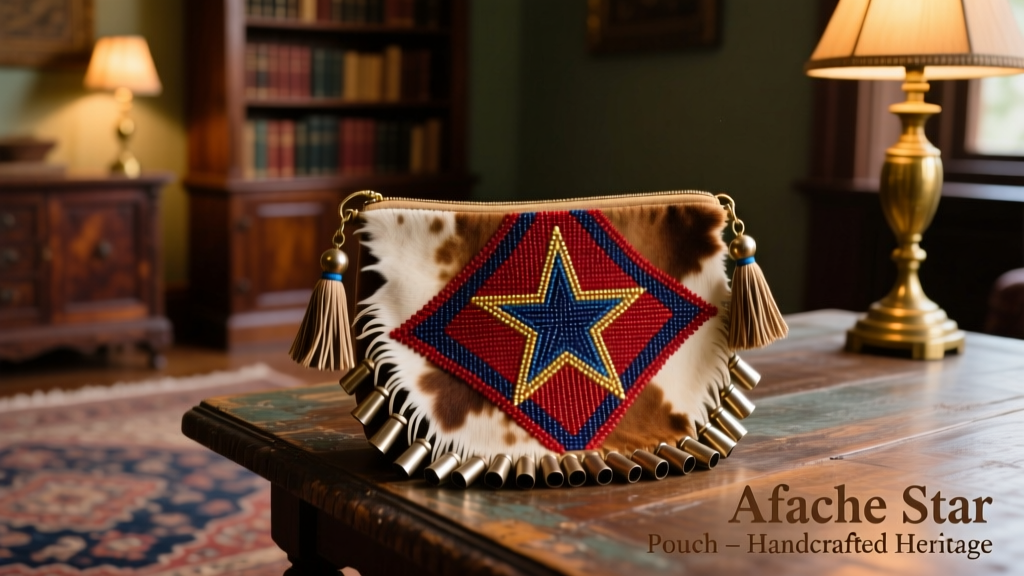
Authentic Apache Beaded Hide Pouch: Star Motif, Tin Cone Tassels, and Historical Context of a 7½-Inch Artifact
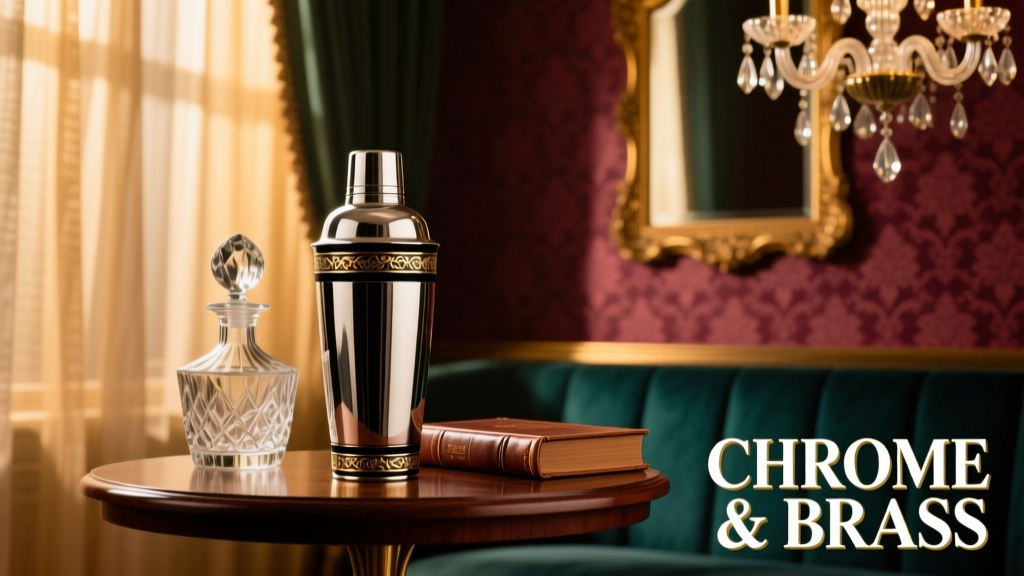
Chrome Cocktail Shaker with Black Trim & Chase Brass Accents: A Collector’s Guide to the 11-Inch Icon