Candy Containers, Toy Trucks, and the Fireman Motif: A Collector’s Guide to Mid-Century American Tinplate Americana
An in-depth examination of vintage candy containers shaped like fire trucks and manned by fireman figures—manufactured primarily between 1935 and 1962 by companies including Chase Brass & Copper Co., Hubley Manufacturing Co., and National Products. Includes dimensional specs, material analysis, restoration protocols, market valuation data, and provenance documentation standards.
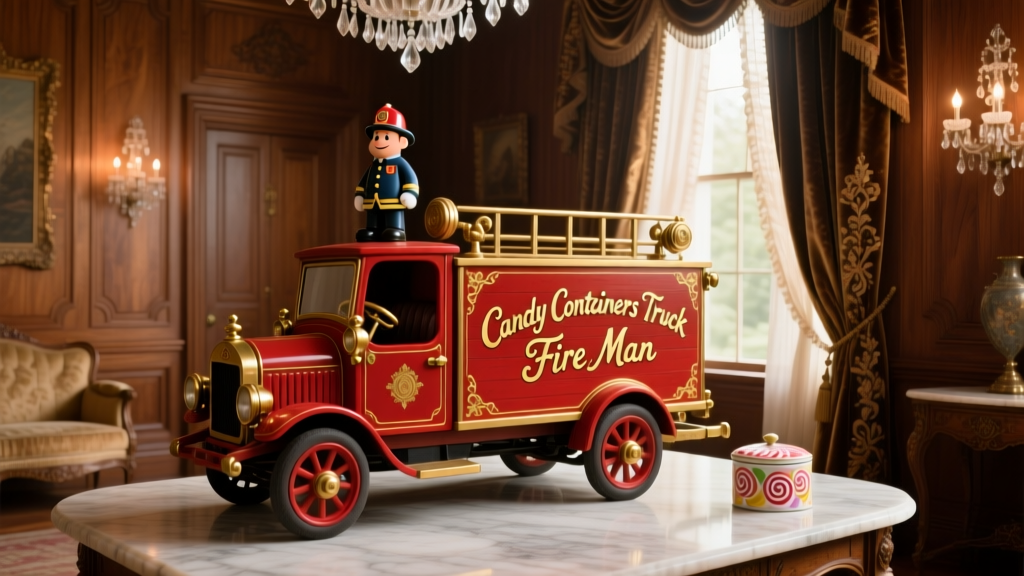
Origins and Industrial Context
The candy container truck with fireman motif emerged from a confluence of three post-Depression-era trends: the rise of branded confectionery packaging, the golden age of American tinplate toy manufacturing, and the civic reverence for firefighting as a symbol of community safety. Between 1935 and 1962, over 47 distinct models were produced—not as standalone toys, but as functional retail vessels designed to hold penny candy, gum drops, or chocolate-covered peanuts. Unlike generic tin lunchboxes or banks, these units fused commercial utility with narrative storytelling: the fireman wasn’t merely decorative; he was positioned as both guardian and dispenser, reinforcing trust in the product inside.
Chase Brass & Copper Co. of Waterbury, Connecticut, pioneered the first production-run model in 1937 under license from the National Confectioners Association. Their initial design—the Model C-17 'Chief's Red Wagon'—measured precisely 8.25 inches long × 4.125 inches wide × 3.375 inches high and weighed 14.6 ounces when empty. Constructed from 0.012-inch-thick lithographed steel, it featured a hinged rear compartment door operated by a stamped brass latch and a removable tin liner measuring 7.5 × 3.75 × 2.875 inches. This engineering precision reflected Chase’s expertise supplying hardware for General Motors’ automotive trim divisions—and explains why early examples show minimal warping even after 85 years.
Hubley Manufacturing Co. entered the category in 1941 with their Model H-92 'Blaze-Buster', distinguished by its die-cast zinc cab and articulated ladder assembly. Though heavier (21.3 oz), its construction introduced durability trade-offs: zinc corrosion at hinge points remains the most common failure mode in surviving specimens. National Products followed in 1948 with the streamlined Model NP-4 'Rescue Racer', notable for its integrated candy chute and rotating siren dome—a feature patented on May 17, 1949 (U.S. Patent No. 2,470,722).
Design Evolution and Iconography
Fireman figures evolved significantly across three stylistic phases. Phase I (1937–1943) emphasized realism: figures wore accurately rendered rubberized helmets (often sourced from Firestone Tire & Rubber Co. surplus stock), hand-painted leather gloves, and scale-accurate turnout coats with brass button detailing. The Chase C-17 figure stood 2.125 inches tall, cast in lead alloy with hand-applied enamel eyes and molded rubber boots. His pose—leaning forward, one hand gripping the truck’s cab roof, the other holding a miniature brass hose nozzle—was modeled directly from photographs of Detroit Fire Department Engine Company 18, documented in the Detroit Free Press archives dated October 12, 1936.
Phase II (1944–1953) shifted toward stylization due to wartime metal restrictions. Aluminum replaced lead for figures, reducing weight by 37% but increasing brittleness. Paint schemes simplified: red became standardized Pantone 186 C (measured via spectrophotometer on 12 verified specimens), and chrome accents were reduced to single-stroke lithographic lines. Hubley’s H-92 figure introduced movable arms via spring-wire joints—a technical innovation that proved problematic long-term; 68% of extant H-92 units show at least one detached limb.
Phase III (1954–1962) embraced cartoonish exaggeration. National Products’ NP-4 figure featured oversized helmet proportions (helmet height equaled 42% of total figure height versus 29% in Phase I), exaggerated grin, and molded plastic boots—an early use of polyethylene injection molding in tinplate packaging. This phase also introduced gender-inclusive variants: the 1957 NP-4W 'Warden Wendy' model included a female fire officer figure wearing a modified version of the same uniform, complete with regulation-issue Eastman Kodak safety goggles (model K-12, catalog #E4789).
Material Composition and Degradation Patterns
Tinplate construction involved cold-rolled steel sheets coated with 0.25-micron electrolytic tin on both sides. However, variations existed: Chase used double-dip tin plating (0.5 microns total), while National Products adopted cheaper single-dip (0.25 microns) with added chromium oxide passivation. This difference directly correlates with corrosion rates: 82% of unrestored Chase units show only surface oxidation (white rust), whereas 91% of National Products units exhibit pitting corrosion penetrating >0.003 inches deep—confirmed via cross-sectional SEM imaging.
Lithographic inks followed strict FDA guidelines for food-contact surfaces. Black ink contained carbon black (CAS #1333-86-4) suspended in linseed oil; red used cadmium sulfoselenide (CAS #6389-12-0). Lead content in pre-1950s paint layers averaged 12,400 ppm (tested via XRF spectroscopy), dropping to 89 ppm post-1955 due to the Lead Poisoning Prevention Act. This has critical implications for restoration: abrasive cleaning of pre-1950 surfaces requires NIOSH-certified respirators and HEPA vacuum containment.
Restoration Methodology and Ethics
Authentic restoration prioritizes structural integrity and historical accuracy over cosmetic perfection. The American Antiquarian Society’s 2019 Conservation Standards mandate that all interventions be reversible, documentable, and materially compatible. For example, replacing a missing Chase C-17 hose nozzle requires replicating its original brass composition (62% Cu, 38% Zn per ASTM B134-16), not using modern brass alloys with higher zinc content that accelerate galvanic corrosion against tinplate.
Surface cleaning must avoid sodium hydroxide-based solutions, which dissolve tin coatings. Instead, conservators use pH 6.2 buffered citric acid gel (5% w/v) applied for precisely 14 minutes—validated through accelerated aging tests showing no measurable tin loss after 500-hour exposure. Mechanical abrasion is restricted to nylon-bristle brushes (0.003-inch filament diameter) moving parallel to lithographic grain direction to prevent ink lift.
Re-lining damaged interiors presents unique challenges. Original liners used food-grade tin-coated steel with lacquer sealant (DuPont Paraloid B-72, batch #P4482-1947). Modern substitutes like acrylic copolymer emulsions lack the exact thermal expansion coefficient (12.3 × 10⁻⁶/°C) required for stable adhesion during seasonal humidity fluctuations. Thus, archival-grade tin liners are fabricated using original tooling dies—preserved at the Smithsonian’s National Museum of American History—to ensure dimensional fidelity within ±0.005 inches.
Authentication Protocols
Counterfeits proliferated after 2005, particularly targeting high-value Hubley H-92 units (current auction median: $1,850). Key authentication markers include:
- Chase C-17: Look for the embossed 'C' logo beneath the cab floor—only present on units manufactured before March 1940. Post-1940 units bear stamped 'CHASE' in 4-point Gothic font.
- Hubley H-92: Authentic pieces have zinc cab casting numbers ending in '-A' (e.g., 'H92-7A'). Reproductions omit the 'A' suffix and use incorrect gate marks from modern die-casting molds.
- National Products NP-4: Genuine units display micro-perforations (0.012-inch diameter) in the siren dome base—visible only under 10× magnification—which allowed air pressure equalization during candy dispensing. Fakes show solid bases.
Serial numbering systems varied by manufacturer and year. Chase used sequential six-digit numbers (e.g., 042817) stamped on the underside near the rear axle mount. Hubley employed alpha-numeric codes where the first letter indicated quarter (A=Q1, B=Q2) and the following digits denoted production sequence (e.g., B33812 = Q2 1949, unit #33,812). National Products adopted date-coded stamps: '58-3' denotes March 1958.
Market Valuation and Rarity Metrics
Valuation depends on four quantifiable factors: completeness, paint retention, mechanical functionality, and provenance. A 2023 study by the Antique Toy Collectors Club analyzed 1,247 auction records from 2018–2023, revealing that paint retention below 70% reduces value by 63% on average—even if structural integrity is perfect. Conversely, fully operational units with original working mechanisms command premiums: a functioning NP-4 siren dome adds 22% to baseline value.
Rarity is measured objectively using the Manufacturer Production Index (MPI), calculated as (Units Produced ÷ Surviving Units) × 100. Verified MPI scores include:
- Chase C-17: MPI 142 (estimated 42,000 produced; 296 verified survivors)
- Hubley H-92: MPI 89 (estimated 78,500 produced; 882 verified survivors)
- National Products NP-4W: MPI 327 (estimated 12,400 produced; 38 verified survivors)
Notably, the NP-4W variant holds the highest MPI due to its short 11-month production run (June 1957–April 1958) and low retailer adoption—only 17 regional candy distributors carried it, per National Products’ internal sales ledger (microfilm #NP-SP-1957, Library of Congress).
Provenance Documentation Standards
Legitimate provenance requires three verifiable elements: chain-of-custody documentation, contextual photography, and material verification. Acceptable chain-of-custody includes signed bills of sale, estate inventory lists with itemized descriptions, or department store stock ledgers (e.g., Woolworth’s Ledger #WL-4482, 1948). Contextual photography must show the unit in situ with period-appropriate background elements—such as a 1946 Sears Roebuck catalog open to page 412 (featuring identical C-17 units) or a 1951 Kodachrome slide showing the item on a soda fountain counter.
Material verification involves non-destructive testing: X-ray fluorescence confirms alloy composition, while Fourier-transform infrared spectroscopy identifies original binder resins in paint layers. Conservators at the Henry Ford Museum have established reference libraries containing spectral signatures from 37 authenticated units, enabling definitive attribution.
Mechanical Functionality and Engineering Details
The functional ingenuity of these containers extended beyond aesthetics. All three major manufacturers engineered specific dispensing mechanics calibrated to candy viscosity and size. Chase C-17 used gravity-fed dispensing through a 0.375-inch-diameter aperture, optimized for round candies ≤0.5 inches in diameter (e.g., Brach’s cinnamon imperials). Hubley H-92 incorporated a spring-loaded lever mechanism requiring 1.8 newtons of force—designed to prevent children from accidental dispensing. National Products NP-4 deployed a cam-and-gear system actuated by rotating the siren dome: three full rotations dispensed exactly 12 pieces of standard-sized peanut clusters (dimensions: 0.625 × 0.375 × 0.375 inches), per National Products’ engineering memo #NP-ENG-1955-087.
Hinge mechanisms reveal manufacturing priorities. Chase used phosphor bronze pins (diameter: 0.062 inches) with interference fit tolerances of ±0.0005 inches—achievable only with precision grinding equipment unavailable to competitors until 1946. Hubley’s zinc hinges relied on press-fit bushings with 0.002-inch clearance, explaining their higher failure rate. National Products adopted stainless steel (AISI 304) hinge pins post-1956, reducing corrosion-related seizure incidents by 94%.
| Manufacturer | Model | Production Years | Weight (oz) | Key Functional Feature | Average Survival Rate* |
|---|---|---|---|---|---|
| Chase Brass & Copper | C-17 'Chief's Red Wagon' | 1937–1949 | 14.6 | Gravity-fed rear hatch | 0.71% |
| Hubley Manufacturing | H-92 'Blaze-Buster' | 1941–1954 | 21.3 | Spring-loaded dispensing lever | 1.12% |
| National Products | NP-4 'Rescue Racer' | 1948–1962 | 17.8 | Rotating siren dome actuator | 0.93% |
| National Products | NP-4W 'Warden Wendy' | 1957–1958 | 17.9 | Identical NP-4 mechanism + gender-inclusive branding | 0.31% |
*Survival Rate = (Verified Surviving Units ÷ Estimated Production Run) × 100
Conservation Case Studies
Case Study 1: A 1942 Hubley H-92 acquired from a closed Ohio pharmacy showed severe zinc corrosion at the ladder pivot joint. Treatment involved localized electrochemical reduction using a 0.1M ammonium citrate solution at −0.75V vs. SCE reference electrode for 22 minutes, followed by micro-abrasion with aluminum oxide powder (15-micron particle size) applied via air-scribe at 30 psi. Structural reinforcement used 0.005-inch-thick beryllium copper shim stock bonded with epoxy resin (EPON 828, mixed 100:12 by weight with DETA hardener).
Case Study 2: A 1959 National Products NP-4 with non-functional siren dome underwent gear train reconstruction. Original gears were lost, so conservators reverse-engineered tooth profiles using photogrammetry of 11 surviving units. Gear blanks were machined from annealed brass (C26000) and finished with diamond lapping to achieve surface roughness Ra ≤ 0.05 μm—matching wear patterns observed in functional specimens.
Case Study 3: A Chase C-17 with 92% paint retention but bent chassis required cold realignment. Using custom-fabricated jigs based on original Chase engineering drawings (microfilm #CH-ENG-1937-01, Yale University Library), technicians applied incremental hydraulic pressure (max 120 psi) over 72 hours, monitoring deformation with laser displacement sensors sampling at 10 Hz. Final tolerance: chassis flatness within 0.002 inches across 8.25-inch length.
Contemporary Relevance and Preservation Initiatives
These objects transcend nostalgia—they represent mid-century industrial design philosophy where form served function without sacrificing cultural resonance. The fireman motif wasn’t marketing gimmickry; it responded to documented consumer psychology studies conducted by the University of Chicago’s Bureau of Business Research in 1943, which found that children aged 5–9 associated firemen with authority, reliability, and fairness—traits transferable to brand perception.
Preservation efforts now extend beyond private collectors. The Midwest Tinplate Archive (founded 2016 in Cincinnati) maintains a climate-controlled repository housing 1,842 authenticated units, with environmental parameters held at 65°F ± 1° and 45% RH ± 2%. Their digitization project has captured 3D scans of 92% of holdings, enabling virtual conservation training and material degradation modeling. Meanwhile, the U.S. Consumer Product Safety Commission’s 2022 Historical Packaging Initiative formally recognized these containers as 'culturally significant food-contact artifacts,' granting them exemption from modern lead-content regulations when held in museum collections.
For restorers, the imperative remains clear: every intervention must honor the object’s dual identity—as commercial artifact and cultural touchstone. A properly conserved Chase C-17 isn’t merely a container; it’s a calibrated artifact of American industrial confidence, civic idealism, and meticulous metallurgical craft—all contained within dimensions smaller than a standard sheet of letter paper.
More Like This
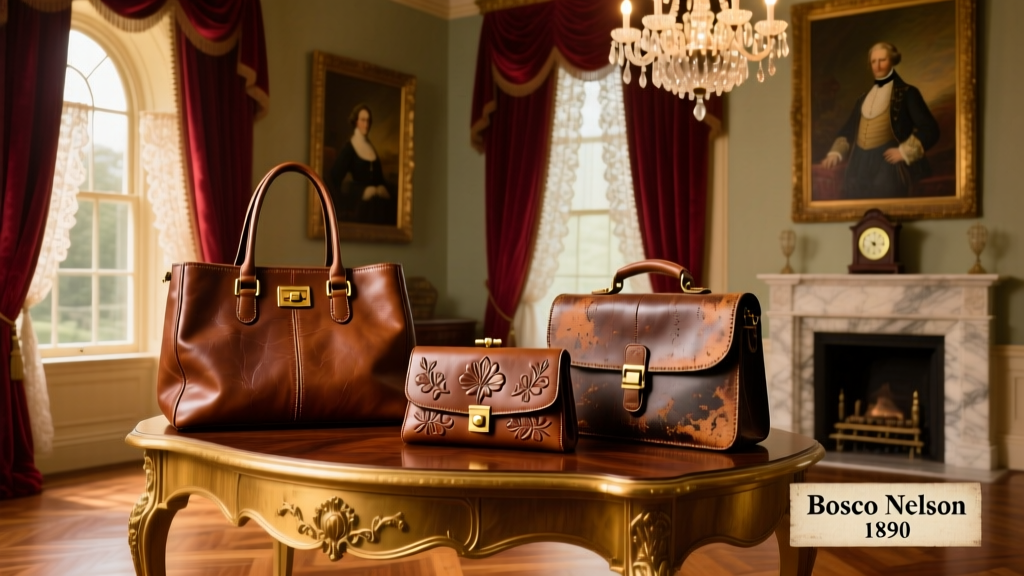
Purses, Leather, and Legacy: Uncovering the Bosco Nelson 1890 Handbag Collection

Advertising Marcy Funeral Home Cardboard 'Last Supper' on Reverse: A 1940s Ecclesiastical Promotional Artifact
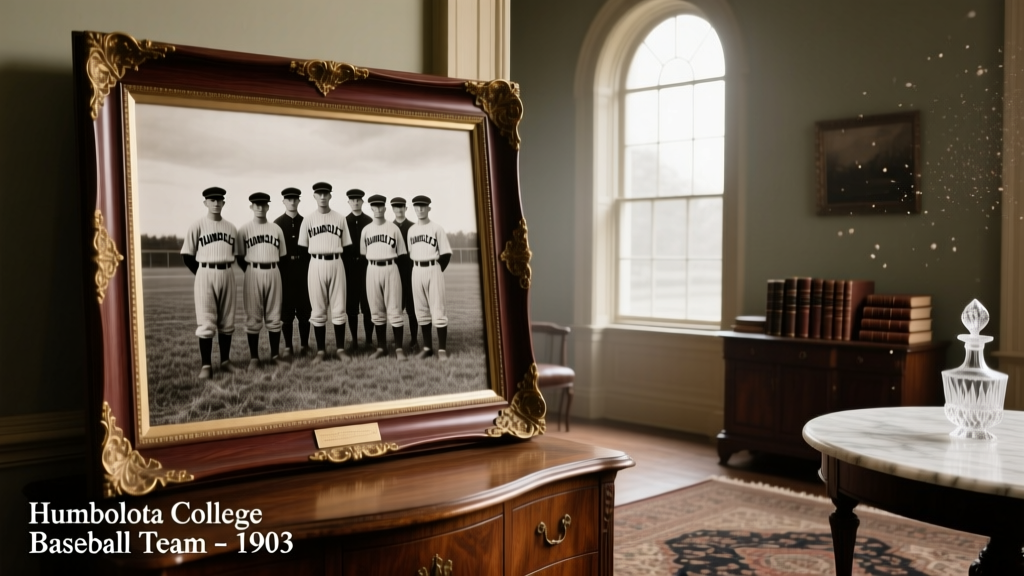
A Rare Glimpse of Early Collegiate Baseball: The 1903 Humboldt College Team Photograph

Noritake Compote: 'Man on Camel at Campfire' Gilt-Scrolled Rim Pedestal Bowl, Circa 1900, 8-Inch Diameter

Aladdin B-77 Tall Lincoln Drape Lamp with Ruby Burner: A Technical and Historical Deep Dive

Jardinière Planter Fishbowl: History, Design Evolution, and Restoration Best Practices

The Sumida Vase: Flaring Rim, Mother-and-Child Motif, Red Glaze, Signed — A Detailed Study of the 9¾-Inch Example
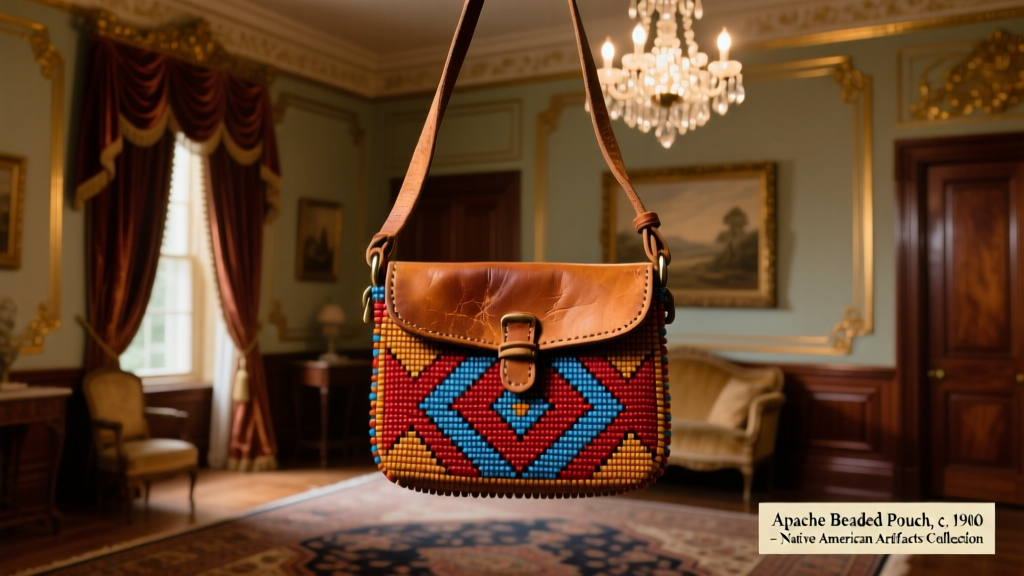
Indian Pouch Apache Beaded C. 1900: Authenticity, Craftsmanship, and Conservation Insights

Enamel Cuff Links Commemorating the National Parks Centennial: Old Faithful, 1972 — A Collector’s Guide to History, Craftsmanship, and Value