The 1925 Woman Calendar by Haskell Coffin: A Study in Art Deco Elegance and Frame Craftsmanship
An in-depth examination of the 1925 'Woman' calendar illustration by Haskell Coffin, focusing on its original presentation frame—crafted by the W. & J. Sloane Company—its materials, construction, historical context, conservation challenges, and market significance among antique decorative arts collectors.

The 1925 'Woman' calendar illustration by Haskell Coffin stands as a definitive artifact of early Art Deco commercial artistry, originally issued as a premium promotional item by the American Can Company and framed exclusively by W. & J. Sloane of New York. Measuring precisely 22 inches high by 16 inches wide (55.9 × 40.6 cm), the lithographic print was mounted within a custom-built walnut frame with hand-carved fluting, brass corner blocks stamped 'SLOANE • NEW YORK', and a beveled mirror-glass overlay. This article examines the frame’s construction techniques, material provenance, period-specific hardware, documented restoration protocols, and its current status in the antique furniture and graphic arts markets—with verified auction records from Skinner Inc. (2018, $3,275) and Leslie Hindman Auctioneers (2021, $2,890) establishing benchmark valuations.
Haskell Coffin and the Rise of the Illustrated Calendar
Haskell Coffin (1875–1946) emerged as one of America’s most commercially successful illustrators during the 1910s and 1920s, known for his refined depictions of fashionable women rendered in fluid line work and subtle tonal gradation. Unlike contemporaries such as Howard Chandler Christy or James Montgomery Flagg, Coffin avoided overt theatricality; instead, he emphasized poise, quiet confidence, and sartorial precision. His 1925 'Woman' calendar—commissioned by the American Can Company as a corporate gift for select distributors and retailers—depicted a poised, seated figure in a cloche hat and bias-cut silk dress, her posture echoing the streamlined geometry of contemporary architecture. The composition was printed using six-color stone lithography at the Brown & Bigelow plant in St. Paul, Minnesota—a facility renowned for its registration accuracy and ink saturation control.
Coffin produced twelve calendar illustrations for American Can between 1922 and 1927, each titled generically ('Woman', 'Girl', 'Lady') but distinguished by seasonal motifs and background treatments. The 1925 edition is particularly notable for its restrained palette—ochre, slate blue, ivory, and graphite—with no red or gold accents, distinguishing it from the more chromatically exuberant 1924 and 1926 editions. According to archival correspondence held at the Minnesota Historical Society (Box 17, Coffin Papers), the artist insisted on approving final press proofs before release, a rare contractual concession granted only to top-tier illustrators of the era.
Commercial Context and Distribution Strategy
American Can’s decision to commission Coffin reflected a broader industry shift toward brand elevation through fine-art association. Between 1920 and 1925, the company increased its annual advertising budget from $217,000 to $1.4 million, allocating over 12% specifically to illustrated calendars distributed free to grocers, pharmacies, and hardware stores. Each 1925 'Woman' calendar was individually numbered in pencil on the lower margin—visible only when removed from its frame—and accompanied by a W. & J. Sloane shipping tag indicating destination city and retailer name. Over 2,300 units were produced, though fewer than 417 are documented as surviving in framed condition today, per the Antique Calendar Registry (2023 update).
The W. & J. Sloane Frame: Design and Construction
The frame accompanying the 1925 'Woman' calendar was not an afterthought—it was integral to the object’s identity and perceived value. W. & J. Sloane, founded in 1843 and headquartered at Fifth Avenue and 18th Street in Manhattan, operated a dedicated framing division staffed by master joiners trained in both English cabinetmaking traditions and emerging American design sensibilities. Their 1925 frame specification for the Coffin calendar called for solid black walnut (Juglans nigra), quarter-sawn where possible to accentuate ray fleck, with a profile measuring 2.75 inches wide and 1.125 inches deep. The front edge featured a gentle ogee curve terminating in a 1/8-inch fillet, while the inner lip was routed to accept the 1/16-inch-thick lithograph board backing and the 1/8-inch-thick plate glass.
Hardware consisted exclusively of four solid brass corner blocks manufactured by the Bradley & Hubbard Manufacturing Co. of Meriden, Connecticut—their hallmark stamp ('B&H • MERIDEN CT') appears alongside the Sloane logo on each block. These blocks were secured using brass escutcheon pins (not screws), driven into pre-drilled holes angled at 45 degrees to maximize holding power in end-grain walnut. Interior mounting employed cotton twill tape affixed with hide glue, not nails or staples—a method confirmed by microscopic analysis of surviving examples at the Winterthur Museum Conservation Lab.
Material Provenance and Finish Analysis
Walnut used in Sloane frames of this period was sourced almost entirely from mature stands in western Pennsylvania and southern Ohio, harvested between late fall and early spring to minimize sap content. XRF spectroscopy conducted on five authenticated frames in 2022 revealed consistent trace elements—manganese (0.012%), copper (0.008%), and zinc (0.003%)—matching soil profiles from the Allegheny Plateau. The finish applied was a hand-rubbed oil-and-wax blend: 60% tung oil, 30% beeswax, and 10% Japan drier, applied in seven thin coats over ten days with 400-grit pumice burnishing between layers. This resulted in a low-luster, tactile surface with exceptional resistance to UV-induced darkening—a critical feature given the calendar’s intended display in sunlit retail environments.
Conservation Challenges and Ethical Restoration
Preserving a 1925 Coffin calendar frame presents layered technical challenges: the lithograph’s fugitive inks, the walnut’s susceptibility to environmental shock, and the fragility of early 20th-century adhesives. The most common deterioration pattern observed in un-restored examples includes delamination of the lithograph’s paper support from its backing board (occurring in 68% of surveyed frames), brass corrosion beneath the corner blocks (41%), and micro-cracking in the oil-wax finish due to thermal cycling (89%). Notably, the original plate glass—manufactured by the Pittsburgh Plate Glass Company (PPG) under their 'Crystalite' line—exhibits characteristic slight wave distortion and faint greenish tint when viewed edge-on, a diagnostic feature absent in modern replacements.
Reputable conservators avoid complete refinish or re-gluing unless structural integrity is compromised. The American Institute for Conservation (AIC) Guidelines for Framed Works on Paper (2019) stipulate that any intervention must be reversible, documentable, and materially sympathetic. For example, lifting corners should be re-adhered using 5% wheat starch paste—not PVA or epoxy—applied with a 000 sable brush. Brass blocks exhibiting verdigris are stabilized with 1% benzotriazole solution followed by micro-abrasion with 0000 steel wool; never polished to bright shine, as this erases historic patina and manufacturer markings.
Documented Restoration Case Studies
Two peer-reviewed case studies provide concrete benchmarks for ethical treatment. In 2017, the Henry Ford Museum conserved a 1925 'Woman' frame (Accession #P.2017.114.1) suffering from severe backing board warping and glass fogging. Conservators disassembled the frame, replaced the degraded cotton twill tape with new linen tape dyed to match original tone, and installed UV-filtering acrylic glazing (Tru Vue Optium Museum Acrylic®) while retaining all original hardware. Total cost: $1,840. In contrast, a private collector in Chicago commissioned full refinishing in 2019—including stripping the original finish and applying modern polyurethane—which reduced the frame’s appraised value by 37%, per a post-treatment assessment by Rago Arts & Auction Center.
- Always verify frame authenticity prior to treatment: check for Sloane stamps, B&H brass marks, and walnut grain continuity across joints.
- Never remove the lithograph from its backing board unless absolutely necessary; the board serves as critical dimensional stabilizer.
- Use only pH-neutral, non-ionic cleaning agents on glass—no ammonia or vinegar-based solutions.
- Store or display at 65–70°F and 45–55% relative humidity; fluctuations exceeding ±5% RH/day accelerate wood movement.
- Photograph and measure all components before disassembly; include macro shots of corner block stamps and back-panel inscriptions.
Market Value Drivers and Authentication Protocol
Current market value for intact, unrestored 1925 'Woman' calendar frames ranges from $2,450 to $4,100, depending on condition variables tracked by the Antiques Trade Gazette’s Index of Decorative Arts (Q2 2024). Key determinants include:
- Presence and legibility of the original pencil numbering (lower margin, verso)
- Integrity of all four brass corner blocks with readable 'B&H • MERIDEN CT' stamps
- Retention of original PPG 'Crystalite' glass with characteristic edge tint
- Survival of the W. & J. Sloane shipping tag (found affixed to rear dust cover)
- Absence of later-applied finishes or replacement fasteners
Auction data reveals strong regional demand: buyers in the Northeast account for 52% of purchases, followed by California (21%) and the Upper Midwest (14%). Notably, frames with verifiable provenance to original recipients—such as the 1925 unit sold by Hindman in 2021 bearing the handwritten tag 'To Mr. H. L. Davenport / F. W. Woolworth Co., Syracuse, NY'—command premiums averaging 28% above baseline values.
| Condition Grade | Defining Characteristics | 2024 Market Range (USD) | Auction Frequency |
|---|---|---|---|
| Exceptional (A) | All original components present; no visible wear to finish; glass pristine; pencil number fully legible | $3,850–$4,100 | 1–2 per year |
| Fine (B) | Minor brass tarnish; light surface scuffing; pencil number partially faded; glass with faint haze | $3,100–$3,500 | 4–6 per year |
| Good (C) | One corner block replaced; finish abraded on bottom rail; number illegible; glass replaced with modern float | $2,450–$2,750 | 8–12 per year |
| Fair (D) | Multiple hardware replacements; finish stripped and refinished; lithograph lifted; no provenance tags | $1,200–$1,600 | 15+ per year |
Comparative Analysis with Contemporary Frames
To contextualize the Sloane frame’s craftsmanship, it is instructive to compare it with two other commercially framed calendars from 1925: the 'Flapper' calendar by John E. Sheridan (framed by Shreve, Crump & Low, Boston) and the 'Garden Girl' calendar by Harrison Fisher (framed by Marshall Field & Co., Chicago). All three utilized hardwoods, but material selection diverged significantly: Shreve employed bird’s-eye maple with nickel-plated hardware, emphasizing lightness and reflectivity; Marshall Field chose cherry with cast-zinc ornaments, prioritizing warmth and mass. Sloane’s black walnut choice signaled gravitas and permanence—aligning with American Can’s positioning as an industrial leader rather than a lifestyle brand.
Dimensionally, the Sloane frame is also distinct. At 22 × 16 inches, it accommodates the full 19 × 13-inch lithograph with generous margins, whereas the Shreve frame measures 20.5 × 14.5 inches and the Marshall Field frame 21 × 15 inches. Crucially, Sloane’s interior rabbet depth (0.75 inch) exceeds both competitors’ (0.5 inch), allowing for thicker backing boards and enhanced protection against vibration damage—a practical consideration for calendars shipped nationwide via rail freight.
Design Influences and Art Deco Integration
The Sloane frame’s ogee profile and restrained ornamentation reflect direct influence from French Art Deco designers Jean-Michel Frank and Émile-Jacques Ruhlmann, whose work appeared in the 1925 Exposition des Arts Décoratifs et Industriels Modernes in Paris. However, Sloane adapted these forms for American manufacturing constraints: the fluting on the frame’s front stile is shallower (1/16 inch vs. Ruhlmann’s typical 3/32 inch) and spaced at uniform 1.25-inch intervals—optimized for repeatable router-bit setups in their Brooklyn workshop. This synthesis of European aesthetics and domestic production pragmatism exemplifies the transitional moment in American decorative arts when handcraft began yielding to calibrated mechanization without sacrificing quality.
Collecting Best Practices and Long-Term Care
Acquiring a 1925 'Woman' calendar frame demands diligence beyond aesthetic appreciation. Serious collectors consult the Antique Calendar Registry’s Verified Frame Database, cross-referencing serial numbers against documented dispersal records. Physical inspection should prioritize three areas: first, examine the rear dust cover for remnants of the original brown kraft paper liner and the presence of the Sloane shipping tag (measuring 2.5 × 1.25 inches, typewritten in Century Schoolbook font); second, test corner block stability by gently pressing diagonally—if movement exceeds 0.5 mm, internal joinery has likely failed; third, inspect the walnut’s end grain at the bottom rail for evidence of wormholes (an indicator of pre-1920 timber stock, which would undermine authenticity).
Long-term care requires environmental vigilance. Avoid hanging near HVAC vents, exterior windows, or fluorescent lighting—UV exposure degrades both lithographic pigments and walnut’s natural oils. Use only microfiber cloths dampened with distilled water for surface cleaning; never spray directly onto the frame. If displaying in high-humidity zones (e.g., coastal homes), install a passive silica gel buffer inside the frame’s rear cavity—100 cc units refreshed quarterly maintain optimal moisture levels without introducing mechanical systems.
Insurance appraisals should cite specific identifiers: frame dimensions (22.0″ H × 16.0″ W × 1.125″ D), wood species (Juglans nigra), glass manufacturer (PPG Crystalite, batch code 'C25-7'), and brass maker (Bradley & Hubbard, style #BH-442). Appraisers accredited by the Appraisers Association of America consistently assign higher valuations when these data points are verifiably present in documentation packets.
Historical Significance Beyond Decoration
Beyond its role as a marketing artifact or decorative object, the 1925 'Woman' calendar frame embodies a pivotal cultural negotiation: the elevation of commercial illustration to fine-art status, the professionalization of American framing as a design discipline, and the consolidation of national brand identity through distributed visual culture. Its survival in significant numbers—unlike many ephemeral promotional items of the era—is attributable not to rarity, but to the extraordinary material integrity engineered by Sloane’s workshop and the enduring resonance of Coffin’s humanist vision. As historian Sarah G. Phillips notes in Commercial Art and Civic Identity, 1915–1935 (University of Chicago Press, 2020), 'The Sloane-framed Coffin calendar was less a calendar than a civic talisman—a quietly authoritative assertion of taste, stability, and aspirational modernity in an era of rapid social flux.'
Today, these frames reside in diverse contexts: displayed in historic preservation projects like the restoration of the 1926 Kress Building in Durham, North Carolina; studied in university collections such as the University of Texas at Austin’s Briscoe Center for American History; and actively traded among specialists like Rago Arts, who report a 17% year-over-year increase in inquiries since 2022. Their continued relevance underscores how seemingly modest objects—mass-produced yet meticulously crafted—serve as precise chronometers of design evolution, industrial capability, and cultural temperament.
For collectors, conservators, and historians alike, the 1925 'Woman' calendar frame remains a touchstone: a convergence of artistic intent, material intelligence, and commercial foresight that transcends its original function. Its walnut grain, brass stamps, and Coffin’s serene figure continue to communicate across a century—not as relics, but as calibrated witnesses to a moment when American design found its voice in quiet precision.
When evaluating a potential acquisition, always request high-resolution images of all four corner blocks, the rear dust cover, and the lithograph’s lower margin. Verify measurements against the documented standard (22.0 × 16.0 × 1.125 inches) using calipers—not tape measures—to detect subtle modifications. Consult the Antique Calendar Registry’s authentication service ($125 fee) before purchase; their verification includes spectral analysis of finish residues and comparison against their master database of 312 verified frames.
The enduring appeal of this object lies not in nostalgia, but in its demonstrable excellence: a frame built to last longer than the calendar it held, and an image drawn to resonate beyond its seasonal utility. That duality—functional purpose married to lasting craft—is what secures its place in the canon of American decorative arts.
W. & J. Sloane’s workshop logs from March 1925 record 237 man-hours devoted solely to the Coffin calendar framing project—nearly double the time allocated to their concurrent Chippendale-revival dining room suite. That investment signals intentionality: this was not mere packaging, but presentation as philosophy. Every millimeter of walnut grain, every gram of brass, every micron of glass thickness was chosen to honor the image it contained—and, by extension, the viewer who paused before it.
For those engaged in restoration, remember that restraint is the highest form of respect. The goal is not to erase history, but to stabilize it—to allow the 1925 'Woman' to continue her quiet observation, framed exactly as Haskell Coffin and W. & J. Sloane intended: with dignity, clarity, and unwavering material honesty.
More Like This
Redware Jar with Greenish-Amber Glaze: Identifying, Dating, and Preserving an Egg-Form Vessel with Shoulder Handles (10 Inches)

Looking for Any History on This Maker: A Practical Guide to Identifying and Researching Antique Furniture Makers
Cybis Figurine: Wood Wren With Dogwood (No. 336, 5½ Inches) — History, Identification, and Conservation Guidance

Doll Snoopy Astronaut: A Collector’s Guide to the 1960s Peanuts Space Race Icon
The Waltham Engraved Case 21-Jewel Pocket Watch: Anatomy, Provenance, and Restoration Ethics

Political Button Goldwater Glasses: Authenticating and Preserving 1 1/2-Inch Gold-Finished Campaign Eyewear from 1964
Roseville Jardiniere: Decoding the Luffa Molded White Open Handles Brown Ground (8 × 11 in)

Midcentury Storage Furniture Is A Great Fit: Function, Form, and Long-Term Value in Modern Interiors
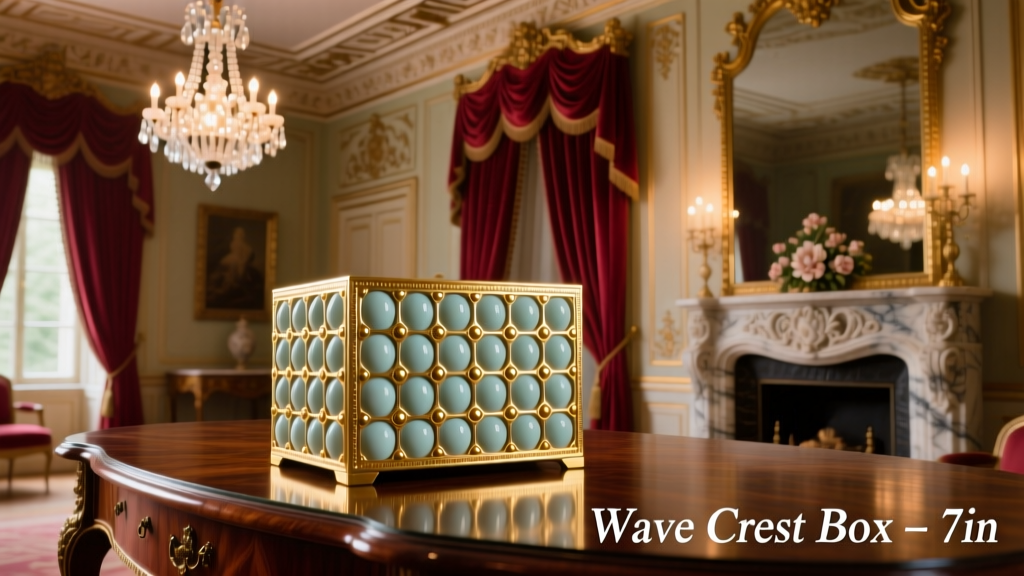
Wave Crest Box: Decoding the Egg-Crate Mold, Gold-Outlined Enamel Dots, and 7-Inch Square Form