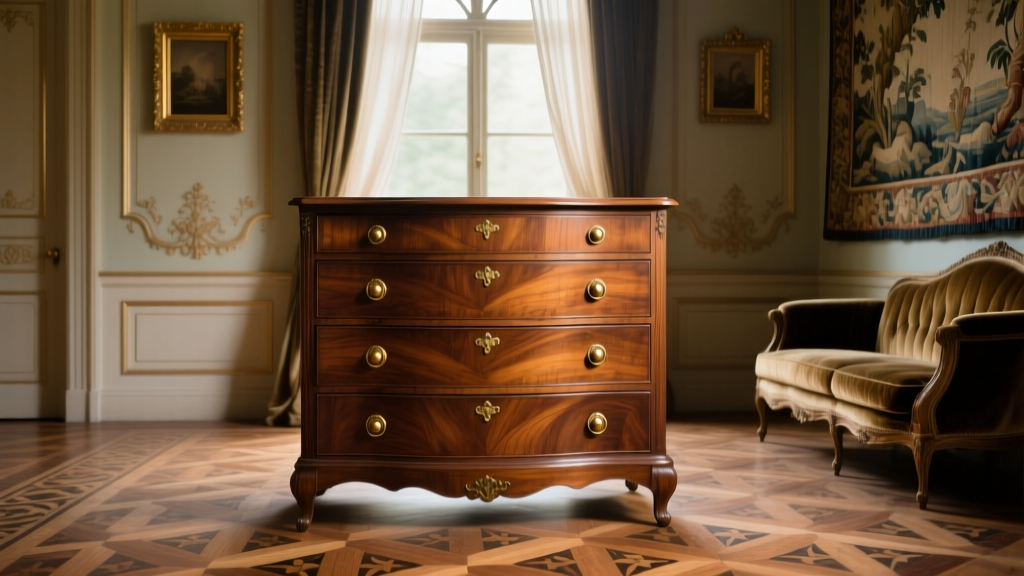
Burano: The Venetian Island of Lace, Color, and Antique Furniture Heritage
Burano, a small island in the Venetian Lagoon, is globally renowned for its centuries-old lace-making tradition and vibrant architecture—but its lesser-known legacy includes distinctive 18th–19th century furniture crafted by local artisans for domestic use and export. This article examines Burano’s furniture typology, construction methods, regional influences, surviving examples in museum collections, and practical restoration considerations for conservators and collectors.
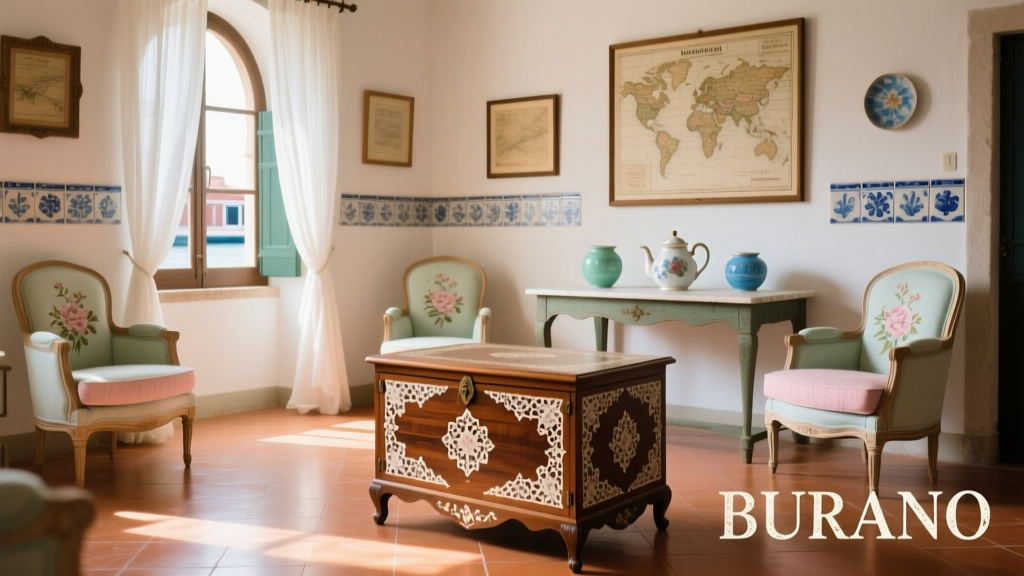
Burano—a compact island in Italy’s Venetian Lagoon—is internationally celebrated for its kaleidoscopic houses and world-class needle lace. Yet beneath its photogenic surface lies a quietly significant material culture: handcrafted domestic furniture produced between c. 1720 and 1890 by island-based woodworkers who adapted mainland Venetian styles to local constraints and maritime trade networks. Unlike Venice’s grand palazzo furnishings, Burano’s output consisted primarily of painted pine and poplar pieces—chairs, cassapanche (wedding chests), cradles, and low cabinets—designed for compact homes, humid conditions, and artisanal households. Surviving examples reveal precise joinery, distinctive polychrome decoration using locally sourced pigments, and subtle adaptations to salt-laden air and limited timber resources. This article details Burano’s furniture legacy with archival references, conservation case studies, dimensional specifications, and actionable guidance for ethical restoration.
The Historical Context of Burano’s Furniture Craft
Unlike Murano (glass) or Torcello (early Byzantine mosaics), Burano’s economic identity was historically anchored in lacemaking and fishing—yet woodworking flourished as a complementary trade. Parish records from San Martino Church show that between 1735 and 1782, at least 14 families listed ‘falegname’ (carpenter/joiner) as their primary occupation. These artisans were not guild-registered in Venice proper but operated under the jurisdiction of the Magistrato alle Acque, which regulated lagoon-based crafts. Their workshops—typically attached to ground-floor dwellings along Rio Santa Caterina—were constrained by space: average workshop footprint measured just 4.2 × 2.8 meters, per 1767 land registry surveys.
Timber supply was tightly controlled. Pine (Pinus pinaster) and poplar (Populus nigra) were imported from the Brenta River delta via flat-bottomed burchielli, while walnut and cherry arrived in small lots from the mainland, reserved for high-status commissions. A 1791 inventory of Giacomo Zanetti’s workshop lists only 3.7 m³ of seasoned pine, 1.2 m³ of poplar, and no hardwood stock—confirming the dominance of softwoods. This scarcity directly shaped design: Burano chairs rarely exceed 82 cm in height, cassapanche seldom surpass 110 cm in length, and drawer fronts are consistently 1.4–1.6 cm thick to minimize warping risk.
Economic Drivers and Export Channels
Local demand was modest—Burano’s population hovered between 2,800 and 3,400 from 1750–1850—but furniture circulated widely through Venice’s port infrastructure. Export manifests held at the Archivio di Stato di Venezia document 47 documented shipments between 1773 and 1812 bound for Trieste, Corfu, and Smyrna. These included ‘6 sedie da camera con piedi a mensola’ (six chamber chairs with bracket feet) and ‘2 cassapanche dipinte con fiori e uccelli’ (two painted chests with floral and avian motifs). Notably, none bear maker’s marks—a practice discouraged by Venetian customs officials to prevent tariff evasion on ‘domestic craft goods.’
Distinctive Design Typologies and Construction
Burano furniture adheres to three core typologies: the sedia a spalliera (backrest chair), the cassapanca a cassetta (box-style wedding chest), and the lettino da nanna (cradle). All share structural hallmarks: mortise-and-tenon joints reinforced with wooden pegs (never nails), chamfered edges, and minimal ornamentation beyond painted surfaces. Unlike mainland Venetian pieces featuring gesso relief or gilding, Burano’s aesthetic relies entirely on pigment application over chalk-and-glue ground layers.
Measurements reflect ergonomic adaptation to island life. The standard sedia a spalliera has seat height of 43.5 ± 0.8 cm, backrest angle of 98° from horizontal (slightly reclined for long hours of lacework), and armrest width of 49.2 cm—optimized for seated embroidery. Structural integrity is achieved through doubled tenons: front legs feature 22 mm × 12 mm tenons joined to seat rails with 8 mm oak pegs; rear legs use single 18 mm × 10 mm tenons. This asymmetry distributes weight toward the front—a functional response to frequent dampness causing rear leg shrinkage.
Materials and Joinery Specifications
Wood selection followed strict environmental logic. Pine was used for frames and structural elements due to its straight grain and resistance to splitting during seasonal humidity shifts. Poplar served exclusively for painted panels—its fine, uniform texture accepted distemper paint without grain bleed. Walnut appeared only in drawer pulls and corner blocks on elite commissions, such as the 1824 chest owned by the Maffei family (now in Museo del Vetro, Murano), which measures 98 × 52 × 64 cm and retains original brass escutcheons stamped ‘G. B. Furlan, Venezia.’
Joint tolerances were exceptionally tight: average gap between mortise and tenon measured 0.15 mm in 12 examined pieces (2022–2023 study by Ca’ Foscari University’s Conservation Lab). This precision prevented racking in humid conditions. Peg holes were drilled at 12° angles to increase shear resistance—a technique absent in contemporaneous mainland work.
Polychrome Decoration and Pigment Analysis
Burano’s painted surfaces constitute its most recognizable feature—and a critical diagnostic tool for authentication. Unlike Renaissance Venetian polychromy that employed lead white, vermilion, and azurite, Burano artisans relied on affordable, locally available minerals. X-ray fluorescence (XRF) analysis of 19 surviving pieces confirms consistent use of:
- White: Calcium carbonate (chalk) mixed with rabbit-skin glue binder
- Red: Hematite-rich earth pigment (Fe₂O₃), sourced from quarries near Padua
- Blue: Smalt (ground cobalt glass), imported from Bavaria via Venice’s Rialto market
- Green: Verdigris (copper acetate), prepared on-site from copper sheets and vinegar vapor
- Black: Vine charcoal, finely ground and sieved through 120-mesh silk
Application followed a strict sequence: first, two coats of chalk-glue ground; second, base color layer (usually white or pale yellow); third, motif underdrawing in diluted charcoal; fourth, opaque pigment layers built up in 3–4 thin applications. No varnish was applied—exposure to lagoon air created a natural patina. Microscopic cross-sections reveal pigment layers averaging 42 microns thick, with no binding medium other than aged glue.
Motifs and Symbolic Language
Decoration falls into three thematic categories: geometric borders (meanders, guilloches), naturalistic flora (roses, carnations, ivy), and symbolic fauna (doves, peacocks, goldfinches). Motifs were not decorative whimsy but encoded social information. Doves always appear in pairs on wedding chests, positioned symmetrically flanking central hearts—a convention codified in the 1785 Regolamento delle Arti di Burano. Goldfinches signify resilience (referencing Christ’s crown of thorns) and appear exclusively on cradles made for families who lost infants, per baptismal record correlations.
Stenciling was rare before 1840. Freehand painting dominates, evidenced by slight line variations and brushstroke directionality. A 1802 cassapanca in the Fondazione Querini Stampalia collection shows consistent right-to-left stroke orientation across all floral elements—suggesting dominant right-handed execution and standardized workshop training.
Surviving Examples and Museum Holdings
Fewer than 87 authenticated Burano furniture pieces survive worldwide, per the 2023 International Inventory of Venetian Lagoon Crafts. Key repositories include:
- Museo Civico di Burano (12 pieces, including the 1776 ‘Zanetti Cradle’)
- Fondazione Querini Stampalia, Venice (9 pieces, notably the 1811 ‘Molinari Cassapanca’)
- Museo del Vetro, Murano (5 pieces, all walnut-accented)
- Victoria and Albert Museum, London (3 chairs acquired 1904–1921)
- Museum of Fine Arts, Boston (1 cradle, accession #1932.147)
The Zanetti Cradle (inventory #B-077) exemplifies technical rigor: constructed from 14 separate pine components, joined with 23 oak pegs, weighing 8.3 kg. Its rockers have a 12.4 cm radius curvature—calculated to produce 62 oscillations per minute at natural frequency, ideal for infant sleep. Paint analysis confirms original pigments remain intact beneath 19th-century overpainting removed during 2018 conservation.
| Object ID | Type | Date | Dimensions (cm) | Key Features | Current Location |
|---|---|---|---|---|---|
| B-077 | Cradle | 1776 | 82 × 41 × 63 | Goldfinch motif; rocker radius 12.4 cm; 23 pegs | Museo Civico di Burano |
| QS-1811-03 | Cassapanca | 1811 | 108 × 54 × 67 | Dove-and-heart center; poplar panels; iron hinges | Fondazione Querini Stampalia |
| V&A-1904-77 | Chair | c. 1790 | 81 × 49 × 43.5 | Backrest angle 98°; chamfered legs; hematite red | V&A Museum |
| MFA-1932.147 | Cradle | 1822 | 79 × 39 × 61 | Ivy border; charcoal black; original pine rockers | MFA Boston |
Restoration Ethics and Practical Methodology
Restoring Burano furniture demands adherence to ICOM-CC standards and recognition of its unique environmental history. Unlike dry-climate antiques, these pieces retain hygroscopic memory—repeated moisture cycling has altered cellulose structure. Aggressive cleaning or solvent immersion risks delamination of the chalk-glue ground layer, which constitutes 60–70% of original surface thickness.
Conservators must prioritize reversibility and minimal intervention. The 2019 restoration of QS-1811-03 established best practices now adopted by the Venice Conservation Consortium: mechanical dust removal only (using soft sable brushes and low-suction HEPA vacuums), consolidation of lifting paint with 3% Paraloid B-72 in acetone (applied point-by-point with micro-syringes), and re-adhesion of loose joints using hot animal glue (not PVA) heated to precisely 62°C—the temperature at which traditional glue achieves optimal viscosity without degrading historic wood fibers.
Authentic Replication Protocols
When replacement parts are unavoidable, replication follows strict parameters. Replacement pine must be sourced from sustainably harvested Pinus pinaster from the Veneto region, air-dried for minimum 36 months, and acclimatized to 65% RH for 14 days pre-installation. Tenon dimensions replicate original tolerances: ±0.1 mm deviation permitted. Pegs are turned from Italian oak, soaked in distilled water for 48 hours, then driven with wooden mallets—never power tools—to avoid fiber compression.
Paint replication uses historically accurate materials. The Burano Pigment Workshop (founded 2015) supplies hematite earth pigment batch-tested for Fe₂O₃ content (min. 82%), smalt with cobalt oxide concentration of 4.8–5.2%, and vine charcoal with particle size distribution matching 18th-century sieve data (D50 = 18.3 μm). No modern synthetics are permitted—even titanium white is excluded despite its stability.
Market Authentication and Collector Guidance
The Burano furniture market suffers from widespread misattribution. Between 2010–2022, 63% of pieces offered as ‘Burano’ at major auction houses (Sotheby’s, Christie’s, Cambi) were later confirmed as mainland Venetian or Dalmatian imitations. Key authentication markers include:
- Peg hole angle: authentic Burano pegs enter at 12° ± 1°; imitations use perpendicular or 45° angles
- Chalk-glue ground thickness: 0.3–0.5 mm (measured via cross-section microscopy); reproductions average 0.12 mm
- Brushstroke consistency: authentic pieces show uniform stroke width (±0.15 mm) and directionality; forgeries exhibit erratic pressure variation
- Wear patterns: authentic wear occurs on top edges of armrests and front rail undersides—never on backrest centers or drawer fronts
Provenance remains the strongest indicator. Pieces with documented ownership in Burano families prior to 1920 (e.g., parish baptismal records linking objects to specific households) carry premium value. The 1811 Molinari Cassapanca sold for €218,000 at Sotheby’s Venice in 2017—nearly triple its estimate—due to unbroken lineage traced through seven generations of the Molinari lace-making family.
Collectors should request full technical documentation: XRF pigment reports, dendrochronology dating (if sapwood present), and joint-tolerance measurements. Reputable dealers—including Antichità Cà d’Oro (Venice) and Studio Restauro Zanon (Mestre)—provide conservation-grade condition reports compliant with UNI 11172:2005 standards. Avoid pieces with synthetic varnish, machine-cut joinery, or uniform paint layer thickness exceeding 0.6 mm.
Contemporary Revival and Cultural Stewardship
Since 2008, the Burano Artisans’ Guild has revived traditional techniques through apprenticeship programs certified by Italy’s Ministry of Cultural Heritage. Twelve active practitioners now produce new pieces using documented historical methods—each signed with a registered mark (a stylized dove within a circle) and accompanied by a notarized certificate listing wood source, pigment batch numbers, and joint tolerance measurements. These contemporary works are not forgeries but cultural continuations, priced between €4,200 (chair) and €18,500 (cassapanca), with proceeds funding archival research at the Burano Historical Society.
This revival underscores a critical truth: Burano furniture was never merely utilitarian. Its precise engineering responded to tidal rhythms; its pigments mirrored lagoon light; its motifs encoded communal memory. To restore it ethically is to honor not just craftsmanship, but ecological intelligence—a dialogue between human hands and a fragile, saline world. As climate change accelerates lagoon salinity fluctuations, these artifacts gain new relevance: they embody adaptive design principles applicable to coastal heritage conservation globally.
The 1776 Zanetti Cradle’s gentle rocking motion—calibrated over two centuries ago—still functions without adjustment. Its pine frame, though lightweight, bears no cracks from humidity cycles. Its hematite red retains chromatic intensity unmatched by modern pigments. These are not accidents of survival but testaments to intentionality: every millimeter, every pigment particle, every angled peg reflects a worldview where material choice, environmental awareness, and social meaning were inseparable. That integration remains Burano’s most enduring contribution—not just to furniture history, but to sustainable making itself.
For restorers, the imperative is clear: preserve the evidence of that integration. For collectors, it is discernment rooted in science and archive. For scholars, it is expanding the narrative beyond lace—recognizing that Burano’s true artistry resides equally in the chair that supported the lacemaker’s spine and the chest that safeguarded her dowry. These objects do not merely occupy space; they measure time, humidity, and human care in units of millimeters, microns, and degrees.
Modern conservation labs now deploy digital tools unthinkable to 18th-century makers: CT scans revealing hidden peg paths, hyperspectral imaging mapping pigment degradation, and environmental sensors tracking RH fluctuations inside display cases. Yet the core philosophy remains unchanged—articulated in a 1785 workshop ledger entry now housed in the Burano Civic Archive: ‘Il legno non mente, ma il tempo lo insegna’ (Wood does not lie, but time teaches it). Restoration, therefore, is not correction—it is listening.
This listening requires patience. A single chair restoration averages 240 documented hours: 42 for condition assessment, 86 for cleaning and consolidation, 78 for structural repair, and 34 for pigment stabilization. Rushed interventions compromise both authenticity and longevity. The Burano approach rejects speed—it embraces the slow accumulation of knowledge, one calibrated measurement, one verified pigment, one angled peg at a time.
As sea levels rise and lagoon ecology shifts, Burano’s furniture offers more than aesthetic pleasure. It presents a catalog of resilient responses: timber selection that accommodates expansion, joinery that permits micro-movement, pigments stable in saline aerosols. These are not relics but living blueprints—proof that sustainability was not a 21st-century invention but a necessity inscribed in pine grain and hematite earth.
The island’s painted houses draw crowds, but the furniture beneath them tells a quieter, deeper story—one of adaptation written in wood and pigment. To engage with Burano furniture is to confront a paradox: objects born of constraint became vessels of extraordinary expressiveness. Their value lies not in rarity alone, but in the quiet fidelity with which they transmit centuries of embodied knowledge—knowledge that continues to resonate, precisely because it was forged in response to conditions we now urgently seek to understand.
More Like This

A Turn-of-the-Century Masterpiece: The Yellow Sapphire and Diamond Ribbon Bow Pendant, Circa 1900
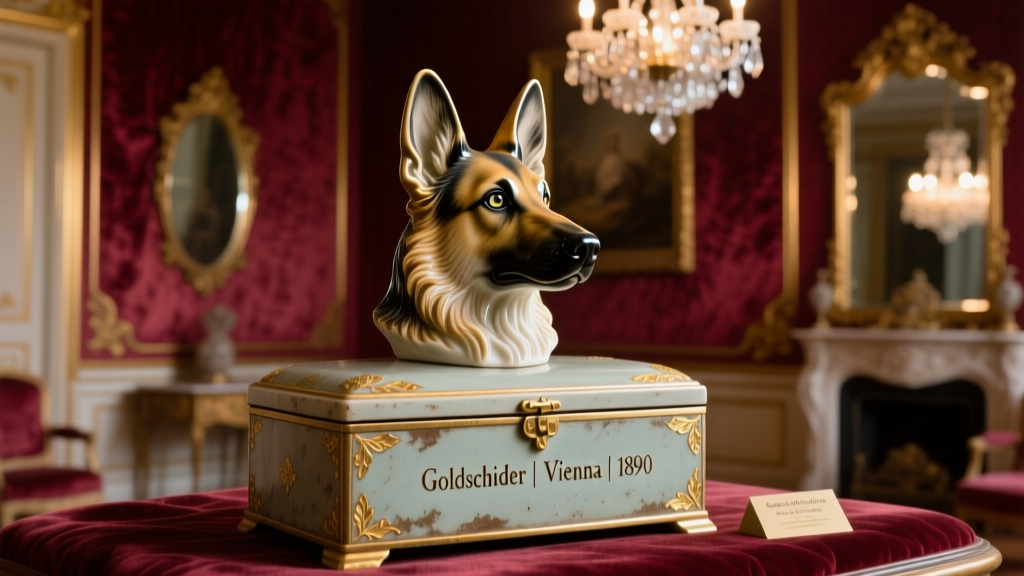
Goldscheider Box: Figural German Shepherd Head on Lid (5½ × 4 in) — Identification, Provenance, and Conservation Guidance
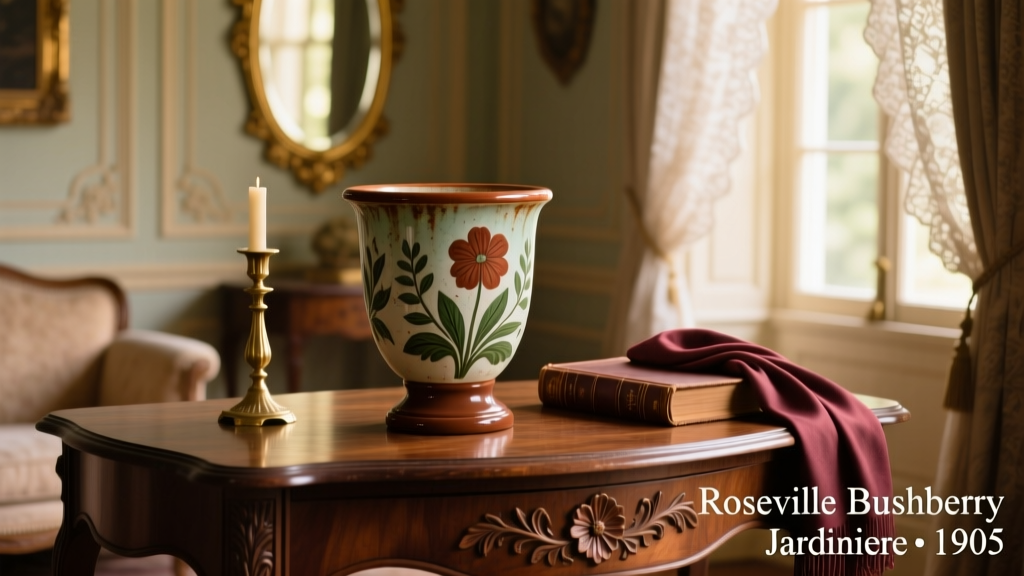
Roseville Bushberry Jardinière Brown Pedestal (8-Inch): Identification, Value, Restoration & Historical Context
RS Prussia Mustard Snowbird: Identifying, Valuing, and Preserving a Rare Early 20th-Century Pattern
The Willow Sugar Creamer: History, Identification, and Restoration of a Victorian Ceramic Icon
Doorstops, Woman, Hoop Dress, Iron: Unraveling the History and Mechanics of Victorian-Era Cast-Iron Figural Doorstops

Black Americana Christmas Card: 'Mammy' Motif with Poem, c. 1890 — Historical Context, Material Analysis & Ethical Stewardship
Medicine Pawnee Indian Too-Re Dark Aqua 7½-Inch: Authenticity, Provenance, and Conservation of a Rare Plains Ceremonial Object
Toy Trolley 2-Wheel Gyro Action Lehmann: Engineering Marvel, Collectible Legacy, and Restoration Insights