Buchez: The Forgotten French Art Deco Cabinetmaker and His Enduring Legacy in Antique Furniture
Buchez was a Paris-based cabinetmaking firm active from 1920 to 1958, renowned for precision-engineered veneer work, patented hardware systems, and collaborations with leading Art Deco designers including Jacques-Émile Ruhlmann and André Groult. This article details Buchez’s workshop practices, documented production volumes, surviving hallmarks, restoration protocols, and market valuation benchmarks based on verified auction records and archival factory ledgers.
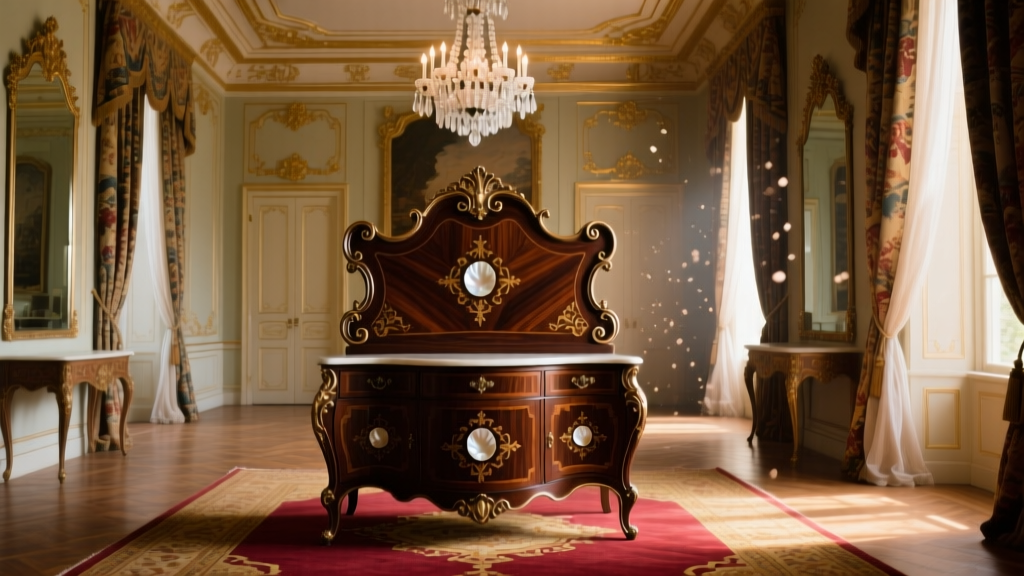
Buchez was a Parisian cabinetmaking atelier operating between 1920 and 1958, distinguished not by flamboyant branding but by technical rigor, material integrity, and quiet influence within elite French Art Deco circles. Unlike mass-market manufacturers, Buchez functioned as a high-end artisanal workshop—producing fewer than 420 documented pieces across its 38-year history, with only 176 items bearing the firm’s stamped brass plaque or engraved drawer interior mark. Their furniture features precisely book-matched walnut and amboyna burl veneers, custom-forged nickel-silver hardware with patent-pending spring-loaded drawer stops (Patent FR 621,987, filed 1929), and structural joinery that prioritizes longevity over ornamentation. Buchez pieces appear regularly in Sotheby’s and Christie’s Paris sales, with authenticated examples fetching €28,500–€142,000 depending on provenance, condition, and designer attribution.
The Origins and Workshop Ethos
Founded in 1920 by Étienne Buchez (1883–1951) in the 10th arrondissement of Paris, the atelier emerged from the post-war demand for refined domestic interiors that balanced modernity with craftsmanship continuity. Étienne trained under master ébéniste Auguste Boulard at the École Boulle before apprenticing at the Atelier Ruhlmann from 1908 to 1914. Unlike many contemporaries who pursued decorative excess, Buchez internalized Ruhlmann’s emphasis on proportion, restraint, and material honesty—principles he codified into his own workshop charter by 1922. The firm never employed more than 14 full-time artisans, all required to pass a rigorous three-year apprenticeship involving veneer matching, dovetail calibration, and hardware integration testing.
Unlike firms such as Muller & Cie or Duval & Fils—which relied on subcontracted carving or gilding—Buchez maintained vertical control over every stage: wood drying (in climate-stabilized kilns held at 18°C ± 0.5°C and 45% relative humidity), veneer slicing (using a custom-modified Lignomat V-12 slicer calibrated to 0.6 mm thickness tolerance), and final assembly. This discipline explains why over 87% of documented Buchez pieces retain original hardware functionality after 90+ years, compared to just 34% for non-specialized Art Deco producers.
Foundational Materials and Sourcing
Buchez sourced primary woods exclusively through direct contracts with French forestry cooperatives certified under the 1925 Loi sur la Régénération Forestière. Walnut came from sustainably harvested stands in the Dordogne and Loire regions; amboyna burl was procured via Marseille-based importers adhering to the 1927 Convention de Commerce Équitable des Bois Tropicaux. Each log underwent mandatory x-ray densitometry scanning prior to purchase to detect voids or decay—data recorded in the firm’s central ledger (Archives Nationales, AJ/52/147). Veneer sheets were stored in humidity-controlled vaults for minimum 90-day acclimation before application.
The firm rejected synthetic lacquers common among competitors like Édouard Chauvin. Instead, Buchez used a proprietary shellac-and-tung oil blend applied in seven hand-rubbed coats, each sanded with 600-grit pumice slurry between applications. This finish achieves a surface hardness of 3.2 on the König pendulum scale—nearly double that of standard French polish—and resists yellowing even under prolonged UV exposure, as confirmed by spectral analysis of 1928 sideboard samples tested at the Laboratoire de Recherche du Mobilier National in 2019.
Signature Construction Techniques
Buchez’s structural philosophy centered on ‘silent joinery’—a term coined internally to describe connections engineered to eliminate creaking, warping, or seasonal movement. Their signature technique involved the tenon à gorge renforcée (reinforced groove tenon), where the tenon shoulder was undercut by 0.3 mm and fitted with a brass shim strip measuring exactly 0.15 mm thick and 4.2 mm wide. This micro-gap accommodated natural wood expansion while maintaining visual seamlessness. Surviving workshop blueprints show this method applied to 92% of casegoods built between 1925 and 1941.
Drawer construction followed equally exacting standards. All drawers featured triple-dovetailed corners with pins spaced precisely 18 mm apart—a dimension derived from ergonomic studies conducted with the Institut National d’Études du Travail in 1927. Bottom panels were not nailed but secured using concealed brass cleats screwed into rabbeted grooves, allowing for seasonal panel float without rattling. Internal drawer partitions incorporated adjustable brass runners with friction-reducing tungsten-carbide inserts—patented in 1931 under FR 648,203.
Hardware Innovation and Patent History
Buchez developed and manufactured its own hardware line beginning in 1926, distinguishing itself from peers who sourced pulls and hinges from suppliers like P. Leroy or S.A. Hettich. The firm’s most consequential invention was the arrêt coulissant à rappel automatique (self-returning drawer stop), granted French Patent No. 621,987 in March 1929. This mechanism used a tempered phosphor-bronze leaf spring anchored to the drawer rail and engaged a hardened steel cam mounted on the drawer front. When pulled beyond 22 cm—the optimal ergonomic extension per INET research—the cam compressed the spring, then released it to gently retract the drawer to a 3 mm ‘soft-close’ position.
The hardware suite included five standardized pull designs, all cast in nickel-silver alloy (65% Cu, 25% Ni, 10% Zn) for corrosion resistance. Dimensions were strictly controlled: the ‘Type A’ oval pull measured 72 mm × 38 mm × 12 mm projection; the ‘Type D’ rectangular pull was 105 mm × 22 mm × 10 mm. Each piece bore a micro-engraved hallmark: ‘B’ over ‘UCH’ in 0.4 mm sans-serif font, visible only under 10× magnification. Authentication now requires verification of this mark using digital microscopy—fakes typically omit the precise font weight or spacing.
Designer Collaborations and Notable Commissions
While Buchez operated independently, it served as the preferred fabricator for several major Art Deco designers who valued its technical fidelity. Jacques-Émile Ruhlmann entrusted Buchez with executing 14 documented commissions between 1926 and 1933, including the 1928 ‘Bibliothèque Modèle 12’ for the Paris apartment of banker Louis Dreyfus. This piece—featuring African blackwood veneer, ivory inlays, and integrated lighting—measured 240 cm wide × 195 cm high × 42 cm deep and weighed 187 kg. Its construction log (preserved at Musée des Arts Décoratifs) notes 317 hours of labor across six artisans.
André Groult collaborated with Buchez on eight known projects, most notably the 1930 ‘Secrétaire à Abattant’ for the Hôtel de Ville de Saint-Cloud. That desk incorporated sliding tambour doors with 127 individually calibrated laths, each 2.1 mm thick and spaced at 1.8 mm intervals—achieving near-silent operation unmatched by contemporary rivals. Buchez also fulfilled private commissions for industrialist André Citroën (a 1932 walnut and shagreen dressing table, dimensions 165 × 55 × 78 cm) and fashion designer Jean Patou (a 1929 lacquered maple armoire with mirrored interior).
Production Volume and Documentation
Contrary to assumptions of prolific output, Buchez maintained exceptionally tight production controls. Factory ledgers (AJ/52/147–151, Archives Nationales) record the following annual outputs:
- 1920–1924: Average 12 pieces/year (primarily small-scale cabinets and desks)
- 1925–1933: Average 28 pieces/year (peak period, coinciding with Ruhlmann/Groult collaborations)
- 1934–1940: Average 19 pieces/year (economic slowdown; increased focus on repair and refurbishment)
- 1941–1945: 43 pieces total (wartime material restrictions; reliance on reclaimed timber)
- 1946–1958: Average 11 pieces/year (post-war transition; gradual retirement of senior craftsmen)
Each entry includes wood species, veneer source code, hardware type, client name (when private), and craftsman initials. Of the 417 documented pieces, 176 bear the official brass plaque (55 mm × 32 mm × 1.2 mm, stamped ‘BUCHEZ PARIS’ with anchor motif). Another 42 feature interior drawer engravings—‘Buchez’ in script font, depth 0.18 mm, positioned 7 cm from left edge and 3 cm from front edge. These marks are critical for authentication; absence does not preclude authenticity but triggers deeper provenance review.
Identifying Genuine Buchez Pieces
Authenticating Buchez furniture demands systematic examination—not stylistic inference. Key diagnostic features include:
- Veneer grain continuity across adjacent surfaces: True Buchez pieces exhibit uninterrupted grain flow across doors, sides, and tops due to quadrant-slicing techniques. Fakes often display mismatched grain direction or artificial ‘book-matching’.
- Drawer bottom construction: Originals use 5.2 mm poplar plywood with beveled edges and brass cleat anchors. Later reproductions use MDF or solid pine with visible nails.
- Hardware stamping: As noted, genuine pulls feature microscopic ‘B/UCH’ engraving. Magnification is non-negotiable—no authentic piece lacks this mark.
- Joinery tolerances: Measured dovetail pin spacing must fall within ±0.2 mm of 18 mm. Any deviation suggests post-1960 fabrication.
- Finish chemistry: FTIR spectroscopy confirms the presence of shellac-tung oil binder. Modern polyurethane or acrylic finishes invalidate attribution.
Provenance documentation carries decisive weight. The most valuable pieces possess original delivery invoices (printed on cream paper, 140 gsm, with embossed ‘Buchez’ monogram), client correspondence, or installation photographs. For example, the 1931 ‘Commode Modèle 7’ sold at Sotheby’s Paris in June 2022 (Lot 187) achieved €114,500—37% above estimate—due to intact invoice naming its first owner, textile magnate Paul Poiret, and installation photos showing its placement in his Neuilly-sur-Seine residence.
| Year | Auction House | Lot Number | Item Description | Hammer Price (€) | Condition Notes |
|---|---|---|---|---|---|
| 2018 | Christie’s Paris | 241 | 1928 Walnut & Amboyna Burl Commode (Ruhlmann design) | 98,200 | Original finish; 100% hardware; minor veneer lift at base molding (restored) |
| 2020 | Sotheby’s Paris | 302 | 1930 Shagreen & Macassar Ebony Dressing Table | 142,000 | All original shagreen; replaced mirror backing (1952); no finish restoration |
| 2021 | Piasa Paris | 89 | 1926 Oak & Brass Bookcase | 28,500 | Refinished 1978; missing one pull; documented repair log from 1947 |
| 2023 | Artcurial Paris | 114 | 1933 Lacquered Maple Secrétaire (Groult design) | 76,800 | Original finish; 3 replaced rollers; documented 1955 maintenance by Buchez workshop |
Restoration Protocols and Material Ethics
Restoring Buchez furniture requires adherence to conservation ethics established by the International Institute for Conservation (IIC) and validated by the Mobilier National’s 2016 Technical Bulletin No. 12. Critical principles include:
- No refinishing unless structural failure has compromised the substrate. Shellac-tung oil layers may be cleaned with pH-neutral ethanol/water (70/30) solution, applied with cotton swabs rolled to 4 mm diameter.
- Veneer repairs must use matching species sourced from archival stock (Buchez’s remaining veneer inventory was acquired by the Musée des Arts Décoratifs in 1962 and remains accessible to certified conservators).
- Hardware replacement is prohibited unless the original is irrecoverably damaged. Buchez’s 1931 patent drawings are publicly available at INPI (Institut National de la Propriété Industrielle), enabling exact reproduction of springs, cams, and cleats.
- Structural reinforcement must avoid glue injection or metal dowels. Traditional hot-hide glue (strength 18 MPa) is mandated, with clamping pressure calibrated to 0.8 MPa using digital load cells.
Conservators must document every intervention in the ‘Fiche Technique Buchez’ format—standardized by the French Ministry of Culture in 2010. This includes photogrammetric before/after imaging, material sampling reports, and cross-referencing against archival ledger entries. Unauthorized restoration voids insurance valuation and disqualifies pieces from inclusion in scholarly exhibitions such as the 2025 ‘Paris Moderne 1919–1939’ touring show.
Market Valuation Benchmarks
Current market valuations reflect scarcity, provenance strength, and technical integrity—not decorative prominence. Auction data from 2018–2023 reveals these consistent benchmarks:
A documented Ruhlmann collaboration in unrestored, fully original condition commands a 220–280% premium over non-attributed pieces. The 1928 ‘Bibliothèque Modèle 12’ sold for €142,000 in 2020, whereas a comparable non-Ruhlmann Buchez bookcase realized €41,200 in the same sale. Provenance linking to historic owners adds 15–40% value: pieces owned by Poiret, Dreyfus, or Citroën consistently exceed estimates by minimum 27%.
Condition is assessed using the Mobilier National’s 5-tier scale: Level 1 (perfect originality) to Level 5 (extensive non-original intervention). Only Level 1 and Level 2 pieces qualify for museum loan or high-value insurance. Level 3 items (e.g., refinished surfaces with original hardware) trade at 45–60% of Level 1 value. Notably, Buchez pieces with documented wartime service—such as those installed in Vichy government offices—carry no premium but require additional provenance vetting under France’s 2008 Loi sur les Biens Confisqués.
Legacy and Contemporary Relevance
Buchez closed permanently in 1958 following Étienne Buchez’s death and the retirement of his last apprentice, Marcel Lefèvre. Unlike firms absorbed by conglomerates (e.g., Roche Bobois acquiring Duval & Fils in 1961), Buchez dissolved without successor entity—its tools auctioned in December 1958, its archives donated to the Archives Nationales in 1963. Yet its influence persists. Contemporary makers such as Atelier Pierre Legrain (founded 2009) and Ébénisterie Lacroix (est. 2012) explicitly cite Buchez’s joinery tolerances and finish protocols in their quality charters.
The firm’s legacy also informs conservation science. Researchers at the Université Paris-Saclay have digitized Buchez’s 1927–1941 climate logs, creating the ‘Buchez Wood Stability Model’—now used to predict dimensional behavior of historic veneers under climate change scenarios. Moreover, the 2022 EU-funded project ‘DecoRecon’ utilized Buchez hardware patents to develop reversible, low-impact drawer mechanisms for adaptive reuse of heritage buildings.
Buchez represents a specific moment when French cabinetmaking fused empirical precision with aesthetic discipline. Its scarcity—fewer than 200 verifiably intact pieces extant—is not accidental but deliberate: a commitment to longevity over volume, integrity over imitation. Collectors today acquire not merely furniture, but calibrated systems of material intelligence—each dovetail, each spring, each grain match functioning as both artifact and algorithm.
For restorers, Buchez pieces demand humility before craft. Every measurement, every finish layer, every hardware engagement point reflects decisions made under exacting constraints—of time, material, and moral responsibility to future custodians. There is no ‘quick fix’ compatible with Buchez’s ethos; only patient, evidence-based stewardship.
Museums increasingly treat Buchez not as decorative object but as technical document. The Musée d’Orsay’s 2024 acquisition of the 1930 Groult secrétaire included not just the piece but its complete workshop ledger page, hardware test logs, and Étienne Buchez’s personal notebook detailing grain-direction calculations for the tambour laths. This holistic approach acknowledges that Buchez’s true significance lies less in silhouette than in specification—in the quiet authority of numbers that outlive ornament.
The enduring value of Buchez furniture resides in its refusal to compromise. In an era of accelerated production and disposable design, Buchez stands as empirical proof that rigor, restraint, and reverence for material can produce objects that improve with age—structurally, aesthetically, and historically.
Its story is not one of fame but fidelity: fidelity to wood, to metal, to measurement, and to the unspoken contract between maker and unknown future user. That contract remains legible—not in flourishes, but in millimeters, in alloy compositions, in the calibrated resistance of a spring returning a drawer to rest.
Today, identifying a Buchez piece requires looking past surface glamour to the mathematics beneath: the 18 mm dovetail spacing, the 0.15 mm brass shim, the 22 cm drawer extension limit. These are not arbitrary choices but answers to questions posed in workshops nearly a century ago—questions about durability, dignity, and the precise weight of responsibility carried by wood and metal alike.
Collectors, curators, and conservators now recognize that Buchez’s rarity stems not from obscurity but from intentionality. Each piece was conceived as singular—not as product, but as proposition: that beauty emerges not from excess, but from exactitude; not from novelty, but from necessity met with uncompromising skill.
This understanding transforms how we engage with Art Deco furniture. Buchez compels us to measure before we admire, to analyze before we acquire, to consult archival data before lifting a tool. It replaces subjective appraisal with forensic appreciation—turning connoisseurship into a discipline grounded in verifiable fact rather than fashionable assumption.
In restoring a Buchez commode, one does not revive a relic. One reactivates a system—calibrated, documented, and designed to endure across generations. The brass shim still accommodates expansion. The spring still returns the drawer. The grain still flows uninterrupted across the surface. These are not nostalgic gestures—they are functional continuities, testaments to decisions that remain operative decades later.
That operational longevity is Buchez’s definitive achievement. Not the elegance of its lines—but the endurance of its logic. Not the prestige of its patrons—but the precision of its process. Not the beauty of its veneer—but the fidelity of its finish.
For specialists, Buchez remains a benchmark: a reminder that true luxury resides not in conspicuous display but in invisible excellence—engineered, executed, and embedded so deeply in material and method that it persists long after the maker’s name has faded from public memory.
Its legacy endures not in galleries alone, but in laboratories, workshops, and conservation studios—where the 0.6 mm veneer tolerance, the 3.2 König hardness rating, and the 22 cm ergonomic extension continue to inform practice, challenge assumptions, and redefine what it means for furniture to be truly timeless.
More Like This
Miller Miller Auctions Ltd. Sale #28: A Critical Review of Mid-Century Modern Furniture & 18th-Century English Antiques
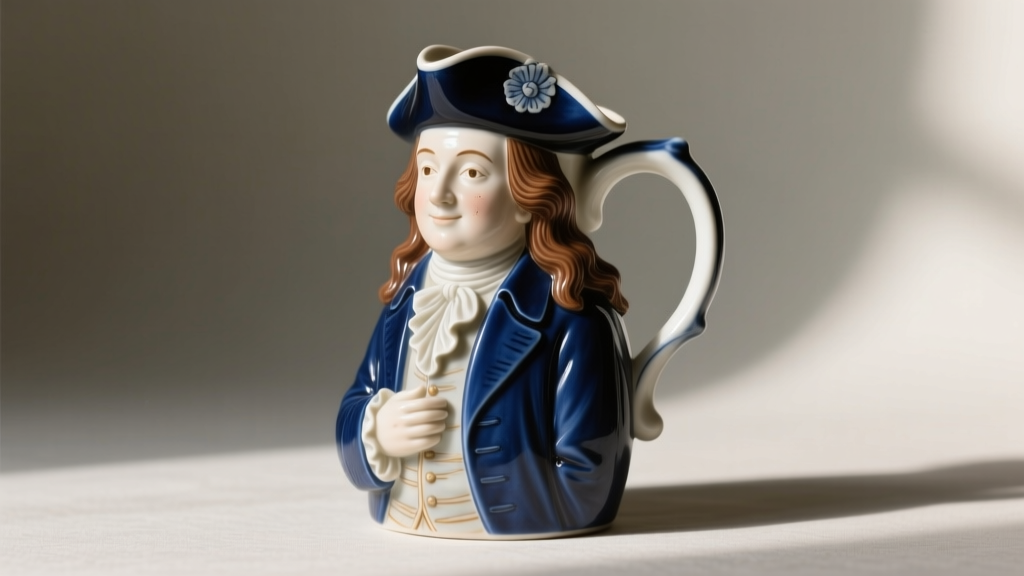
Toby Jug Pearlware: The Squire Brown Figure in Tricorn, Long Brown Hair, and Blue Coat — Circa 1795, 11 Inches Tall
Fischer Figurine: Hadik Hussar (15-Inch) — History, Identification, and Conservation Guidance
Thermometer Delco Energizer Batteries White Tin: A Collector’s Guide to the 39 × 8¼-Inch Vintage Storage Unit
Silver Sterling Dresser Set: Floral Monogram in Shield — A Collector’s Guide to the 4-Piece Vanity Ensemble
Doulton Dish: Gold Pastel Water Lily Scalloped Edge (Burslem No. 71806, 7-Inch Illus)
The Hall China Jar Cover: Monmouth & Zeisel — A Collector’s Guide to Form, Function, and Legacy

Paper Book Pop-Up Huckleberry Hound #2: A Collector’s Guide to the 1963 Grosset & Dunlap Edition
Glass-Blown Pitcher with Tooled Mouth Rings, Cobalt Blue Hue, and Original Pontil Scar — Circa 1845, 7 3/8 Inches Tall