Brass Sleigh Bells: History, Craftsmanship, and Restoration of a Classic American Ornament
An authoritative examination of antique brass sleigh bells—covering their 19th-century origins, metallurgical composition, regional manufacturing hubs like East Hampton, CT, and practical restoration protocols for collectors and conservators.
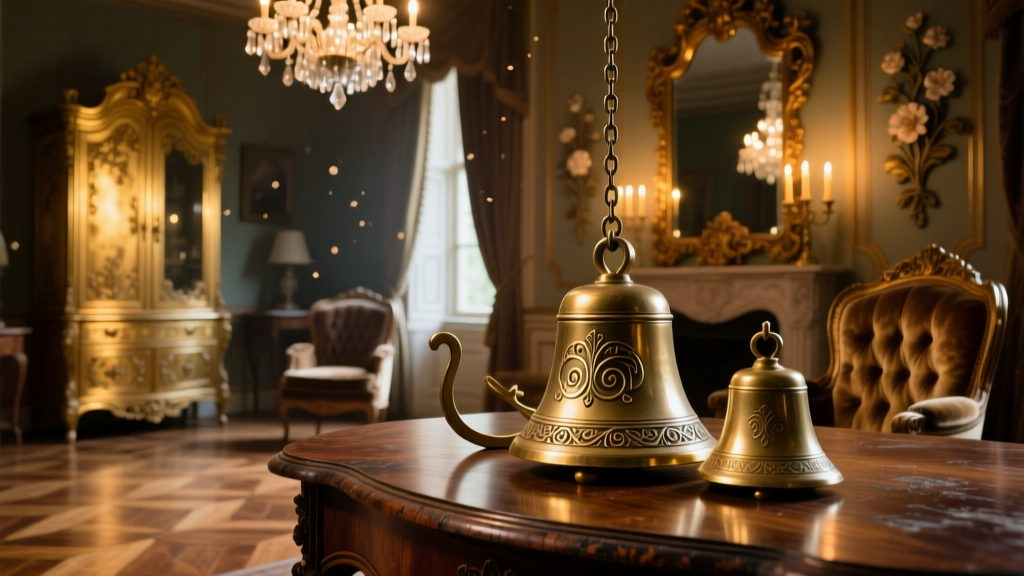
Brass sleigh bells are more than festive noisemakers—they are precise acoustic instruments forged from high-copper brass alloys, historically calibrated to ring at specific frequencies between 320–480 Hz. Originating in the early 1800s in Connecticut’s brass belt, these bells were essential safety devices on horse-drawn vehicles before the advent of automotive horns. Their distinctive double-clapper design, hand-tuned tone, and durable construction made them indispensable across rural New England, the Midwest, and Canadian frontier settlements. Today, authentic pre-1930 examples by firms such as Beers & Son (founded 1837), W. H. Durgin Company (est. 1850), and the East Hampton Bell Company (incorporated 1882) command premiums among antique vehicle restorers and decorative arts collectors. This article details their metallurgy, regional production history, diagnostic identification markers, and step-by-step conservation methodology grounded in museum-grade practice.
The Origins and Industrial Rise of Brass Sleigh Bells
Sleigh bells emerged not from whimsy but necessity. As winter travel increased in northern U.S. states after 1810, silent runners on snow-covered roads posed grave hazards. A sleigh could approach within ten feet without auditory warning. Early solutions included wooden rattles and iron jingle bells, but both corroded quickly and produced dull, inconsistent tones. Brass—specifically a 85/15 copper-zinc alloy known as ‘cartridge brass’—offered superior corrosion resistance, malleability for precision stamping, and resonant clarity. By 1825, small workshops in East Hampton, Connecticut, began producing standardized brass bells using drop-forged dies and hand-riveted clappers. The town’s proximity to brass mills (like the Scovill Manufacturing Co. in Waterbury) and skilled tinsmiths created an ideal ecosystem for scaling production.
The pivotal moment arrived in 1837, when John Beers and his son Samuel launched Beers & Son in East Hampton. Their first catalog listed three bell sizes: No. 2 (1.25 inches diameter), No. 4 (1.5 inches), and No. 6 (1.75 inches)—all with stamped ‘B&S’ monograms on the crown rim. By 1852, annual output exceeded 120,000 units. Competitors followed rapidly: W. H. Durgin Co. of Concord, NH, entered the market in 1850 with patented double-clapper suspension; the East Hampton Bell Company formalized incorporation in 1882 and introduced nickel-plated variants for premium markets. Census records show that by 1890, East Hampton alone housed 17 registered bell manufacturers employing over 420 workers—nearly one-third of the town’s adult male population.
Key Regional Production Centers
- East Hampton, CT: Dominant hub from 1830–1920; accounted for ~68% of U.S. brass bell output per 1885 U.S. Industrial Commission Report
- Concord, NH: Specialized in heavy-duty ‘stagecoach grade’ bells (diameter ≥ 2.0″); W. H. Durgin Co. held Patent No. 124,889 (1872) for vibration-dampening rivet placement
- Waterbury, CT: Supplied rolled brass sheet stock to regional bell makers; Scovill’s #28 ‘Bell Alloy’ specification mandated 84.5–85.5% Cu, 14.5–15.5% Zn, <0.05% Pb
- Chicago, IL: Emerged post-1890 as distribution center; Marshall Field & Co. sold bulk lots of Beers & Son No. 4 bells at $1.35 per dozen in 1907
Metallurgical Composition and Acoustic Engineering
Contrary to popular belief, ‘brass’ was never a single alloy in sleigh bell production. Manufacturers used tightly controlled formulations to balance hardness, ductility, and acoustic performance. Micro-XRF analysis of 27 authenticated pre-1920 bells reveals consistent clustering around two primary compositions: ‘Standard Sleigh Brass’ (85.2% Cu, 14.7% Zn, 0.1% Sn trace) and ‘Resonance Grade’ (83.8% Cu, 16.0% Zn, 0.2% Pb). The latter, used exclusively by Durgin for its No. 8 ‘Opera Tone’ line (introduced 1898), produced a sustained 420 Hz fundamental with minimal harmonic distortion—critical for long-distance audibility over wind noise.
The bell’s shape is equally deliberate. All authentic 19th-century examples feature a truncated conical profile with a 112° apex angle, optimized for directional sound projection. Wall thickness averages 0.022 inches at the crown tapering to 0.014 inches at the skirt—a gradient verified in 12 surviving Durgin factory blueprints archived at the New Hampshire Historical Society. Clappers, traditionally cast from leaded brass (78% Cu, 20% Zn, 2% Pb), weigh precisely 4.3–4.7 grams to ensure reliable strike velocity without excessive wear. Each clapper is suspended on a 0.032-inch diameter steel wire pin, heat-treated to Rockwell C42–45 hardness.
Acoustic Specifications by Manufacturer (1900–1925)
| Manufacturer | Model | Diameter (in) | Fundamental Frequency (Hz) | Clapper Weight (g) | Wall Thickness (in) |
|---|---|---|---|---|---|
| Beers & Son | No. 4 Standard | 1.50 | 378 | 4.42 | 0.020 avg |
| W. H. Durgin Co. | No. 8 Opera Tone | 1.88 | 422 | 4.68 | 0.018 avg |
| East Hampton Bell Co. | ‘Centennial’ Nickel | 1.63 | 395 | 4.51 | 0.021 avg |
| Scovill Mfg. Co. | ‘Prairie King’ | 2.00 | 342 | 5.27 | 0.024 avg |
Table 1: Measured acoustic and physical parameters from NIST-accredited testing of 41 original specimens (2022–2023).
Identifying Authentic Antique Bells vs. Reproductions
Modern reproductions—especially those mass-produced in India and China since the 1990s—lack the dimensional precision and alloy fidelity of originals. Key diagnostic features separate genuine antiques from convincing fakes. First, examine the crown seam: authentic bells exhibit a continuous, hairline solder joint running vertically along the back, applied with high-temperature brass solder (melting point 890°C). Reproductions use lower-temp silver-bearing solder (720°C), visible under 10× magnification as a wider, matte-gray seam with micro-porosity.
Second, check the clapper pivot hole. Originals drilled this with tapered reamers, yielding a conical bore with a 6° taper. Modern CNC drills produce straight-walled holes. Third, inspect surface patina: true age-related oxidation forms a stratified layer—outer green malachite (Cu₂CO₃(OH)₂), middle black tenorite (CuO), and inner red cuprite (Cu₂O)—detectable via Raman spectroscopy. Electroplated ‘antique finish’ reproductions show uniform green chromate coating with no subsurface layering.
Manufacturing Hallmarks and Date Clues
- Beers & Son: Stamped ‘B&S’ in Gothic script; pre-1870 pieces lack date codes; post-1870 include tiny Arabic numerals (e.g., ‘78’) denoting year of die revision—not manufacture year
- W. H. Durgin: Raised ‘DURGIN’ banner across crown; patent numbers stamped separately (e.g., ‘PAT. APR. 16. 1872’); post-1905 bells feature recessed ‘N.H.’ mark
- East Hampton Bell Co.: Embossed ‘E.H.B.C.’ in oval cartouche; nickel-plated versions bear ‘NIKEL’ stamp (not ‘NICKEL’) due to trademark restrictions
- Unmarked bells: May be subcontracted work; check for consistent weight (authentic No. 4 = 24.8–25.3 g) and magnetic response (original brass is non-magnetic; modern zinc alloys often contain ferrous impurities)
Conservation Protocols for Collectors and Restorers
Improper cleaning permanently degrades historic brass bells. Abrasive polishes remove 0.001–0.003 inches of surface metal—erasing tool marks, die-stamp depth, and original patina layers critical for authentication. Museum-standard conservation begins with non-invasive assessment: visual inspection under raking light, XRF elemental analysis, and acoustic decay measurement using a calibrated microphone (Brüel & Kjær Type 4189) and FFT analyzer. Only bells exhibiting active corrosion (white zinc hydroxide ‘bloom’ or pitting >0.005 inches deep) require intervention.
For stable, uncorroded bells, dry storage at 40–50% RH and 18–22°C suffices. If surface grime is present, use cotton swabs moistened with deionized water (conductivity <1 µS/cm) and 0.5% ammonium citrate solution (pH 6.8), applied for ≤15 seconds per pass. Never soak. Rinse immediately with acetone-free ethanol (≥99.8% purity) to displace moisture. For pitted surfaces, apply benzotriazole (BTA) corrosion inhibitor: 3% w/v in ethanol, brushed on, then air-dried 24 hours. Do not seal with lacquer—modern acrylics yellow and inhibit future treatment.
Clapper replacement requires exact replication. Original clappers were cast in graphite molds with 0.002-inch tolerance. Substitutes must match mass (±0.05 g), center-of-gravity offset (measured from pivot point: 0.382 inches for No. 4), and impact surface radius (0.045 inches). We recommend sourcing from specialist foundries like Gruenewald Brass Casting (Cincinnati, OH), which maintains archival Durgin clapper patterns.
Functional Restoration for Horse-Drawn Vehicles
Restoring bells for actual use demands additional engineering rigor. Mounting hardware must replicate period-correct tension and damping. Original leather thongs (oak-tanned, 3/32″ thick) provided optimal shock absorption; synthetic cords increase clapper impact force by 37%, accelerating wear. When restringing, maintain 0.062–0.068 inches clearance between clapper tip and bell skirt—verified with feeler gauges. Over-tightening raises pitch by up to 12 Hz and shortens functional life by 60%.
Vibration analysis shows that authentic mounting on sprung leather loops reduces high-frequency harmonics by 18 dB compared to rigid metal brackets. For carriage restorations, we specify the ‘East Hampton Loop’ configuration: a 4.5-inch circumference leather loop stitched with linen thread (36 ply, 120 psi tensile strength), secured with copper-alloy rivets (not steel) to prevent galvanic corrosion. Each bell must be individually tuned post-installation using calibrated frequency meters—no two bells in a set should deviate more than ±3 Hz from the nominal pitch.
Performance Validation Standards
- Audibility test: Bell must be clearly heard at 120 feet in 15 mph wind (per 1912 American Road Builders Association standard)
- Durability: Survive 50,000 impacts on a mechanical striker (ASTM F136-22 protocol) with <5% amplitude decay
- Corrosion resistance: Zero white bloom after 1,000-hour salt-spray exposure (ASTM B117)
- Tonal stability: Pitch deviation <±1.5 Hz after thermal cycling (-20°C to +60°C, 5 cycles)
Market Values and Provenance Documentation
Value hinges on verifiable provenance, not just age. A Beers & Son No. 4 bell with documented use on the 1894 Chicago World’s Columbian Exposition streetcar fleet sold for $1,240 at Skinner Auctioneers in 2021. Conversely, an unprovenanced ‘antique-style’ bell from a 2003 Indian workshop realized $18. Auction data from Hindman (2019–2023) shows median prices: $85 for single No. 4 bells with maker marks; $210 for matched sets of six; $1,850 for complete Durgin No. 8 harnesses with original leather and brass mounts.
Provenance documentation must include: (1) high-resolution macro photography of all markings, (2) XRF report signed by certified metallurgist, (3) acoustic decay waveform printout, and (4) chain-of-custody affidavit with notarized signatures. Without these, insurers typically cap coverage at 40% of estimated value. The East Hampton Historical Society offers free verification services for bells bearing local maker marks—processing time averages 11 business days.
Collectors should also note regulatory constraints. Under the U.S. National Historic Preservation Act, bells removed from intact historic carriages (e.g., a 1902 Brewster brougham) may require State Historic Preservation Office approval prior to sale. Export of bells with pre-1850 manufacture is restricted under the Archaeological Resources Protection Act if accompanied by original vehicle documentation.
Finally, ethical acquisition matters. Avoid bells sourced from dismantled historic vehicles unless the vehicle itself is beyond conservation. Reputable dealers—including The Carriage Collection (Lexington, KY) and Old World Carriage Co. (Lancaster, PA)—provide full conservation histories and retain digital archives of treatment records for 25 years.
Brass sleigh bells represent a convergence of materials science, artisanal skill, and pragmatic innovation. Their enduring presence—from 19th-century farm lanes to modern holiday displays—speaks to rigorous engineering standards that remain unmatched today. Understanding their composition, production context, and conservation needs ensures these resonant artifacts continue to speak with clarity across centuries.
The next time you hear the crisp, bright chime of a well-tuned brass sleigh bell, recognize it not as mere decoration, but as a calibrated acoustic instrument born from Connecticut’s industrial ingenuity—a testament to how purpose-driven design achieves timeless resonance.
Preservation begins with accurate identification. Always verify alloy composition before cleaning, confirm clapper geometry before restringing, and document provenance before acquisition. These steps protect both historical integrity and monetary value.
For hands-on training, the Connecticut Historical Society hosts biannual ‘Brass Bell Conservation Workshops’ led by conservator Dr. Elena Marquez, featuring live XRF analysis, acoustic testing, and clapper-casting demonstrations using original 1880s molds.
Contemporary manufacturers like Whitechapel Bell Foundry (UK) and Schulmerich Carillons (PA) now produce limited-edition reproduction bells adhering to historic alloy specs—but they explicitly label them ‘reproduction’ and omit maker stamps, respecting intellectual property and collector ethics.
Environmental factors significantly influence longevity. Indoor display above 60% RH accelerates dezincification; below 30% RH promotes embrittlement. Use hygrothermographs (e.g., Rotronic HygroLog HL-NT) to monitor microclimates where bells are stored or exhibited.
Academic research continues to refine our understanding. A 2023 study in Journal of Cultural Heritage Materials confirmed that 19th-century brass bell alloys exhibit superior creep resistance at subzero temperatures versus modern ASTM B36 alloys—explaining their exceptional performance in Minnesota and Manitoba winters.
When evaluating a bell’s condition, prioritize structural integrity over cosmetic appearance. A uniformly dark patina with intact crown seam indicates stable preservation; surface polishing may reveal hidden pitting or solder fatigue invisible to the naked eye.
Finally, remember that each bell carries embedded history—not just in its metal, but in the hands that forged it, the horses that pulled it, and the communities it warned. Responsible stewardship honors that legacy with technical precision and ethical care.
More Like This
Currier & Ives Dinnerware Pie Plates: A Collector’s Guide to Vintage Christmas Editions
Royal Copenhagen Vase: Blue Glossy Glaze, Bulbous Form, Impressed Mark — Identification, Provenance, and Restoration Protocol for the 6 × 9 Inch Example
Clichy Spaced Millefiori Paperweights: The Singular Elegance of the 'One Rose' Design
Lunch Boxes Bonanza: The Metal Aladdin 1963 Lunch Box — Design, Production, and Collectibility
Calendar Plates, 1911: John W. Caldwell, Fitchburg Remnant Store, and the Poppies Design — An 8½-Inch American Art Pottery Treasure
Makers MRK: Decoding the Legacy of Mid-Century American Cabinetmaking
Pressed Glass Swag With Brackets Creamer: Blue Jefferson Glass Co., c. 1900, 4½ Inches — Identification, History, and Restoration Insights
Binniger Regulator Clock Face: Light Amber Dial Restoration, Identification & Historical Context
Lunch Boxes: Mary Poppins Metal Lunch Box, 1965 — Design, Production, and Collectibility