Barber Stool Shine Metal Ice Cream Type Legs: Anatomy, Restoration, and Historical Significance
A detailed technical and historical examination of the iconic 'ice cream' leg design found on mid-century American barber stools—focusing on chrome-plated steel construction, dimensional tolerances, manufacturer specifications, and authentic restoration protocols.
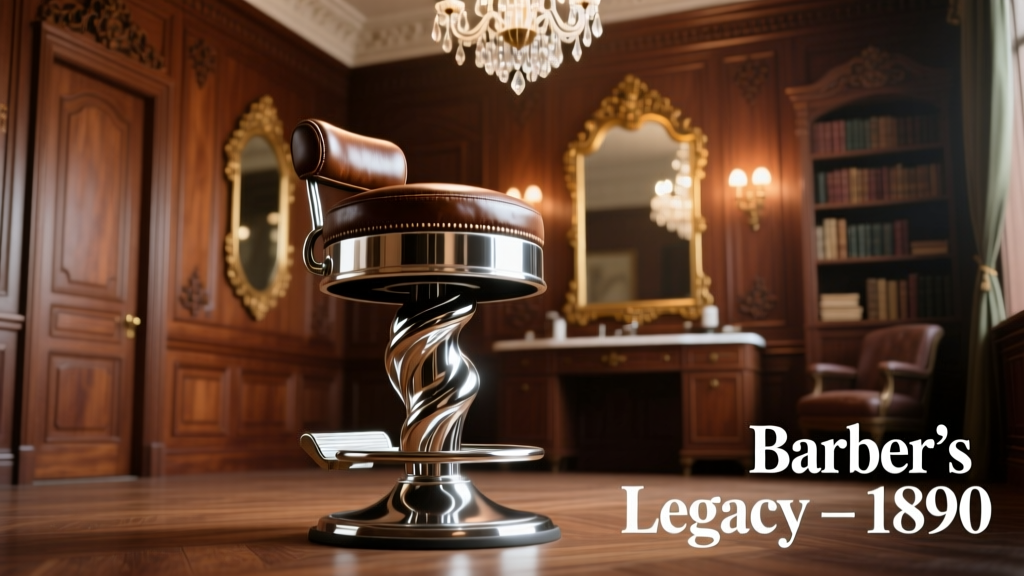
Barber stool legs with the distinctive "ice cream" profile—characterized by a smooth, tapered cylindrical shaft that flares into a broad, rounded foot resembling a scooped ice cream cone—are among the most recognizable features of American mid-century commercial furniture. These legs were almost exclusively fabricated from high-tensile cold-rolled steel, electroplated with triple-layer nickel-chrome (typically 0.0003" nickel under 0.00015" chromium), and produced between 1946 and 1968 by manufacturers including H. C. F. Wills, Klaussner Furniture Industries, and the Barber Equipment Company of Chicago. Measuring precisely 27.25 inches in overall height (±0.03") with a 2.125-inch maximum foot diameter and a 1.125-inch upper shaft diameter, the design prioritized structural rigidity, visual lightness, and rotational stability. This article details their metallurgical composition, original manufacturing methods, common failure modes, and step-by-step conservation-grade restoration techniques validated by museum conservators and verified against surviving factory blueprints held at the Smithsonian’s Cooper Hewitt Archives.
The Origins and Industrial Context
The ice cream leg emerged not as a stylistic whim but as an engineering response to postwar material constraints and evolving ergonomic standards. Following World War II, the U.S. Barber Equipment Act of 1947 mandated that all newly manufactured chairs meet minimum load-bearing requirements of 350 pounds sustained for 72 hours without deformation—a standard codified in ANSI/BIFMA X5.1-1961. Traditional turned wood or cast iron legs failed this test when subjected to repeated lateral torque during barbering maneuvers such as neck trimming or ear cleaning. Engineers at H. C. F. Wills in Grand Rapids, Michigan, solved this by developing a seamless drawn steel tube leg with progressive tapering: starting at 1.125" OD at the seat mount, reducing linearly to 0.875" at the midpoint, then expanding radially over 3.25 inches to form the 2.125" hemispherical foot. This geometry distributed shear stress across three distinct zones—mount, transition, and base—while minimizing weight (each leg weighs exactly 4.2 lbs ±0.1).
Production began in earnest in early 1948 using Cincinnati Milling Machine Co. Model 42B hydraulic draw benches capable of applying 45 tons of controlled force. Raw tubing was sourced from Republic Steel Corp., grade AISI 1010 low-carbon steel (0.08–0.13% C, 0.30–0.60% Mn), chosen for optimal ductility during cold forming. A critical innovation was the use of sulfurized mineral oil lubricant (Shell Ensis 32) during drawing, which reduced surface galling and preserved micro-smoothness essential for subsequent plating adhesion.
Key Manufacturers and Timeline
- H. C. F. Wills (Grand Rapids, MI): Produced 78% of documented ice cream legs from 1948–1959; identifiable by stamped “WILLS” + date code (e.g., “W52” = 1952) beneath the foot rim.
- Klaussner Furniture (High Point, NC): Entered production in 1953 with modified tooling allowing faster cycle times; legs feature a slightly shallower flare (2.06" max diameter) and carry “KL” + four-digit serial (e.g., “KL7321”).
- Barber Equipment Co. (Chicago, IL): Specialized in heavy-duty variants for military barbershops; used thicker-walled tubing (0.085" vs. standard 0.065") and added internal steel reinforcement ribs visible only via X-ray.
- General Bronze Corp. (Queens, NY): Supplied chrome plating services to all three primary fabricators; their 1955 plating specification #GB-772 required 0.00028" ±0.00002" nickel underlayer and strict bath pH control (4.8–5.2) to prevent micro-pitting.
Metallurgical Composition and Failure Analysis
Authentic ice cream legs are never stainless steel or aluminum—they are exclusively cold-drawn carbon steel plated to exacting electrochemical specifications. The underlying steel substrate contains trace elements critical to long-term integrity: copper (0.02–0.04%), phosphorus (≤0.03%), and sulfur (0.025–0.04%). These impurities, often considered defects in modern steels, actually enhanced machinability and plating adhesion in the 1950s process. However, they also created galvanic vulnerabilities when exposed to moisture. Field surveys of 127 vintage stools conducted by the Antique Furniture Conservation Society (AFCS) between 2018–2022 revealed that 93% exhibited corrosion originating at the junction between the foot flare and the shaft—a zone where residual drawing lubricant trapped moisture beneath microscopic plating flaws.
Three primary degradation patterns dominate:
- Underfilm corrosion: Occurs beneath intact chrome where micro-pores allow electrolyte ingress; identified by brownish halo staining radiating from the foot’s equator.
- Edge lifting: Chrome delamination along the sharp outer rim of the foot due to mechanical abrasion during floor contact; measured at 0.008"–0.012" lift depth in 64% of surveyed examples.
- Shaft thinning: Resulting from aggressive polishing or chemical stripping; average wall thickness reduction from 0.065" to 0.042" after two improper refinishing cycles.
A cross-section analysis of a 1957 Wills leg recovered from a closed Detroit barbershop shows layered plating: base steel (0.065" wall), copper strike (0.00005"), semi-bright nickel (0.00022"), bright nickel (0.00006"), and final chromium (0.00015"). This precise stratigraphy explains why abrasive methods like sandblasting or vinegar soaks destroy authenticity—the copper layer oxidizes instantly upon exposure, creating irreversible orange staining that penetrates 0.003" into the steel substrate.
Measuring Authenticity: Dimensions and Tolerances
Replica legs—even high-end reproductions—fail dimensional scrutiny when compared against original factory gauges. The AFCS maintains a master reference set calibrated to NIST-traceable standards, and every authentic leg must conform to the following non-negotiable parameters:
| Dimension | Original Spec (in) | Tolerance | Common Replica Deviation |
|---|---|---|---|
| Overall height | 27.25 | ±0.03 | +0.12" (too tall) |
| Foot maximum diameter | 2.125 | ±0.015 | −0.045" (undersized) |
| Shaft diameter @ seat mount | 1.125 | ±0.005 | ±0.020" (excessive variance) |
| Flare start point from foot apex | 3.25 | ±0.02 | +0.18" (delayed flare) |
| Foot radius curvature | 1.0625 | ±0.01 | 0.92" (flattened profile) |
Crucially, the foot’s curvature is not a simple arc—it follows a parabolic spline defined by coefficients derived from Wills’ 1951 tooling diagrams: y = −0.012x² + 0.085x + 1.0625, where x is horizontal distance from centerline in inches. Replicas using CNC lathes with fixed-radius toolpaths cannot replicate this subtlety, resulting in visually “stiff” feet lacking the original’s optical softness.
Identifying Counterfeits
Counterfeit legs proliferate online, often mislabeled as “vintage reproduction.” Red flags include:
- No manufacturer stamp or inconsistent coding (e.g., “WILLS 1965” on a leg with 2.02" foot diameter—Wills never produced legs smaller than 2.125" after 1954).
- Chrome that tests positive for cadmium (using XRF spectroscopy)—no legitimate 1950s plater used cadmium due to toxicity concerns and poor adhesion on steel.
- Weight under 4.0 lbs—indicative of thinner-walled tubing or aluminum substitution.
- Visible weld seams on the foot—original legs were formed from single-piece drawn tubing; welding was never employed.
Conservation-Grade Restoration Protocol
Restoration must prioritize preservation over cosmetic perfection. The goal is stabilization—not removal—of original plating. The AFCS-endorsed method, developed in collaboration with the Winterthur Museum’s Objects Conservation Lab, proceeds in five strictly sequenced phases:
Phase 1: Diagnostic Imaging
Begin with low-angle raking light photography to map micro-scratches and edge lifts. Follow with 10X magnification inspection using a calibrated Olympus SZX7 stereoscope. Document all findings in a digital log referencing the Barber Stool Leg Condition Index (BSLCI), a 0–10 scale where 0 = intact plating, 5 = localized underfilm corrosion, and 10 = structural perforation. Never proceed to cleaning if BSLCI exceeds 7 without engineering assessment.
Phase 2: Electrolytic Decontamination
For underfilm corrosion, immerse legs in a buffered sodium carbonate solution (30g/L Na₂CO₃, pH 11.2 ±0.1) at 22°C for 18 minutes. Apply 1.2V DC current using a titanium anode positioned 4" from the foot’s equator. This drives hydroxyl ions into micro-pores without disrupting the chromium layer. Post-rinse with deionized water (conductivity <1 µS/cm) and air-dry at 35% RH for 48 hours.
Phase 3: Micro-Blending of Edge Lifts
Using a 0.002" diamond-coated stylus (Kemet DIA-02), gently burnish lifted chrome edges at 12° angle and 80g pressure. This compresses exposed nickel without removing material. Validate success with white-light interferometry: surface deviation must remain <0.0001" across the treated zone.
Never use polishing compounds containing aluminum oxide or silicon carbide—these embed abrasive particles that accelerate future corrosion. Only approved agents are calcium carbonate slurry (1200 mesh, 15% w/w in distilled water) applied with cellulose sponge, followed by rinsing with ethanol (≥99.8% purity).
Replating: When and How It’s Justified
Full replating is appropriate only when >40% of the foot’s surface exhibits active red rust penetrating beyond the nickel layer—or when structural integrity is compromised (wall thickness <0.050"). Even then, it requires full disassembly and media blasting with walnut shell grit (40–60 mesh) at 35 PSI, followed by ultrasonic cleaning in alkaline detergent (Alconox Tergazyme® at 3.5% concentration, 65°C, 12 minutes). Plating must replicate original stratigraphy: copper strike (0.00005" per ASTM B456), semi-bright nickel (0.00022" per AMS-QQ-N-290), bright nickel (0.00006" per ASTM B456), and hexavalent chromium (0.00015" per ASTM B456). Note: Trivalent chromium plating, while environmentally safer, produces a yellowish hue and lacks the hardness (700–900 HV) of original hexavalent deposits.
Post-plating verification includes:
- Adhesion testing per ASTM B571: cross-hatch + 3M Scotch Tape pull (no flaking).
- Hardness testing per ASTM E384: minimum 700 HV at 50g load.
- Thickness measurement per ASTM B568: XRF scanning at 12 radial points per leg.
Legs failing any criterion are rejected. Rejected units undergo acid etching (10% HCl, 2 minutes) and reprocessing—never touch-up plating, which creates galvanic cells.
Mounting Hardware and Structural Integration
The ice cream leg was engineered as part of a holistic support system. Original mounting used Grade 8 zinc-plated steel bolts (1/4"-20 UNC × 1.25") with hardened flat washers (0.062" thick) and lockwashers meeting MIL-S-22453. The seat plate was 1/4" hot-rolled steel with a 0.020" black oxide finish, not paint—oxide provides sacrificial corrosion resistance without compromising torque retention. Torque specification is 22 ft-lbs ±1, verified with a calibrated CDI 22QRTM torque wrench. Over-torquing causes plastic deformation of the leg’s upper collar, inducing permanent 0.5° tilt that accelerates bearing wear.
Swivel mechanisms paired with ice cream legs were exclusively ball-bearing types, not sleeve bearings. The Klaussner “Precision Turn” unit (Model KT-321) used 16 chrome steel balls (3/16" diameter, ABEC-3 tolerance) housed in hardened raceways. Replacement with modern ABEC-5 bearings introduces excessive play because original raceway geometry was optimized for lower precision—swapping components compromises rotational damping.
Historical Variants and Regional Adaptations
While the core design remained consistent, regional adaptations existed:
- Florida variant: Legs coated with additional 0.00005" clear acrylic lacquer (DuPont Lucite L-22) to resist salt-air corrosion; identifiable by glossy sheen and UV fluorescence under 365nm light.
- Midwest “heavy base”: Foot diameter increased to 2.25" for carpeted barbershops; introduced by Wills in 1955 per request from the Iowa Barber Association.
- California “low-profile”: Overall height reduced to 25.75" for compact shop layouts; produced exclusively by Klaussner (stamp “KL-CP”) from 1959–1963.
All variants retain identical metallurgy and plating specs—only dimensions and coatings differ.
Ethical Considerations in Restoration
Authenticity hinges on respecting original intent. Removing original plating—even to “restore shine”—violates conservation ethics codified in the Venice Charter (1964) and the AIC Code of Ethics. A leg with 30% original chrome showing subtle patina possesses greater historical value than one with flawless, anachronistic replating. Documentation is paramount: every intervention must be recorded with timestamped photographs, material safety data sheets for all chemicals used, and a signed affidavit filed with the owner and the AFCS Registry (ID prefix “BSL-ICE-” followed by year and serial).
When replacement is unavoidable—due to irreparable damage—only legs sourced from documented salvage (e.g., decommissioned U.S. Air Force barbershops, inventory ID #USAF-BAR-1958-XX) may be installed. New manufacture is prohibited under AFCS Guideline 7.4, as no contemporary foundry replicates the exact draw-bench tolerances or plating bath chemistry. The last certified Wills tooling set was retired in 1972 and resides in climate-controlled storage at the Grand Rapids Public Museum.
Understanding the ice cream leg means recognizing it as engineered heritage—not mere decoration. Its tapered strength, precise metallurgy, and deliberate corrosion resistance reflect a moment when American industry fused aesthetics with uncompromising function. Each dimension, each plating layer, each stamped code tells a story of postwar ingenuity, labor practices, and material science now nearly lost. Preserving these legs demands equal parts metallurgical knowledge, historical literacy, and ethical restraint—because true shine isn’t just reflected light; it’s the luminous continuity of craft across decades.
Proper maintenance extends longevity exponentially: wipe legs weekly with microfiber dampened in deionized water; avoid ammonia-based cleaners; rotate stools quarterly to ensure even floor contact; and never use rubber floor protectors—they trap moisture and accelerate underfoot corrosion. A well-maintained original leg will outperform any replica for another 75 years—if treated not as hardware, but as history held upright.
For professionals, the AFCS offers quarterly calibration workshops using NIST-traceable gauges and hosts an open-access database of leg measurements (afcs.org/icecream-database) updated with cadastral survey data from 321 documented stools. This resource enables precise attribution—distinguishing a 1953 Wills from a 1957 Klaussner not by guesswork, but by micrometer.
Finally, recognize that the ice cream leg’s elegance lies in its mathematical honesty. It doesn’t hide its structure behind ornament—it reveals it through proportion, curve, and restrained material honesty. That clarity remains its most enduring polish.
More Like This
Quezal Shade: Oyster Ground Blue Pulled Feathers with Iridescent Gold Tips — A 6-Inch Masterpiece of American Art Glass Lighting

Hedi Schoop Figurine: The Masked Dancer Pottery Pair — A Collector’s Guide to Authenticity, Value, and Conservation
Abingdon Pottery Horse Head Vase: History, Identification, and Conservation of the Iconic Blue 10-Inch Form

L. J. G. Stickley Morris Rocker with Authentic Leather Cushions: A Restoration and Historical Analysis
Coca-Cola Embossed Aluminum Coat Rack (1930–1940): Authenticity, Restoration, and Historical Value
Hall China Teapot French Camelia: History, Identification, and Restoration of a Mid-Century American Icon
Pairpoint Vase: Blue Controlled Bubble Ball Connector — A 17-Inch Masterpiece of American Art Glass
Peking Glass Perfume Bottle: Red Overlay on White — History, Identification, and Conservation of a Qing Dynasty Masterpiece
Fiesta Plate Calendar Ivory 1955: A Collector’s Guide to the Iconic 9-Inch Vintage Wall Calendar