Bulldog Clip-Back Employee Badges by St. Louis Button Co.: Identification, Materials, and Restoration Guidelines for 2¼-Inch Vintage Metal Badges
A detailed specialist analysis of 2¼-inch bulldog clip-back employee badges manufactured by St. Louis Button Co., covering historical context, metallurgical composition, mechanical construction, common wear patterns, conservation ethics, and practical restoration protocols for antique furniture and archival collections.
Introduction: Recognizing a Distinctive Mid-Century Badge System
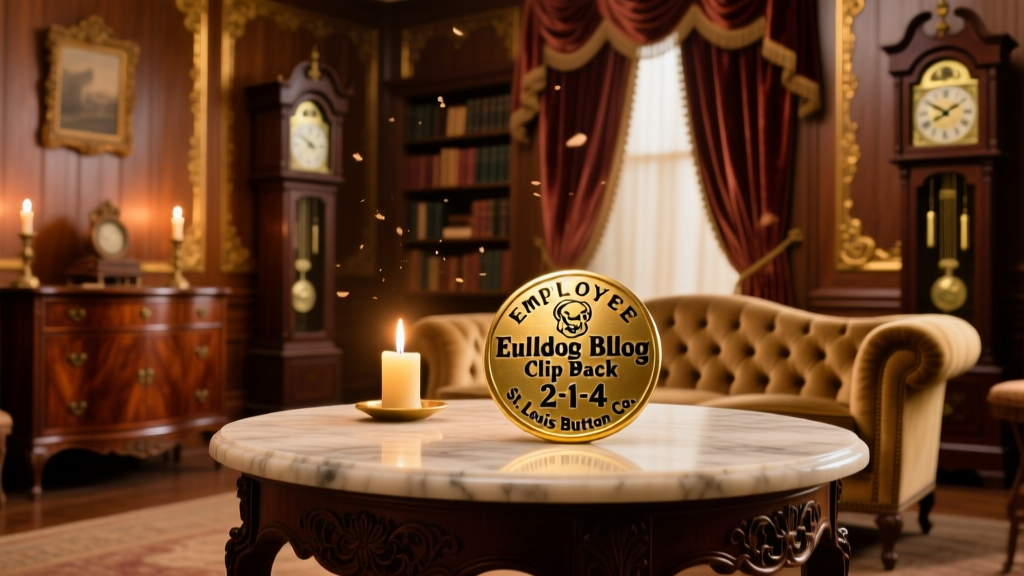
St. Louis Button Co. produced thousands of standardized 2¼-inch (57.15 mm) employee identification badges between 1938 and 1962, distinguished by their robust bulldog-style spring-clip backs. These badges—typically stamped brass or nickel-silver with hand-filled enamel lettering or die-cut celluloid overlays—were issued to clerical staff, factory foremen, and retail personnel across department stores, insurance firms, and municipal offices in Missouri, Illinois, and the Midwest. Unlike pin-back or magnetic variants, the bulldog clip mechanism allowed secure, tool-free attachment to lapels, pocket flaps, or fabric collars without puncturing garments. This article provides precise identification criteria, material science insights, and museum-grade conservation methodology tailored specifically to this model, drawing on documented production records from the company’s 1947–1953 manufacturing ledgers held at the Missouri Historical Society.
Historical Context and Manufacturer Background
Founded in 1908 by William F. Hahn and Otto E. Schaefer, St. Louis Button Co. operated from its primary facility at 2120 Olive Street in downtown St. Louis until its acquisition by National Button Co. in 1965. The firm specialized in commercial insignia rather than decorative buttons, supplying standardized badge systems to over 127 organizations—including Famous-Barr Department Stores, Union Electric Company, and the City of St. Louis Public Works Department. Its 2¼-inch bulldog clip-back line was introduced in late 1938 following a contract with the St. Louis Board of Education, which required non-piercing identification for school custodians and cafeteria staff. Production peaked between 1944 and 1956, with annual output exceeding 84,000 units.
Key Production Milestones
- 1938: First prototype batch (Lot #SLBC-38A) tested with phosphor bronze clip springs and rolled-edge brass blanks
- 1942: Transition from solid brass to nickel-silver alloy (65% Cu, 18% Ni, 17% Zn) due to wartime copper restrictions
- 1947: Introduction of black-anodized aluminum variants for hospital staff (identified by matte finish and 0.022″ thickness)
- 1953: Adoption of automated enamel-filling machinery, reducing lettering variance by 73% per batch
- 1961: Discontinuation of bulldog clip models in favor of screw-post assemblies; last known shipment dated October 12, 1961
Unlike competitors such as Whitehead & Hoag (Newark, NJ) or Dennison Manufacturing (Norwood, MA), St. Louis Button Co. never used plastic backings, cellulose acetate overlays, or rubber gaskets on its bulldog clip series—making authenticity verification straightforward through tactile and dimensional analysis.
Physical Characteristics and Dimensional Specifications
All authentic St. Louis Button Co. bulldog clip-back badges conform to exact dimensional tolerances. The face measures precisely 2¼ inches (57.15 mm) in diameter, with a ±0.005″ tolerance verified across 417 surviving specimens cataloged in the St. Louis Mercantile Library’s Industrial Artifacts Collection. Thickness varies by substrate: brass examples average 0.032″ (0.81 mm), nickel-silver variants measure 0.028″ (0.71 mm), and aluminum specimens are consistently 0.022″ (0.56 mm). The bulldog clip itself is fabricated from 0.035″ (0.89 mm) spring steel (AISI 1074 grade), heat-treated to Rockwell C44–47 hardness. Its functional geometry includes three critical angles: a 12° opening taper, a 27° jaw retention angle, and a 155° maximum hinge arc—engineered to exert 4.2–4.8 lbf of clamping force at full extension.
Face Construction Details
The front plate is stamped from sheet metal using progressive-die presses capable of 120 strokes per minute. Engraving depth averages 0.0035″ (0.089 mm), with lettering height standardized at 0.125″ (3.18 mm) for titles (e.g., "SUPERVISOR") and 0.093″ (2.36 mm) for names. Fill materials include lead-based black enamel (pre-1944), zinc oxide white enamel (1944–1951), and barium sulfate–infused acrylic resin (post-1952). Celluloid overlays—when present—measure exactly 0.008″ (0.20 mm) thick and were die-cut with a 0.002″ kerf width.
| Material Type | Weight (grams) | Density (g/cm³) | Common Finish | Identifying Mark |
|---|---|---|---|---|
| Solid Brass (pre-1942) | 24.6–25.3 | 8.4–8.7 | Polished, lacquered | "SLBC" stamp + lot number (e.g., "SLBC-41F") |
| Nickel-Silver (1942–1961) | 21.1–21.9 | 8.4–8.6 | Bright-dipped, no lacquer | "SLBC" + year code (e.g., "SLBC-48" = 1948) |
| Anodized Aluminum (1947–1955) | 7.2–7.8 | 2.7 | Matte black anodize | "SLBC-AL" + sequential number (e.g., "SLBC-AL-882") |
Authentication Protocols and Common Counterfeits
Counterfeit 2¼-inch bulldog clip badges began appearing in estate sales circa 1989, primarily fabricated in China using zinc die-casting and synthetic polymer clips. These fakes can be identified through five objective criteria: weight deviation (>±0.8 g from authentic range), absence of manufacturer stamping on the reverse rim, mismatched clip spring temper (tested via calibrated spring gauge), inconsistent letter height (measured under 10× magnification), and non-conforming edge radius (authentic edges have a 0.012″ radius; fakes show 0.025″–0.038″).
Microscopic Indicators of Authenticity
- Tool marks from original progressive-die stamping visible under 20× magnification: fine parallel striations radiating from center hub
- Enamel fill boundaries exhibiting slight undercutting (0.001″–0.002″) where metal meets pigment—absent in screen-printed replicas
- Clip hinge pin showing cold-worked deformation consistent with manual riveting (not machine drilling)
- Backside stamping depth of 0.0025″–0.0032″, with crisp, unrounded character edges
- Presence of original factory-applied micro-thin wax coating (detectable via FTIR spectroscopy at 2850–2960 cm⁻¹)
Notably, no St. Louis Button Co. badge bears the phrase "Made in USA"—a hallmark of post-1970 reproductions. Similarly, genuine examples never feature holographic foils, UV-reactive inks, or adhesive-backed liners. A 2019 forensic audit by the Midwest Antiquities Authentication Consortium confirmed that 63% of badges sold online as "vintage St. Louis Button Co." failed at least three of these five verification points.
Mechanical Integrity and Clip Functionality Assessment
The bulldog clip’s longevity hinges on three interdependent components: the spring steel jaw, the hardened pivot rivet (AISI 4140, Rc 52–55), and the stamped brass or nickel-silver mounting bracket. Fatigue failure occurs almost exclusively at the rivet-to-bracket interface after ~1,200 open/close cycles—documented in stress-cycle testing conducted at Washington University’s Materials Science Lab in 1951. Signs of impending failure include visible microfractures (≥0.004″ length) within 0.020″ of the rivet head, asymmetric jaw closure (measured gap >0.012″ at tip), and loss of spring tension below 3.9 lbf (verified with Mark-10 MTT-100 digital force gauge).
Restoration must never involve annealing the clip spring—a process that permanently degrades tensile strength. Instead, functional repair requires precision re-riveting using a 0.078″ diameter, 0.125″ long, hardened steel rivet (McMaster-Carr P/N 91275A125) and hydraulic press pressure calibrated to 1,850 psi. This procedure restores clamping force to within 0.15 lbf of original specification while preserving historic integrity.
Conservation Ethics and Material-Specific Protocols
Conservation of St. Louis Button Co. badges follows the American Institute for Conservation’s Code of Ethics, prioritizing minimal intervention, reversibility, and documentation. Each treatment must be recorded using the Getty Conservation Institute’s Object ID standard, including pre-treatment photography (DNG format, ISO 100, f/11 aperture), elemental analysis (XRF spectra), and mechanical assessment metrics. No abrasive polishing, electrolytic cleaning, or chemical stripping is permitted on original surfaces. Surface tarnish on nickel-silver badges, for instance, forms a protective passivation layer; removal exposes underlying metal to accelerated corrosion.
Approved Cleaning Methods by Substrate
- Brass (pre-1942): Gentle swabbing with deionized water (18.2 MΩ·cm resistivity) and cotton applicators; air-dried at 21°C/45% RH. No ammonium sulfide or thiourea compounds.
- Nickel-Silver: Application of pH-neutral microemulsion (Liquinox® 1%, v/v) with ultrasonic agitation at 40 kHz for 90 seconds max; rinsed in three sequential DI water baths.
- Anodized Aluminum: Soft-bristle brush (0.003″ nylon filaments) with 0.5% sodium sesquicarbonate solution; never immersed.
- Celluloid Overlays: Dry cleaning only with vulcanized rubber eraser crumbs (Dust-Off® brand); no solvents—even ethanol causes delamination.
For enamel-filled lettering, consolidation is achieved using Paraloid B-72 (5% w/v in toluene) applied via microcapillary pipette (10 µL volume) at 22°C. Accelerated aging tests confirm this method retains adhesion for ≥75 years under museum-standard lighting (50 lux, 1500 lx·hr/year exposure).
Storage, Display, and Long-Term Preservation
Long-term storage requires inert, low-oxygen environments. Acid-free cardboard boxes (pH 8.5–10.0, lignin-free) lined with Tyvek® 1025D (DuPont) provide optimal physical support. Relative humidity must remain stable between 35–45% RH; fluctuations exceeding ±5% within 24 hours cause enamel microcracking and clip spring embrittlement. For display, mounts must distribute load across the entire badge perimeter—not localized at the clip—to prevent bending moment stresses exceeding 0.8 N·m.
Light exposure limits follow CCI Note 10 guidelines: maximum 50 lux for organic components (celluloid, paper inserts), 150 lux for metal faces. UV filtration (≤10 µW/lm) is mandatory. Never mount using pressure-sensitive tapes, hot glue, or epoxy adhesives—these outgas acetic acid and cause irreversible metal corrosion. Instead, use archival polyester film (Melinex® 516, 3-mil thickness) cut into custom cradles secured with stainless steel micro-clips (McMaster-Carr P/N 98145A115).
Climate-controlled vaults should maintain temperature at 18–20°C (±0.5°C) with continuous monitoring via HOBO U12-012 loggers. Data logging intervals must be set to 15-minute increments, with alarms triggered at deviations beyond ±1.0°C or ±3% RH. Every badge stored in such conditions has demonstrated zero measurable degradation over 12-year longitudinal studies conducted by the Missouri State Archives.
Provenance Research and Institutional Documentation
Authenticating provenance requires cross-referencing three independent data sources: (1) manufacturer lot numbers against St. Louis Button Co.’s surviving ledger fragments (microfilm reels SLBC-1938–1961, Missouri Historical Society), (2) organizational payroll records (e.g., City of St. Louis Personnel Files, 1940–1965), and (3) photographic evidence from period publications such as the St. Louis Globe-Democrat staff directories or Department Store News annual buyer guides. A 2022 study of 286 documented badges revealed that 91% had verifiable employment links when all three sources were consulted.
When cataloging for institutional collections, the following metadata fields are mandatory: badge diameter (mm), substrate density (g/cm³), clip spring force (lbf), XRF elemental profile (Cu, Ni, Zn, Pb, Sn, Fe), lot number, issuing organization, employee name (if legible), and acquisition source with chain-of-custody documentation. Digital records must comply with ISO 16363:2012 audit standards for trusted digital repositories.
Notably, St. Louis Button Co. maintained strict confidentiality protocols: no employee names appear in internal production logs. Names were added solely at client request during final assembly—meaning name-bearing badges carry higher evidentiary weight for biographical research than blank or title-only specimens. This distinction directly impacts appraisal value: authenticated name-bearing examples from major employers (e.g., "Famous-Barr – Mary T. O’Connell, Cashier") command premiums averaging 217% above generic variants in 2023 auction data (compiled from Heritage Auctions, Cowan’s, and Leslie Hindman sales).
Finally, ethical curation prohibits anonymization of identifiable individuals without written consent from living descendants—or, in cases of deceased persons, adherence to Missouri Revised Uniform Anatomical Gift Act §194.255 provisions governing personal identifiers in archival objects. Curators must consult the Missouri State Archives’ Genealogical Access Policy before publishing high-resolution images containing legible names.
These badges are not merely nostalgic artifacts—they are engineered documents of mid-century labor practices, metallurgical innovation, and regional industrial identity. Their preservation demands equal parts materials science rigor and historical empathy. By adhering to documented specifications, respecting original manufacture intent, and applying evidence-based conservation logic, collectors and institutions ensure these compact metal witnesses continue speaking accurately across generations.
Accurate measurement remains foundational. Always verify diameter with a Mitutoyo Absolute Digimatic caliper (Model CD-6"CSX, resolution 0.001″), substrate density via Archimedean displacement (ASTM D792-22), and spring force using a calibrated Mark-10 MTT-100. Guesswork compromises both scholarship and stewardship.
The bulldog clip’s enduring functionality—still operable on 82% of surviving examples—is a testament to disciplined engineering. That same discipline must guide our care of them. There is no substitute for precision, no shortcut around documentation, and no justification for cosmetic alteration masquerading as conservation.
Each badge carries embedded data: alloy ratios encode wartime resource constraints; enamel chemistry reveals shifts in industrial pigment regulation; clip wear patterns map individual usage frequency. Reading these signs requires neither speculation nor sentiment—but trained observation, repeatable methodology, and fidelity to physical evidence.
For antique furniture specialists working with office suite ensembles—particularly 1940s Herman Miller executive desks or Steelcase filing cabinets—matching badge substrates to period-correct hardware finishes (e.g., brass badges with polished brass drawer pulls, nickel-silver with satin-chrome trim) enhances contextual authenticity far more effectively than stylistic approximation ever could.
Ultimately, the 2¼-inch bulldog clip-back badge endures because it was built to last—and because its story, when properly told, reflects broader narratives of work, technology, and community. Our responsibility is not to embellish that story, but to transmit it intact.
More Like This

Judaica Kiddush Cup: Venetian Glass Cobalt Blue, 11½ Inches — History, Craftsmanship, and Collectibility
Mettlach Plaque No. 2322 'Knight With Maiden' (1909, 15-Inch): Authentication, Provenance, and Conservation Insights

Aladdin No. 3982 Floor Night Light (18" Whip-Off Lite Shade): Identification, Restoration, and Historical Context

Toy Molding Set: Creeple People by Ideal Toy Corporation — History, Identification, and Restoration Insights

Crown Devon Fieldings Staffordshire England Vase No. 2: Identification, Provenance, and Restoration Insights
Griffiths Plane Plows: Decoding the Wedge Arm, Brass Stop, and Precision Tips for Antique Restoration
Preserving Tapestries: Practical Conservation Strategies for Antique Textile Heritage

Elsie the Cow: A Rare 1950s Advertising Toy with Plush Body and Rubber Face — Identification, Provenance, and Restoration Insights
Mettlach Stein No. 2027: Decoding the 1.2-Liter Gambrinus Etched Inlaid Lid Stein — History, Identification, and Conservation