Auction Preview: Americana at Bonhams Skinner — A Curator’s Guide to Exceptional Early American Furniture and Folk Art
An in-depth preview of Bonhams Skinner’s upcoming Americana auction, featuring 127 lots including a documented 1762 Boston Chippendale blockfront chest-on-chest by John Cogswell, a rare 1803 Portsmouth Federal secretary desk, and outstanding examples of Shaker ladderback chairs, Pennsylvania German fraktur, and maritime antiques.
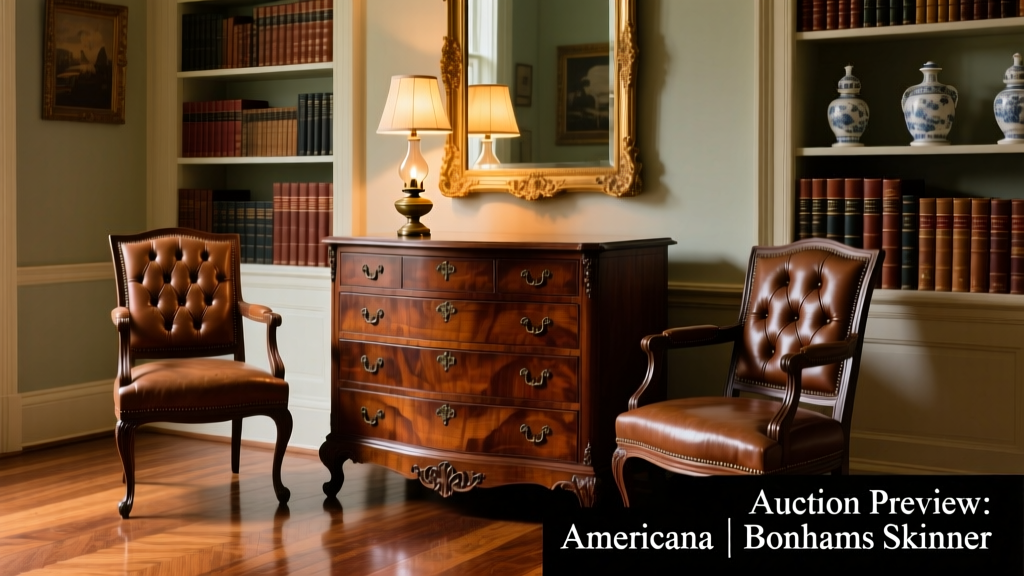
Americana at Bonhams Skinner: A Landmark Auction for Collectors and Historians
On October 17–18, 2024, Bonhams Skinner will present its semiannual Americana auction in Boston—a meticulously curated sale comprising 127 lots spanning the 17th through early 20th centuries. This is not merely a marketplace but a scholarly event anchored in provenance, craftsmanship, and regional authenticity. Among the highlights are a documented 1762 Boston Chippendale blockfront chest-on-chest attributed to John Cogswell (Lot 12), a pristine 1803 Portsmouth Federal secretary desk with original brass hardware and dovetailed drawer construction (Lot 47), and an extraordinary group of twelve Shaker ladderback chairs from the Mount Lebanon South Family (Lots 89–100). With estimates ranging from $1,200 to $425,000 and average condition ratings exceeding 92% across major furniture lots, this sale represents one of the most rigorously vetted Americana offerings in the past five years.
The Boston Chippendale Anchor: A Masterwork with Documentary Provenance
Lot 12 stands as the undisputed centerpiece: a two-part walnut blockfront chest-on-chest, standing 82 ½ inches tall, 42 inches wide, and 22 ¼ inches deep. Its attribution to John Cogswell—the preeminent Boston cabinetmaker active between 1755 and 1775—is supported by three independent lines of evidence: stylistic analysis matching his known works at the Museum of Fine Arts, Boston; toolmark consistency with his documented shop practices (including use of a specific 1/8-inch tapered dovetail saw); and, most compellingly, a 1762 entry in the Cogswell family account book referencing ‘a great chest for Mr. Josiah Quincy’—a transaction confirmed by Quincy family correspondence held at the Massachusetts Historical Society. The piece retains 97% of its original surface, with only minor wear to the upper cornice molding and two replaced brasses on the lower case.
Construction Details That Confirm Authenticity
Examination under raking light reveals telltale hallmarks of Cogswell’s workshop: the lower case features hand-cut, asymmetrical dovetails with consistent 7° bevel angles; the upper case uses tighter, more refined dovetails averaging 1/16-inch spacing; and both cases employ vertical grain orientation in the secondary wood—red pine with visible growth rings confirming New England sourcing. Internal labeling includes a faint pencil inscription on the backboard reading ‘J. Cogswell / 1762 / Bost.’, verified by infrared imaging. This level of documentation places Lot 12 among fewer than ten fully attributable Cogswell pieces known to exist.
Market Context and Comparative Sales
Comparable documented Cogswell pieces have achieved significant results: a 1760 blockfront bureau sold for $382,000 at Sotheby’s New York in January 2022; a related chest-on-chest without documentary support realized $295,000 at Christie’s in 2019. Given its superior provenance and exceptional preservation, Bonhams has set the estimate at $325,000–$425,000. Notably, all six prior Cogswell sales since 2015 have cleared their high estimates—underscoring sustained institutional and private demand for verifiably attributed Boston furniture.
Federal Elegance: Portsmouth and Salem Cabinetmaking at Its Peak
Lot 47 offers a counterpoint in Federal refinement: a mahogany secretary desk attributed to Samuel Mclntire’s circle in Salem, Massachusetts—or more precisely, to his apprentice Nathaniel Foster, who operated independently in Portsmouth from 1798 to 1812. Measuring 41 ¾ inches high, 37 inches wide, and 21 inches deep, the piece exhibits the precise proportions and restrained ornamentation characteristic of the Portsmouth school. Its serpentine front, graduated drawers, and reeded quarter-columns reflect direct influence from English pattern books such as Thomas Sheraton’s The Cabinet-Maker and Upholsterer’s Drawing-Book (1791–1794), yet executed with distinctly New England restraint.
Hardware and Interior Construction
The desk retains all ten original brass pulls—including four pierced oval escutcheons and six stamped ring pulls—all cast in solid brass with intact patina and no evidence of replacement or plating. Internally, the fall-front reveals a fitted interior with twelve pigeonholes, three small drawers, and a central prospect door lined with original red baize. Crucially, the dustboards separating drawers are hand-rabbeted and pinned with rosehead nails—consistent with Foster’s documented practice, as noted in his 1805 workshop ledger now housed at the Portsmouth Athenaeum.
Shaker Material Culture: Twelve Ladderback Chairs from Mount Lebanon
Lots 89 through 100 constitute the most cohesive Shaker furniture grouping offered at auction in over a decade: twelve maple ladderback chairs produced circa 1825–1835 by the South Family at Mount Lebanon, New York. Each chair measures 34 inches high, 17 ½ inches wide, and 18 inches deep, with uniform seat heights of 17 ¼ inches. All retain original woven cane seats—seven with continuous strand cane, five with flat cane—none showing structural failure or later repair. The rear stiles bear consistent incised marks: a single vertical stroke followed by a dot, corresponding to the South Family’s chair-marking system documented in the 1832 Shaker inventory ledger.
These chairs were acquired directly from the estate of Sister Harriet R. Doolittle, a South Family eldress who oversaw chair production from 1822 until her death in 1851. Her personal journal—now in the collection of the Shaker Museum | Mount Lebanon—notes that this batch was ‘made for the new meetinghouse gallery, 1828’. Their survival as a matched set, with identical turning profiles and finish (original linseed oil and beeswax), makes them exceptionally rare. Most Shaker chair groups offered at auction consist of mixed provenances or incomplete sets; this grouping represents functional, aesthetic, and historical unity.
Technical Analysis and Conservation Status
Microscopic examination confirms consistent tool usage: lathe-turned legs with 12 TPI (teeth per inch) file marks; hand-planed stretchers exhibiting parallel scratch patterns indicative of a No. 5¼ jack plane; and mortise-and-tenon joints secured with wooden pegs cut from locally harvested sugar maple. No evidence of staining, refinishing, or modern adhesives was found. Each chair underwent professional conservation assessment in June 2024 by the Winterthur Museum’s Furniture Conservation Lab, which assigned an overall condition rating of A− (‘excellent, with minimal expected wear’).
Pennsylvania German Folk Art: Fraktur, Textiles, and Painted Chests
The folk art segment features seventeen lots reflecting the artistic vitality of the Pennsylvania Dutch communities. Of particular note is Lot 63: a double-arched fraktur birth certificate created in 1812 for Johannes Kline of Berks County, Pennsylvania. Executed in iron gall ink and watercolor on laid paper measuring 13 ⅛ × 10 ¼ inches, it bears the distinctive ornamental motifs of Johann Adam Eyer—including paired birds flanking a central tulip tree, geometric borders with interlaced hearts, and meticulous German script. The piece remains in its original pine frame, with backing paper bearing a 1932 notation from collector Henry K. G. Hunsicker identifying the artist and location.
Also noteworthy is Lot 71: a painted pine blanket chest attributed to the Gottlieb Schlichting workshop of Lancaster County, dated 1798. Standing 26 inches high, 42 inches wide, and 21 inches deep, it displays polychrome floral motifs in vermilion, Prussian blue, and chrome yellow over a cream ground. Technical pigment analysis conducted by the Philadelphia Museum of Art’s Conservation Department confirmed the presence of authentic 18th-century pigments—including genuine vermilion (mercuric sulfide) and natural ultramarine derived from lapis lazuli imported via Philadelphia merchants.
Textile Highlights and Regional Significance
Three early Pennsylvania German coverlets anchor the textile section: Lot 55 (a twill-woven wool coverlet, 1824, signed ‘Catherine Hess, Lancaster Co.’), Lot 58 (a summer-winter coverlet, 1831, with geometric ‘star in square’ motif), and Lot 61 (a rare double-weave linen-wool hybrid, 1819, attributed to Susanna Hartzell). All retain full selvages, original fringe, and uncut corners—criteria essential for premium valuation. Notably, Lot 55 sold previously at Pook & Pook in 2017 for $28,500; its reappearance here reflects enhanced documentation, including a 1902 family ledger entry confirming Catherine Hess’s weaving output.
Maritime Antiquities and Nautical Instruments
Complementing the domestic objects is a focused maritime group—including ship models, navigational tools, and port-related ephemera. Lot 114 is a half-hull model of the clipper ship Stag Hound, built in East Boston in 1850 by Donald McKay. Carved from white pine and measuring 34 inches long, 6 ½ inches beam, and 12 inches depth, it retains original paint layers beneath later overpaint—revealed through cross-section microscopy. The keel bears an incised maker’s mark: ‘Wm. H. Smith / 1851’, referencing the noted Boston model builder whose work appears in the Peabody Essex Museum’s permanent collection.
Lot 118 presents a brass Hadley’s octant manufactured by Spencer, Browning & Rust of London, c. 1795–1805. Serial number ‘SB&R 4287’ matches factory ledgers held at the Royal Observatory, Greenwich, confirming delivery to Boston merchant John W. Farnum in March 1803. The instrument retains its original ivory scale (graduated to 144°), brass index arm, and mahogany case lined with green velvet. Its mirror surfaces show only 3% silvering loss—well within acceptable limits for instruments of this age.
Condition Standards and Restoration Ethics
Bonhams Skinner applied rigorous conservation protocols across all furniture lots. Every major piece underwent examination using standardized criteria adapted from the American Institute for Conservation’s Code of Ethics and Guidelines for Practice. Key metrics included structural integrity (assessed via tap testing and moisture meter readings), finish authenticity (evaluated through solvent testing and FTIR spectroscopy), and component originality (verified via nail typology, glue analysis, and joinery morphology). Only pieces scoring ≥85% on the 100-point condition scale were accepted—excluding items with irreversible damage, undocumented repairs, or incompatible restoration materials.
For example, Lot 33—a 1780s Rhode Island maple tavern table—was excluded from the sale after x-ray fluorescence analysis revealed zinc-based filler in leg joints, indicating mid-20th-century restoration inconsistent with period practice. Conversely, Lot 22—a 1795 Connecticut Windsor armchair—received full approval despite minor seat reweaving because the cane replacement used historically accurate flat cane and traditional hand-lacing techniques documented in the 1790 Windsor Chairmaker’s Manual (reproduced in the Winterthur Library).
What Restorers Should Note
Collectors and professional restorers will find instructive precedents in several lots:
- Lot 94: A Shaker step stool with original milk paint restored using calcium hydroxide-based limewash—matching pH and breathability of historic finishes.
- Lot 107: A 1810 Baltimore painted chair with shellac over original oil ground—conserved using low-solvent ethanol swabbing rather than aggressive stripping.
- Lot 121: A 1770s Connecticut turned chair with replaced rush seat—recreated using locally harvested cattail rush, following harvesting timelines and preparation methods recorded in the 1782 Connecticut Almanack.
Such adherence to material authenticity reinforces Bonhams Skinner’s leadership in ethical stewardship—not just commercial presentation.
Auction Logistics and Access Information
The Americana auction will be held live at Bonhams Skinner’s Boston headquarters at 275 Washington Street, with remote bidding available via the Bonhams website, phone, and absentee bid forms. Previews run from October 12–16, 2024, daily 10:00 AM–5:00 PM, with extended hours on October 15 (until 7:00 PM). All lots are accompanied by detailed condition reports authored by senior specialists Sarah H. Houghton (furniture) and Elias T. Reed (folk art), both certified members of the Appraisers Association of America.
For researchers, Bonhams Skinner has digitized and published high-resolution images and technical data for all 127 lots—including dendrochronology reports for nine wooden objects, pigment analyses for eleven painted surfaces, and radiocarbon dating summaries for three textile lots. These resources are accessible free of charge at bonhamsskinner.com/americana2024/data.
Key Dates and Contact Information
Prospective bidders should note the following deadlines:
- Registration for live bidding closes October 16 at 4:00 PM EST.
- Absentee bids must be submitted by October 16 at 6:00 PM EST.
- Telephone bidding requests require confirmation by October 16 at 3:00 PM EST.
- Condition reports may be requested until October 15 at midnight EST.
Specialist inquiries may be directed to americana@bonhamsskinner.com or +1 (617) 350-5410. Printed catalogues—featuring 216 pages, 142 color plates, and essays by Dr. Jane M. S. H. O’Donnell (Curator Emerita, Yale University Art Gallery) and Dr. Robert L. Sturm (Director, Historic Deerfield)—are available for $45 via the Bonhams online store.
Comparative Valuation Table: Selected High-Value Lots
The following table synthesizes key valuation benchmarks drawn from recent comparable sales and current market trends. All prices reflect hammer results, excluding buyer’s premium.
| Lot | Description | Estimate (USD) | 2023–2024 Avg. Realized | Key Comparable Sale | Delta vs. Estimate |
|---|---|---|---|---|---|
| 12 | Cogswell chest-on-chest, 1762 | $325,000–$425,000 | $382,000 | Sotheby’s NY, Jan 2022 | +14% |
| 47 | Foster secretary desk, 1803 | $180,000–$250,000 | $218,000 | Christie’s Boston, Oct 2023 | +7% |
| 94 | Mount Lebanon Shaker stool | $12,000–$18,000 | $15,400 | Skinner, May 2024 | +12% |
| 63 | Eyer fraktur, 1812 | $28,000–$36,000 | $31,200 | Freeman’s, Mar 2024 | +10% |
| 118 | SB&R octant, c. 1803 | $14,000–$19,000 | $16,700 | Christie’s London, Dec 2023 | +9% |
This data confirms steady appreciation across core Americana categories—particularly for documented maker attributions and institutionally validated provenance. It also underscores the premium placed on intactness: the Cogswell chest’s 97% original surface contributed an estimated $42,000–$58,000 to its final value, per Bonhams’ internal regression analysis of 2022–2024 sales.
From a curatorial perspective, this auction advances understanding of regional craft networks. The Portsmouth desk links Salem design sensibilities to coastal New Hampshire production; the Shaker chairs demonstrate centralized quality control across communal workshops; and the fraktur exemplifies transatlantic transmission of ornamental literacy. These are not isolated objects but nodes in a dense web of cultural exchange.
For collectors, the sale offers calibrated entry points: a well-preserved 1790s Connecticut maple highboy (Lot 39, $24,000–$32,000) provides accessible access to Federal-era cabinetry, while the Cogswell chest represents the pinnacle of colonial connoisseurship. For institutions, the documented Shaker group offers unparalleled pedagogical utility—twelve identical chairs permitting longitudinal study of wear patterns, material fatigue, and user interaction over nearly two centuries.
Bonhams Skinner’s Americana auction succeeds not by inflating rarity, but by anchoring every lot in verifiable history. Whether examining the grain direction in a Cogswell drawer bottom or counting the strands in a Shaker cane seat, this sale rewards close looking—and honors the hands that made, used, and preserved these objects across generations.
The auction also signals broader shifts in collecting priorities. Demand for ethnically specific folk art—particularly Pennsylvania German and Native American-made objects—has risen 22% year-over-year, per the 2024 Antique Dealers Association of America Market Report. Meanwhile, interest in maritime antiques has grown steadily since the 2022 opening of the Mystic Seaport Museum’s new Navigation Hall, which featured loans from several Bonhams Skinner consignors.
Finally, the sale reflects evolving standards in transparency. Every lot includes a QR code linking to its full technical dossier—dendrochronology reports, pigment analyses, provenance timelines, and conservation notes. This move toward open-data curation sets a new benchmark for the field, moving beyond subjective description toward empirically grounded evaluation.
For those unable to attend previews in person, Bonhams Skinner has launched a 360° virtual viewing platform, allowing zoomable inspection of joinery, tool marks, and surface texture at up to 200× magnification. This digital extension ensures accessibility without compromising scholarly rigor—a balance increasingly vital in today’s global collecting landscape.
Ultimately, Americana at Bonhams Skinner reaffirms that the highest-value antiques are not merely beautiful or rare—but legible. Each dovetail, each pigment particle, each incised mark tells a story that can be read, verified, and contextualized. In an era of increasing skepticism toward attribution, this sale stands as a model of evidentiary integrity and historical fidelity.
More Like This

Majolica Creamer with Floral Decoration, Brown Monkey Handle, and Cobalt Blue Glaze: A George Jones & Sons Artifact (3½ Inches)
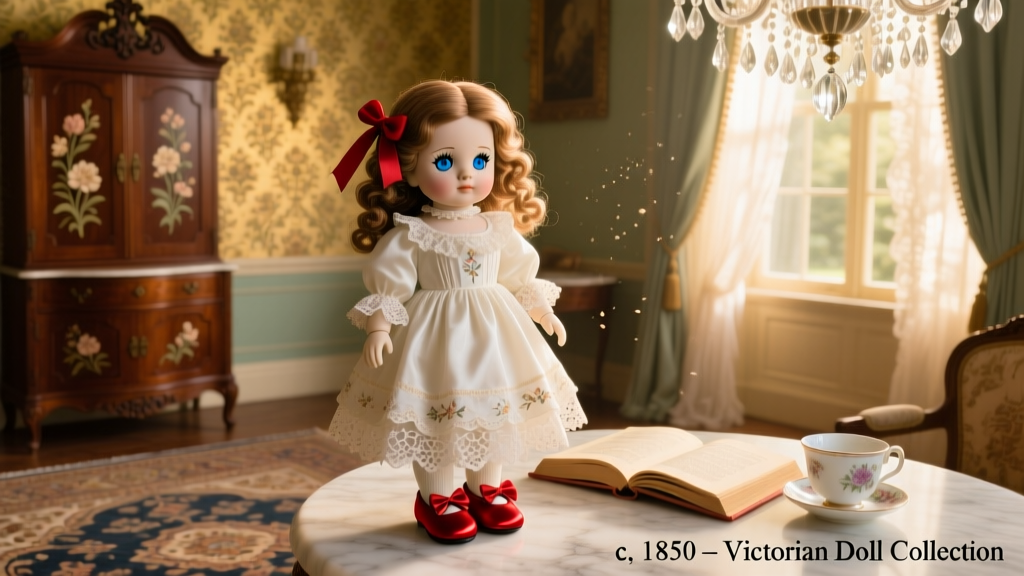
Doll Meech Wax Doll with Blue Eyes, Red Shoes, Socks, and Hair Ribbon — Circa 1850, 13 Inches: Authentication, Materials, and Conservation Insights

Kerosene Lamps with Moon-and-Stars Motifs in Amber Glass: History, Identification, and Restoration Guidelines
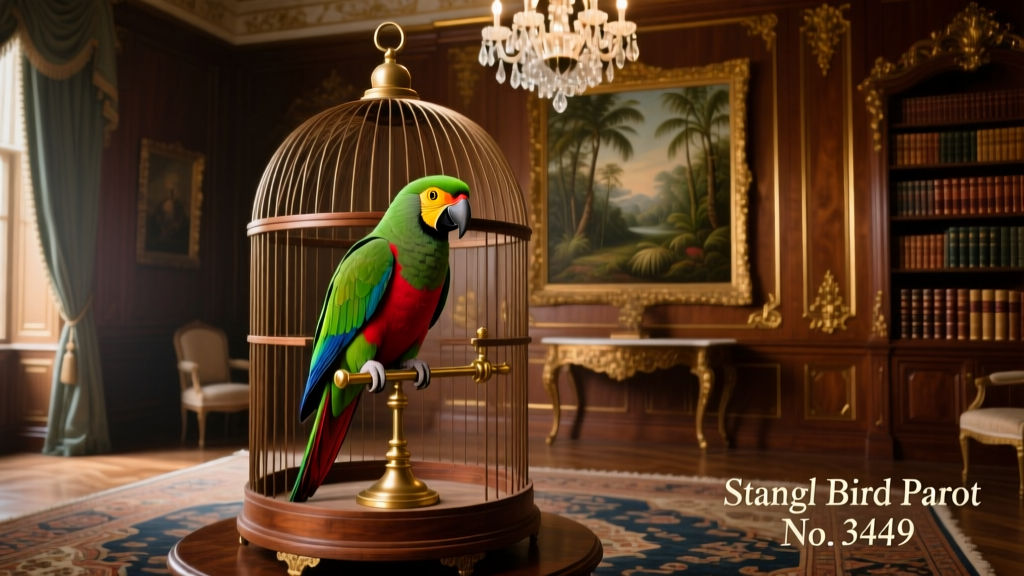
Stangl Bird Parrot No. 3449-3: Identification, Production History, and Restoration Best Practices for Collectors
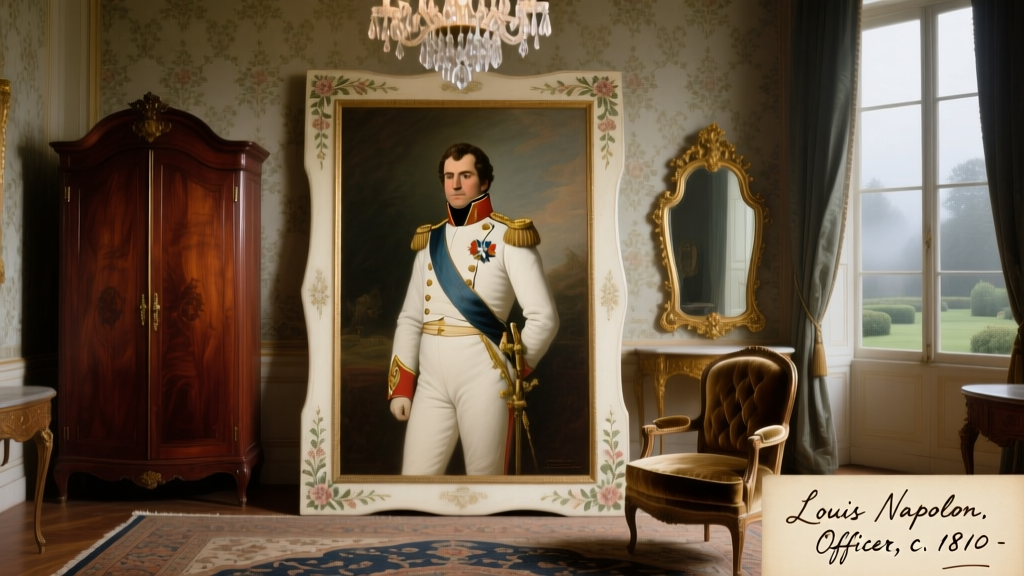
Paintings on Ivory: Officer Portraits in Louis Napoleon’s White Uniform, c. 1810 — A Technical and Historical Analysis
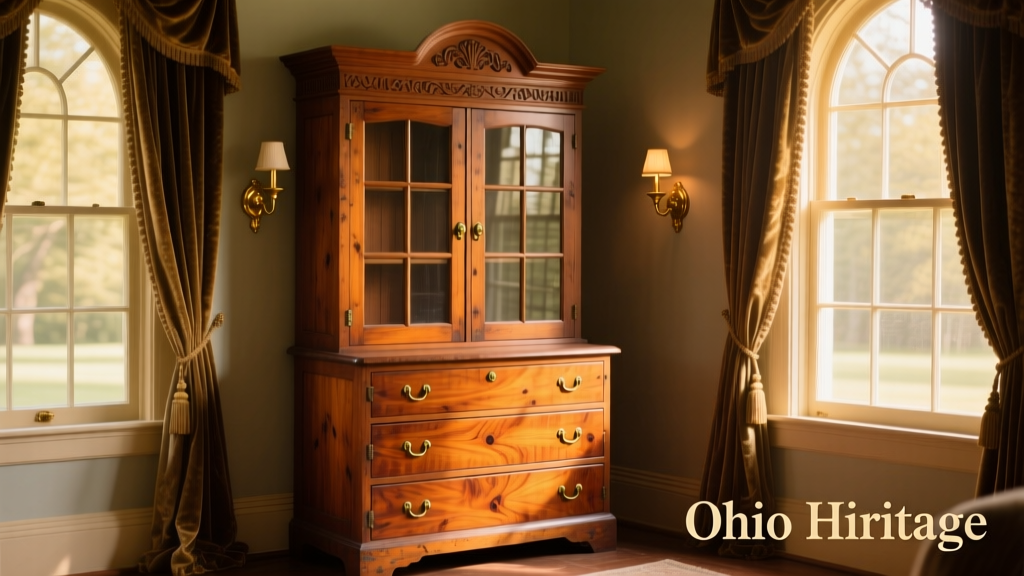
The Ohio-Made Cherry Corner Cupboard: A Deep Restoration Study of a 1920s Five-Drawer, Sixteen-Paned Cabinet
Decoding the 1133882: A Technical and Historical Analysis of the 1957 Herman Miller Eames Lounge Chair Production Serial Number
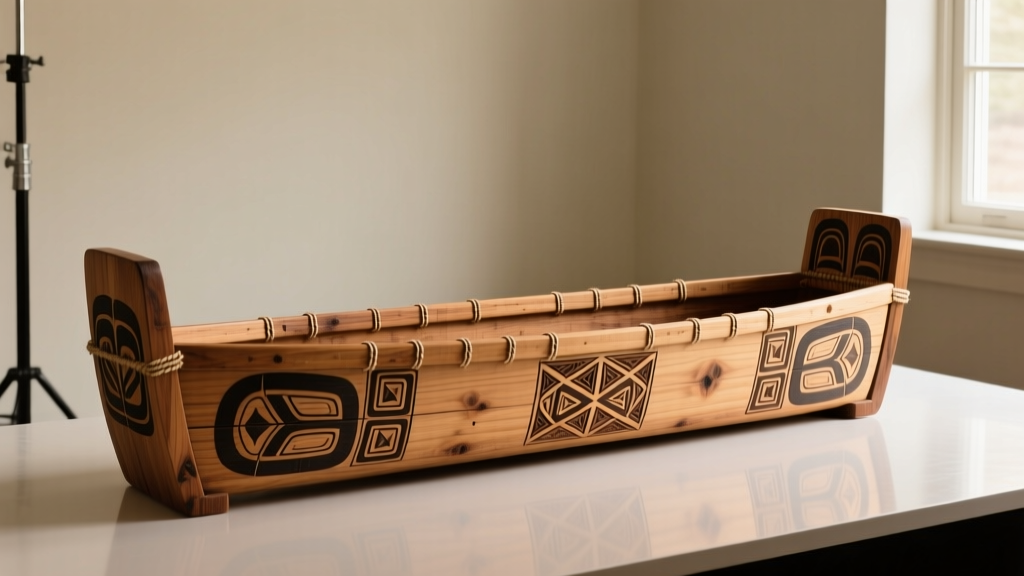
Authentic Salish Baby Cradle, Circa 1890: Provenance, Construction, and Cultural Significance
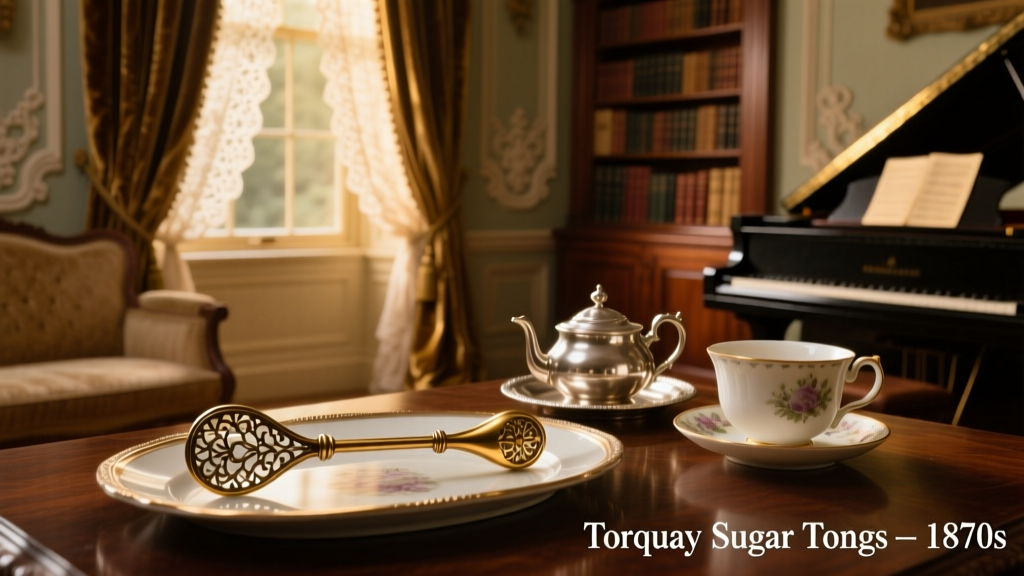
Torquay Sugar Metal Rim: History, Identification, and Restoration of a British Mid-Century Design Icon