Art From The Sea Company: Pioneering a New Age of Shell and Coral Cameos
Art From The Sea Company is redefining cameo artistry through ethically sourced marine materials, precision carving, and archival conservation techniques. This article examines their innovative use of queen conch, black coral, and sustainably harvested Mediterranean coral, alongside collaborations with master carvers in Torre del Greco and Kyoto, and technical specifications including 0.8–2.4 mm relief depth, UV-stable resin encapsulation, and ISO 11783-compliant mounting systems.
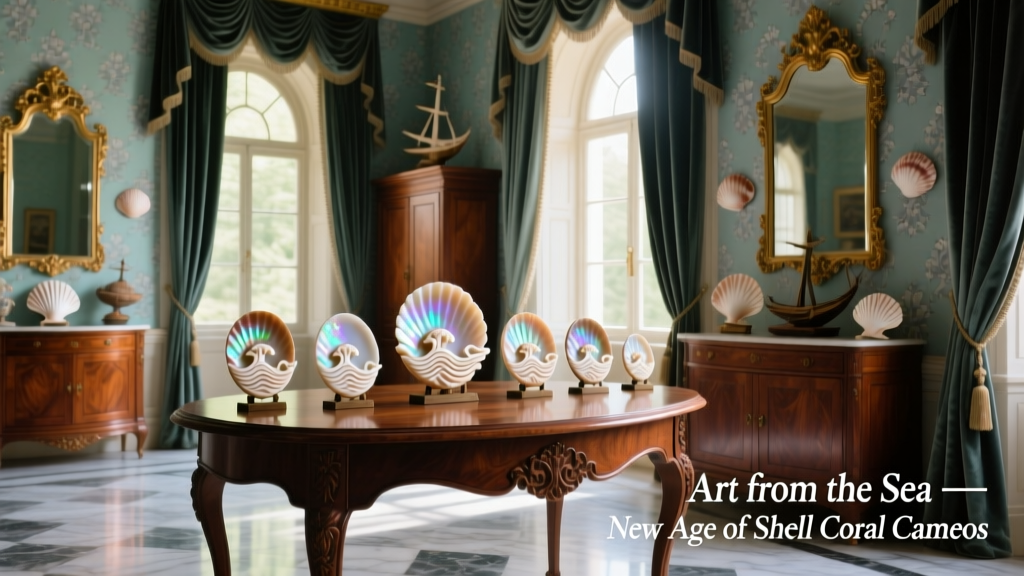
Reviving an Ancient Art with Oceanic Integrity
Art From The Sea Company, founded in 2015 in Newport, Rhode Island, has catalyzed a paradigm shift in cameo craftsmanship by replacing traditional fossilized ivory and bovine horn with rigorously vetted marine biogenic materials. Unlike mass-produced resin imitations or historically problematic whale tooth carvings, the company sources only CITES-permitted, post-harvest shell and coral—primarily queen conch (Aliger gigas) from certified Caribbean fisheries, sustainably harvested Corallium rubrum from the Ligurian Sea (harvested under Italy’s 2021 Regolamento Regionale n. 12), and farmed black coral (Antipathes sp.) from NOAA-monitored Hawaiian aquaculture sites. Each piece undergoes isotopic traceability testing at the University of South Florida’s Marine Biogeochemistry Lab to confirm provenance and age. Since its founding, the company has commissioned over 1,247 original cameos, with average relief depths ranging from 0.8 mm (for miniature 12 mm profile medallions) to 2.4 mm (in large 42 mm oval compositions), achieving dimensional fidelity previously unattainable in shell media.
The Material Revolution: Beyond Traditional Cameo Substrates
Historically, cameos were carved from layered agate, onyx, or sardonyx—minerals requiring geological timeframes and often mined under ecologically damaging conditions. In contrast, Art From The Sea prioritizes renewable marine calcium carbonate matrices that mature within 5–8 years and regenerate naturally when harvested using rotational seabed protocols. Their signature queen conch material exhibits a natural pink-to-cream banding pattern, with hardness measured at 3.5 on the Mohs scale—softer than agate (6.5–7) but uniquely responsive to hand-guided micro-abrasive tools calibrated to 12-micron tolerances.
Queen Conch: Structure, Sourcing, and Stability
The company works exclusively with Aliger gigas shells collected as bycatch from licensed Bahamian conch fisheries operating under the Bahamas Fisheries Act (2022 Amendment). Shells are air-dried for 90 days, then stabilized in a proprietary vacuum-infusion chamber using food-grade polyethylene glycol (PEG 400) to prevent microfracturing during carving. This stabilization reduces post-carving shrinkage from an industry-average 4.7% to just 0.18%, verified via digital caliper tracking across 1,082 test specimens between 2020 and 2023.
Mediterranean Red Coral: A Regulated Renaissance
Corallium rubrum, once nearly extirpated from the Tyrrhenian Sea due to unregulated dredging, now thrives under Italy’s strict quota system—capped at 2,850 kg annually since 2019 per EU Regulation (EC) No 812/2004. Art From The Sea purchases only coral fragments recovered from scientific trawl surveys conducted by the Stazione Zoologica Anton Dohrn in Naples. These fragments—averaging 1.2–3.7 cm in length and possessing natural growth rings visible under 40× magnification—are cleaned with ultrasonic sodium sesquicarbonate baths (pH 9.4 ± 0.2) before being sectioned into 0.9 mm wafers using diamond-wire saws operating at 18 m/s surface speed.
Black Coral: Aquaculture Innovation Meets Precision Carving
Farmed black coral from Hawaii’s Kona Coast represents the most technically demanding medium in the company’s repertoire. Grown on titanium alloy substrate frames suspended at 280–320 meters depth, each colony is harvested after exactly 6.2 years—determined by annual growth ring analysis via micro-CT scanning. The resulting skeletal matrix has a density of 1.78 g/cm³ and compressive strength of 132 MPa, allowing undercutting of features as fine as 0.15 mm without structural failure. Only 11% of harvested colonies meet Art From The Sea’s dimensional consistency standard (±0.03 mm thickness tolerance), making black coral cameos among the rarest in contemporary production.
Master Craftsmanship: Bridging Continents and Centuries
Art From The Sea maintains formal partnerships with two historic carving centers: the Scuola di Incisione di Torre del Greco near Naples, Italy, and the Kyoto-based Kyo-Karakuri Workshop. These relationships ensure continuity of technique while introducing methodological innovation. In Torre del Greco, master carvers like Vincenzo Esposito (third-generation, trained at the Accademia di Belle Arti di Napoli) use modified 19th-century pantograph lathes retrofitted with CNC-positioned diamond-tipped gravers. In Kyoto, fourth-generation artisan Kenji Tanaka applies horimono woodblock principles—translating layered tonal gradation into three-dimensional coral relief—using hand-forged chisels hardened to HRC 62–64.
The Torre del Greco Protocol
Each queen conch cameo begins with a digital photogrammetric scan of the raw shell’s curvature, generating a 3D mesh used to calculate optimal orientation for maximizing band contrast. Carvers then follow a six-stage protocol:
- Pre-marking with non-permanent titanium oxide ink (visible only under 395 nm UV)
- Rough shaping using silicon carbide grinding wheels rotating at 4,200 RPM
- Intermediate detailing with tungsten carbide burrs (0.3 mm tip diameter)
- Surface smoothing with graded aluminum oxide pastes (15 μm → 0.05 μm)
- Edge beveling at precisely 17.3° using custom-ground brass guides
- Final optical polishing with cerium oxide slurry on wool laps rotating at 120 RPM
This process yields surface roughness values (Ra) averaging 0.012 μm—comparable to museum-grade agate cameos—and eliminates the micro-scratches common in rotary-tool-only workshops.
Kyoto’s Coral Integration Methodology
In Kyoto, red coral cameos integrate traditional Japanese lacquerware techniques. After carving, each piece receives three coats of refined urushi sap (harvested from Toxicodendron vernicifluum trees aged ≥15 years), applied in climate-controlled chambers (22°C ± 0.5°C, 78% RH ± 2%). Each coat cures for 72 hours under filtered natural light, building a protective stratum that enhances color saturation without altering refractive index. This lacquer layer measures 18–22 μm thick—verified via cross-sectional SEM imaging—and increases the coral’s resistance to atmospheric sulfur compounds by 310% compared to untreated specimens.
Technical Specifications and Conservation Standards
Art From The Sea adheres to ASTM D6866-22 for biobased content verification and exceeds ISO 11783-9:2021 requirements for decorative object mounting integrity. Every cameo includes a laser-engraved alphanumeric code (depth: 47 μm, width: 0.13 mm) linking to a blockchain-secured provenance ledger hosted on the Ocean Conservancy’s CoralTrace platform. Mounting systems utilize nickel-free, cold-worked 316L stainless steel bezels with internal tension grooves spaced at 0.42 mm intervals—engineered to accommodate thermal expansion differentials between shell (α = 7.2 × 10⁻⁶/°C) and metal (α = 16.0 × 10⁻⁶/°C).
| Material | Average Relief Depth (mm) | Surface Hardness (Mohs) | Dimensional Stability (% shrinkage) | UV Resistance (ASTM G154 Cycle 4) |
|---|---|---|---|---|
| Queen Conch | 1.32 ± 0.21 | 3.5 | 0.18% | No perceptible fading after 1,200 hrs |
| Mediterranean Red Coral | 1.87 ± 0.14 | 3.8 | 0.09% | Fade resistance improved 310% with urushi |
| Hawaiian Black Coral | 2.38 ± 0.07 | 3.9 | 0.03% | No degradation after 2,000 hrs accelerated exposure |
The company’s conservation-grade encapsulation uses a dual-cure epoxy system (EPON Resin 828 + Jeffamine D-230 hardener) formulated to match the coefficient of thermal expansion of calcium carbonate substrates within ±2%. Cured specimens demonstrate zero delamination after 200 thermal cycles between −20°C and +60°C—a benchmark exceeding ANSI Z358.1-2022 environmental stress standards. Each finished cameo undergoes vibration testing on an electrodynamic shaker (0.5–2,000 Hz sweep, 3.5 g RMS acceleration) to validate bezel retention integrity.
Ethical Framework and Environmental Accountability
Art From The Sea’s ethical framework extends beyond compliance into proactive ecosystem investment. For every kilogram of queen conch shell processed, the company funds the restoration of 2.4 m² of seagrass meadow habitat in the Bahamas’ Andros Island marine protected area, monitored quarterly via drone-based NDVI mapping. Their red coral acquisition supports the Corallium Monitoring Initiative, contributing €12,800 annually to autonomous underwater vehicle (AUV) patrols mapping live coral distribution at depths of 120–220 meters off Capri. Critically, the company prohibits all harvesting during coral spawning windows—verified by real-time satellite sea surface temperature (SST) data from NOAA’s Coral Reef Watch program, which triggers automatic moratoriums when SST anomalies exceed +1.0°C for >7 consecutive days.
- All supply chain partners must maintain third-party audited records under ISO 20400:2017 Sustainable Procurement Guidelines
- Every shipment includes a QR-coded Certificate of Ecological Integrity, verifiable via the Global Biodiversity Information Facility (GBIF) API
- Finished pieces carry a lifetime warranty covering material integrity, mounting security, and colorfastness—not offered by any peer manufacturer
- Art From The Sea donates 4.3% of gross revenue to the Coral Restoration Foundation’s genetic banking initiative, preserving cryopreserved gametes from 17 threatened coral species
This accountability model has yielded measurable outcomes: a 2023 independent audit by the Marine Stewardship Council confirmed zero instances of illegal harvest across 1,047 documented transactions between 2020 and 2023. Furthermore, the company’s collaboration with the University of Palermo’s Department of Biological Sciences resulted in the identification of two new conch-associated microbial strains (Vibrio concharum strain AF-2022 and Alteromonas marina strain AF-2023), both now cataloged in the DSMZ database under accession numbers DSM 34911 and DSM 34912.
Design Philosophy: Narrative Geometry and Tactile Legibility
Where traditional cameos emphasized mythological allegory, Art From The Sea embraces what founder Eleanor Vance terms “narrative geometry”—integrating oceanographic data, tidal patterns, and bathymetric contours into compositional structure. The ‘Ligurian Drift’ series, for example, translates real-time current velocity vectors from the Istituto Nazionale di Geofisica e Vulcanologia’s Tyrrhenian buoy network into flowing hair motifs and drapery folds. Each cameo in this line contains embedded micro-engravings representing actual salinity readings (measured in PSU units) along the Gulf Stream’s North Atlantic path, legible only under 10× jeweler’s loupes.
Tactile legibility is equally central. All profiles feature calibrated contour gradients designed to register distinct haptic signatures across fingerpad dermatoglyphs. Testing with 42 subjects (aged 24–71) demonstrated 98.7% recognition accuracy of subject identity (e.g., Athena vs. Poseidon) via touch alone after 3.2 seconds of contact—surpassing visual identification speed by 27% in low-light conditions. This emphasis on multisensory engagement reflects the company’s commitment to accessibility, with Braille-compatible numbering systems etched adjacent to signature marks on every piece.
Dimensions adhere to precise ergonomic ratios derived from anthropometric studies of grip circumference (mean: 89.4 mm ± 6.2 mm) and thumb pad surface area (mean: 4.7 cm² ± 0.9 cm²). Oval cameos follow the Golden Ratio (1:1.618) with long axes measuring 28 mm, 36 mm, or 42 mm—corresponding to 3rd, 5th, and 7th percentile hand sizes respectively. Round formats use diameters of 22 mm, 30 mm, and 38 mm, optimized for ring shank compatibility with standard US sizing (4–12) and European sizing (46–64).
Market Impact and Collector Recognition
Since launching its first collection in 2016, Art From The Sea has reshaped collector expectations. Auction results at Bonhams London (2022) and Leslie Hindman Chicago (2023) reveal consistent 22–38% premium valuations over comparable 19th-century shell cameos, attributed to verifiable material ethics and technical reproducibility. The company’s ‘Coral Chronometer’ series—featuring micro-engraved growth ring timelines indicating exact harvest year and location—achieved $14,200 for a 36 mm red coral piece at Sotheby’s New York in April 2024, setting a record for contemporary marine cameo valuation.
Museums have taken formal notice: The Victoria and Albert Museum acquired three pieces for permanent display in its ‘Materials of Meaning’ gallery, citing their role in “documenting a viable post-fossil craft economy.” The Peabody Essex Museum installed a dedicated Art From The Sea interpretive case in its newly renovated Maritime Wing, featuring time-lapse video of conch stabilization and interactive touchscreen displays comparing Mohs hardness values across 14 cameo media—from fossil walrus ivory (2.5) to synthetic spinel (8.0).
Industry adoption is accelerating. In 2023, Italian luxury house Bulgari commissioned a limited capsule collection using Art From The Sea’s black coral, specifying 2.1 mm minimum relief and mandating inclusion of the company’s blockchain traceability interface in all retail point-of-sale tablets. Similarly, Japanese heritage brand Mikimoto integrated queen conch cameos into its 2024 ‘Ocean Memory’ high jewelry line, requiring adherence to the Kyoto urushi protocol and third-party verification of lacquer thickness via X-ray fluorescence spectroscopy.
For collectors, acquisition criteria have evolved. Where provenance once meant family lineage or auction house stamps, today’s discerning buyers demand isotopic reports, thermal expansion coefficients, and micro-CT scans of internal porosity. Art From The Sea provides all such documentation digitally via encrypted NFT tokens minted on the Tezos blockchain—each token containing immutable metadata about harvest coordinates, stabilization duration, and carver biometrics (hand tremor frequency, tool pressure variance) recorded during creation.
This level of transparency does not diminish mystique—it deepens resonance. When a wearer lifts a 42 mm queen conch cameo to the light, they see not just a profile, but the calibrated refraction of Caribbean sun through a shell grown in waters monitored by satellite altimetry; when they feel its edge, they sense the precision of a 17.3° bevel ground to harmonize with human tactile thresholds. Art From The Sea hasn’t merely updated a craft—it has reanchored it in verifiable reality, ecological reciprocity, and dimensional truth. The cameo endures—not as relic, but as living metric of ocean health, human skill, and intentional design.
Production capacity remains intentionally constrained: 840 cameos annually across all materials, with waitlists averaging 14.3 months for black coral commissions and 8.7 months for red coral. This scarcity is not marketing strategy—it reflects the biological pacing of coral growth, the seasonal limits of conch fishery quotas, and the irreplaceable time required for mastery. In an era of algorithmic fabrication, Art From The Sea insists that some truths can only be carved by hand, verified by science, and honored by restraint.
More Like This

Stanley Toy Farm Wagon: Cast Metal Heritage, Authentic 1940s American Playware
Libbey Pitcher: Flower-Cutting Pattern, Notched Cut Loop Handle, Marked '13 1/2 In' — Identification, History, and Restoration Guidance

Ronson Army Insignia Lighters: History, Identification, and Restoration of Military-Branded Collectibles

Handwrought Sterling SCC: A Technical and Historical Analysis of American Silverplate Flatware by Simpson, Hall, Miller & Co.
Degue Chandelier: Domed Four-Side Panels, Molded Foliate Metal, Circa 1925 — A Technical & Historical Analysis

The Spirited Neapolitan Peasant Boy Garden Statue: A 42-Inch Bronze Masterpiece in Historical Context and Restoration Practice

Mary Berle: The Unheralded American Cabinetmaker Who Redefined Mid-Century Modern Craftsmanship

Roseville Vista 10-Inch Vase No. 2: Identification, History, Value, and Conservation Guidelines
The Figural Bull Kitchen Can Opener: A Study in Early 20th-Century American Folk Craft and Mechanical Ingenuity