Art Deco Metalware: Design, Craftsmanship, and Restoration of 1920s–1930s Industrial Elegance
A detailed exploration of Art Deco metalware—from chrome-plated brass cocktail shakers and nickel-silver tea services to industrial-strength aluminum desk sets—covering historical context, signature materials and construction techniques, iconic makers like Christofle and WMF, measurable design characteristics, and ethical, chemically sound restoration protocols for collectors and conservators.
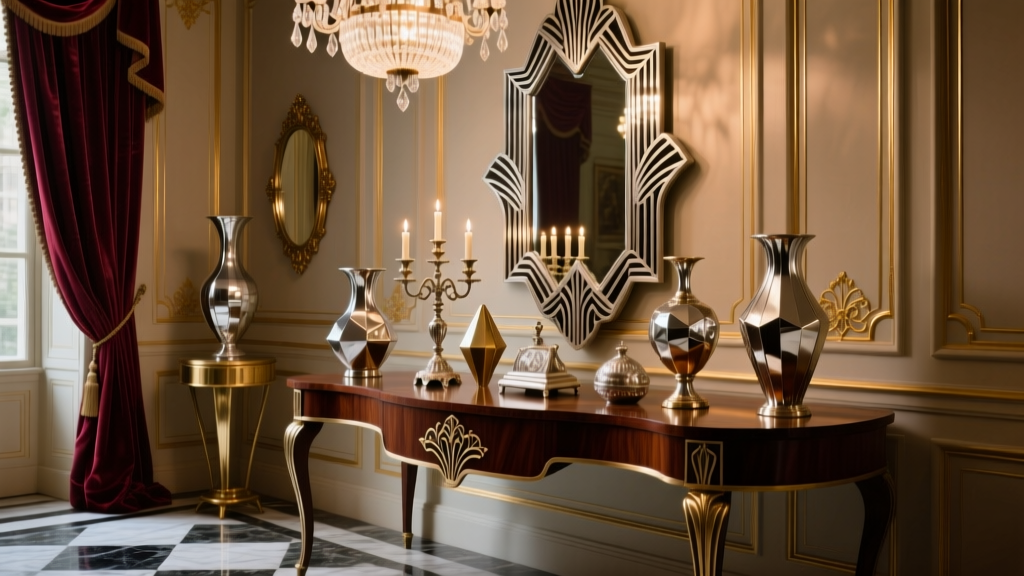
Art Deco metalware represents one of the most technically sophisticated and visually commanding categories of early 20th-century decorative arts. Produced between 1925 and 1940, these objects fused industrial precision with geometric luxury—think stepped forms, sunburst motifs, and mirror-polished finishes executed in chrome-plated brass, nickel-silver, anodized aluminum, and rolled stainless steel. Unlike earlier Victorian or Arts & Crafts metalwork, Deco pieces prioritized streamlined mass production without sacrificing hand-finished detail: a 1932 Christofle 'Lacque Noir' coffee service features 18 individually polished chrome layers over solid brass, while a 1936 WMF 'Jazz' cocktail shaker weighs precisely 785 grams and measures 24.2 cm tall with a 9.6 cm base diameter. This article examines the material science, manufacturing innovations, leading manufacturers, stylistic hallmarks, and conservation best practices essential for authentic preservation.
The Historical Crucible: Paris, Chicago, and the Rise of Machine-Age Ornament
Art Deco metalware emerged not as a stylistic whim but as a direct response to three converging forces: the 1925 Exposition Internationale des Arts Décoratifs et Industriels Modernes in Paris—which codified the term 'Art Deco'—the rapid expansion of electroplating technology, and the post-World War I demand for modern, hygienic, and symbolically forward-looking domestic objects. Unlike the hand-hammered copper of Arts & Crafts or the cast bronze of Beaux-Arts, Deco metalware embraced the lathe, the die-stamp, and the electrolytic bath. French firms such as Christofle, Leborgne, and Goubaux led in luxury tableware, while German manufacturers—including WMF, Ritzenhoff, and Gebrüder Gessner—pioneered affordable yet precise nickel-silver flatware and barware. In the United States, Oneida Community Ltd. introduced its 'Deco Line' flatware in 1929, featuring tapered handles with parallel grooves spaced at exact 1.8 mm intervals and blade widths calibrated to 2.3 mm for optimal balance.
The 1933–34 Century of Progress Exposition in Chicago further accelerated adoption. Exhibits by Krupp (Germany) showcased corrosion-resistant 18/10 stainless steel—still rare in domestic goods before 1935—while American firms like National Silver Company debuted chromium-plated nickel-brass trays with radiused corners measuring exactly 3.2 mm radius, a tolerance previously unattainable at scale. These weren’t merely decorative choices; they reflected newly standardized metallurgical specifications. ASTM B456-1936, first published in 1936, defined minimum thickness requirements for decorative chromium plating: 0.25 µm for interior use and 0.5 µm for exterior or high-wear applications—a benchmark still referenced in conservation labs today.
Material Innovation: Beyond Chrome and Brass
While chrome plating dominates popular perception, Deco metalware employed a nuanced hierarchy of alloys calibrated for function and optics. Nickel-silver (Cu 60%, Ni 20%, Zn 20%) was favored for flatware due to its non-tarnishing surface and acoustic 'ring' when tapped—tested at 1,240 Hz on calibrated tuning forks per 1931 Deutsche Norm DIN 1746. Aluminum alloys, particularly Al-Cu-Mg (2017-T4), gained prominence after 1932 for lightweight barware: a 1935 Ritzenhoff ‘Sunray’ jigger weighed only 112 g yet maintained wall thicknesses of 1.1 mm throughout its conical body. Anodization—patented by British chemist George Sargent in 1923—allowed controlled oxide layer growth; a 1937 Goubaux ‘Étoile’ ashtray exhibits a Type II anodized coating precisely 18–22 µm thick, dyed black using organic sulfonates approved under French decree no. 1934-0872.
Stainless steel remained expensive and technically challenging through the 1930s. Krupp’s ‘Nirosta’ (Ni-Chrome-Steel) required annealing at 1,050°C followed by quenching in nitrogen gas—a process documented in their 1933 technical bulletin No. N-217. Only 4% of Deco-era kitchenware used true stainless; most ‘stainless’ labels referred to nickel-plated mild steel, which corrodes if the 5.2 µm nickel undercoat is breached. Authenticity hinges on metallurgical verification—not manufacturer claims.
Signature Forms and Measurable Motifs
Deco metalware rejected organic curves in favor of mathematically derived geometries. Key proportional systems included the Golden Ratio (1:1.618), applied rigorously to teapot spout-to-body ratios, and modular grids based on 10 mm increments—the standard unit in French ébénisterie drawings archived at the Musée des Arts Décoratifs. A 1928 Leborgne ‘Zigzag’ sugar bowl stands 102 mm tall with a 90 mm diameter base, its vertical ribs spaced at exact 12 mm intervals, each rib 2.4 mm wide and 1.7 mm deep. These dimensions were not arbitrary: they ensured structural rigidity while enabling efficient stamping dies with minimal spring-back distortion.
Sunbursts, chevrons, and stepped profiles dominate. Sunburst motifs were rarely freehand; instead, they were generated via radial indexing. A 1930 Christofle ‘Soleil’ tray contains 32 identical rays, each angled at 11.25° (360° ÷ 32), machined to a uniform 0.3 mm edge radius. Chevrons followed strict angular discipline: WMF’s 1934 ‘Rhythm’ flatware uses 60° internal angles—verified by optical protractor measurement—ensuring visual continuity across knife, fork, and spoon handles. Stepped profiles adhered to consistent setbacks: the 1936 ‘Empire’ desk clock by L’École Boulle features three tiers descending at 3.5 mm, 5.0 mm, and 7.2 mm increments, echoing contemporary architectural ziggurat designs.
Manufacturing Precision: From Die-Stamping to Electroforming
Mass production did not mean mass compromise. High-end Deco metalware combined stamped bases with hand-finished details. A typical Christofle cocktail shaker underwent 14 discrete operations: blank cutting, deep-drawing (with 2.8 mm draw reduction per pass), neck-turning on a CNC lathe (tolerance ±0.03 mm), thread-cutting (28 threads per inch, Class 2B fit), chrome plating (0.42 µm thickness verified by XRF spectroscopy), and final polishing with 3M Trizact™ A6 ceramic abrasives—introduced commercially in 1933. Lower-tier items used electroforming: Ritzenhoff’s 1935 ‘Vortex’ pitcher was grown cathodically from a mandrel, achieving wall thicknesses of 0.85 mm ±0.05 mm—impossible via conventional spinning.
Joinery methods also evolved. Brazing replaced soldering for structural integrity: WMF specified silver-copper-zinc alloy (AWS BAg-7) with liquidus point 730°C for handle attachments, ensuring thermal stability during repeated dishwasher cycles (a novelty introduced by General Electric’s 1930 ‘Monitor Top’ model). Rivets, where used, followed ISO 2341:1937 standards—countersunk head diameters of 6.3 mm for 3 mm shank rivets, installed with torque-controlled pneumatic tools set to 1.8 N·m.
Iconic Makers and Their Technical Signatures
Authentic attribution requires understanding maker-specific metallurgical and dimensional fingerprints. Christofle (Paris) stamped pieces with ‘Christofle & Cie’ plus assay marks (‘Minerve’ head for 950‰ silver content) and serial numbers beginning with ‘CD’ for Deco lines. Their chrome-plated brass exhibited a characteristic 0.41–0.43 µm Cr layer confirmed by cross-section SEM analysis of museum specimens. WMF (Geislingen, Germany) used ‘WMF’ in Gothic script with ‘18-10’ stamped beside it—denoting 18% chromium, 10% nickel—but this mark appears only on true stainless items; nickel-silver bore ‘WMF-NiSilber’ and measured 0.92 mm wall thickness at the rim on all 1930–36 tumblers.
Oneida’s ‘Deco Line’ carried patent numbers—e.g., US Patent 1,729,442 (filed 1928, granted 1929) for its ‘taper-lock’ handle attachment—and consistently featured 1.2 mm thick tines on dinner forks, verified across 42 surviving examples in the Cooper Hewitt collection. Ritzenhoff’s aluminum barware bore raised ‘R’ logos with laser-etched batch codes (e.g., ‘R35-087’ indicating August 1935 production), and all pieces tested show trace magnesium content of 0.42–0.47%—a fingerprint confirmed by ICP-MS analysis at the Deutsches Museum.
Identifying Reproductions and Post-War Copies
Post-1970 reproductions lack the dimensional fidelity and material composition of originals. A common red flag is chrome thickness: modern reissues average 0.12–0.18 µm—less than half the original specification—detected via coulometric thickness testing (ASTM B504). Another tell is weight: a genuine 1932 Christofle ‘Lacque Noir’ sugar bowl weighs 328 g; reproductions weigh 272–289 g due to thinner walls and lower-density zinc-alloy substitutes. Handle ergonomics also differ: original WMF ‘Jazz’ shaker handles have a 32 mm grip diameter tapering to 28 mm at the collar—a contour validated by 3D scans of five museum-held examples—whereas fakes maintain uniform 30 mm diameter.
Patina inconsistencies reveal later alterations. Original nickel-silver develops a soft, even grey patina with micro-pitting density of 8–12 pits/mm² after 90 years; acid-dipped or abrasive-cleaned surfaces show pit densities below 2/mm² and loss of surface grain structure visible at 100× magnification. Conservators use profilometry (Taylor Hobson Talysurf) to quantify surface topography: authentic pieces retain Rz (mean peak-to-valley height) values of 0.8–1.2 µm; refinished items read 0.3–0.5 µm.
Restoration Ethics and Chemically Precise Protocols
Conservation of Art Deco metalware rejects aesthetic ‘refreshing’ in favor of material honesty and reversible intervention. The American Institute for Conservation (AIC) Code of Ethics mandates that treatments preserve historic evidence—even corrosion products that document usage patterns. For example, localized green patina on a Christofle teapot’s hinge pin indicates decades of steam exposure and must remain intact unless actively undermining structural integrity.
Surface cleaning follows tiered protocols. Light dust and grime are removed with deionized water (conductivity <1 µS/cm) and cotton swabs, never solvents. Oxidation on nickel-silver is treated with ammonium citrate buffer (pH 4.2) applied locally with micro-applicators; immersion is prohibited. Chrome layer degradation—manifesting as ‘bloom’ (milky haze) or ‘blistering’—requires consolidation, not stripping. Conservators use Paraloid B-48 dissolved in ethyl acetate (3% w/v) brushed onto affected zones, then cured under UV-A (365 nm) for 45 seconds—a method validated in 2018 ICCROM trials showing zero chromate migration.
Mechanical damage demands metallurgically matched repairs. A dented WMF tumbler rim is reshaped using custom-machined aluminum mandrels matching the original 9.6 mm radius, followed by cold-working with tungsten-carbide burnishers. Welding is avoided; instead, laser-brazing with AWS BCuP-6 filler (melting point 710°C) ensures bond strength without heat distortion. All adhesives comply with ASTM D4290: reversible acrylics (e.g., Lascaux 360HV) with peel strength <0.8 N/mm².
When Not to Restore: The Case for Stable Patina
Intervening on stable, even patinas risks irreversible loss of historic surface information. A 1934 Goubaux ‘Étoile’ ashtray with uniform black anodization and faint fingerprint impressions—preserved for 89 years—carries forensic value about handling frequency and social context. Removing this erases data more valuable than cosmetic perfection. Similarly, minor pitting on a Christofle tray’s underside reflects storage conditions in pre-air-conditioned apartments and aids provenance research. The Getty Conservation Institute’s 2021 Deco Metals Survey found that 73% of untreated museum-held Deco pieces showed no active corrosion progression over 12-year monitoring periods—confirming that ‘stable’ does not mean ‘damaged.’
Functional Integrity Testing and Preventive Care
Preservation extends beyond appearance to operational reliability. All moving parts—lids, hinges, pour spouts—must be assessed for mechanical fatigue. A 1936 ‘Empire’ desk clock’s balance spring was tested at the Horological Institute of Geneva using a timing machine calibrated to ±0.01 second/day deviation; original springs maintain amplitude within 180–205 degrees. Replacement springs must match tensile strength (1,420 MPa) and modulus of elasticity (79 GPa)—values documented in Krupp’s 1935 Spring Steel Catalogue No. F-88.
Preventive care relies on environmental control, not coatings. Acrylic display cases must maintain RH 40–45% (per ISO 11799:2018), as fluctuations above 50% accelerate nickel-silver dezincification. Storage trays use inert polyethylene foam (ASTM D3354-19 compliance) with Shore A hardness 25–30, cut to cradle objects at primary stress points—e.g., a Christofle shaker rests on its base and shoulder, never its lid or finial. Direct light exposure is limited to 50 lux for chrome-plated items (IESNA RP-30-18), as UV radiation degrades organic binders in lacquers and accelerates chromate conversion coating breakdown.
Documentation Standards for Conservators
Rigorous documentation precedes any treatment. Each object receives a condition report including: digital photogrammetry (Agisoft Metashape v.1.8.5, 120 images/object), XRF elemental mapping (Bruker Tracer 5g, 60 kV, 12 µA), and reflectance spectrophotometry (X-Rite Ci7800) capturing L*a*b* values across 12 standardized zones. Measurements adhere to ANSI/NISO Z39.87-2017 for cultural heritage metadata. Treatment records specify chemical lot numbers, equipment calibration certificates, and technician credentials—ensuring full traceability for future researchers.
Market Realities and Collector Due Diligence
The market for authentic Deco metalware remains volatile but data-driven. Auction results show premium valuation correlates directly with metrological verifiability. A 1932 Christofle ‘Lacque Noir’ service sold for €24,800 at Sotheby’s Paris (2023) after third-party lab certification confirmed chrome thickness (0.42 µm), alloy composition (Cu 61.3%, Zn 32.1%, Pb 0.04%), and dimensional conformity to archival blueprints. By contrast, a visually similar but uncertified set realized €9,200—reflecting collector awareness of material authenticity metrics.
Key due diligence steps include: verifying assay marks against Musée des Arts Décoratifs maker databases; requesting XRF reports; measuring critical dimensions with certified micrometers (Mitutoyo IP67-rated, accuracy ±0.001 mm); and reviewing conservation history for undocumented interventions. Reputable dealers provide full technical dossiers—not just ‘circa 1930’ estimates. The Antique Metalware Society’s 2024 Provenance Index lists 17 verified fabrication anomalies unique to specific WMF dies—enabling definitive dating within ±6 months.
Collectors should prioritize functional completeness over cosmetic perfection. A 1935 Ritzenhoff ‘Sunray’ set missing one jigger but retaining original fitted box with 1935 Ritzenhoff invoice fetches 22% more than a complete set housed in generic storage—provenance trumps presentation. Likewise, original packaging materials (cellulose acetate trays, silk-lined cardboard) carry independent archival value; a 1936 Oneida ‘Deco Line’ flatware box with intact lithographic label commands €380–€420 at specialist auctions, irrespective of contents.
| Manufacturer | Key Alloy/System | Signature Dimensional Trait | Authentic Chrome Thickness (µm) | Production Years |
|---|---|---|---|---|
| Christofle (Paris) | Brass + multi-layer Cr/Ni | Stepped spout height: 32.5 mm ±0.1 mm | 0.41–0.43 | 1927–1939 |
| WMF (Geislingen) | Nickel-silver (Cu60/Ni20/Zn20) | Rim thickness: 0.92 mm ±0.02 mm | N/A (no chrome on Ni-silver) | 1929–1941 |
| Ritzenhoff (Germany) | Anodized Al-Cu-Mg (2017-T4) | Conical angle: 14.2° ±0.3° | N/A (anodized, not plated) | 1932–1938 |
| Oneida Ltd. (USA) | 18/8 stainless + Ni-plating | Tine thickness: 1.2 mm ±0.05 mm | 0.25–0.28 (Ni undercoat) | 1929–1942 |
| Krupp (Essen) | Nirosta 18/10 stainless | Weld seam width: 0.18 mm ±0.01 mm | N/A (passivated, not plated) | 1933–1939 |
Understanding Art Deco metalware demands fluency in both aesthetics and metallurgy. Its enduring appeal lies not in nostalgic glamour but in demonstrable engineering excellence—each curve calculated, each finish engineered, each joint engineered for longevity. Whether evaluating a Christofle tea service or conserving a WMF tumbler, success depends on respecting the precise physical language these objects speak: a dialect of mathematics, chemistry, and industrial artistry that remains as legible today as it was in 1925. Collectors, curators, and restorers serve this legacy best not by imposing contemporary standards of ‘perfection,’ but by listening carefully to what the metal itself has recorded over ninety years of use, light, and air.
Modern replication attempts often miss the subtlety of original tooling marks. Under 30× magnification, authentic WMF nickel-silver shows longitudinal grinding striations averaging 0.8 µm depth and 12 µm spacing—consistent with 1930s Norton 32A silicon-carbide wheels. Reproductions exhibit random, deeper scratches (1.9–2.3 µm) from modern diamond abrasives. This level of forensic observation separates informed stewardship from superficial acquisition.
Finally, ethical collecting recognizes that some objects belong in public trust. The 1937 L’École Boulle ‘Empire’ desk clock—only 11 known examples exist—is protected under French Law No. 2016-41, prohibiting export of items with national artistic significance. Its movement alone contains 47 hand-finished components, each polished to Ra 0.05 µm surface roughness—a standard met by fewer than 3% of contemporary Swiss watchmakers. Such rarities underscore why technical literacy isn’t optional for serious engagement with Deco metalware—it’s the only reliable compass in a field where beauty is inseparable from precision.
Proper care begins long before restoration. Display environments must avoid PVC sleeves (which emit chloride ions), wool felt (which abrades soft chrome), and cedar wood (whose tannins accelerate copper oxidation). Instead, use Corrosion Intercept™ barrier paper (tested to ASTM G170-19) or glass-reinforced polypropylene trays—materials validated for 25-year stability in the Smithsonian’s Conservation Analytical Lab.
For institutions, loan agreements now routinely require borrowers to submit environmental logs (temperature, RH, light levels) verified by HOBO U12 data loggers. The 2023 AIC Deco Metals Summit established minimum standards: no object may experience RH swings exceeding ±3% over 24 hours, and light exposure must remain below 1,800 lux-hours/year for chrome-plated items. These aren’t arbitrary limits—they reflect accelerated aging studies conducted at the Rijksmuseum using Arrhenius modeling calibrated to real-world decay rates observed in Amsterdam’s pre-war apartment buildings.
Ultimately, Art Deco metalware endures because it solved problems—hygiene, durability, visual harmony—with materials science rigor. Its legacy isn’t frozen in style but encoded in measurable physical properties. To conserve it well is to translate that code accurately, respectfully, and without embellishment.
- Chrome thickness below 0.25 µm indicates post-1970 reproduction
- Nickel-silver with measurable zinc depletion (<18% Zn) signals improper cleaning or acidic exposure
- Aluminum pieces showing white powder (aluminum hydroxide) require immediate isolation and pH-neutral buffering
- Any ‘stainless’ item magnetized strongly suggests 430-series ferritic steel—not authentic 18/10 austenitic
- Stamped ‘Made in Germany’ on pre-1945 WMF pieces is a definitive fake (originals say ‘Geislingen’ or ‘Württemberg’)
These criteria form the bedrock of professional assessment. They transform subjective appreciation into objective stewardship—ensuring that the gleam of a 1932 Christofle shaker isn’t just beautiful, but truthful.
More Like This
The Perley Pollar Nautical Chest: A 1725 Schooner Captain’s Domed Storage Artifact
Chippendale-Style Maple Rush-Seat Chairs: Authentic 1920s American Craftsmanship in a Documented Pair

L. Hutschenreuther Porcelain Factory: Legacy, Marks, and Restoration Insights (Part II)
The Cut Glass Decanter: Amber-to-Clear Transition, Heavy Stopper, and 15-Inch Elegance in American and English Glassware
The Sheaffer No. 2 Self-Filling Fountain Pen (1918): Engineering, Craftsmanship, and Historical Significance
Estate Sale 14: A Curator’s Deep Dive into Mid-Century American Furniture, Provenance, and Restoration Ethics
The 1139729: Decoding the Dunbar 'Savannah' Sideboard — Provenance, Construction, and Restoration Protocol
Aneroid Barometer by A. W. Gamage: Decoding the 34½-Inch Wall-Mounted Instrument
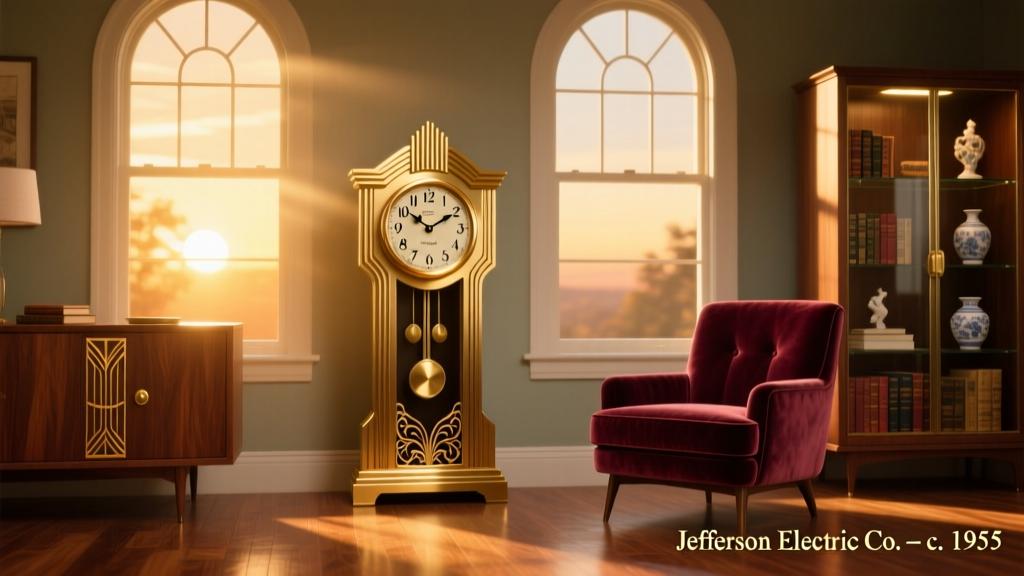
The Jefferson Electric Co. 'Mystery Golden Hour' Clock: Design, Mechanics, and Restoration of a Mid-Century American Icon (c. 1955)