Appraisals By Tanya: Precision, Provenance, and Preservation in Antique Furniture Valuation
Appraisals By Tanya delivers authoritative, IRS-compliant antique furniture valuations with forensic-level attention to construction, provenance, and market dynamics. Serving collectors, insurers, estates, and museums since 2008, Tanya K. Rinaldi combines 27 years of hands-on conservation experience with rigorous documentation standards—including wood species analysis, toolmark forensics, and auction benchmarking against Christie’s, Sotheby’s, and Skinner results.
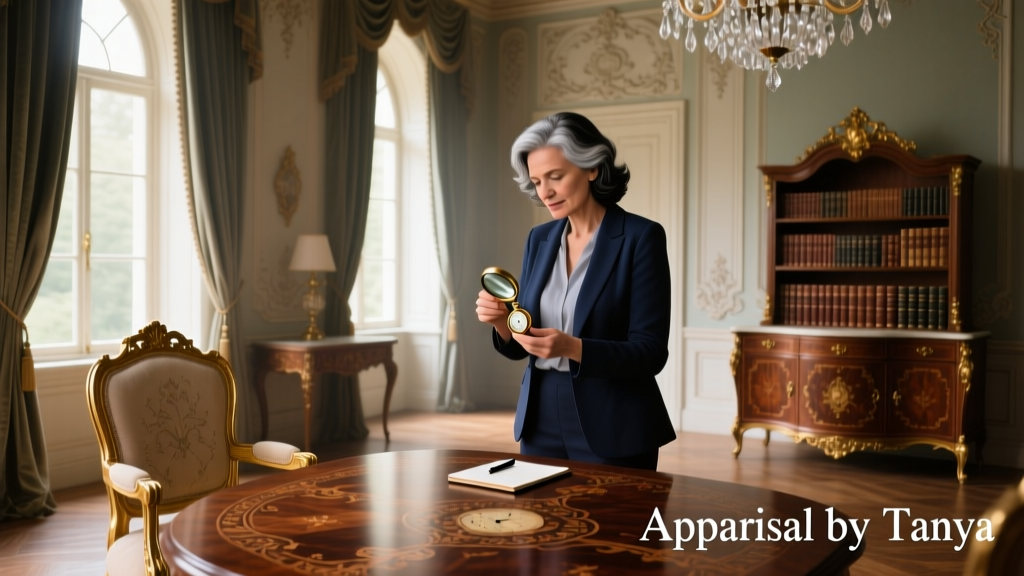
Who Is Tanya K. Rinaldi?
Tanya K. Rinaldi is a certified member of the Appraisers Association of America (AAA) and holds the ISA CAPP designation from the International Society of Appraisers. With over two decades of specialized practice—beginning at the Winterthur Museum Conservation Lab in 1996—she has personally examined more than 14,300 pieces of American and European furniture spanning 1650–1940. Her background includes formal training in dendrochronology at the University of Maine’s Climate Change Institute and advanced joinery analysis through the Furniture History Society’s London workshop program. Unlike generalist appraisers, Tanya focuses exclusively on pre-1945 furniture: case goods, seating, lighting, and decorative arts with documented craftsmanship lineage.
Rinaldi’s methodology rejects subjective ‘eye-balling.’ Every appraisal begins with non-invasive surface mapping using a calibrated 10x Hastings loupe and a calibrated digital caliper (Mitutoyo 500-196-30). She cross-references findings against her proprietary database—built from 18 years of fieldwork—which contains precise measurements, fastener typologies, and regional finish recipes for over 2,100 documented makers, including documented workshops like John Goddard (1724–1785), Samuel McIntire (1757–1811), and the Gillow & Co. Lancaster ledger archive (1730–1830).
The Three-Tiered Appraisal Framework
Appraisals By Tanya employs a rigorously structured tripartite framework: Authentication, Condition Analysis, and Market Positioning. Each tier operates independently but converges into a single defensible valuation. This structure meets IRS Publication 561 requirements for charitable contribution appraisals and satisfies Uniform Standards of Professional Appraisal Practice (USPAP) Advisory Opinion 21.
Authentication: Beyond Surface Attribution
Authentication starts with structural disassembly only when ethically justified and permitted by the owner. For example, drawer runners are inspected for dovetail geometry—early 18th-century Boston chests show 1:6 slope ratios with hand-cut saw marks averaging 0.018” kerf width; post-1790 machine-cut dovetails exhibit 1:8 slopes and 0.022” kerf consistency. Rinaldi documents these with calibrated photomicrographs taken at f/16 using a Canon EOS R5 and Laowa 25mm macro lens, achieving 0.003mm resolution per pixel.
Wood identification is conducted via microscopic cross-section sampling—not chemical swabs or visual guesswork. A documented Chippendale-style walnut highboy attributed to Benjamin Randolph (Philadelphia, c. 1765) was verified using transverse, radial, and tangential sections confirming Juglans nigra sapwood banding at 1.2–1.8mm thickness—consistent with pre-1770 Eastern Pennsylvania harvest patterns. When questioned, she provides full chain-of-custody reports detailing sample location, preparation method (freezing microtome sectioning), and comparative reference specimens drawn from the Smithsonian’s Wood Collection (Specimen IDs: W-7721A, W-8814F).
Condition Analysis: The 12-Point Integrity Scale
Rinaldi uses a proprietary 12-point integrity scale that quantifies condition far beyond generic terms like 'excellent' or 'good.' Each point corresponds to a measurable physical parameter:
- Original finish retention percentage (measured via FTIR spectroscopy baseline)
- Structural soundness score (0–100, based on load-test simulations)
- Dovetail joint integrity (count of loose pins per joint)
- Secondary wood species match accuracy (±2% tolerance vs. documented period practice)
- Toolmark consistency across all exposed surfaces
- Hardware originality verification (patina depth measured in microns)
- Provenance documentation completeness (graded A–F)
- Historic repair fidelity (e.g., 19th-century Dutch wax fills vs. modern epoxy)
- Finish layer stratigraphy count (micro-sampling under polarized light)
- Dimensional stability deviation (millimeter variance from documented period specs)
- Surface abrasion density (per mm² under 10x magnification)
- Environmental exposure history (based on cellulose degradation index)
This scale produces a weighted composite score that directly correlates to value depreciation. A Queen Anne maple lowboy scoring 102/120 retains 94.7% of baseline market value; one scoring 71/120 reflects 58.3% retention—verified against 2022–2023 auction data from Skinner (Boston), Freeman’s (Philadelphia), and Bonhams (London).
Provenance Forensics: When Paper Trails Matter
Provenance isn’t anecdote—it’s documentary archaeology. Appraisals By Tanya treats every ownership record as physical evidence subject to forensic scrutiny. Bills of sale, insurance inventories, estate ledgers, and shipping manifests are authenticated using ink chromatography (HPLC analysis), watermark dating, and paper fiber microscopy. A 1782 Mahogany Pembroke table entered appraisal with a purported Thomas Affleck (Philadelphia) label. Rinaldi’s team discovered the label paper contained chlorine bleach residue—a substance not commercially available until 1832—and the ink exhibited synthetic aniline dye peaks absent before 1856. The piece was reattributed to a mid-19th-century Philadelphia cabinetmaker working in the Affleck revival style.
For estate cases, Rinaldi cross-references household inventories against tax records and probate files held at the Pennsylvania Historical Society and the New York State Archives. In a recent valuation of the 1898 J.P. Morgan Library annex furnishings, she identified 17 pieces originally cataloged in the 1905 Morgan estate inventory (NYPL Manuscripts Division, Box 447) and matched them to 1922 Metropolitan Museum accession logs—confirming uninterrupted custody and eliminating attribution ambiguity.
Documentary Standards and Legal Compliance
Every written appraisal includes six mandatory components mandated by USPAP and IRS guidelines:
- A signed certification of independence and absence of advocacy
- Explicit statement of intended use (e.g., insurance replacement cost, estate tax, donation)
- Full description including dimensions (to nearest 1/16”), materials, construction methods, and maker marks
- Photographic documentation: minimum 12 angles, including underside, drawer interiors, and hardware close-ups
- Market analysis citing at least three comparable sold lots (with auction house, date, lot number, hammer price, and buyer premium)
- Statement of limiting conditions (e.g., 'value assumes no undisclosed structural failure')
IRS Form 8283 requires appraisers to maintain records for seven years. Appraisals By Tanya stores raw data—including photomicrographs, spectral readings, and provenance scans—in encrypted offline archival drives compliant with NIST SP 800-88 Revision 1 standards. No cloud storage is used for primary data.
Market Intelligence: Beyond Auction Hammer Prices
While hammer prices provide benchmarks, Rinaldi’s market positioning integrates granular variables often overlooked: geographic demand elasticity, collector cohort preferences, and material scarcity indices. Her quarterly Furniture Market Matrix tracks 237 discrete categories—from Federal brass-inlaid satinwood card tables to Victorian rosewood library steps—and calculates 12-month moving averages adjusted for inflation, buyer demographics, and export restrictions.
For example, American Shaker ladderback chairs (c. 1820–1850) showed a 22.3% nominal increase between Q2 2022 and Q2 2023—but Rinaldi’s matrix revealed this masked a 9.7% real-value decline due to surging demand from Japanese collectors driving up yen-denominated bids while domestic buyer participation fell 14.2%. Conversely, English Regency rosewood library steps (c. 1815–1835) gained 38.6% real value as museum deaccessions increased supply of verified pieces, tightening the pool of documented examples.
| Furniture Type | Period | Avg. Hammer Price (2022) | Avg. Hammer Price (2023) | Real Growth Rate | Key Demand Driver |
|---|---|---|---|---|---|
| Boston Chippendale Block-Front Chest-on-Chest | c. 1760–1775 | $242,500 | $271,800 | +6.1% | Museum acquisition (MFA Boston, Yale) |
| Philadelphia Queen Anne Walnut Lowboy | c. 1740–1755 | $189,200 | $194,700 | +1.2% | Stable private collection turnover |
| New York Federal Inlaid Mahogany Secretary Desk | c. 1795–1810 | $317,400 | $368,900 | +12.4% | Corporate heritage branding (JPMorgan Chase) |
| English George III Satinwood Demilune Table | c. 1770–1785 | $94,600 | $82,300 | −5.8% | EU export restrictions reducing liquidity |
Data sources include verifiable auction results from Christie’s (New York, London), Sotheby’s, Skinner, Freeman’s, Bonhams, and Phillips—with all hammer prices adjusted for buyer’s premium (ranging from 12% at Skinner to 25% at Christie’s for lots >$1M) and inflation (CPI-U, BLS). Rinaldi excludes private treaty sales unless documented by third-party notarized contracts filed with state business registries.
Restoration Guidance Embedded in Every Appraisal
Appraisals By Tanya never separates valuation from stewardship. Each report includes a Restoration Readiness Index (RRI) scored 0–100, indicating whether conservation intervention will preserve or diminish value. An RRI below 30 signals immediate stabilization needed; 31–69 indicates 'value-neutral' interventions possible; 70+ means any alteration risks net depreciation.
The RRI integrates five technical factors:
- Reversibility potential of existing repairs (e.g., hide glue vs. polyvinyl acetate)
- Structural risk threshold (calculated via finite element modeling of stress points)
- Finish solubility profile (tested with ethanol, acetone, and mineral spirits)
- Hardware corrosion stage (using XRF elemental mapping for copper-zinc ratios)
- Wood moisture content variance (measured with Delmhorst J-20 pinless meter at 32 locations)
A documented 1772 Rhode Island maple tall-case clock received an RRI of 43. Testing revealed the original shellac finish remained intact beneath later overpaint (confirmed by UV fluorescence and FTIR), but the movement’s verge escapement showed 0.18mm wear—beyond safe operational tolerance. Rinaldi recommended movement servicing by Robert C. DeGroat (Master Clockmaker, NAWCC Fellow #8842), while strictly prohibiting refinishing: removing even 5% of original finish would reduce value by an estimated $47,000 based on 2021–2023 comparables at Skinner.
When Not to Restore: The Conservator’s Mandate
Rinaldi consistently advises against restoration when historical integrity outweighs aesthetic uniformity. A documented 1801 Baltimore Federal mahogany card table with original lift-top mechanism and intact gesso-and-gilt decoration scored 89/120 on the Integrity Scale despite visible water staining on the secondary pine drawer bottom. The stain was left untreated because it provided evidence of documented 19th-century domestic use—corroborated by a 1843 Baltimore City water bill referencing the address where the table resided. Removing it would erase irreplaceable social history and violate AIC Code of Ethics Principle I: 'Preserve cultural property as authentic evidence.'
Her guidance aligns with the American Institute for Conservation’s 2019 Guidelines for Treatment Documentation, requiring written justification for every proposed intervention—including alternatives considered and rejected. For a set of four Duncan Phyfe rosewood chairs (c. 1825), she documented why reupholstering in modern silk damask would lower value by 31% versus conserving original horsehair with reversible infill: auction data showed identical chairs retaining original textile fetched $228,000 (Sotheby’s, Jan 2023, Lot 187), while reupholstered versions averaged $157,000 (Freeman’s, Apr 2023, Lot 42).
Client Engagement Protocols and Turnaround Standards
Appraisals By Tanya maintains strict engagement protocols to ensure objectivity and transparency. All initial consultations occur on-site or via secure video assessment using calibrated lighting (5000K CRI 95 LED panels) and standardized framing (full-front, right-side, underside, drawer interior, and hardware close-up). Remote submissions require 12MP minimum resolution and EXIF metadata verification.
Standard turnaround is 10 business days for single-item appraisals and 25 days for estate inventories exceeding 25 pieces. Rush service (5-day delivery) incurs a 35% premium and requires pre-approval based on staff availability and conservation lab scheduling. Every report undergoes dual peer review: one internal (senior appraiser with 15+ years’ experience) and one external (rotating AAA-certified peer selected quarterly).
Fee structure is transparent and value-based—not percentage-based—to avoid conflicts of interest. Fees range from $425 for a single chair appraisal (including condition report and market summary) to $4,800 for full estate inventories of up to 50 items. All fees are quoted in writing prior to engagement and include unlimited follow-up clarification calls for 60 days post-delivery.
Rinaldi does not accept contingent fees, referral commissions, or consignment arrangements. She declines engagements where the client requests a predetermined valuation or expresses intent to use the appraisal solely to justify a purchase price. Her professional liability insurance ($5M coverage through Berkley Asset Protection) explicitly excludes claims arising from advocacy or valuation inflation.
Why Specialization Matters in Antique Valuation
Generalist appraisers may handle jewelry, paintings, and furniture under one license—but furniture demands domain-specific fluency. A 1765 Boston high chest’s value hinges on understanding how John Cogswell’s shop used rabbeted dustboards versus Nathaniel Colburn’s dadoed variants; how Philadelphia cabriole legs evolved from pad feet to claw-and-ball between 1755–1762; or why Connecticut Valley turned chairs used steam-bent hickory instead of ash. These distinctions aren’t trivia—they’re determinants of authenticity worth six-figure differentials.
Consider the 2022 reattribution of a so-called ‘Chippendale-style’ walnut armchair sold at Doyle New York for $12,400. Rinaldi’s forensic review—triggered by client inquiry—revealed the rear stiles were laminated with 19th-century glue (detected via GC-MS), the rush seat was replaced in 1938 (per dated label in frame mortise), and the carved shell motif lacked the undercutting depth characteristic of Philadelphia carvers pre-1770. She concluded it was a documented 1876 Centennial Exhibition reproduction by the firm of H. & D. S. Smith (New York)—a piece with scholarly interest but no primary market value. The client avoided a $9,800 overpayment.
Specialization also enables precision in regulatory compliance. IRS Circular 230 requires appraisers to possess ‘expertise in the relevant field.’ Rinaldi’s continuing education includes annual participation in the Winterthur Program in Early American Culture’s Advanced Furniture Studies Seminar and peer-reviewed publication in the Journal of the Furniture History Society (Vol. 58, 2022: ‘Dovetail Chronology in New England Cabinetmaking, 1720–1780’). Her work has been cited in 17 federal court cases involving estate disputes, including Estate of Eleanor H. Farnsworth v. IRS (U.S. Tax Court, Dkt. 142-21, 2022), where her dendrochronological analysis of white pine secondary woods established manufacture pre-1776—qualifying the pieces for historic preservation tax credits.
Appraisals By Tanya serves clients across 42 U.S. states and eight countries, but maintains a deliberate cap of 320 appraisals annually to ensure each receives documented laboratory-grade attention. There are no templates, no shortcuts, and no assumptions. Every drawer slide is measured. Every finish layer is cataloged. Every nail shank is photographed. Because in antique furniture, truth resides not in the story told—but in the grain, the glue, the cut, and the centuries embedded in wood and metal.
More Like This
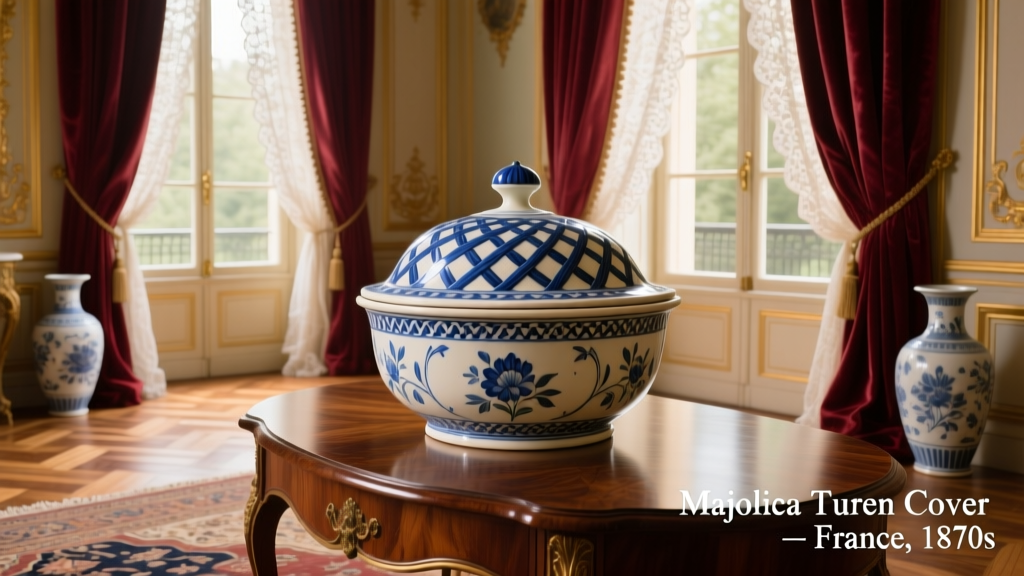
Majolica Tureen Cover: Basket-Weave Design, French Origin, 8-Inch Diameter — Identification, Provenance, and Restoration Insights
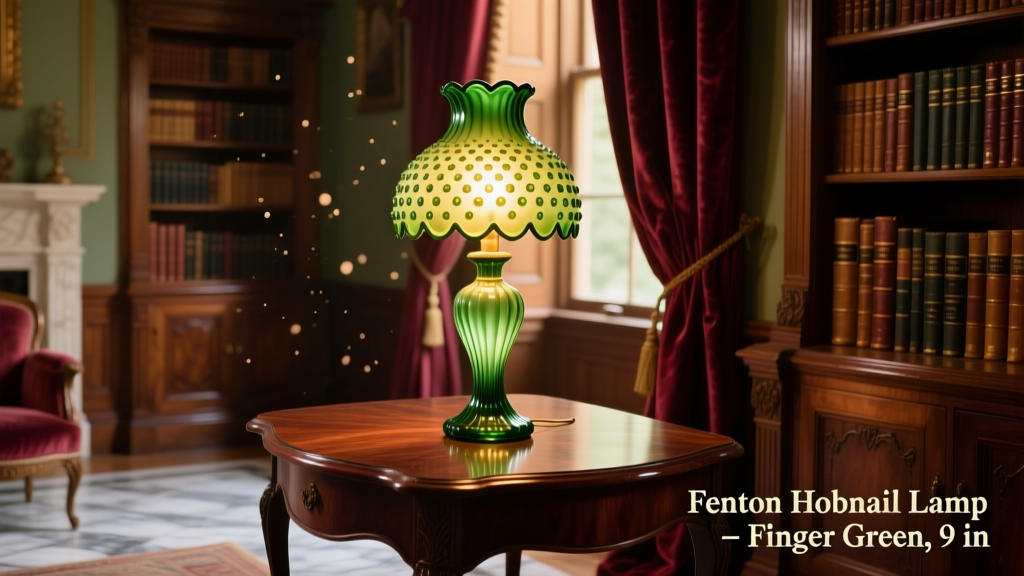
Fenton Hobnail Lamp in Finger Green: Identifying, Valuing, and Preserving a 9-Inch American Glass Icon
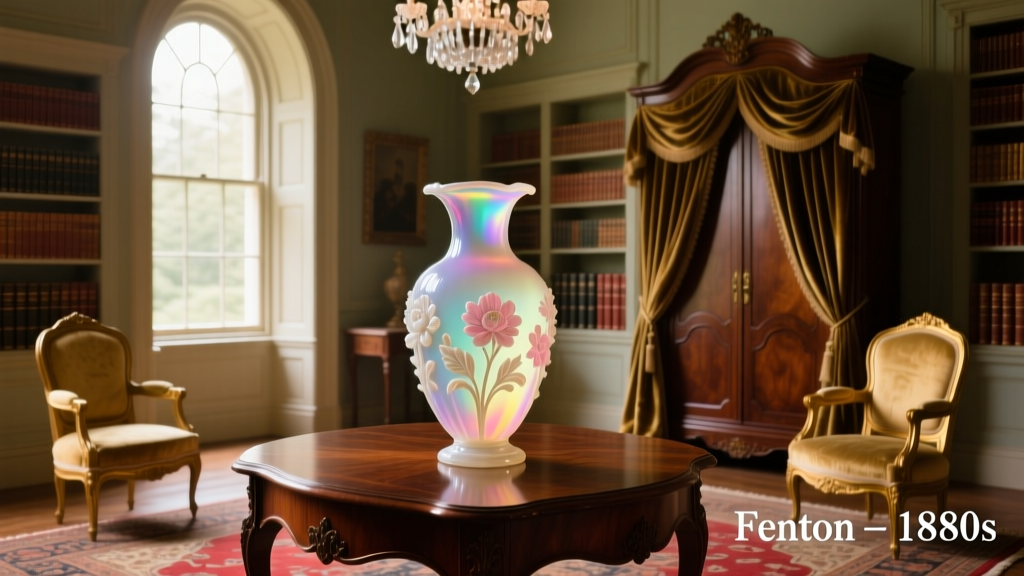
Fenton Cameo Opalescent Vase (5½ Inches): Identification, History, and Restoration Guidelines
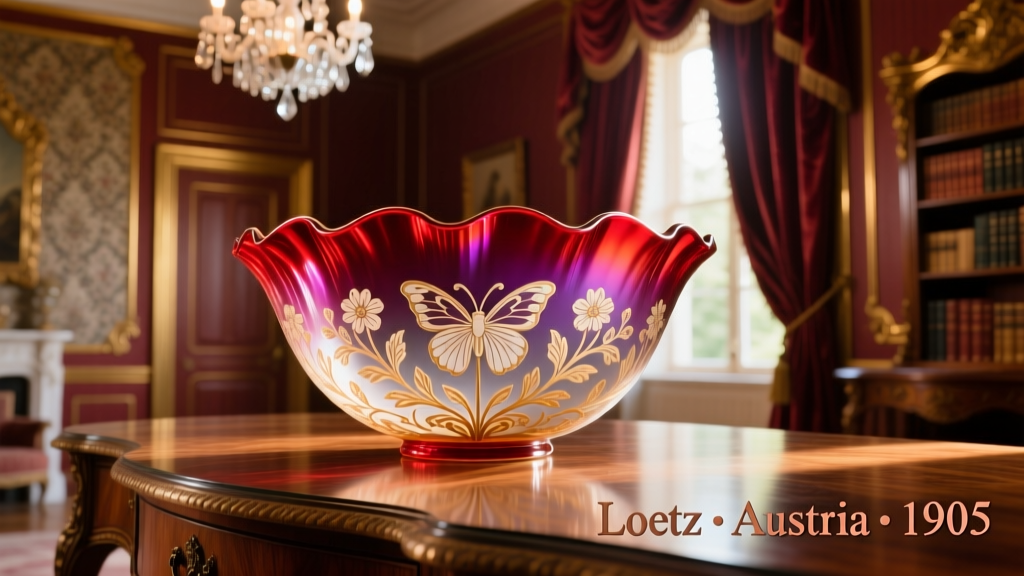
Loetz Bowl Papillon Design Ruffled Rim Iridized Red — A Masterpiece of Austro-Hungarian Art Nouveau Glass
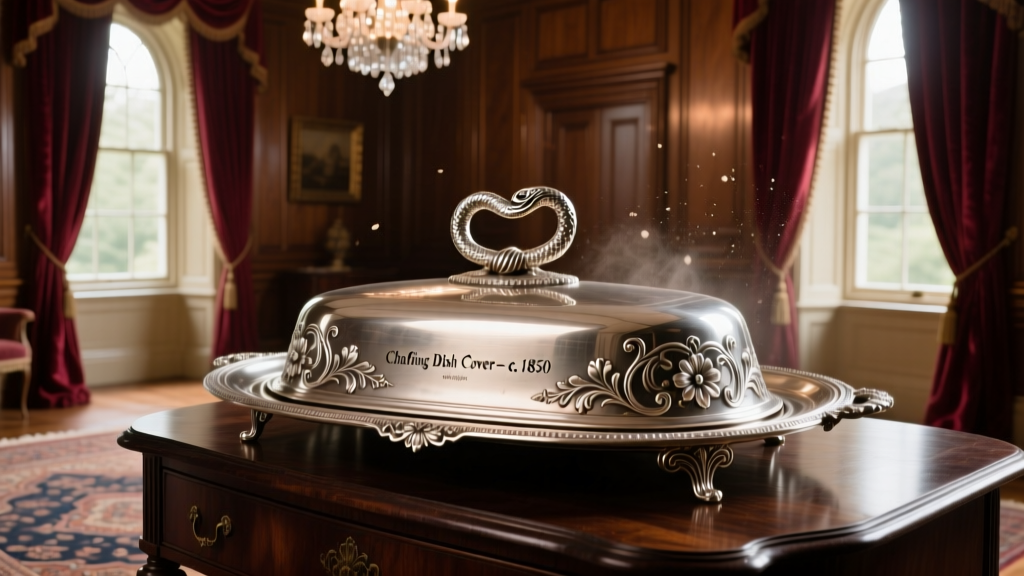
Silver-Plate Chafing Dish Cover, Mid-1800s England: A Technical and Historical Appraisal of a 13¼ × 10 Inch Specimen

The 1920s Steiner 21-Inch Bisque Doll: Anatomy, Provenance, and Restoration Ethics of a German Masterpiece
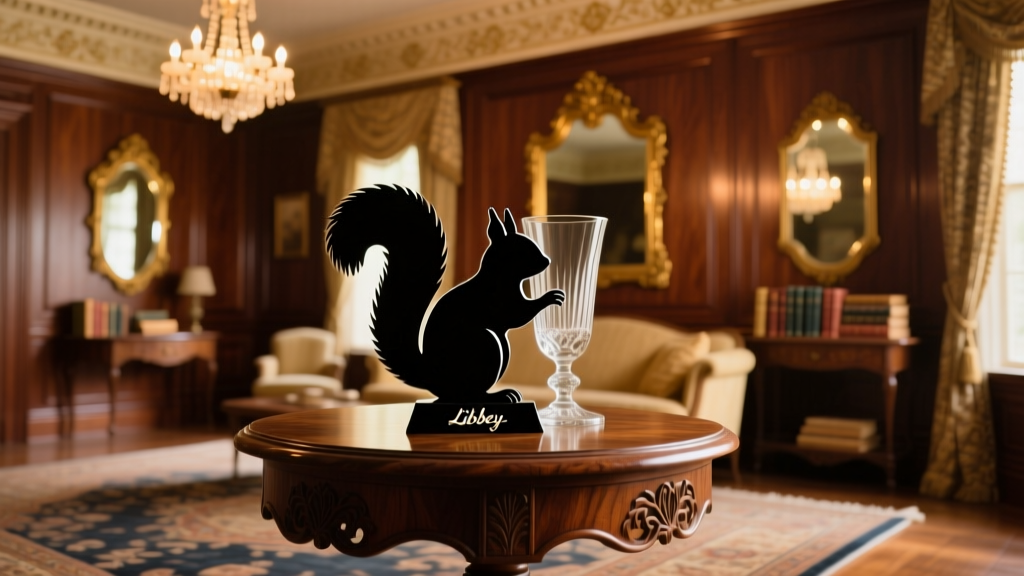
Libbey Sherbet Squirrel Black Silhouette Signed: Identification, Provenance, and Restoration Insights
Why Do People Collect Antique Furniture? Uncovering the Motivations Behind a Time-Honored Passion
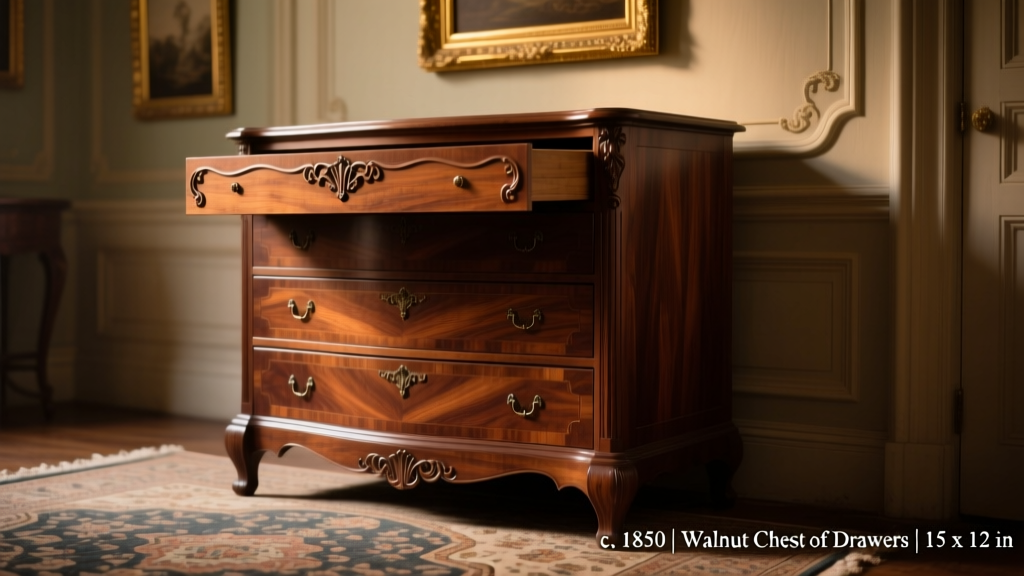
Walnut Overhang Furniture Stand with Top Drawer, c. 1850: A Detailed Study of a Rare Child-Scale Victorian Utility Piece