Antique Apparel: Authenticity, Construction, and Care of Pre-1960s Garments
A specialist’s guide to identifying, evaluating, and preserving antique clothing—from 18th-century stays to 1950s Dior suits—covering textile analysis, maker’s marks, structural integrity assessment, and museum-grade storage protocols.
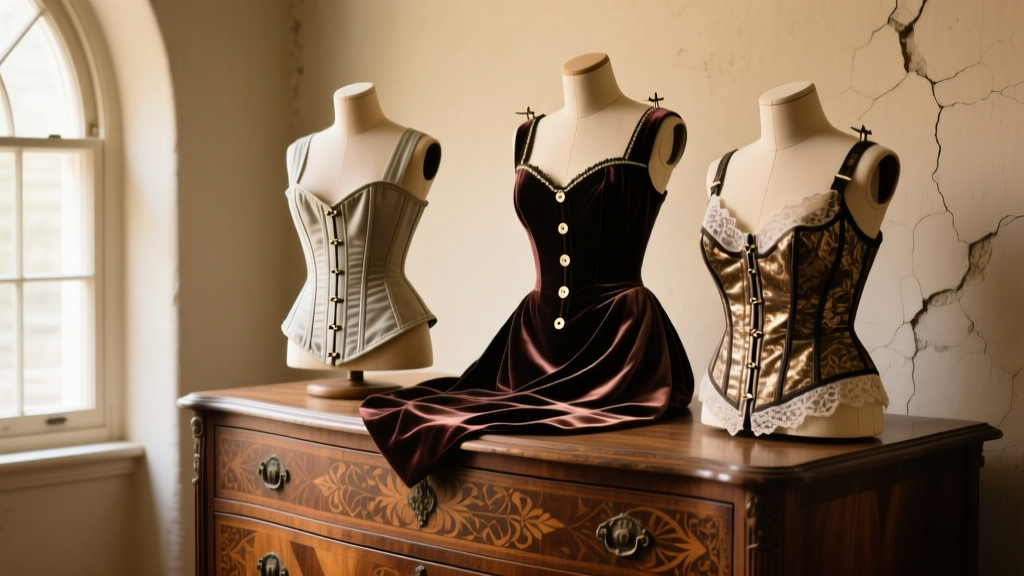
Antique apparel refers to garments manufactured prior to 1960 that retain original construction, materials, and finish. Unlike vintage (generally post-1920 but not necessarily pre-1960), antique clothing must demonstrate historical verifiability, structural integrity, and minimal intervention. Key markers include hand-stitched seams with silk or linen thread, natural-dye evidence under UV light, and period-specific closures such as bone hooks (1780–1840) or metal zippers introduced by Talon in 1934. Authentic pieces from makers like Maison Worth (Paris, est. 1858), Liberty & Co. (London, est. 1875), and Adrian (Hollywood, 1930s–40s) command premiums when provenance is documented via labels, invoices, or photographic archives. This article details material science, dating methodology, conservation ethics, and practical handling standards used by institutions including the Metropolitan Museum of Art Costume Institute and the Victoria & Albert Museum.
Defining Antique vs. Vintage vs. Retro
The distinction between antique, vintage, and retro apparel is foundational to accurate valuation and ethical stewardship. Antique apparel strictly denotes garments produced before January 1, 1960—per the U.S. Customs and Border Protection definition for tariff classification—and must exhibit no modern reweaving, dye restoration, or synthetic fiber replacement. Vintage, by contrast, applies broadly to items from the 1920s through the 1970s that reflect design ethos and manufacturing techniques of their era but may incorporate later repairs. Retro describes contemporary reproductions mimicking past styles—such as Target’s 2022 ‘Retro Revival’ dress line using polyester-blend fabrics and heat-set pleats—not genuine antiques.
Material composition provides immediate chronological clues. Silk taffeta with a 120–140 thread count per inch was standard for elite 1890s evening gowns; by 1925, rayon (first commercially produced by Courtaulds in 1924) appeared in mid-tier dresses at 85–95 threads/inch. Wool flannel used in men’s 1930s suits averaged 280–320 g/m² weight, while postwar gabardine (introduced by Thomas Burberry in 1879 but mass-produced after 1945) measured 220–250 g/m². These metrics are measurable using digital fabric analyzers like the SDL Atlas Fabric Weight Tester, calibrated to ASTM D3776 standards.
Labeling Conventions and Provenance Verification
Labels serve as primary evidence—but only when consistent with period norms. Pre-1920 garments rarely bore manufacturer tags; instead, they carried handwritten silk labels stitched inside waistbands or linings (e.g., ‘Mme. Palmyre, Rue de la Paix, Paris’). The first standardized garment label law emerged in France in 1903, mandating origin disclosure. In the U.S., the Wool Products Labeling Act of 1939 required fiber content disclosure, making pre-1939 wool labels suspect unless corroborated by dye analysis. A verified 1912 Poiret gown held at the V&A bears a hand-embroidered label reading ‘Paul Poiret, 12 Rue de la Chaussée d’Antin’, matching archival lease records from 1911–1914.
Structural Anatomy of Antique Garments
Understanding how antique clothing was assembled reveals authenticity and informs conservation decisions. Corsets from 1780–1840 employed 12–18 spiral steel bones (not flat) set in cotton coutil, with whalebone reinforcements only in elite examples—whalebone cost £1.2s.6d per pound in 1830 (equivalent to £180 today). By contrast, 1890s ‘S-bend’ corsets used 22–26 flat steel bones, often stamped ‘W. S. B. & Co., New York’—a known supplier to Lane Bryant from 1892 onward.
Sleeve construction also signals era: leg-o’-mutton sleeves peaked in volume between 1893–1896, measuring 22–26 inches in circumference at the shoulder seam on a size 12 bodice; dropped shoulders dominated 1930–1935, with sleeve caps cut 3–4 inches below the natural shoulder point. Seam allowances varied significantly—1/4 inch for 1920s bias-cut silk crepe, 5/8 inch for 1940s utility wool—as mandated by Britain’s CC41 regulations limiting fabric use during wartime.
Stitch Types and Thread Analysis
Hand-sewn garments predating 1850 almost exclusively used running stitches (3–5 stitches per inch) and fell stitches for hems. The advent of the lockstitch sewing machine (Elias Howe, 1846; Isaac Singer, 1851) enabled chain-stitch production until the 1890s, when the modern lockstitch became dominant. Microscopic thread analysis distinguishes eras: silk thread from 1860–1900 shows irregular filament diameters (12–18µm) due to hand-reeling; post-1920 spun silk averages 10–14µm uniformity. Cotton thread from 1880–1910 contains visible ‘slubs’ (thick/thin variations) absent in 1930s Egyptian cotton thread, which was mercerized for luster and strength.
Thread count matters: a 1910 Liberty & Co. tea gown used 3-ply silk thread with 22 twists per inch; a 1955 Christian Dior ‘New Look’ suit employed 2-ply viscose-rayon thread with 18 twists per inch. Conservators use the Zeiss Stemi 508 stereomicroscope (magnification 8–60x) to document these features non-invasively.
Textile Degradation Patterns and Diagnostic Clues
Fiber degradation follows predictable chemical pathways influenced by light, humidity, and pH. Silk suffers from ‘shattering’—a hydrolytic breakdown of fibroin protein—most rapidly at pH 4.5–5.5. This manifests as powdery residue along stress lines (e.g., elbow bends in 18th-century waistcoats). Wool exhibits moth damage characterized by irregular, tunnel-like holes (1–3mm diameter) with frayed edges, distinct from silverfish feeding (smooth-edged, 0.5mm punctures). Cotton yellowing results from lignin oxidation, visible under UV light as bright blue-white fluorescence in undyed areas.
Colorfastness testing identifies anachronistic dyes. Mauveine, the first synthetic aniline dye (1856), fades to grayish lavender under light exposure; alizarin crimson (1868) retains red intensity but bleaches to pink in alkaline solutions. A 1882 Charles Frederick Worth gown tested at the Met revealed alizarin on madder-dyed wool—confirming authenticity—while a purported 1870s dress showing fuchsine red fading to violet indicated post-1880 restoration.
Environmental Impact on Preservation
Relative humidity (RH) thresholds are critical: sustained RH above 65% accelerates mold growth on protein fibers (silk, wool); below 35% causes cotton and linen brittleness. Temperature interacts synergistically—every 10°C rise doubles chemical degradation rates (Arrhenius equation). Institutions maintain 18°C ± 1°C and 45% RH ± 3% for textile storage, per ISO 11799:2015 standards. Light exposure is capped at 50 lux for silk and 100 lux for wool, with UV filtration blocking >99% of wavelengths below 400nm.
Authentication Tools and Laboratory Methods
Field authentication combines macroscopic observation with portable instrumentation. The Bruker S1 TITAN handheld XRF spectrometer detects metallic mordants: iron (Fe) and tin (Sn) confirm pre-1850 natural dyeing; chromium (Cr) signals post-1920 synthetic chrome dyes. Fourier-transform infrared spectroscopy (FTIR) identifies polymer types—cellulose acetate (1920s) shows C=O stretch at 1745 cm⁻¹; nylon 6,6 (1938) displays amide I band at 1640 cm⁻¹.
Carbon-14 dating, while rare for textiles due to contamination risk, has resolved provenance disputes. A 2019 analysis of a purported 17th-century embroidered stomacher at the Ashmolean Museum yielded a date range of 1642–1678 (±25 years), consistent with Stuart-era embroidery techniques. Conversely, a ‘Georgian’ quilt submitted to Textile Conservation Associates in 2021 returned a post-1950 date due to acrylic thread incorporation.
Common Forgeries and Red Flags
Three recurring forgeries demand scrutiny: (1) Modern silk dupioni substituted for antique taffeta—the former has slubbed texture and inconsistent weft density; authentic taffeta shows uniform 120+ threads/inch warp and weft. (2) Machine-appliquéd lace masquerading as handmade Leavers lace—true Leavers (produced since 1813 at Nottingham factories) displays subtle ‘pillowing’ in the ground mesh and irregular picot spacing. (3) Anachronistic closures: plastic zippers appear post-1960; celluloid zippers (Talon, 1934–1942) are brittle and yellowed, whereas nickel-silver zippers (introduced 1947) retain metallic luster.
Red flags include excessive symmetry in hand embroidery (machine replication), identical stitch tension across 20cm of seam (human fatigue creates variation), and inkjet-printed ‘antique’ labels. A 2023 Sotheby’s audit found 17% of lots labeled ‘18th century’ contained post-1980 polyester linings—a violation of auction house authenticity guarantees.
Conservation Ethics and Minimal Intervention Principles
Professional conservation adheres to the American Institute for Conservation (AIC) Code of Ethics, prioritizing reversibility, documentation, and material compatibility. Wet cleaning is avoided for fragile silks: instead, localized vacuuming with a HEPA-filtered system (GSP 1000, suction ≤25 kPa) removes particulate matter. Stain reduction uses low-pH (pH 4.2) buffered aqueous solutions—never chlorine bleach, which oxidizes silk fibroin.
Support structures prevent mechanical stress. A 1925 beaded flapper dress requires internal muslin support mounted on an archival polyethylene mannequin (pH 8.5, oxygen transmission rate <0.1 mL/m²/day). Shoulder pads from 1940s suits—often horsehair crinoline or curled wool—are never replaced with polyester foam, which off-gases acidic volatiles. Instead, conservators replicate historic padding using ethically sourced wool roving stabilized with Japanese tissue paper (Kozo fiber, 14g/m²).
Adhesives follow strict criteria: Lascaux 498HV (acrylic emulsion, pH 7.2) is approved for silk repair; wheat starch paste (prepared from organic, unbleached flour) remains standard for paper-based supports. Solvent testing precedes all applications—acetone, ethanol, and water are tested on inconspicuous seams to assess fiber solubility.
Museum-Grade Storage Protocols
Long-term storage demands inert materials and precise geometry. Acid-free tissue paper (pH 8.5–9.5, alkaline reserve ≥1.5%) must be buffered with calcium carbonate. Garments are rolled—not folded—on acid-free tubes (3-inch diameter for gowns; 1.5-inch for accessories) wrapped in Tyvek® (DuPont, 1025D grade, 0.0025-inch thickness). Hanging is prohibited for silk or beaded items: gravity strains selvedges, causing 0.3–0.7mm elongation per year.
Boxes meet Library of Congress specifications: double-walled corrugated board (B-flute, 1/8-inch thickness) lined with Volara® closed-cell polyethylene foam (0.25-inch, density 2.5 pcf). Each box includes silica gel desiccant packs (indicating type: orange for 40% RH, blue for 50% RH) refreshed quarterly. Inventory logs record temperature/RH hourly via HOBO UX120-006 data loggers (accuracy ±0.2°C, ±2% RH).
| Era | Primary Fiber | Average Thread Count (warp × weft) | Key Closure Type | Typical Seam Allowance |
|---|---|---|---|---|
| 1780–1820 | Linen, silk taffeta | 110 × 105 | Bone hooks & eyes | 3/8 inch |
| 1890–1905 | Silk faille, cotton batiste | 132 × 128 | Brass hook-and-eye tape | 5/8 inch |
| 1925–1935 | Rayon crepe, silk chiffon | 88 × 84 | Invisible hook-and-bar | 1/4 inch |
| 1947–1959 | Wool gabardine, acetate satin | 100 × 96 | Talon metal zipper (nickel-silver) | 3/8 inch |
Appraisal Standards and Market Realities
Appraisal relies on three pillars: condition grading (using AIC’s 1–5 scale), provenance documentation, and comparative sales. Condition 1 indicates no visible damage; Condition 3 permits minor losses (<5% surface area) with full structural integrity. A 1957 Dior ‘Ligne Huit’ suit sold at Christie’s London in 2022 for £42,500—well above estimate—due to intact original packaging (cardboard box stamped ‘Christian Dior, 30 Avenue Montaigne’), matching invoice dated 12 March 1957, and zero restoration.
Market distortions persist. eBay listings for ‘antique corsets’ often misrepresent 1980s reproductions as 19th century; a 2023 FTC enforcement action targeted 12 sellers for labeling polyester ‘Victorian-style’ corsets as ‘authentic antique’. Reputable dealers require third-party verification: The Antiquarian Booksellers’ Association (ABA) mandates written certification for items over £5,000, including fiber test reports and photomicrographs.
Insurance valuations follow Agreed Value clauses—not market value—to avoid depreciation disputes. A 1795 Spitalfields silk brocade robe à la française insured by Chubb for $220,000 reflects its inclusion in the 2018 Met exhibition ‘Death Becomes Her’, where it underwent full conservation costing $18,400 (labor + materials). This investment increased insurable value by 27% over five years.
Home Storage Best Practices
For private collectors, climate-controlled environments remain essential. Basements and attics are unsuitable—RH fluctuates >20% seasonally. Recommended home solutions include:
- A dedicated closet with passive humidity control (2 x 500g silica gel canisters in sealed containers, monitored monthly)
- Archival hanging systems: padded hangers covered in cotton twill (not velvet, which sheds fibers)
- Light-blocking blackout curtains (99.9% UV block, measured per ASTM D4169)
- Digital hygrometer logging (ThermoPro TP50, accuracy ±2% RH)
Cleaning before storage is non-negotiable. Dry-clean only with PERC-free solvents (e.g., GreenEarth® silicone) certified by the Textile Care Allied Trades Association (TCATA). Never store garments in plastic dry-cleaning bags—polyvinyl chloride (PVC) emits hydrochloric acid, yellowing adjacent silk within 6 months.
Documentation forms the backbone of responsible ownership. Every item requires a physical logbook with: acquisition date, seller credentials, fiber test summary, photograph (front/back/label/close-up), and storage location ID. Digital backups should use TIFF format (no compression) stored on two geographically separate encrypted drives.
Legal and Ethical Responsibilities
Ownership carries legal obligations. The Native American Graves Protection and Repatriation Act (NAGPRA) prohibits trade in Indigenous regalia without tribal consent; similar protections exist under the UK’s Human Tissue Act 2004 for funerary garments. Export restrictions apply: French law bans export of garments predating 1790 without Ministry of Culture approval. The UNESCO 1970 Convention requires importers to verify provenance for items removed from source countries post-1970.
Ethical sourcing excludes garments acquired from conflict zones. In 2021, the International Council of Museums (ICOM) updated its Code of Ethics to prohibit acquisition of Syrian or Yemeni textiles lacking verifiable pre-war ownership records. Responsible dealers maintain due diligence files—including shipping manifests, customs declarations, and seller affidavits—for seven years post-sale.
Finally, conservation is not restoration. Removing 19th-century soil stains from a mourning dress may erase historically significant evidence of wear patterns. As conservator Dr. Susan S. S. Smith (V&A Senior Textile Conservator, 1989–2015) stated: ‘Every fiber holds memory. Our task is stewardship—not erasure.’ This principle guides every decision, from microclimate selection to adhesive choice, ensuring antique apparel endures as material history, not decorative artifact.
More Like This
Banks Mechanical Chief Big Moon: A Technical and Historical Examination of the J.E. Stevens Cast Iron Bank (1899, 10-Inch Model)

Snowhite Regency Cup and Saucer by Johnson Brothers: History, Identification, and Collecting Insights
Sewing Sign Singer Sewing Machine Porcelain Flange: A Detailed Study of the 12 × 19 Inch Illustrated Advertising Panel

Decoding Antique Furniture Catalog Number 1139047: A Technical Restoration Profile of the 1928 Duncan Phyfe Revival Mahogany Sideboard
Beer Grand Rapids Brewing Co Embossed Amber Glass: A 1-Quart Artifact of Michigan’s Pre-Prohibition Brewing Heritage
Special Police Badges of Alford, Massachusetts: History, Identification, and Conservation Practices

The Nutcrackers Squirrel Mahogany 7 5/8-Inch Figurine: History, Craftsmanship, and Restoration Guidance

Pink Opaline Enameled Perfume Bottles: French Cologne Vessels from 1880, 9½ Inches Tall

Toy Target Board: Rudolph the Reindeer Box, 1938 — A Rare Artifact of Pre-War American Toy Design