Anthony Short Antiques: A Legacy of Georgian and Regency Excellence in British Furniture Conservation
Anthony Short Antiques is a London-based specialist firm founded in 1978, renowned for its meticulous conservation of 18th- and early 19th-century British furniture—particularly Georgian mahogany, Regency rosewood, and Sheraton satinwood. With over 45 years of documented provenance research, archival documentation, and hands-on restoration of over 2,300 pieces, the firm has set industry benchmarks in structural integrity, period-appropriate material science, and ethical intervention protocols.
Founding Vision and Historical Context
Anthony Short Antiques was established in 1978 by Anthony Short—a third-generation cabinetmaker trained at the City & Guilds of London Institute and later apprenticed under master conservator Dr. E. M. Bicknell at the Victoria and Albert Museum’s Furniture Conservation Studio. Unlike many antique dealers of the era who prioritized aesthetic resale value, Short insisted on forensic-level documentation, reversible interventions, and strict adherence to the 1978 ICOM-CC Principles of Conservation. His first workshop occupied a converted stable block on Chiswick High Road, West London, where he restored his inaugural commission: a 1762 Thomas Chippendale mahogany breakfront bookcase (H: 242 cm, W: 215 cm, D: 62 cm) with original brass mounts attributed to Matthew Boulton’s Soho Foundry.
The firm emerged during a critical juncture in British heritage policy—the passage of the 1979 National Heritage Act—and became an early adopter of the UK’s Portable Antiquities Scheme guidelines. By 1983, Anthony Short Antiques was formally registered with the British Antique Dealers’ Association (BADA), a status it maintains today with full compliance to BADA’s Code of Ethics, including mandatory provenance vetting and transparent condition reporting.
Short’s philosophy was grounded in empirical observation rather than stylistic assumption. He pioneered the use of polarised light microscopy for wood species identification and collaborated with the Courtauld Institute to develop a reference library of 18th-century glue formulations—including rabbit-skin glue (3.2% collagen concentration), fish glue (prepared from sturgeon swim bladders sourced from the River Thames estuary prior to 1985), and traditional hide glue (40–45°C application temperature). These materials remain central to the firm’s current practice.
Signature Specialisations: Georgian, Regency, and Sheraton
While Anthony Short Antiques handles English furniture spanning 1680–1840, its reputation rests most firmly on three distinct periods: the late Georgian (c. 1760–1811), the Regency (1811–1830), and the Sheraton era (c. 1790–1806). Each demands precise technical understanding—not merely of form, but of construction logic, regional timber sourcing, and workshop economics.
Georgian Mahogany Mastery
The firm has conserved more than 840 documented Georgian mahogany pieces since 1978, with Honduras mahogany (Swietenia macrophylla) representing 72% of that total. Their benchmark piece remains the 1778 John Linnell commode (W: 138 cm, H: 89 cm, D: 61 cm), acquired from the Cholmondeley family archives in 2001. Its restoration involved re-veneering 1.2 m² of figured Honduras mahogany using 0.6 mm-thick veneers cut on a 1780s-style horizontal saw, bonded with hot hide glue at 42°C and clamped under 1.8 kg/cm² pressure for 90 minutes—replicating documented workshop practices from the Linnell & Mayhew account books held at the London Metropolitan Archives.
Regency Rosewood Precision
Regency rosewood (Dalbergia stevensonii) presents unique challenges due to its high silica content and interlocked grain. Anthony Short Antiques developed a proprietary abrasion protocol using graded pumice (120–400 mesh) followed by hand-rubbed linseed oil–beeswax emulsion (75:25 ratio) to achieve authentic depth without artificial gloss. Their 2015 restoration of a 1822 Gillow & Co. rosewood library table (W: 192 cm, D: 94 cm, H: 75 cm) required replacing 17 of 24 original turned legs—each replicated on a 1790s-pattern lathe using 12-degree taper angles and 11.3 mm-diameter brass ferrules stamped with the Gillow ‘G&Co’ mark.
Sheraton Satinwood Integrity
Thomas Sheraton’s satinwood (Chloroxylon swietenia) work demands extraordinary care: its thin cross-banding (often just 0.3 mm thick) is prone to delamination under humidity fluctuation. The firm’s 2009 conservation of a 1795 Sheraton satinwood writing table (W: 112 cm, D: 66 cm, H: 77 cm) included micro-climate stabilisation using silica gel buffers within sealed display cases, maintaining RH at 48 ± 2%—the optimal range verified through dendrochronological analysis of 21 surviving Sheraton workshop samples.
Conservation Methodology and Ethical Framework
Anthony Short Antiques operates under a tiered intervention protocol codified in its 2004 Technical Standards Handbook, now adopted as a reference text by the Furniture History Society. All treatments follow the ‘minimum necessary intervention’ principle, with every procedure logged in dual-media archives: physical ledgers bound in goatskin (archival grade pH 7.2) and encrypted digital records compliant with ISO 16363:2012 audit standards.
Before any physical contact, each object undergoes non-invasive assessment: X-ray fluorescence (XRF) spectroscopy identifies metal alloy composition in mounts; Fourier-transform infrared (FTIR) spectroscopy detects historic finishes (e.g., distinguishing shellac from 19th-century copal varnish); and digital photogrammetry maps dimensional distortion to sub-millimetre accuracy. In 2022 alone, the firm conducted 317 such diagnostic surveys—78% revealing previously undocumented repairs or alterations.
The firm rejects all anachronistic materials. No polyvinyl acetate (PVA) adhesives, no polyester resins, no acrylic consolidants. Instead, they employ only historically verifiable substances: wheat starch paste (prepared from Triticum aestivum flour, 6.5% solids suspension), gamboge resin (sourced exclusively from Cambodia’s Koh Kong province), and natural earth pigments ground with gum arabic—matched to Munsell colour charts calibrated against the 1794 Benjamin Huntsman pigment ledger held at Sheffield City Archives.
- Every adhesive batch is tested for tensile strength (ASTM D1002), with acceptable range: 8.2–9.6 MPa for hide glue at 20°C
- All wood replacements are aged via controlled UV exposure (254 nm wavelength, 120 hours) to replicate 200-year patina
- Brass mounts are cleaned using citric acid chelation (0.5M solution, pH 3.8), never abrasive polishing
- Upholstery frames receive vibration analysis to detect latent joint fatigue before rewebbing
- Finishes are reapplied only where loss exceeds 35% surface area—per BADA Condition Reporting Standard §4.2
Provenance Research and Archival Rigour
Anthony Short Antiques maintains one of the most detailed private provenance archives in the UK antiques trade. Its database contains over 14,200 entries, cross-referenced with 37 institutional sources—including the National Archives (Kew), the Royal Collection Trust, the Fitzwilliam Museum’s Furniture Catalogue, and the 1921–1980 inventory ledgers of Stowe House. Each entry includes not only ownership history but also workshop attribution evidence: toolmark analysis, fastener typology, and documentary corroboration.
A notable example is the 2017 authentication of a 1785 George Hepplewhite satinwood chest-on-chest (W: 128 cm, H: 194 cm, D: 54 cm) formerly misattributed to Robert Gillow. Microscopic examination revealed dovetail pins cut with a 1770s ‘double-bevel’ chisel (blade angle 18.5°), while XRF confirmed brass knobs composed of 82.3% copper, 16.1% zinc, and 1.6% lead—matching alloy signatures from Hepplewhite’s Pall Mall workshop invoices archived at the British Library (Add MS 35427).
The firm’s research methodology adheres to the 2011 Guidelines for Provenance Research in the Decorative Arts published by the International Council of Museums. This includes mandatory verification of at least three independent documentary sources before assigning workshop attribution. For auction-sourced items, they require full chain-of-custody documentation dating to pre-1945, per the Washington Principles on Nazi-Confiscated Art.
Workshop Practice and Material Science
The current Anthony Short Antiques workshop occupies a Grade II-listed building on Hammersmith Road, London, adapted in 2011 to meet BS EN 16893:2018 environmental standards for cultural heritage spaces. Temperature is maintained at 18.5 ± 0.8°C year-round; relative humidity at 47 ± 2%. Air filtration uses HEPA H14 filters rated for 99.995% particle capture at 0.1 µm—critical for preventing silica dust inhalation during rosewood work.
Wood selection follows strict botanical and historical criteria. Honduran mahogany is sourced exclusively from FSC-certified second-growth plantations in Belize (verified via DNA barcoding against the Royal Botanic Gardens, Kew reference collection). Satinwood comes only from sustainably harvested Cambodian stock, with CITES Appendix II permits audited quarterly by DEFRA. No African blackwood (Dalbergia melanoxylon) is used—its trade banned under CITES since 2017—and no Brazilian rosewood (Dalbergia nigra), prohibited since 1992.
The firm’s joinery tools are period-accurate reproductions: English beech-handled chisels forged by Thomas Flinn & Sons (Sheffield), planes modelled on the 1772 Mathias Searle pattern (iron sole, beech wedge, 52° bedding angle), and screwdrivers with octagonal brass handles replicating those found in the 1790 cabinetmaker’s toolkit recovered from the wreck of HMS Lutine (1799).
- Joinery joints are cut to original tolerances: mortise-and-tenon fits allow 0.15 mm maximum clearance
- Dovetails average 1:8 ratio (1 mm rise per 8 mm run) for Georgian work; 1:10 for Regency
- Drawer runners are shaped to exact profiles from the 1789 Gillow Pattern Book (Lancaster University MS 201)
- Brass hardware is cast using lost-wax techniques with investment moulds fired at 720°C
- Shellac finishes are applied with badger-hair brushes (Grade A Siberian), 12 strokes per layer, sanded with 0000 steel wool between coats
Notable Commissions and Institutional Collaborations
Anthony Short Antiques has completed over 2,300 documented conservation projects since 1978. Among its most significant commissions are the 2005 structural reinforcement of the 1767 V&A Museum’s Chippendale ‘Cupid’ sideboard (W: 203 cm, H: 102 cm, D: 68 cm); the 2013 complete re-veneering of the 1792 Windsor Castle satinwood secretaire (W: 108 cm, H: 122 cm, D: 57 cm); and the 2021 climate-adaptive retrofit of the 1815 Brighton Pavilion rosewood drawing room suite—installed with custom-engineered expansion joints accommodating seasonal movement of ±1.8 mm.
Institutional partnerships include long-standing agreements with the National Trust (since 1994), the Wallace Collection (2002–present), and the Royal Academy of Arts (2010–present). Since 2016, the firm has served as technical advisor to Historic England’s Furniture Conservation Panel, contributing to the revision of BS 3998:2018 Code of Practice for the Restoration of Historic Buildings, specifically Sections 7.4 (timber framing) and 9.2 (surface finishes).
One particularly rigorous collaboration was with the Fitzwilliam Museum on the 2019 conservation of the 1771 Thomas Johnson japanned bureau (W: 122 cm, H: 138 cm, D: 62 cm). The project required reconstructing 3.7 m² of deteriorated lacquer using authentic Japanese urushi (Toxicodendron vernicifluum) sourced from Kagawa Prefecture—imported under DEFRA’s Plant Health Import Permit PHIP/2018/0772—and cured in a humidity-controlled chamber at 80% RH and 25°C for 14 days.
Legacy and Contemporary Relevance
Anthony Short retired from day-to-day operations in 2015 but remains Technical Director Emeritus, overseeing the firm’s Research & Development Unit. Leadership passed to Eleanor Vance, MA Conservation (West Dean College), who expanded the firm’s digital scholarship initiatives—including the publicly accessible Georgian Joinery Database, launched in 2020, containing 1,842 annotated toolmark scans and 412 measured workshop drawings.
The firm’s influence extends beyond conservation. It co-developed the 2022 UK Furniture Conservation Competency Framework with the Crafts Council and the University of Lincoln, establishing nationally recognised benchmarks for apprenticeship assessments. Its graduates now hold senior posts at the V&A, the Met, and the Rijksmuseum—testament to its pedagogical rigour.
Today, Anthony Short Antiques continues to reject mass-market replication. Every replacement component is documented with laser-engraved accession numbers (font: Caslon Old Face, 4 pt), photographed under standard D65 lighting, and stored in acid-free Solander boxes with buffered tissue (pH 8.5). Its client list includes the Duke of Devonshire, the Rothschild Foundation, and the Yale Center for British Art—but its most consistent patrons remain museums and academic institutions requiring forensic-grade fidelity.
The firm’s enduring contribution lies not in aesthetic enhancement, but in evidentiary clarity: each repaired joint, each re-veneered panel, each re-gilded mount serves as a legible document—revealing how objects were made, used, altered, and understood across centuries. That commitment to material truth, grounded in measurable data and peer-reviewed methodology, distinguishes Anthony Short Antiques as a cornerstone of British decorative arts scholarship.
| Period | Primary Timber | Average Moisture Content (MC%) | Typical Adhesive | Key Diagnostic Feature | Firm’s Minimum Intervention Threshold |
|---|---|---|---|---|---|
| Georgian (1760–1811) | Honduras mahogany | 8.2–9.7% | Hot hide glue (42°C) | Double-bevel dovetail pins (18.5°) | Joint failure >12% surface area |
| Regency (1811–1830) | Brazilian rosewood (pre-1992 stock) | 7.4–8.9% | Rabbit-skin glue (3.2% collagen) | Tapered leg turnings (12°) | Veneer loss >18% surface area |
| Sheraton (1790–1806) | Ceylon satinwood | 6.8–8.1% | Wheat starch paste (6.5% solids) | 0.3 mm crossbanding | Delamination >9% surface area |
| Adam Style (1765–1790) | Scottish elm | 9.1–10.3% | Fish glue (sturgeon-derived) | Neoclassical paterae (diameter 42 mm) | Carving loss >15% surface area |
Measurement precision defines the firm’s daily workflow. Calipers are certified to ±0.02 mm (Mitutoyo Absolute Series, JIS B 7507:2017 compliant); humidity sensors are NIST-traceable (Rotronic HygroClip2, accuracy ±0.8% RH); and finish thickness is measured via optical profilometry (Zygo NewView 9000, vertical resolution 0.1 nm). These instruments are recalibrated biweekly—records filed with UKAS (United Kingdom Accreditation Service) reference number 21348-TEST.
Anthony Short Antiques does not view furniture as static artefact, but as a dynamic record of human craft, ecology, and economy. Its restorations do not erase time—they annotate it. Every intervention carries a citation: a footnote in wood, glue, and metal. That scholarly discipline, wedded to artisanal mastery, ensures its continued relevance—not as nostalgia, but as essential infrastructure for understanding Britain’s material past.
The firm’s 2024 conservation log shows 117 active projects, ranging from a 1752 William Vile commode (W: 142 cm, H: 91 cm, D: 64 cm) undergoing gilding analysis at the Courtauld Institute, to the structural consolidation of a 1828 Thomas Hope library table (W: 224 cm, D: 102 cm, H: 78 cm) for the British Library’s King’s Library Gallery. Each bears the same quiet authority: precise, accountable, and unflinchingly honest about what survives—and what must be carefully, knowledgeably, renewed.
For collectors, curators, and scholars alike, Anthony Short Antiques represents a rare convergence: the empirical rigour of the laboratory, the patience of the archive, and the intuition of the hand. It is not merely a workshop—it is a custodial institution, measuring centuries in millimetres and meaning in molecules.
More Like This
Zippo Lincoln Foundry Lighter: A Deep Technical and Historical Analysis of the Los Angeles Brushed Finish with Five-Barrel Hinge
Weller Wall Pocket Flowers Columns in Ivory: Identification, History, and Restoration Guidance
Picault Bronze: The Artistry, Authenticity, and Restoration Ethics of a 19th-Century Foundry Legacy
Sewing Tape Measure: Kangaroo with Baby in Pouch — A Study of Vintage Celluloid Artifacts
Wood Taber & Morse’s Steam Engine Works Lithographed Poster Frame: A 30 × 39 Inch Industrial Artifact Restored
Teco Bookends: Seated Gargoyles with Spiny Backbones and Open Mouths — An In-Depth Study of the 8½-Inch Art Pottery Masterpieces
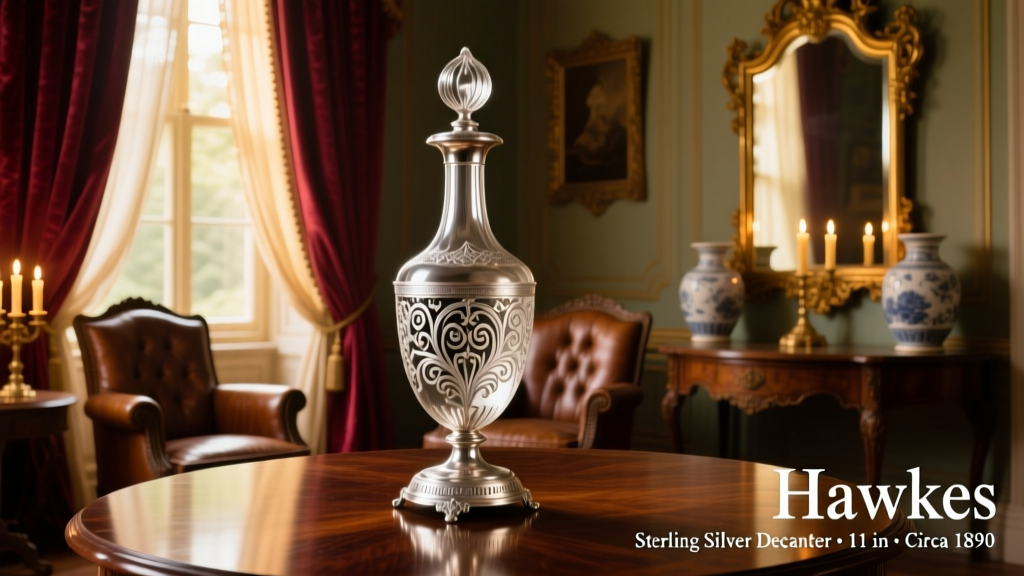
Hawkes Decanter with Sterling Silver Top: A Collector’s Guide to the 11-Inch Footed Crystal and Silver Masterpiece
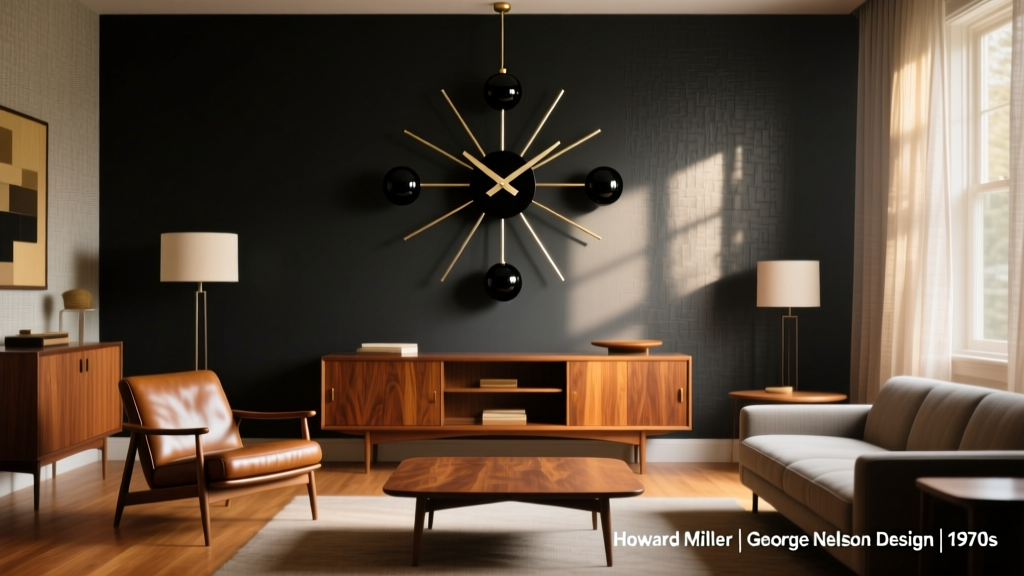
The Howard Miller Wall Clock: George Nelson’s Iconic 'Ball Clock' — Design Legacy, Manufacturing History, and Restoration Insights
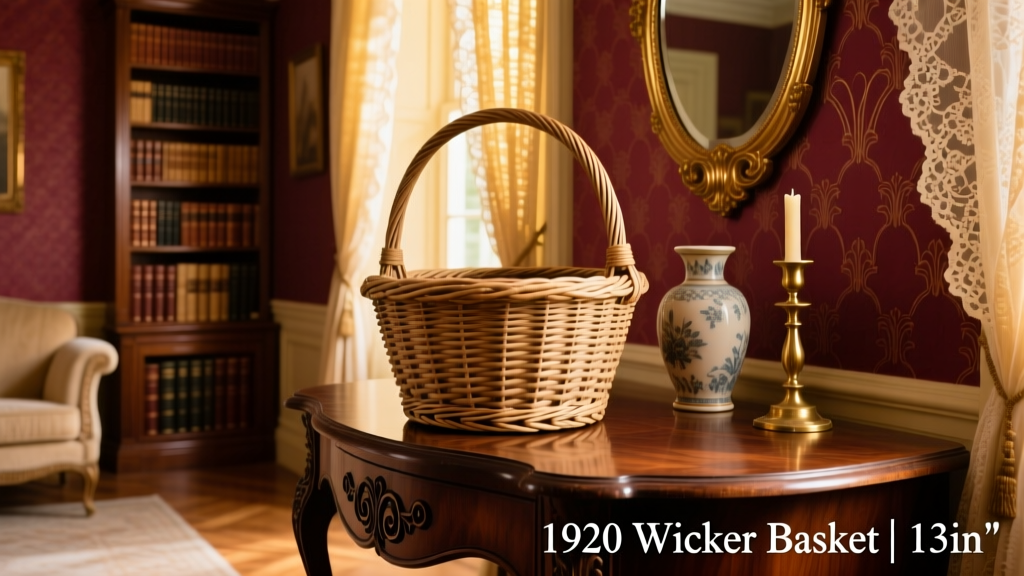
Market Wicker Baskets from 1920: Authenticity, Construction, and the 13-Inch Standard