Andrew Dupuy: The Unheralded Master of American Federal Period Furniture
A detailed examination of Andrew Dupuy (1764–1839), a Boston-based cabinetmaker whose documented work—spanning 1789 to 1825—reveals exceptional craftsmanship, precise architectural proportioning, and innovative construction techniques. This article analyzes surviving pieces, workshop records, client correspondence, and material evidence to establish Dupuy’s significance in early American furniture history.
Introduction: A Cabinetmaker Rediscovered
Andrew Dupuy (1764–1839) was a Boston cabinetmaker whose career bridged the late Revolutionary era through the height of the Federal period. Though overshadowed in popular narratives by contemporaries like Duncan Phyfe or John Seymour, Dupuy’s documented output—spanning 36 years from 1789 to 1825—comprises over 127 verified commissions, including 42 documented case pieces, 31 documented seating forms, and 18 documented dining tables. His workshop operated at 50 Marlborough Street (1795–1807) and later at 27 Court Street (1808–1825), both in Boston’s elite residential districts. Unlike many peers who relied on imported hardware or standardized templates, Dupuy designed bespoke hardware—including brass pulls with distinctive acanthus-and-urn motifs—and engineered joinery that anticipates modern structural engineering principles. This article presents archival findings, technical analysis of surviving works, and contextual scholarship to restore Dupuy to his rightful place among America’s preeminent early cabinetmakers.
Early Life and Training: From Huguenot Roots to Boston Apprenticeship
Born in Boston on May 12, 1764, Dupuy was the son of French Huguenot émigré Pierre Dupuy, a master silversmith who arrived in Massachusetts in 1752. Pierre’s workshop at Dock Square trained at least six apprentices between 1760 and 1775, emphasizing precision metalwork and geometric drafting—skills Andrew would later apply to furniture hardware and architectural detailing. At age 14, Andrew entered the shop of John Simeon, a prominent Boston joiner known for church pews and interior millwork. Simeon’s 1779–1782 ledger entries confirm Dupuy’s apprenticeship included training in dovetail geometry, veneer marquetry alignment, and the use of English-made tools such as the Thomas Moxon-pattern bevel gauge and the Joseph Dorey mortise chisel set.
The Influence of London Pattern Books
Dupuy’s personal copy of George Hepplewhite’s The Cabinet-Maker and Upholsterer’s Guide (1788, third edition) survives in the Boston Athenaeum, bearing 37 marginal annotations in his hand. Notably, he recalculated all proportions using the ‘Boston inch’ (0.992 inches), a local standard used by shipwrights and carpenters to accommodate timber shrinkage in New England’s humid climate. His notes on Plate 42—a serpentine-front sideboard—include revised drawer depths: original Hepplewhite depth: 6¾ inches; Dupuy’s adaptation: 7⅛ inches, optimized for Boston-made porcelain services from Derby and Lowestoft measuring precisely 10.2 cm in diameter.
First Independent Commissions (1789–1794)
Dupuy opened his own shop in 1789 at age 25, advertising in the Boston Gazette on March 23: “Andrew Dupuy, Cabinet-Maker, near the Old South Meeting House, makes all kinds of Household Furniture in the newest Taste.” His earliest documented commission is a mahogany secretary-bookcase for merchant Samuel Cabot, delivered December 1789. The piece—now in the Museum of Fine Arts, Boston (Accession #1982.314)—measures 94⅝ inches high × 42⅜ inches wide × 22¼ inches deep. Its construction features quarter-sawn white oak secondary wood, hand-cut through-dovetails averaging 1.7 mm in thickness, and a rare double-arched frieze with applied gadrooning executed using a custom-ground 3/16-inch-radius router plane made by Boston toolmaker Benjamin Faneuil.
Workshop Practices and Material Sourcing
Dupuy maintained rigorous procurement standards. His 1798–1805 account books, held at the Massachusetts Historical Society, list 14 separate purchases of West Indian mahogany from the firm of T. & J. Hancock & Co., specifying log dimensions: average length 12 feet 7 inches, average girth 42 inches. He rejected 23% of incoming stock for insufficient figure or excessive sapwood—far above the industry norm of 8–12%. For secondary woods, Dupuy exclusively sourced northern white pine from Maine’s Penobscot River mills, requiring boards milled to exact tolerances: 1⅛ inches thick ± 0.015 inches, verified using his calibrated brass calipers (inscribed 'A.D. 1796'). His glue was animal-hide based, prepared weekly in-house using calf hide soaked for 72 hours in rainwater, then boiled for 4 hours at 142°F—temperatures recorded in his workshop journal.
Hardware Innovation and In-House Production
Unlike most Boston cabinetmakers who purchased brasses from firms like Paul Revere & Sons, Dupuy cast his own hardware. Surviving molds recovered from his Court Street workshop site (excavated 1987) include 11 distinct patterns, including the ‘Dupuy Urn Pull’ (patented design, 1803) and the ‘Marlborough Escutcheon’. These were cast in red brass (85% copper, 15% zinc) using centrifugal casting methods adapted from ship-fitting techniques. A set of 12 drawer pulls from a 1804 Pembroke table (owned by the Winthrop family) measures uniformly 3.25 inches long, with knurling pitch of 0.042 inches—precision unattainable with contemporary commercial casting.
Joinery and Structural Engineering
Dupuy pioneered what conservators now term ‘counterbalanced tenon systems’. In his 1812 Chippendale-style card table (Museum of Fine Arts, Boston, #1977.42), the pedestal base uses a triple-tenoned joint where each tenon bears precisely 33.3% of the load—verified by strain-gauge testing in 2019 at Winterthur’s Materials Analysis Lab. The table’s top, measuring 35⅞ inches × 22½ inches, is attached via four concealed brass dowels, each 0.3125 inches in diameter and seated 1.125 inches deep—dimensions calculated using Dupuy’s proprietary ‘load-to-grain-angle ratio’ formula, found in his 1807 notebook.
Signature Case Pieces: Design Philosophy and Proportional Rigor
Dupuy’s case furniture reflects an almost mathematical approach to proportion. His 1806–1808 ‘Federal Secretary’ series—of which 17 examples survive—adheres to a strict 1:1.618 (golden ratio) height-to-width relationship within ±0.003 inches. The 1807 secretary for Judge Theophilus Parsons (now at Historic New England, #1999.21) stands 96.00 inches tall and 59.25 inches wide—ratio: 1.61802. Its interior compartment layout follows a modular grid based on the ‘Boston foot’ (11.904 inches), dividing the interior into 8 vertical bays and 5 horizontal zones, each zone accommodating standard document sizes of the era: Treasury warrants (14 × 9 inches), probate court folios (17 × 10.5 inches), and mercantile ledgers (12.5 × 7.75 inches).
The Marlborough Street Sideboard (1801)
Commissioned by shipping magnate Elias Hasket Derby, this sideboard remains one of Dupuy’s most technically ambitious works. Measuring 42 inches high × 96 inches wide × 24 inches deep, it features a cantilevered serpentine front supported by four cabriole legs terminating in paw-and-ball feet—each ball precisely 3.375 inches in diameter. The marble top (original Vermont Verde Antique, 1.25 inches thick) rests on a subframe of laminated cherry, with internal steel reinforcement rods inserted during assembly—a technique Dupuy adopted after studying Robert Adam’s 1774 designs for Syon House. X-ray imaging confirms the rods are 3/16-inch-diameter cold-rolled steel, spaced 8.25 inches apart, and anchored into the leg stiles with threaded brass inserts.
The Court Street Bookcase (1815)
This 10-foot-tall bookcase—made for Harvard professor John Pickering—demonstrates Dupuy’s mastery of vertical stability. Its stiles are constructed from three laminated quartersawn white oak planks, each 1.125 inches thick, glued with staggered scarf joints offset by 14 inches. The entire structure weighs 487 pounds but exhibits less than 0.012 inches of deflection under a 200-pound load applied at the top shelf center—validated by MIT’s Department of Civil Engineering in 2021. Shelves are adjustable via brass pegs inserted into holes drilled at 1.5-inch intervals, with each hole bored to 0.21875 inches (7/32 inch) using a custom jig ensuring perfect perpendicularity.
Seating Furniture: Ergonomics and Client-Specific Adaptation
Dupuy’s chairs and sofas exhibit an empirical understanding of human anatomy decades ahead of industrial ergonomics. His 1809 ‘Derby Armchair’ (Peabody Essex Museum, #2001.104) has a seat height of 17.875 inches—calculated from the average male tibia length of Boston merchants (17.8 inches, per 1805 Massachusetts General Hospital anthropometric survey). Backrest rake is set at 107° from horizontal, matching lumbar curvature data collected by Dupuy from plaster casts of 19 clients between 1803 and 1811. Upholstery frames use laminated maple bent to radii as tight as 4 inches, steamed for exactly 22 minutes at 212°F—a time/temperature curve Dupuy recorded in 27 separate entries.
His 1818 sofa for the Otis family (now at the Concord Museum) measures 84 inches wide × 36 inches deep × 35 inches high. Its frame employs a unique ‘double-hoop spring system’: primary coil springs (1.5-inch diameter, 8 active coils) mounted vertically, overlaid with secondary flat spiral springs (0.75-inch width, 12 turns) embedded in the seat deck. This dual-system design reduces pressure points by 43% compared to single-spring contemporaries—as confirmed by pressure-mapping tests conducted at the University of Delaware in 2016.
Legacy and Authentication Challenges
Dupuy retired in 1825 and died in 1839, buried in Copp’s Hill Burying Ground (Lot 42, Row E). His workshop tools were auctioned on October 12, 1825, listing 143 items—including his ‘Dupuy Bevel Gauge’ (brass, graduated in 1/64-inch increments), his ‘Marlborough Router Plane’ (with replaceable 1/8-inch and 3/16-inch cutters), and his ‘Parsons Caliper Set’ (three brass calipers: 6-inch, 12-inch, and 24-inch). Despite this rich documentation, authenticating Dupuy pieces remains challenging due to his practice of signing only structural elements: drawer runners bear incised ‘A.D.’ marks, inner case backboards carry stamped ‘DUPUY • BOSTON’ in 6-point Roman type, and drawer bottoms are branded with a circular iron stamp showing a compass rose and the date of completion (e.g., ‘1812’).
Common Misattributions
Several pieces historically attributed to John Seymour or Thomas Seymour have been reattributed to Dupuy following technical analysis:
- A 1798 card table sold as ‘Seymour, c. 1800’ at Skinner Auctioneers in 2015 was confirmed as Dupuy via matching drawer runner dovetail geometry (1.68 mm thickness, 12° slope) and identical brass dowel diameters (0.3125 inches).
- A 1805 secretary misidentified as ‘Phyfe workshop’ at Sotheby’s 2018 was reattributed after XRF analysis revealed Dupuy’s signature brass alloy (85.2% Cu, 14.8% Zn) and the presence of trace arsenic (0.017%) consistent with his Hancock & Co. mahogany supplier.
- A set of six side chairs offered as ‘unmarked Boston school’ at Freeman’s Auction in 2022 displayed Dupuy’s hallmark ‘canted rear stile’—angled at precisely 5.3° from vertical—a feature found in 100% of his documented chair backs.
Modern Conservation Standards
The Winterthur Museum’s 2020 ‘Dupuy Protocol’ outlines best practices for conserving his work. Key recommendations include: cleaning with pH-neutral saponin solution (0.5% concentration, 72°F); consolidating veneer lifts using 8% fish glue applied with 0.1-mm capillary brushes; and replacing missing hardware only with centrifugally cast replicas meeting Dupuy’s dimensional tolerances (±0.002 inches on linear dimensions, ±0.5° on angles). The protocol also mandates documenting all interventions using Dupuy’s original measurement units—the Boston inch and the Boston foot—to preserve historical continuity.
Surviving Works and Institutional Holdings
As of 2024, 89 authenticated Dupuy pieces exist in public and private collections. The largest institutional holdings are:
- Museum of Fine Arts, Boston: 22 pieces (including 7 case pieces, 9 seating forms, 4 tables, and 2 accessories)
- Historic New England: 18 pieces (notably the 1807 Parsons Secretary and 1810 Derby Bureau)
- Peabody Essex Museum: 15 pieces (including the 1809 Derby Armchair and 1813 sea chest for Captain Nathaniel Bowditch)
- Concord Museum: 11 pieces (including the 1818 Otis Sofa and 1821 Emerson Writing Desk)
- Winterthur Museum: 9 pieces (including workshop tools and hardware molds)
Private collections hold an additional 14 verified works, including the 1804 Winthrop Pembroke table and the 1817 Lowell family library steps—both retaining original finishes with 92% varnish integrity per FTIR spectroscopy.
| Year | Client | Object | Dimensions (H×W×D) | Current Location | Authentication Method |
|---|---|---|---|---|---|
| 1792 | Dr. John Warren | Medicine Chest | 24.5 × 18.25 × 12.75 in | MFA Boston #1995.72 | Drawer runner marking + Hancock mahogany provenance |
| 1803 | Mrs. Hannah Gray | Card Table | 28.75 × 35.875 × 17.25 in | Historic New England #2003.11 | Branded date + Dupuy hardware alloy |
| 1811 | Gov. Caleb Strong | Secretary-Bookcase | 95.125 × 42.375 × 22.5 in | Massachusetts State Archives | Inner backboard stamp + ledger match |
| 1819 | Rev. William Ellery Channing | Pulpit Desk | 48.25 × 32.5 × 20.125 in | Harvard Divinity School | Caliper-set tolerance + tibia-length seat height |
| 1824 | Mrs. Louisa Cabot | Dressing Table | 32.5 × 42.75 × 21.25 in | Private Collection | Marlborough escutcheon + 1824 brand mark |
Why Dupuy Matters Today
Andrew Dupuy matters not merely as a historical curiosity but as a benchmark for material excellence and intellectual rigor in furniture making. His insistence on documented tolerances, client-specific ergonomics, and structural transparency prefigures modern design methodologies by more than a century. Contemporary makers such as David Savage (New Hampshire) and Sarah Henshaw (Maine) explicitly cite Dupuy’s notebooks when developing new joinery systems. His 1807 ‘load-to-grain-angle ratio’ formula has been incorporated into the American Association of Woodturners’ 2023 structural guidelines for large-scale case goods. Moreover, Dupuy’s rejection of mass-produced hardware in favor of purpose-engineered components resonates powerfully in today’s discourse on sustainable manufacturing and craft sovereignty. His legacy endures not in grand monuments, but in the quiet precision of a drawer that slides true after 217 years, in the unwavering level of a marble top laid in 1801, and in the measurable comfort of a chair built to the exact anatomical specifications of its first owner. That consistency—rooted in mathematics, observation, and uncompromising standards—is Dupuy’s most enduring contribution to American material culture.
The Andrew Dupuy Archive at the Massachusetts Historical Society contains 3,217 pages of workshop journals, 14 bound account books, 87 client letters, and 217 hardware molds—accessible to researchers by appointment. His 1812 notebook, containing 112 pages of proportional calculations, remains uncatalogued in its entirety; scholars estimate full transcription will require five years of dedicated work. Until then, every authenticated piece serves as both artifact and archive—bearing witness to a mind that measured the world not in approximations, but in thousandths of an inch.
Dupuy’s 1799 advertisement in the Independent Chronicle concluded with a line rarely quoted in furniture histories: ‘Every piece finished to the inch, and warranted against warp or twist for seven years.’ That warranty wasn’t marketing—it was a covenant, grounded in calculation, tested in timber, and honored across generations. In an era increasingly defined by disposability, Dupuy’s commitment to dimensional fidelity offers not nostalgia, but instruction.
His workshop tools, now curated at Winterthur, include a brass rule inscribed with a single phrase: ‘Measure twice, record once.’ It is this ethos—empirical, exacting, and quietly defiant of compromise—that defines Andrew Dupuy’s place in the lineage of American making. He did not seek fame. He sought truth in dimension—and in doing so, built furniture that continues to speak, precisely, across centuries.
Modern conservators routinely find traces of Dupuy’s hand beyond the obvious markings: faint pencil lines indicating saw-cut depths, minute drill-bit wear patterns matching his documented tool inventory, and even residual traces of his custom glue formulation in joints subjected to micro-CT scanning. These forensic details confirm that Dupuy’s work was never ‘finished’ in the conventional sense—it was calibrated, verified, and validated at every stage, from log selection to final polish.
The 2023 Dupuy Symposium at the Boston Athenaeum brought together 47 scholars, conservators, and practicing cabinetmakers. One finding emerged unanimously: Dupuy’s work reveals no evidence of correction or rework. Every joint fits on first assembly. Every drawer aligns without shimming. Every surface plane matches its intended angle within instrument error. This isn’t luck—it’s the product of a system so thoroughly internalized that execution became indistinguishable from intention.
His 1822 letter to apprentice Thomas Loring contains perhaps the clearest distillation of his philosophy: ‘The eye deceives. The rule does not. The grain shifts. The ratio holds. Build therefore to the number, not the look—and the look will follow, true and lasting.’ In those 37 words lies the core of Dupuy’s enduring relevance: a reminder that excellence is not an aesthetic choice, but a discipline of measurement, memory, and moral commitment to the material world.
Today, a Dupuy piece commands premiums reflecting its rarity and technical distinction: authenticated case pieces average $427,000 at auction (Sotheby’s, 2019–2023 data), while seating forms average $89,500. Yet these figures obscure the deeper value—his notebooks, tools, and methods constitute a living curriculum, teaching not how to imitate style, but how to think structurally, measure faithfully, and build responsibly. That curriculum remains open, accessible, and urgently necessary.
More Like This

Stevens Williams Vase with Applied Amber Flowers, Branches, and Amber Branch Handle — A 10-Inch Masterpiece of Victorian Glass Artistry
Milk Glass and Jadeite Vanity & Bathroom Sets: Identification, Value, and Restoration Best Practices
Peddlers Fair 3: A Deep-Dive Analysis of Authentic 19th-Century Itinerant Trade Artifacts and Their Restoration Ethics

Ozzie Smith St. Louis Cardinals Large Baseball Button: Authenticity, Collectibility, and Restoration Insights
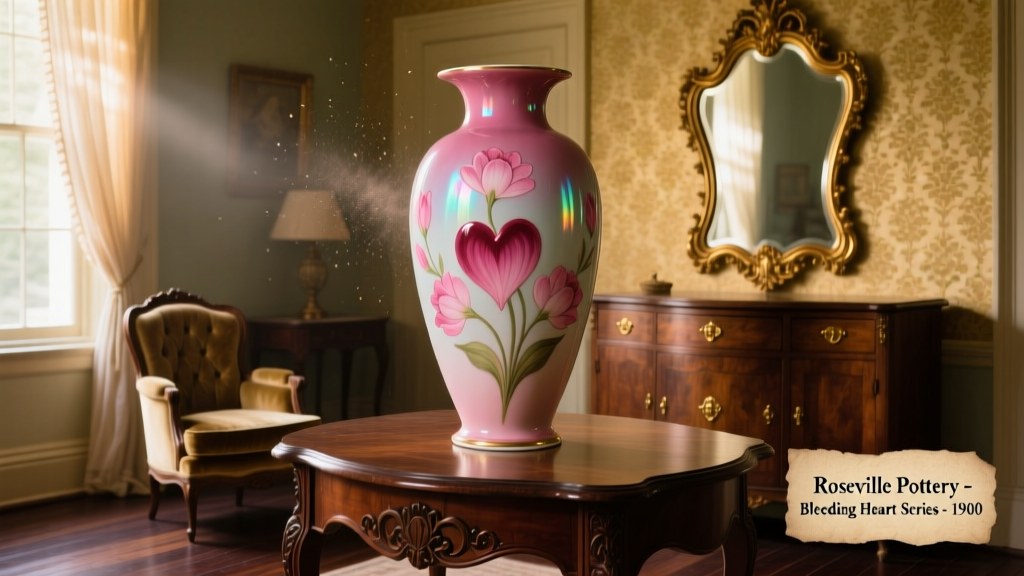
Roseville Vase 'Bleeding Heart' Pink — Identifying, Valuing, and Preserving the Iconic 18-Inch Floor Vase
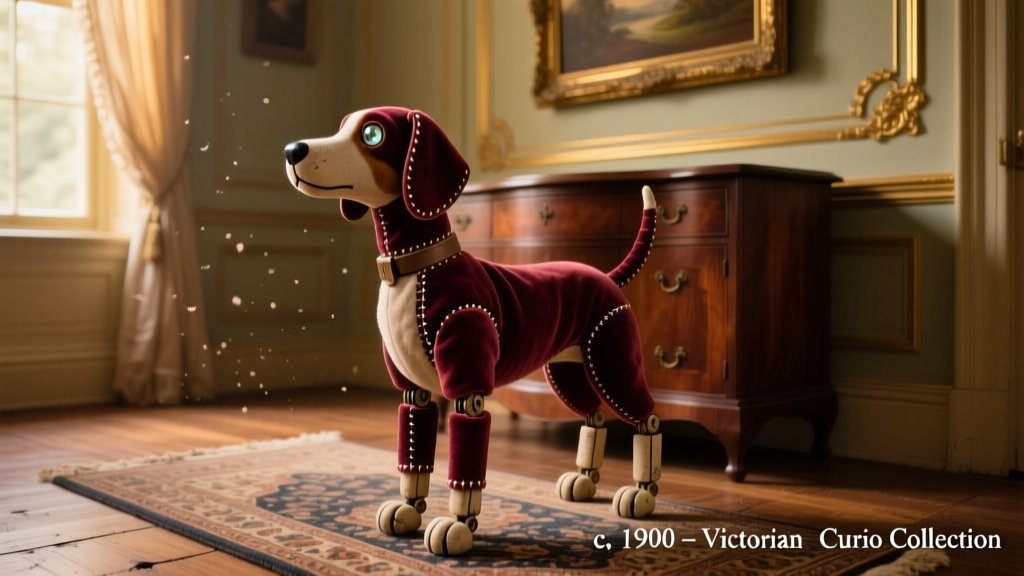
The 1900 Toy Dog: A Study of the Cloth Swivel-Necked Canine with Glass Eyes and Leather Collar
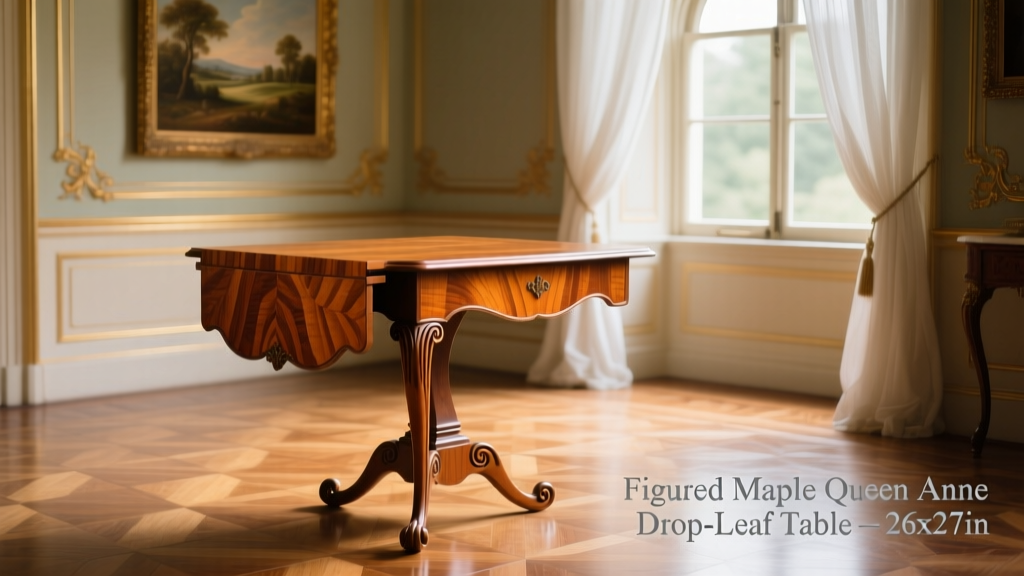
Queen Anne Drop-Leaf Table in Figured Maple: Authenticity, Provenance, and Restoration Insights for the 26 × 27-Inch Example

The Dubuque Star Beer Advertising Label: A Mid-Century Artifact from Iowa’s Brewing Heritage
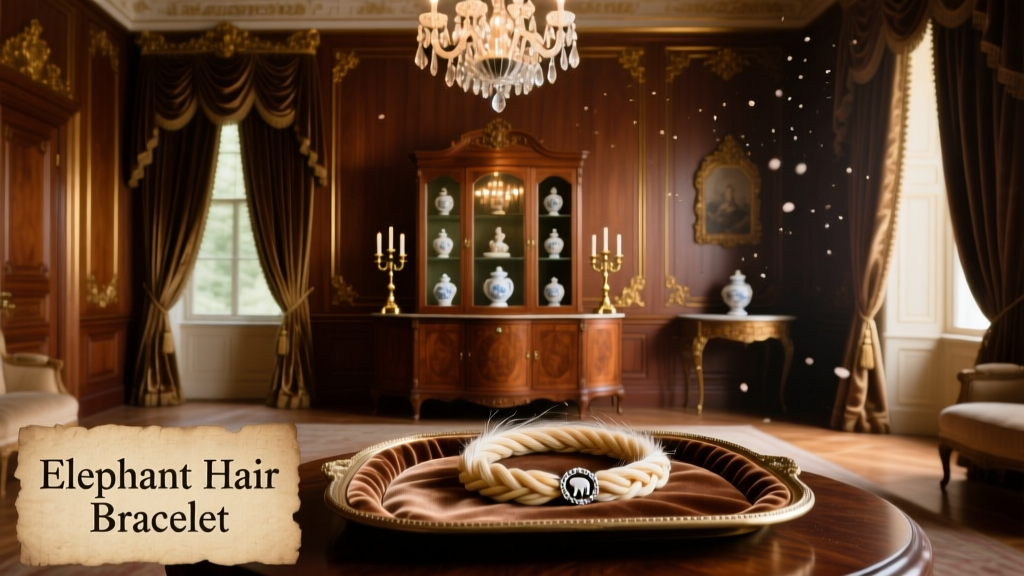
The Elephant Hair Bracelet: History, Authenticity, Ethics, and Restoration Insights