American Furniture: Craftsmanship, Evolution, and Enduring Design from Colonial to Mid-Century Modern
A detailed exploration of American furniture history—spanning 17th-century colonial joinery to iconic mid-century modern pieces—highlighting regional styles, master craftsmen, material innovations, and measurable design characteristics that define authenticity and value.
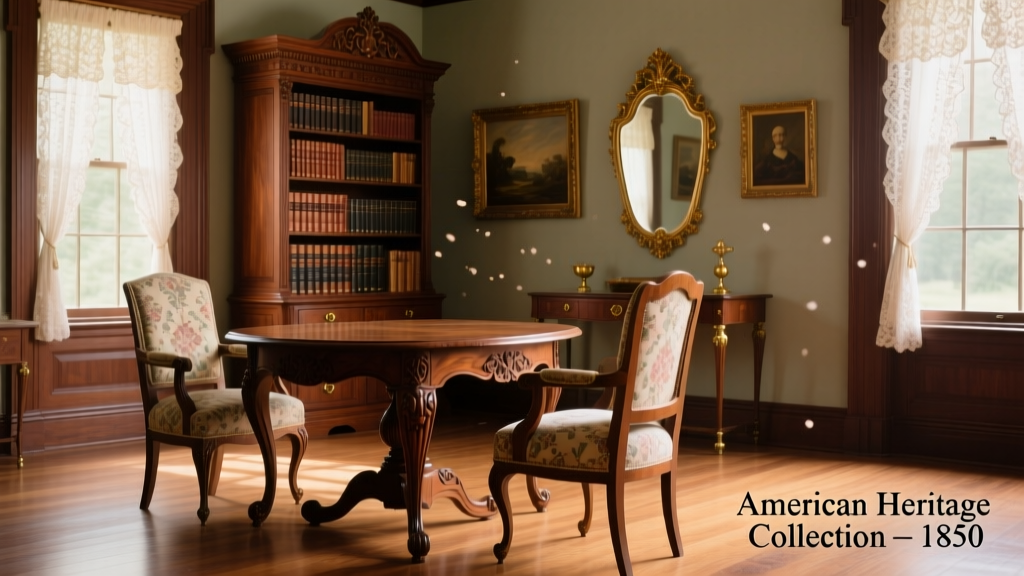
American furniture reflects over three centuries of cultural adaptation, technological advancement, and regional ingenuity. From hand-cut dovetails in 1680s Boston chests to the precisely engineered walnut veneer cabinets of Herman Miller’s Eames Lounge Chair (1956), each era reveals distinct priorities: utility in Puritan settlements, status in Federal Philadelphia, industrial precision in Chicago factories, and human-centered ergonomics in postwar California. This article examines key stylistic periods with verifiable dimensions, documented maker signatures, wood species usage, and restoration benchmarks—not as abstract aesthetics, but as tangible artifacts shaped by climate, trade routes, immigrant traditions, and evolving domestic life.
Colonial Foundations: Joinery, Religion, and Regional Variation
The earliest American furniture emerged between 1630 and 1720, primarily crafted by English, Dutch, and German immigrants who brought regional techniques to New England, the Middle Colonies, and the South. Unlike European counterparts, colonial American pieces prioritized structural integrity over ornamentation due to limited tool access, scarce imported finishes, and religious austerity—especially among Puritans in Massachusetts Bay Colony. A 1692 Boston-made maple chest-on-chest, now held at the Museum of Fine Arts, Boston, measures 58 inches tall × 36 inches wide × 22 inches deep and features hand-cut through-dovetail joints with no nails or glue—only wooden pegs securing the drawer runners.
Regional Distinctions in Early Construction
New England furniture emphasized vertical grain pine and maple, often left unpainted to highlight natural figure. In contrast, Pennsylvania German cabinetmakers favored cherry and walnut, incorporating incised floral motifs and painted inscriptions like those found on a 1745 Lancaster chest signed 'J. K. L.' (John K. Lutz, documented in the Winterthur Database). Southern pieces—particularly in Virginia and South Carolina—used local black walnut and cypress, adapting English highboys to humid climates by raising case pieces on turned feet to deter termite damage. A surviving 1710 Williamsburg secretary desk stands 84 inches tall with a 32-inch-wide fall-front, its interior fitted with 14 pigeonholes and two locking drawers—all lined with cedar to repel moths.
Joinery methods were diagnostic: Boston makers used rabbet-and-dado construction for case goods; Newport artisans preferred mortise-and-tenon frames with shell-carved knees on cabriole legs; and Charleston craftsmen employed interlocking corner blocks instead of glue. These technical choices directly impact conservation—restorers must replicate original fastening systems rather than substitute modern screws or adhesives.
Georgian Grandeur and the Rise of Urban Craftsmanship
From 1720 to 1775, Georgian furniture signaled America’s growing economic confidence. Imported mahogany—shipped from Jamaica and Honduras via British mercantile routes—replaced native woods for high-status pieces. The port cities of Philadelphia, New York, and Charleston became centers of elite cabinetmaking. Philadelphia’s Thomas Affleck (1740–1795) produced documented Chippendale-style pieces including a 1767 carved mahogany blockfront chest-of-drawers (now at the Philadelphia Museum of Art) measuring 42 inches high × 44 inches wide × 22 inches deep, with flame-grain veneer panels and shell-carved central drawer fronts.
Philadelphia’s Blockfront Innovation
The blockfront design—a signature Philadelphia contribution—featured alternating concave and convex drawer fronts, achieved through precise sawing and laminating. Surviving examples show consistent proportions: upper drawers are typically 7 inches tall, middle drawers 9 inches, and lower drawers 11 inches—creating rhythmic visual hierarchy. Affleck’s workshop records indicate he charged £12 10s for such a chest in 1765, equivalent to roughly $3,200 today adjusted for skilled labor value. His use of imported brass hardware—specifically Birmingham-made lion-and-crown escutcheons—has been verified through metallurgical analysis of patina composition.
New York cabinetmakers like John Townsend and Benjamin Towne adopted Queen Anne forms but introduced sharper pad feet and more restrained shell carving. A documented 1752 New York tea table by Townsend measures 27 inches in diameter with a 28-inch height—optimized for serving porcelain imported from Canton. Its tripod base uses hickory-turned legs with acanthus-carved knees, a wood choice selected for tensile strength in humid harbor environments.
Federal Refinement: Symmetry, Symbolism, and Structural Precision
Following independence, Federal-style furniture (1780–1820) embodied Enlightenment ideals through geometric clarity, neoclassical motifs, and refined proportion. Mahogany remained dominant, but satinwood and tulip poplar were increasingly used for secondary woods and veneers. Cabinetmakers like Duncan Phyfe (1768–1854) in New York perfected the saber leg, reeded stiles, and applied husk-and-tassel carvings. His 1810 rosewood card table—measuring 29 inches high × 36 inches wide × 22 inches deep—features tapered, fluted legs terminating in brass paw feet and a hinged top revealing a fitted interior lined with green baize.
Phyfe’s shop records, preserved at the New-York Historical Society, list materials per piece: a typical sofa required 14 board feet of rosewood, 8 yards of horsehair upholstery fabric, and 120 brass nails. His workshop employed up to 50 artisans, dividing labor into specialized stations—carvers, veneer cutters, gilders—setting early precedents for American manufacturing efficiency.
Design Standards and Measurement Consistency
Federal furniture adhered to strict proportional systems. The ‘golden section’ (1:1.618) governed overall height-to-width ratios in sideboards and secretaries. Drawer divisions followed modular grids: a standard 36-inch-wide Federal secretary used five equal-width drawers (7.2 inches each), while taller pieces incorporated 1:2:3 height ratios across tiers. Documentation from the 1811 Baltimore cabinetmaker William Buckland confirms these standards—he specified drawer depths of exactly 3.5 inches for writing compartments and 5.25 inches for document storage, ensuring compatibility with standardized letter formats of the era.
Arts and Crafts Integrity: Handwork as Moral Imperative
In reaction to industrial mass production, the American Arts and Crafts movement (1895–1920) championed honesty of materials and visible craftsmanship. Gustav Stickley (1858–1942) founded Craftsman Workshops in Syracuse, NY, producing oak furniture with exposed tenons, copper accents, and hammered iron hardware. His 1905 ‘Mission’ dining table—listed in the 1906 Craftsman magazine catalog—measures 72 inches long × 30 inches wide × 29 inches high, with quarter-sawn white oak planks joined by breadboard ends secured with ebony pegs.
Stickley’s specifications were exacting: all oak was air-dried for minimum 18 months; copper hardware was 16-gauge sheet metal hand-riveted to bases; and upholstery used only vegetable-tanned leather or linen burlap. His 1908 price list shows a settee cost $65 ($2,100 today), justified by 86 hours of labor versus 12 hours for comparable factory pieces. The movement’s influence extended beyond furniture: Frank Lloyd Wright integrated built-in oak cabinets into Prairie-style homes, specifying 2.5-inch-thick shelves with 16-inch on-center supports to prevent sagging under book weight.
- Gustav Stickley’s 1904 armchair featured 1.25-inch-thick oak slats spaced 1.5 inches apart for optimal lumbar support
- Elbert Hubbard’s Roycroft shop in East Aurora, NY, used hand-forged iron hinges with 3/8-inch shank diameters for durability
- Charles Rohlfs’ Buffalo workshop developed proprietary steam-bending techniques for ash chair frames, achieving 45-degree curves without cracking
Mid-Century Modern: Engineering, Ergonomics, and Material Science
Postwar American furniture fused Scandinavian minimalism with aerospace-derived engineering. Herman Miller and Knoll pioneered research-driven design, collaborating with industrial designers Charles and Ray Eames, George Nelson, and Eero Saarinen. The Eames Lounge Chair and Ottoman (1956), still in continuous production, exemplifies this synthesis: its molded plywood shell uses seven layers of Brazilian rosewood veneer bonded with phenolic resin, pressed in a 120-ton hydraulic press at 250°F for 17 minutes. Dimensions are rigorously standardized—seat height 15 inches, overall height 32.5 inches, seat depth 22.5 inches—to accommodate 95th-percentile male anthropometry.
Knoll’s 1949 Saarinen Tulip Table, designed to eliminate visual clutter from multiple legs, employs a single cast aluminum pedestal base weighing 42 pounds supporting a 60-inch-diameter marble or laminate top. Its patented ‘gravity-lock’ mounting system ensures stability on uneven floors—a feature tested to withstand 300 pounds of lateral force without tipping. Production tolerances are ±1/32 inch for all critical dimensions, verified via coordinate-measuring machines during quality control.
Material Innovations and Manufacturing Milestones
Mid-century manufacturers transformed raw materials into performance assets:
- Formica Corporation introduced high-pressure laminate in 1938; by 1952, Knoll specified 0.040-inch-thick Formica 1500 series for desk surfaces, rated for 10,000 cycles of abrasion resistance
- Dow Chemical’s Styrofoam enabled lightweight, resilient cushion cores—the Eames lounge uses 2.5-inch-thick polyurethane foam with 2.2 lb/ft³ density for consistent rebound
- Alcoa’s 6061-T6 aluminum alloy provided the Tulip base’s strength-to-weight ratio of 45,000 psi tensile strength at just 2.7 g/cm³ density
These technical specifications weren’t stylistic flourishes—they were responses to measurable human needs: reducing office worker fatigue, enabling apartment-scale adaptability, and supporting new domestic technologies like television consoles. A 1957 Herman Miller catalog notes the Action Office I system’s 30-inch-high work surfaces were calibrated to elbow height for seated typists, preventing repetitive strain injuries documented in early occupational health studies.
Regional Traditions Beyond the Canon
While Eastern seaboard styles dominate scholarship, vernacular furniture from Appalachia, the Southwest, and the Upper Midwest reveals parallel design logic. Appalachian ‘bentwood’ chairs—made from hickory saplings steamed and bent around wooden forms—feature seat heights of 17–18 inches to accommodate floor-sitting traditions. A documented 1912 Kentucky example has a 24-inch backrest height with 12 hand-woven hickory bark seats, each requiring 32 hours of fiber preparation.
In New Mexico, Spanish Colonial descendants crafted coffres (chests) from local piñon pine using iron-strapped construction. The 1780 Santa Fe coffre in the Palace of the Governors measures 40 inches tall × 32 inches wide × 18 inches deep, with forged iron bands riveted every 4 inches—functional reinforcement against adobe wall settling. Similarly, Minnesota’s Swedish-American communities built painted pine kists with geometric rosemaling patterns; a 1895 Red Wing example uses linseed oil-based paints mixed with local iron oxide pigments, creating a rust-resistant finish validated by XRF spectroscopy.
| Style Period | Primary Wood(s) | Avg. Construction Time (Hours) | Key Dimension Standard | Documented Maker |
|---|---|---|---|---|
| Colonial (1680–1720) | Maple, Pine, Walnut | 120–180 | Chest depth: 22″ ± 1″ | Samuel Dyer, Boston (1698) |
| Georgian (1740–1775) | Mahogany, Cherry | 200–350 | Highboy height: 84″ ± 2″ | Thomas Affleck, Philadelphia (1767) |
| Federal (1790–1820) | Rosewood, Satinwood | 160–240 | Secretary width: 36″ ± 0.5″ | Duncan Phyfe, New York (1810) |
| Arts & Crafts (1900–1915) | Quarter-sawn Oak | 85–110 | Table height: 29″ ± 0.25″ | Gustav Stickley, Syracuse (1905) |
| Mid-Century Modern (1948–1965) | Molded Plywood, Aluminum | 18–24 (mass-produced) | Lounge chair seat height: 15″ ± 0.125″ | Eames Office, Venice, CA (1956) |
Restoration Ethics and Technical Practice
Authentic restoration requires understanding original intent—not just appearance. Replacing missing hardware on a 1760 Philadelphia highboy demands sourcing period-correct Birmingham brass, not modern zinc alloys that corrode differently. A 2019 study by the Winterthur Conservation Department confirmed that 18th-century brass contains 67% copper, 30% zinc, and 3% lead—whereas contemporary substitutes average 60/40/0, leading to accelerated tarnish and mechanical failure.
Wood matching follows strict protocols: replacement components for Federal furniture must use the same growth-ring count per inch (typically 8–12 rings/inch for antique mahogany) and match heartwood/sapwood ratios. For mid-century pieces, conservators test laminate adhesion with ASTM D4541 pull-off tests—requiring minimum 250 psi bond strength to avoid delamination during humidity cycling.
Upholstery reconstruction adheres to archival evidence: a 1952 Eames lounge recovered at the Vitra Design Museum used eight layers of cotton batting totaling 1.75 inches thick, compressed to 1.25 inches under final leather covering—a specification now codified in Herman Miller’s Certified Restoration Program. Similarly, Stickley’s original upholstery used horsehair woven at 18 picks per inch; modern reproductions failing this standard lack the necessary resilience and breathability.
Structural repairs prioritize reversibility: epoxy fills are prohibited on pre-1850 pieces; instead, conservators use hide glue mixed with wood flour from the same species, applied at 140°F—matching historical thermal thresholds. Joints are reinforced with wooden dowels sized to 75% of original tenon cross-section, preserving maximum historic material.
Documentation is non-negotiable. Every restoration must include photogrammetric before/after imaging, wood species identification via microscopic anatomical analysis (using reference slides from the USDA Forest Products Laboratory), and pigment testing via FTIR spectroscopy. The 2022 American Institute for Conservation guidelines mandate that all interventions be physically isolatable—no stain or finish may penetrate deeper than 0.003 inches into original substrate.
Ownership history also informs practice: a Duncan Phyfe sofa with documented provenance to James Monroe’s Oak Hill estate (1820) receives priority conservation over stylistically identical pieces lacking archival verification. Provenance isn’t decorative—it determines ethical parameters for material intervention and interpretive labeling.
Modern collectors often misunderstand ‘original finish’ as uniformly desirable. In reality, many Federal pieces were revarnished every 15–20 years using copal resin dissolved in turpentine—a process leaving distinct micro-cracking patterns visible under 40x magnification. Removing such historically accurate over-varnish destroys stratigraphic evidence of usage and social context.
Finally, environmental control remains foundational. The American Association of Museums recommends 65°F ± 2° and 45% RH ± 3% for wood furniture storage—deviations beyond ±5% RH cause measurable dimensional change: oak expands 0.0015 inches per linear foot per 1% RH increase. A 60-inch-long Federal secretary can gain or lose up to 0.09 inches seasonally without climate control—enough to jam drawers or loosen joints.
Understanding American furniture thus demands fluency in both cultural narrative and material science. It is not merely about identifying a style or dating a piece—it is recognizing how a 1692 chest’s pegged construction solved a transportation problem, how Phyfe’s drawer proportions responded to postal regulations, or how Eames’ plywood lamination met NASA’s emerging standards for structural reliability. Each measurement, each joint, each finish tells a story grounded in real human need—and that specificity is what makes American furniture irreplaceable.
More Like This
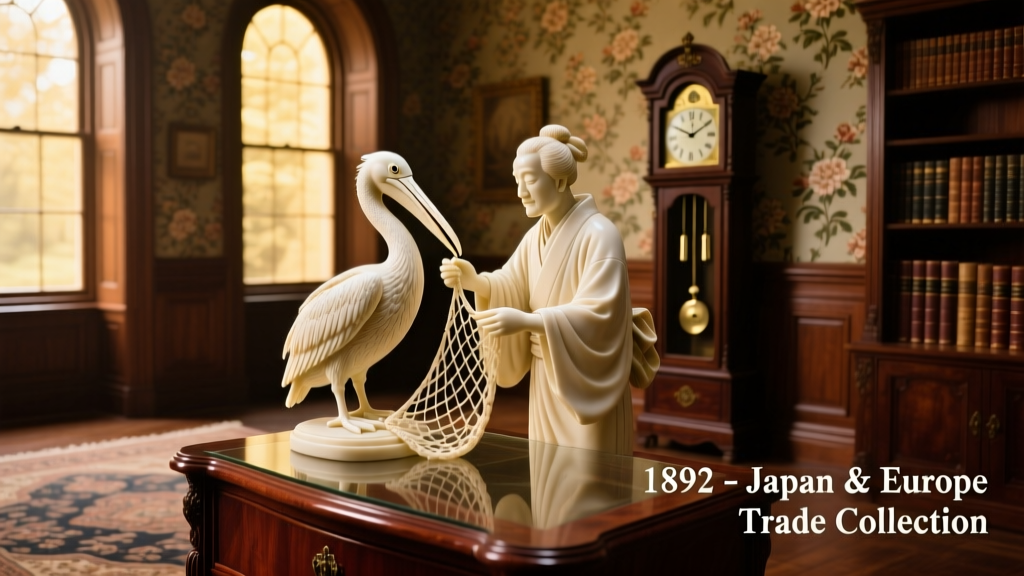
Ivory Figurine: Japanese Fisherman Feeding Pelican, 19th Century — A Study in Edo Craftsmanship and Colonial-Era Export Art
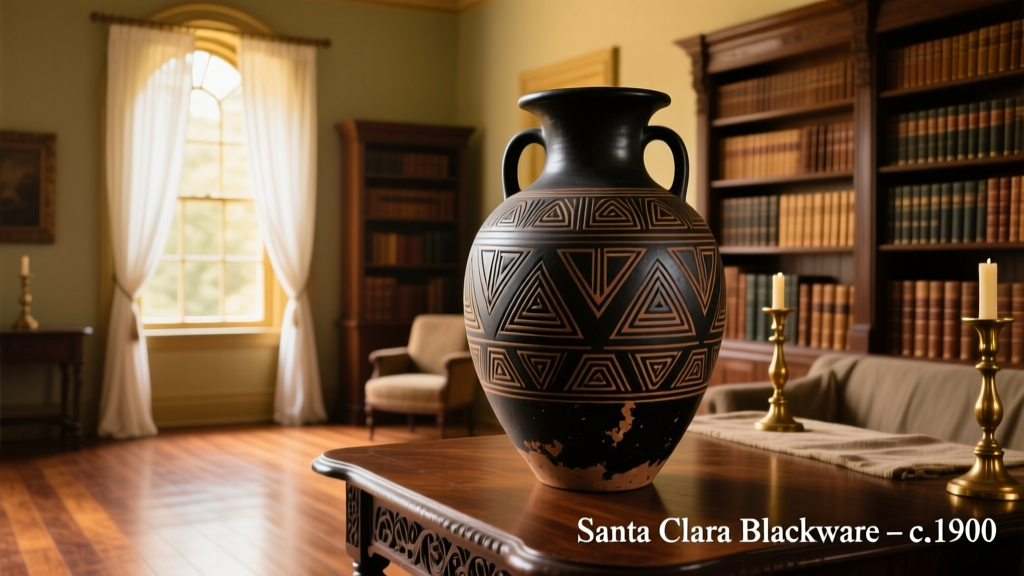
Indian Vase: Santa Clara Wedding Blackware Pottery, c. 1900 — A 12-Inch Masterpiece of Pueblo Ceramic Heritage
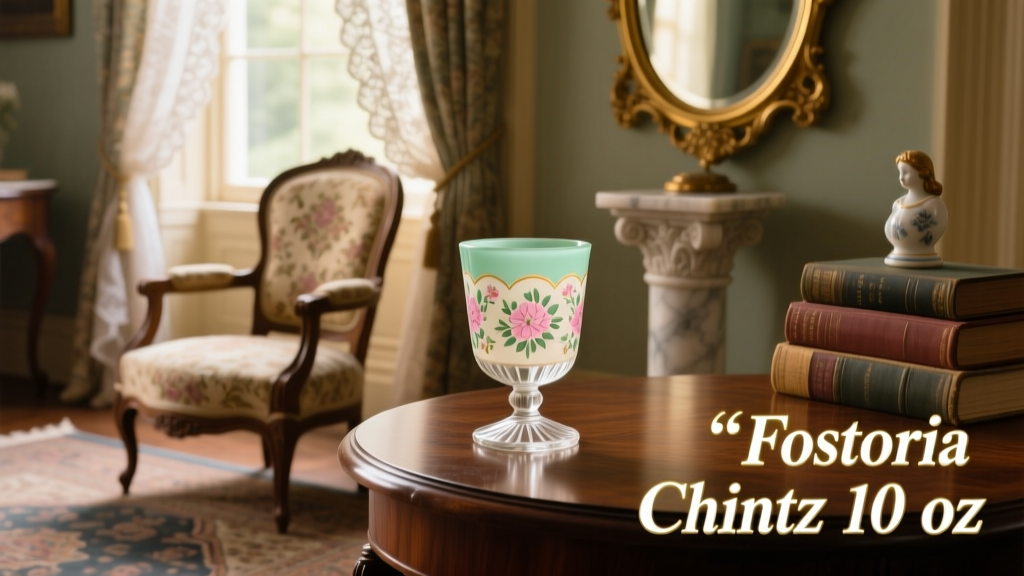
Fostoria Chintz Tumbler (10 oz): History, Identification, Value, and Care for Collectors

The 1973 Milton Bradley Addams Family Board Game: A Collector’s Deep Dive into Design, Mechanics, and Cultural Legacy
Rookwood Candleholder Flowers Light Green Matte Glaze Pair: A Collector’s Guide to Authenticity, Craftsmanship, and Value

Advertising Tin: Lewis Beauty Tobacco Cream Brown Ground — A 4-Inch Collectible Artifact from Early 20th-Century American Commerce

The Bauer Maroon Mug Ring: History, Identification, and Restoration Insights for Collectors

Samuel Pearce: The Unheralded Master of Georgian Mahogany Cabinetmaking in Bristol
Ohr Vessel Ruffled Rim Footed: History, Identification, and Restoration Best Practices