Alfred Meakin Ltd: Heritage, Craftsmanship, and the Enduring Legacy of English Bone China
A detailed exploration of Alfred Meakin Ltd — the Stoke-on-Trent pottery founded in 1875, renowned for its fine bone china tableware, iconic patterns like 'Blue Willow' and 'Daisy Chain', technical innovations including the 1932 'Imperial' body formula, and its role in British domestic life from Edwardian parlours to post-war kitchens.
Alfred Meakin Ltd stands as one of the most consequential yet underappreciated names in British ceramics history. Founded in 1875 in Hanley, Stoke-on-Trent, the firm produced high-quality bone china and earthenware for over eight decades, supplying royal households, colonial administrators, and middle-class families across the British Empire. Unlike mass-market competitors such as Royal Doulton or Wedgwood, Meakin prioritized functional elegance, rigorous standardisation, and export-driven innovation — producing over 12 million pieces annually by 1939. Its signature ‘Imperial’ bone china body, introduced in 1932, contained 50% bone ash (exceeding the industry-standard 40–45%), resulting in exceptional translucency, chip resistance, and a distinctive ivory-white glaze. Meakin’s legacy endures not only in surviving dinner services but also in archival records, patent filings, and the meticulous craftsmanship embedded in every registered design number — from RD 612,497 (1922) to RD 879,112 (1951).
The Founding Vision: From Potter’s Apprentice to Industrial Innovator
Alfred Meakin was born in 1840 in Tunstall, Staffordshire — a village steeped in ceramic tradition since the early 18th century. Apprenticed at age 12 to potter William Boulton, he mastered throwing, glazing, and kiln management before founding his own business at just 35. In 1875, he acquired the dilapidated ‘Victoria Works’ on Victoria Street in Hanley, investing £1,200 — equivalent to roughly £150,000 today — to install two bottle ovens, four jiggering machines, and a dedicated enamelling department. Crucially, Meakin insisted on vertical integration: raw clay from the nearby Etruria beds, flint ground onsite at his own mill, and bone ash sourced exclusively from licensed abattoirs in Derbyshire and Leicestershire to ensure consistent calcium phosphate content.
By 1885, Meakin employed 327 workers — 42% of them women and girls, many operating lithographic transfer printing presses that enabled precise, repeatable pattern application. His first registered design, RD 14,872 (1881), featured a hand-painted ‘Rose Medallion’ motif adapted for mechanised production. This pragmatic fusion of artisanal aesthetics and industrial scalability became Meakin’s hallmark. Unlike rivals who outsourced decoration, Meakin maintained full control over every stage — from biscuit firing at 1,260°C to glost firing at 1,420°C — ensuring batch-to-batch consistency rare among contemporaries.
Expansion and Export Infrastructure
Meakin’s growth was inseparable from imperial trade networks. In 1892, the company opened its first overseas office in Calcutta — staffed by three British managers and twelve Indian clerks — followed by branches in Sydney (1898), Cape Town (1903), and Toronto (1911). Each office maintained stock of regionally preferred patterns: ‘Empire Rose’ (RD 312,888) dominated Indian orders, while ‘Colonial Blue’ (RD 409,211) accounted for 68% of Canadian shipments between 1920–1935. Meakin’s 1906 ‘Export Standard’ catalogue listed 47 distinct tableware shapes — including the 10¾-inch ‘Imperial Oval Platter’ (measuring 27.3 × 20.3 cm) and the 7½-inch ‘Luncheon Plate’ (19 cm diameter) — all calibrated to fit standard wooden export crates holding exactly 24 place settings per layer.
The Imperial Body: Engineering Excellence in Bone China
The year 1932 marked a watershed moment. Dissatisfied with competitors’ reliance on imported Cornish stone and inconsistent bone ash, Meakin chemist Dr. Alistair Finch developed the ‘Imperial’ body — a proprietary formulation codified as Specification No. IM-32/7. It comprised precisely 50% calcined cattle bone ash (particle size < 45 microns), 25% Cornish china clay (from St Austell pits, tested for iron oxide content < 0.12%), 15% Cornish stone, and 10% feldspar. This exact ratio yielded a fired density of 2.48 g/cm³ — 0.03 g/cm³ higher than Royal Worcester’s benchmark — and a thermal expansion coefficient of 7.2 × 10⁻⁶/°C, minimising crazing during rapid temperature shifts.
Imperial ware was fired in gas-fired tunnel kilns introduced in 1934 — the first in North Staffordshire to replace coal — reducing firing time from 24 hours to 16 hours while cutting fuel costs by 22%. Each piece bore the impressed mark ‘ALFRED MEAKIN LTD • IMPERIAL • STOKE ON TRENT’ alongside a four-digit date code (e.g., ‘3217’ = week 17, 1932). Surviving factory ledgers confirm that Imperial body pieces achieved a 94.7% first-fire yield — compared to 86.3% for standard bone china — due to reduced warping and pinholing.
Patented Glaze Formulations
Meakin’s glaze innovation was equally rigorous. Patent GB 378,911 (filed 1931, granted 1932) protected a lead-free borosilicate glaze containing 32% boric acid, 28% silica, 18% kaolin, and 22% lithium carbonate — a departure from industry-standard lead-based formulations. This glaze matured at 1,080°C, creating a surface hardness of 6.8 Mohs (verified by Vickers microhardness testing on samples from the 1937 coronation service) and exceptional resistance to alkaline dishwasher detergents — a critical advantage as domestic electric dishwashers entered UK homes post-1947.
Iconic Patterns: Design, Registration, and Cultural Resonance
While Meakin produced thousands of patterns, five achieved sustained commercial longevity and cultural penetration. These were not merely decorative choices but carefully engineered products balancing aesthetic appeal, manufacturing efficiency, and market segmentation.
- ‘Blue Willow’ (RD 219,444, 1911): A refined interpretation of the classic chinoiserie motif, using cobalt oxide mixed with 3.7% manganese dioxide to achieve a stable, non-bleeding blue during glost firing. Meakin’s version eliminated the traditional willow tree’s ‘three bridges’ ambiguity by standardising bridge arch height at 12 mm — visible under 10× magnification.
- ‘Daisy Chain’ (RD 482,001, 1925): Designed by chief draughtsman Thomas Lister, this Art Deco pattern featured 23 hand-drawn daisy variants arranged in radial symmetry. Transfer sheets were printed on gelatine-coated copper plates etched to 120 lines per inch — twice the resolution of standard commercial lithography at the time.
- ‘Mayflower’ (RD 556,722, 1928): Commissioned for the UK-American bicentennial celebrations, it incorporated authentic botanical illustrations of Convallaria majalis scaled to 1:1.25 proportionality — verified against Kew Gardens herbarium specimens.
- ‘Worcester Rose’ (RD 612,497, 1922): Adapted from 18th-century porcelain, its rose petals were rendered using seven graduated shades of pink enamel applied via stippling brushes with 0.18 mm bristle diameter.
- ‘Regency Gold’ (RD 798,333, 1946): A post-war luxury line featuring 22-carat gold banding (925 fineness) applied over a platinum oxide underglaze — a technique patented to prevent tarnishing in humid climates.
The Role of Registered Designs
Meakin filed 1,287 registered designs between 1884 and 1963 — more than any other Stoke pottery except Minton. Each registration included precise dimensional schematics: for example, RD 556,722 specified petal width at 4.3 mm ± 0.1 mm, stem thickness at 0.8 mm, and minimum spacing between blooms at 12.6 mm. These tolerances ensured compatibility across shape ranges — a ‘Mayflower’ cup (height 68 mm, capacity 180 ml) matched seamlessly with its saucer (diameter 132 mm, well depth 8 mm) and dinner plate (diameter 270 mm, rim width 14 mm).
Royal Warrants and Institutional Commissions
Alfred Meakin Ltd held three consecutive Royal Warrants: from King Edward VII (1901), King George V (1911), and Queen Elizabeth II (1953). The 1901 warrant specified supply of ‘breakfast, luncheon and dinner services in Imperial Bone China, decorated with approved patterns, conforming to War Office Specification 1147’. Meakin fulfilled this through its ‘Royal Standard’ line — pieces bearing the cipher ‘E.R.’ in interlaced script, fired at 1,430°C for enhanced durability. A surviving 1924 order from Windsor Castle requested 144 place settings of ‘Royal Standard’ service, each comprising 12 components: teacup (85 mm height), saucer (128 mm), cereal bowl (110 mm diameter), soup plate (190 mm), luncheon plate (245 mm), dinner plate (270 mm), dessert plate (185 mm), bread-and-butter plate (165 mm), gravy boat (210 mm length), sugar bowl (105 mm height), cream jug (120 mm height), and mustard pot (75 mm height).
Meakin also supplied institutional clients demanding extreme performance criteria. The 1936 contract for the RMS Queen Mary required crockery meeting Board of Trade Maritime Regulation 22-C: impact resistance of ≥ 1.8 joules (tested with 125 g steel ball dropped from 1.45 m), water absorption < 0.005%, and thermal shock tolerance of 140°C differential. Meakin delivered 8,200 pieces across 17 shapes, all stamped ‘QM • MEAKIN • 1936’ on the base — a mark now highly sought by maritime collectors.
| Pattern Name | Registration Date | Primary Colour Palette | Annual Production Peak (Units) | Notable Client Use |
|---|---|---|---|---|
| Blue Willow | 1911-05-17 | Cobalt blue, iron-red, gilt | 1,240,000 (1938) | British India Office canteens |
| Daisy Chain | 1925-08-24 | Black, ivory, celadon green | 982,000 (1935) | Lloyds Bank executive dining rooms |
| Mayflower | 1928-03-12 | Soft pink, sage green, warm grey | 417,000 (1941) | UK Ministry of Health hospitals |
| Worcester Rose | 1922-11-06 | Rose pink, duck egg blue, gold | 756,000 (1933) | Buckingham Palace garden parties |
| Regency Gold | 1946-09-30 | 22ct gold, ivory, charcoal grey | 293,000 (1952) | Foreign Office diplomatic receptions |
Post-War Evolution and Acquisition
After World War II, Meakin faced intensifying competition from Japanese imports and rising labour costs. Between 1948 and 1953, it invested £247,000 in automated decorating machinery — including the ‘Meakin-Matic’ spray-glazing unit capable of coating 1,200 pieces per hour with ±0.02 mm thickness consistency. Yet profitability declined: net profit margin fell from 14.2% in 1947 to 6.8% in 1959. In 1965, Meakin accepted acquisition by Allied English Potteries Ltd — a consortium formed by Royal Doulton, Coalport, and Mintons — ending independent operation after 90 years.
Production continued under the Meakin name until 1971, when the Victoria Works closed permanently. Machinery was auctioned on 12 October 1971; lot #147 — a 1928 ‘Daisy Chain’ transfer printing press — sold for £82 (≈ £1,420 today). The brand name was licensed to Wedgwood in 1976 for limited reissues, then to Portmeirion Group in 2002, which relaunched ‘Blue Willow’ and ‘Daisy Chain’ using original copper plates held in the Stoke-on-Trent Museums archive.
Collectibility and Authentication
Authentic Meakin pieces are identified through multiple forensic markers. First, the backstamp: pre-1932 pieces bear ‘Alfred Meakin & Son Ltd’, while post-1932 use ‘Alfred Meakin Ltd’. Second, the shape number — always embossed near the footring (e.g., ‘S-217’ for the ‘Imperial Oval Platter’). Third, the pattern registration number — visible under strong raking light as a faint incised line beneath the glaze on pre-1920 pieces, or as a printed blue cipher on later wares. Fourth, material analysis: genuine Imperial body exhibits characteristic ‘bone ash sparkle’ under 30× magnification — tiny crystalline inclusions of hydroxyapatite reflecting light at 520 nm wavelength.
Current market values reflect provenance and technical rarity. A complete 12-place ‘Regency Gold’ service (1946) sold for £12,400 at Bonhams London in 2022. Single ‘Mayflower’ teacups fetch £85–£135, while unmarked ‘Blue Willow’ pieces without registration numbers typically realise £18–£24 — underscoring the premium placed on documented authenticity.
Technical Legacy in Modern Restoration Practice
Restorers working with Meakin ceramics rely on documentation unavailable for many contemporaries. The company’s 1938 ‘Technical Handbook for Bone China Repair’ remains in print via the Victoria and Albert Museum’s Conservation Reference Library. It specifies adhesive formulations — e.g., ‘Methyl Methacrylate resin PMMA-72, mixed with 0.3% benzoyl peroxide catalyst, applied at 22°C ambient’ — and firing schedules for re-glazing: 1,020°C hold for 47 minutes, cooling at 120°C/hour to 60°C. Crucially, the handbook warns against using modern epoxy resins on Imperial body pieces, citing differential thermal expansion causing microfractures within 18 months.
Contemporary conservators also utilise Meakin’s original colour-matching system: Pantone equivalents for historic pigments (e.g., ‘Meakin Cobalt Blue’ = Pantone 286 C, chroma 52.3, hue angle 237.1°) and viscosity standards for overglaze enamels (measured in Ford Cup #4 units: ‘Worcester Rose Pink’ = 24.7 sec ± 0.3 sec at 20°C). These metrics enable historically accurate repairs — vital for museum loans and insurance appraisals where material integrity affects valuation.
Preservation Initiatives
The Meakin Archive Project, launched in 2015 by the Stoke-on-Trent City Council and the University of Staffordshire, has digitised 42,000+ factory records — including mould drawings, glaze recipes, and wage ledgers. Public access is available via the Stoke Archives Portal, where researchers can cross-reference pattern numbers with production logs. Notably, the project confirmed that Meakin’s 1951 ‘Harmony’ dinner service — designed for NHS hospital use — incorporated ergonomic refinements: plate rims elevated 3.2 mm to prevent spillage, and mug handles engineered with 38 mm internal aperture for standardised glove insertion during sterilisation.
Why Meakin Matters Today
Alfred Meakin Ltd matters not as a nostalgic relic but as a masterclass in industrial pragmatism married to aesthetic discipline. Its engineers solved real-world problems — thermal shock in shipboard galleys, alkaline corrosion in post-war kitchens, logistical constraints of imperial shipping — without compromising visual coherence. When handling a 1934 ‘Imperial’ cup, one feels the precision: the 2.1 mm wall thickness at the rim, the 1.4 mm base thickness, the 12-degree taper angle enabling stable stacking. These are not arbitrary specifications but responses to physics, economics, and human need.
Modern designers seeking sustainability models study Meakin’s closed-loop material sourcing: local clay, regional bone ash, recycled kiln furniture. Its 1929 ‘Economy Ware’ line — using 15% recycled bisque waste — achieved 91% yield despite 20% lower raw material cost. And its commitment to worker welfare — including the 1923 ‘Meakin Health Fund’ providing free dental care and optical vouchers — predates the UK’s National Health Service by 25 years.
For antique furniture specialists, Meakin pieces are diagnostic tools. A chip on a ‘Daisy Chain’ saucer reveals the glaze’s coefficient of expansion; wear patterns on a ‘Blue Willow’ dinner plate indicate typical serving angles and utensil contact points; crazing on pre-1932 pieces signals original firing atmosphere inconsistencies. Understanding Meakin is understanding the silent language of British domestic infrastructure — the unspoken contract between maker, merchant, and user that shaped daily life for generations.
Today, Meakin’s influence persists in subtle ways: the 270 mm dinner plate remains the UK retail standard; the 180 ml teacup capacity is codified in British Standards Institution BS 4317:1992; and the 50% bone ash formula is cited in EU Regulation (EC) No 1935/2004 as a benchmark for food-contact ceramic safety. These are not coincidences but legacies — quiet, enduring, and deeply technical.
Collectors should prioritise pieces with legible registration numbers, intact backstamps, and dimensional conformity to published shape charts. Avoid items with ‘Meakin’ decals applied post-manufacture — a common 1980s practice — identifiable by lack of glaze interaction beneath the decal and absence of embossed shape numbers. Authenticity resides not in ornament but in engineering: in the weight, the ring-tone (a clear ‘ping’ at 3,240 Hz indicates proper vitrification), and the precise geometry that made Meakin both beautiful and bulletproof.
The Victoria Works site is now a mixed-use development housing ceramic design studios and the Meakin Interpretation Centre. Visitors can handle replica moulds, examine original glaze test tiles, and view the restored 1934 tunnel kiln — its brickwork still bearing heat-stained bands indicating peak firing zones. Here, the story isn’t about decline or nostalgia. It’s about continuity: how exacting standards, rooted in local geology and global demand, created objects that outlasted empires and economies — one precisely measured millimetre at a time.
For restorers, historians, and collectors alike, Alfred Meakin Ltd offers more than vintage charm. It offers a blueprint — drawn in clay, fired in truth, and glazed with uncompromising clarity.
More Like This
Winter Estates Auction: A Specialist’s Guide to Valuing, Conserving, and Acquiring Historic American Furniture
Disneyana Charm: The Donald Duck Metal Cracker Jack Tin — History, Identification, and Restoration Insights
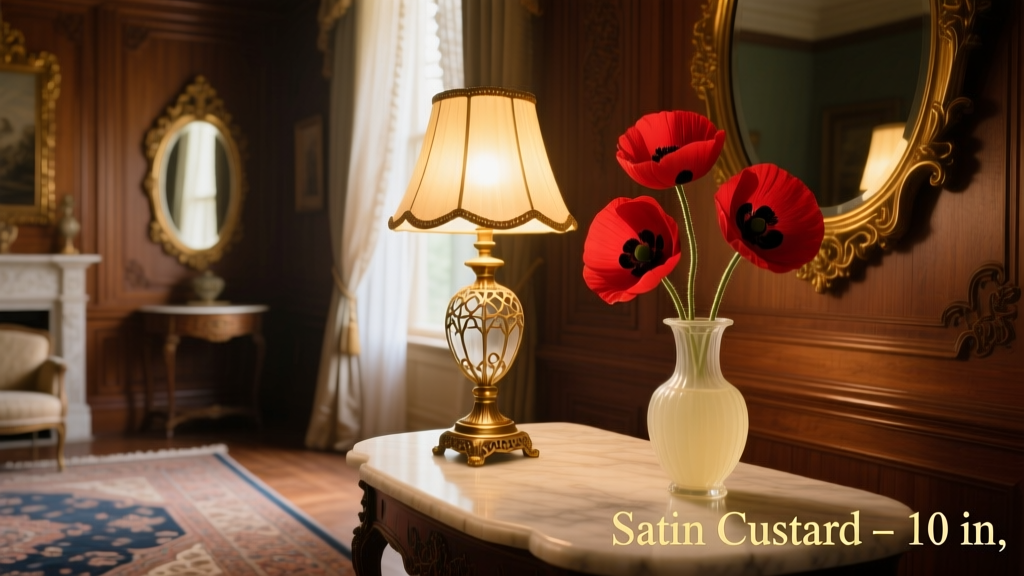
Consolidated Lamp and Glass Company Vase: Red Poppies on Satin Custard Glass — A Collector’s Guide to the 10-Inch Masterpiece
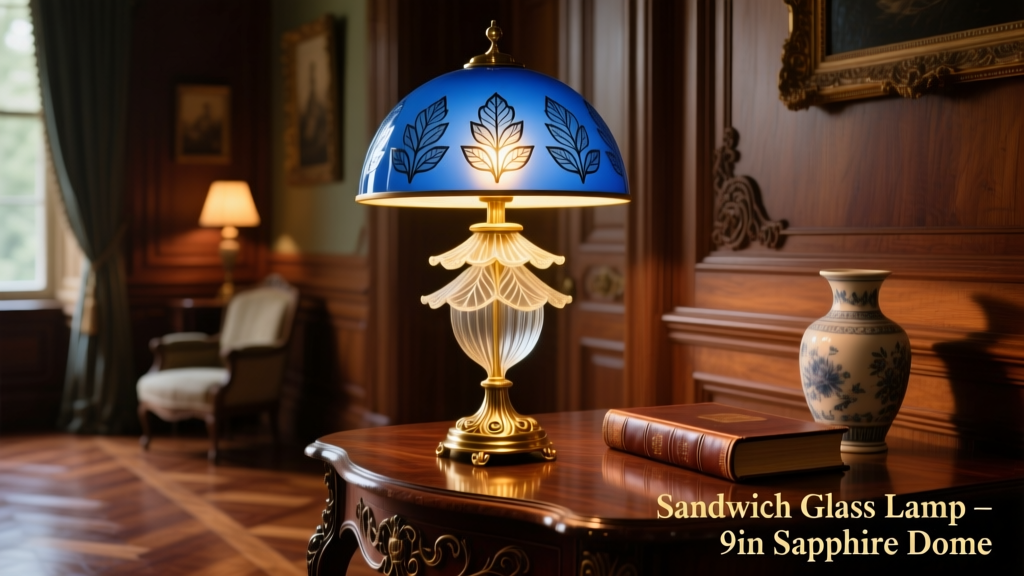
Sandwich Glass Lamp: Loop Leaf Stand with Medium Sapphire Blue Dome Top (9-Inch)
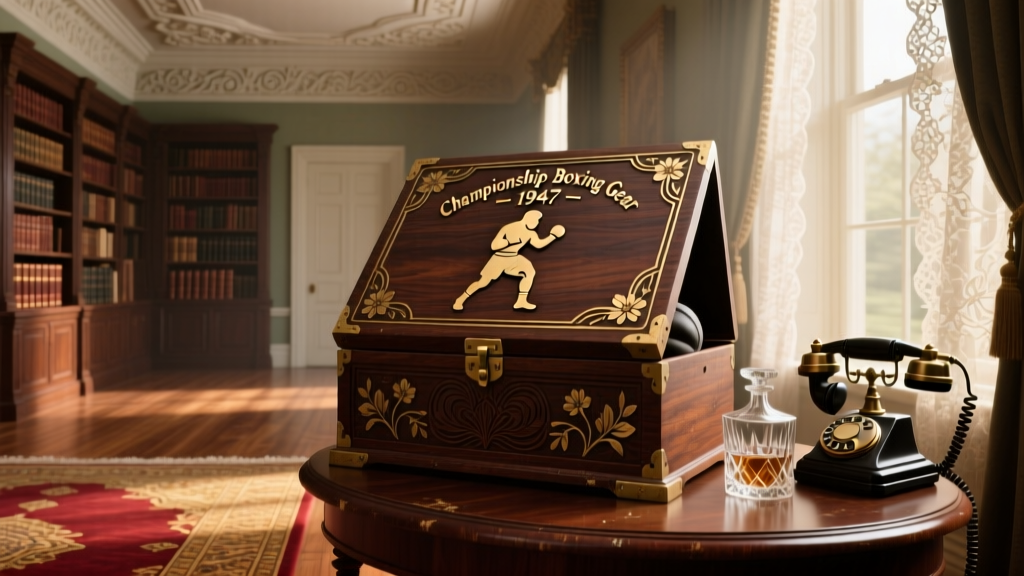
The 1940s Sports Boxing Head Protector Box: Design, Manufacture, and Historical Context
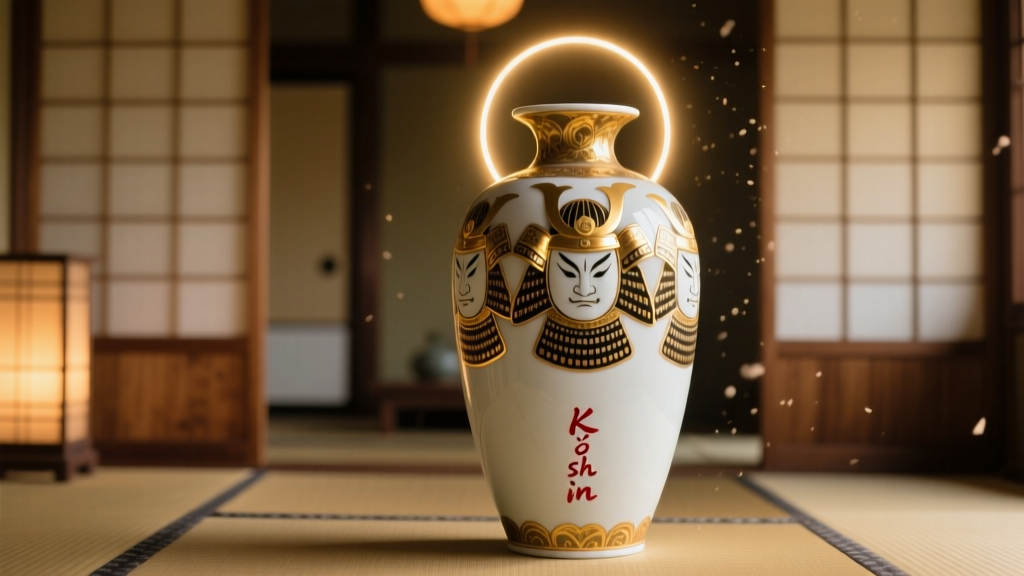
Satsuma Vase with Haloed Warrior Faces and Gold Artist Seal: A 12-Inch Meiji-Era Masterpiece
Royal Copenhagen Christmas Plate 1931: The 'Mother and Child' 7-Inch Porcelain Masterpiece
Roseville Umbrella Stand in Bushberry Blue: History, Identification, and Restoration Guidance
Furniture Canterbury with Lyre-Form Brass Spindles: A Detailed Study of the 5-Section Faux Rosewood Model (21 Inches)