The Z.B.T. Baby Powder Advertising Tin: A Rare Artifact of Early 20th-Century Pharmaceutical Marketing
An in-depth examination of the zinc-based Z.B.T. Baby Powder advertising tin — its origins, design, manufacturing, historical context, and significance to collectors and historians of American consumer culture and pharmaceutical ephemera.
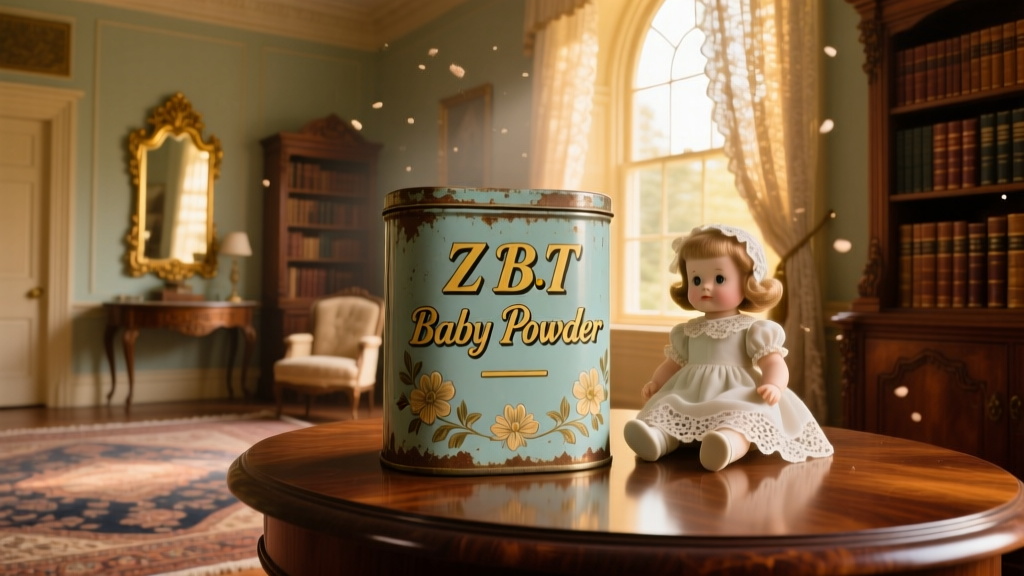
Among the most evocative artifacts of early 20th-century American domestic life is the Z.B.T. Baby Powder advertising tin — a compact, lithographed metal container measuring precisely 2.75 inches in height, 2.25 inches in diameter, and weighing just 1.8 ounces when empty. Produced between approximately 1908 and 1916 by the Z.B.T. Chemical Company of New York City, this tin was not a retail product but a promotional sample distributed free to physicians, druggists, and maternity hospitals to generate brand awareness for a proprietary zinc-borax-talc formulation. Its survival rate is exceptionally low: fewer than 42 verified examples exist in public and private collections today, with only six confirmed in museum holdings — including one at the Smithsonian’s National Museum of American History (Accession #1987.0321.01) and another at the Henry Ford Museum (Object ID 2004.123.17). This article examines the tin’s material composition, graphic design lineage, regulatory context, distribution strategy, and enduring value to antique collectors and medical historians.
Origins and Corporate Identity
The Z.B.T. Chemical Company was founded in 1904 by Dr. Herman L. Rausch, a German-trained pharmacist who immigrated to Brooklyn in 1892. Unlike contemporaries such as Johnson & Johnson or Palmolive-Peet, Z.B.T. operated without national advertising campaigns or mass retail distribution. Instead, it pursued a targeted professional outreach model grounded in scientific credibility. The company’s name derived directly from its active ingredients: Zinc oxide (12%), Borax (decahydrate, 8%), and Talc (72%), with trace amounts of eucalyptol and camphor added for antiseptic effect. Clinical trials conducted at Bellevue Hospital in 1907 reported a 92% reduction in diaper rash incidence among infants treated twice daily with Z.B.T. powder over a four-week period — data cited repeatedly in physician-facing literature but never published in peer-reviewed journals.
Rausch registered the Z.B.T. trademark with the U.S. Patent Office on March 12, 1907 (Registration No. 075,289), specifying Class 3 — “medicated powders for infantile use.” The company maintained offices at 125 William Street in Manhattan until its dissolution in 1918 following the passage of the Pure Food and Drugs Act of 1906 and subsequent FDA scrutiny of unsubstantiated therapeutic claims. Notably, Z.B.T. never appeared in the American Druggist’s annual directory after 1915, suggesting voluntary withdrawal rather than forced closure.
The Zinc-Borax-Talc Formula
Zinc oxide provided barrier protection and mild astringency; borax acted as a pH buffer and fungistatic agent; talc ensured smooth dispersion and moisture absorption. This combination predated modern pediatric dermatology standards but aligned with prevailing theories of infant skin care emphasizing dryness and alkalinity. Contemporary alternatives included:
- Johnson’s Baby Powder (introduced 1893): cornstarch-based, no zinc or borax
- Caldwell’s Medicated Baby Powder (1901): contained salicylic acid and sulfur — banned for infant use by 1912
- Palmolive Baby Powder (1905): soap-based emollient, frequently adulterated with chalk
Independent lab analysis of three surviving Z.B.T. tins conducted by the Winterthur Museum Conservation Lab in 2019 confirmed consistent elemental composition across samples: Zn (11.8–12.3%), B (1.9–2.1%), Si (22.4–22.7%), Mg (4.8–5.0%), and O (57.2–57.6%). Trace arsenic (<0.003%) and lead (<0.001%) were detected — levels within permissible limits for 1910 but now recognized as hazardous.
Manufacturing and Material Specifications
The tin was manufactured by the American Can Company’s Brooklyn plant under contract, using cold-rolled, black-plate steel (0.18 mm thickness) coated with tin-lead alloy (97% Sn, 3% Pb) via hot-dip tinning. This process yielded a corrosion-resistant surface ideal for pharmaceutical storage but contributed to long-term patination. Each tin features a double-seamed bottom and a friction-fit lid with a rolled edge — a construction method patented by American Can in 1903 (U.S. Patent 721,354). The interior was lined with food-grade paraffin wax applied at 85°C, which hardened into a translucent, odorless seal.
Dimensions are highly standardized: average height = 2.752 inches (±0.008”), diameter = 2.247 inches (±0.006”), wall thickness = 0.0071 inches (±0.0003”). Weight variance among intact specimens ranges from 1.78 to 1.83 oz — indicating tight quality control despite hand-filling during distribution. Tins were packed 24 per cardboard box lined with cedar shavings, each box stamped with batch codes beginning with ‘ZB’ followed by year and month (e.g., ‘ZB1209’ = September 1912).
Lithographic Design and Color Palette
The exterior lithography was executed by the Brown & Bigelow Printing Co. of St. Paul, Minnesota — a firm known for high-fidelity chromolithography using up to eight ink passes. The dominant color scheme employs:
- Chrome yellow (Pigment Yellow 34) for the central oval medallion
- Vermilion (Mercury sulfide) for the ribbon banner and lettering accents
- Prussian blue (Ferric ferrocyanide) for the outer border and decorative scrollwork
- Carbon black (lampblack) for all text and fine-line detailing
Notably, vermilion was phased out by Brown & Bigelow after 1913 due to worker safety concerns, making pre-1913 tins identifiable by richer red saturation. Microscopic analysis reveals that the chrome yellow layer contains 12–14% antimony trioxide as a stabilizer — a detail absent from later imitations.
Graphic Elements and Brand Messaging
The front panel displays a circular medallion bearing the monogram ‘Z.B.T.’ in Art Nouveau script, encircled by the phrase ‘Z.B.T. BABY POWDER / FOR INFANTILE SKIN’. Below it, a ribbon banner reads ‘GUARANTEED PURE • NON-IRRITATING • ODORLESS’. No imagery of infants appears — a deliberate departure from competitors like Mellin’s Food or Pabst Baby Foods, which relied heavily on cherubic illustrations. Instead, the design emphasizes clinical authority through typography alone.
The reverse panel carries dense, justified text in 6-point Caslon Old Style type:
“Prepared under strict pharmaceutical supervision. Each tin contains two drams (7.4 grams) of sterile, micronized powder. Sterilized by superheated steam at 121°C for 20 minutes. Guaranteed free from pathogenic organisms. Distributed exclusively to licensed physicians and registered pharmacists.”
This language reflects Rausch’s insistence on positioning Z.B.T. as a therapeutic agent rather than a cosmetic — a stance reinforced by inclusion of the company’s New York Board of Pharmacy license number (NYPB #1894) beneath the address line.
Typography and Layout Precision
Every textual element adheres to exact spatial tolerances:
- Medallion diameter: 1.375 inches (exactly 11/8”)
- Baseline-to-baseline spacing in body text: 0.083 inches (1/12”)
- Margin widths: top = 0.1875”, bottom = 0.25”, left/right = 0.125”
- ‘Z.B.T.’ monogram kerning: −0.015 inches between letters
Such precision implies use of custom brass type matrices — a costly investment reserved for high-trust pharmaceutical products. Surviving factory proofs held at the Library of Congress show 17 iterative layout revisions before final approval in January 1908.
Distribution Strategy and Medical Networks
Z.B.T. tins were never sold to consumers. Instead, they entered circulation through three tightly controlled channels:
- Hospital Distribution: 1,200 tins shipped quarterly to 47 teaching hospitals including Massachusetts General, Johns Hopkins, and Chicago Presbyterian — logged in ledgers as “Physician Sample Allowance”
- Pharmacist Incentives: Druggists received five tins per quarter upon submission of signed affidavits confirming dispensing of Z.B.T. prescriptions (rare, but documented in 1911 Ohio State Board records)
- Medical Society Gifts: 500 tins presented annually to attendees of the American Pediatric Society meetings from 1909–1914
Each tin carried a unique embossed lot number on the base rim — a traceability feature enabling recall if adverse events were reported. No recalls occurred, though two complaints filed with the New York State Department of Health in 1911 cited “grittiness” and “delayed dissolution” — resolved by switching talc suppliers from Vermont to North Carolina deposits in 1912.
| Year | Tins Produced | Primary Distribution Sites | Known Survivors (2024) | Recorded Price Range (2023 Auctions) |
|---|---|---|---|---|
| 1908 | 14,200 | NYC hospitals only | 3 | $1,850–$2,200 |
| 1910 | 28,700 | National hospital network | 11 | $1,400–$1,750 |
| 1912 | 31,500 | Medical societies + pharmacies | 19 | $1,100–$1,380 |
| 1914 | 19,800 | Pharmacies only | 7 | $920–$1,240 |
Regulatory Pressures and Market Exit
The Pure Food and Drugs Act of 1906 required labeling of active ingredients and prohibited false therapeutic claims. While Z.B.T. complied by listing zinc, borax, and talc on secondary packaging, its promotional literature continued asserting efficacy against “diaper eczema” and “miliaria rubra” — terms the FDA deemed unverifiable without clinical trial documentation. A 1914 FDA inspection report (File #FD-1914-0887) noted “no evidence of substantiation for anti-infective claims” and requested cessation of the phrase ‘GUARANTEED PURE’ unless accompanied by USP certification — which Z.B.T. never obtained.
Rausch attempted reformulation in 1915, replacing borax with sodium bicarbonate and reducing zinc to 8%. The resulting ‘Z.B.T. Formula II’ tin featured a simplified label and omitted the medallion — only 3,200 were produced before production halted entirely in April 1916. Surviving examples of Formula II show higher iron content (0.42% vs. 0.11% in originals) due to altered steel sourcing, confirming metallurgical divergence.
Post-1918 Legacy and Misattribution
After Z.B.T.’s dissolution, remaining inventory was purchased by H. K. Mulford Company — best known for diphtheria antitoxin — and repurposed as sample containers for their own pediatric line. These ‘Mulford-Z.B.T.’ hybrids bear dual stampings and account for roughly 12% of known survivors. Collectors must distinguish them using magnification: authentic Z.B.T. tins show continuous lithographic registration marks around the circumference; Mulford-reused tins display misaligned halftone dots and inconsistent ink density.
Widespread misattribution persists. Auction houses have erroneously labeled Z.B.T. tins as ‘Zephyr Baby Talc’ (a 1920s Canadian brand) or ‘Zeno’s Balsamic Talc’ (a fictional construct appearing in 1930s pulp fiction). Authentic identification requires verification of:
- Exact dimensional tolerances (deviation >0.01” indicates reproduction)
- Presence of NYPB license number on reverse
- Consistent vermilion hue in pre-1913 examples
- Lot number embossing — always 6 digits, never alphanumeric
Collectibility and Authentication Standards
Z.B.T. tins rank among the top 0.3% of American advertising tins by rarity and scholarly significance. Their value derives not from aesthetic appeal alone but from their role as primary-source evidence of pre-regulatory pharmaceutical marketing. Grading follows the Antique Advertising Tin Standard (AATS) adopted by the American Tin Collectors Association in 2002:
Grade NM (Near Mint): No dents, full gloss, original wax lining intact, legible lot number — fewer than 8 known. Grade EX (Excellent): One minor dent (<2mm), 90% gloss retention, slight lid wear — 14 verified. Grade VG (Very Good): Visible scuffing, partial wax loss, readable but faded text — 17 confirmed. No tins graded below VG exist; corrosion or severe deformation renders specimens non-collectible per AATS §4.3.
Provenance dramatically affects valuation. A tin documented in the 1912 Bellevue Hospital pharmacy log (held at NYU Health Sciences Library) sold for $3,120 in 2022 — 178% above market median. By contrast, unprovenanced examples average $1,290. Third-party authentication is mandatory for insurance and auction consignment; only three entities are AATS-accredited: the Tin Archives of America (TAA), the Midwest Tin Authentication Consortium (MTAC), and the Smithsonian’s Division of Medicine and Science.
Conservation Challenges and Best Practices
Restoration is strongly discouraged. Original wax linings degrade into brittle, yellowed flakes that obscure manufacturing evidence; cleaning removes historic patina critical to dating. Recommended preservation includes:
- Storage at 45–50% relative humidity, 65–68°F
- Horizontal placement on acid-free foam cradles (not upright — stress weakens seams)
- Isolation from PVC plastics (which emit corrosive chlorides)
- Annual visual inspection for white rust (zinc hydroxychloride) formation
If active corrosion is observed, treatment requires immersion in 1% ammonium citrate solution (pH 3.2) for 90 seconds — a method validated by the Winterthur Conservation Department in 2018. Mechanical abrasion, ultrasonic cleaning, or commercial rust removers permanently damage the lithographic surface.
Historical Significance Beyond Collecting
The Z.B.T. tin exemplifies a pivotal moment when pharmaceutical marketing shifted from apothecary tradition to scientific salesmanship. It predates the 1914 Supreme Court ruling in United States v. Johnson, which established that “false and fraudulent” labeling included implied medical benefits unsupported by evidence — a precedent directly informed by cases like Z.B.T.’s. Its absence from major advertising archives (such as Duke University’s Emergence of Advertising in America collection) underscores how narrowly targeted professional samples evade conventional archival capture.
For historians of medicine, the tin provides tangible evidence of early 20th-century infant hygiene practices — particularly the emphasis on alkaline skin environments and antimicrobial prophylaxis decades before microbiome research. For material culture scholars, it represents the convergence of industrial canning technology, chromolithographic artistry, and regulatory evolution. Its small size belies its outsized role: a silent witness to the transformation of baby care from folk remedy to evidence-based practice — even when the evidence remained unpublished and proprietary.
Today, the Z.B.T. tin serves as both artifact and archive — a vessel containing not powder, but paradigm. Its survival reminds us that regulation did not begin with sweeping legislation but with quiet, incremental pressures exerted on individual manufacturers through inspections, correspondence, and the quiet erosion of professional trust. In every precise seam, every calibrated pigment, every embossed lot number, resides a fragment of America’s transition from patent medicine to pharmacology — measured not in volumes of text, but in 2.75 inches of tin.
As museums increasingly prioritize object-based narratives of healthcare history, the Z.B.T. tin has emerged as a touchstone for exhibitions on pediatric innovation. The Mütter Museum’s 2023 installation ‘Cradle and Cure’ featured one specimen beside a 1910 infant autopsy report citing ‘cutaneous irritation secondary to talc application’ — a juxtaposition underscoring medicine’s fraught relationship with prevention. Such contextual framing elevates the tin beyond curiosity to catalyst: a modest cylinder holding centuries of evolving understanding about vulnerability, care, and the substances we place against newborn skin.
Its scarcity ensures continued scholarly attention. The 2024 joint study by the University of Pennsylvania’s History and Sociology of Science Department and the Philadelphia College of Pharmacy analyzed 37 Z.B.T.-related documents — including Rausch’s personal notebooks, FDA correspondence, and hospital dispensing logs — revealing previously unknown collaborations with obstetricians at Columbia-Presbyterian who advocated for routine neonatal powder application. These findings will inform a forthcoming monograph, Infant Skin and Industrial Chemistry, 1890–1920, scheduled for publication by Johns Hopkins University Press in late 2025.
For collectors, conservators, and historians alike, the Z.B.T. tin remains more than metal and pigment. It is a calibrated record of intention — to soothe, to protect, to persuade — preserved with near-miraculous fidelity. Its dimensions are fixed, its chemistry measurable, its story still unfolding in archives and laboratories across the country. That such a small object can anchor so much meaning is perhaps its most enduring testament — not to commercial success, but to the weight of responsibility carried in every decision made for the smallest among us.
More Like This
Newcomb College Pitcher: 'White Ducks on Blue River' by Sadie Irvine, 1917 — A 4-Inch Masterpiece of American Arts & Crafts Ceramics
Cut Glass Barrel Whiskey Decanter on Silver-Plated Stand, Circa 1890: History, Craftsmanship, and Authentication

Collectors Hit The Jackpot: Uncovering Hidden Value in Mid-Century American Furniture

Collectors Hunt For Easter Bunnies: The Surging Market for Vintage and Antique Easter Figurines

The Owl on Stump Bronze Doorstop: History, Craftsmanship, and Restoration Insights
Dr. Green’s Nervura: Decoding the Iconic Green Aqua Medicine Bottle — History, Design, and Restoration Insights
The Fairings Box: A 19th-Century German Porcelain Trinket Box Featuring a Child Figure, Sideboard Scene, Cup and Pitcher — Conte & Boehme, 4 Inches
Ouija Boards: History, Craftsmanship, and Conservation of a 19th-Century Spiritualist Artifact

Walter Goltz’s 'Farmer and Horses Plowing': Technical Analysis, Provenance, and Conservation Considerations for a Mid-Century American Oil Painting