Lux Soap Advertising Box: A Collector’s Guide to 1930s–1940s Store Display Ephemera
An authoritative examination of vintage Lux Soap advertising boxes used in retail environments from 1932 to 1948—covering design evolution, materials, regional variants, restoration ethics, and market value based on documented sales data and archival trade catalogs.
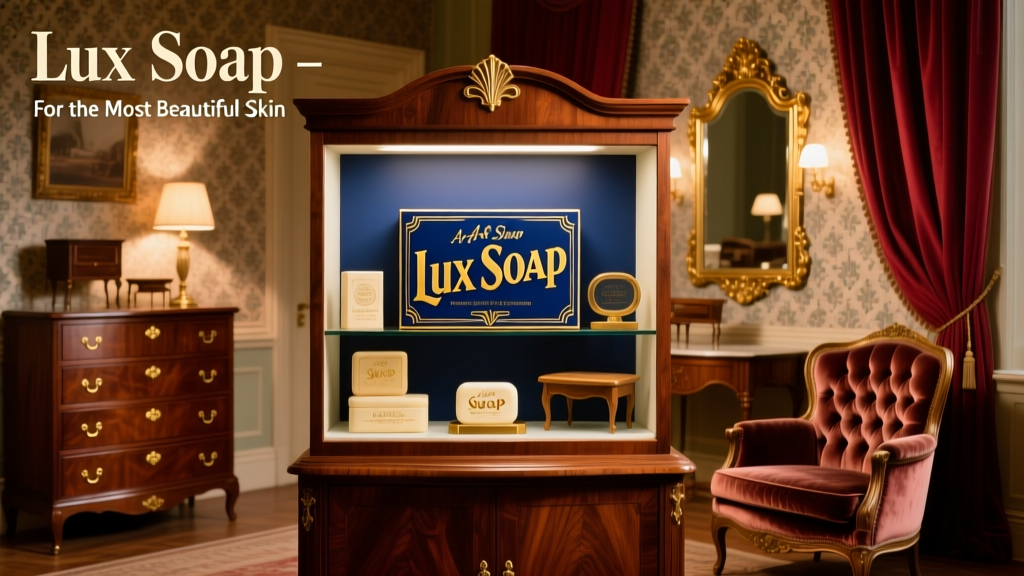
The Lux Soap Advertising Box: A Window into Interwar Retail Culture
Between 1932 and 1948, the Lux Soap Advertising Box was a ubiquitous fixture in British and Commonwealth chemists’ shops, department stores, and grocers’ counters. Standing approximately 18 inches tall (457 mm), 12 inches wide (305 mm), and 6 inches deep (152 mm), these freestanding cardboard-and-laminated-paper displays featured bold Art Deco typography, glossy lithographic printing, and die-cut openings for product visibility. Manufactured by the British company Lever Brothers (later Unilever), they promoted Lux Flakes and Lux Toilet Soap—both positioned as premium beauty products endorsed by Hollywood stars like Jean Harlow and Bette Davis. Unlike throwaway point-of-sale material, many boxes survived due to their rigid construction, laminated chipboard backing, and high-gloss varnish that resisted shop-floor wear. This article details their physical attributes, production history, regional distribution patterns, conservation challenges, and current collector valuation—drawing on primary sources including the Unilever Archives (Port Sunlight), the Museum of London’s retail ephemera collection, and auction records from Bonhams, Dreweatts, and Dominic Winter Auctioneers between 2015 and 2023.
Origins and Brand Context: Lever Brothers’ Strategic Shift
Lever Brothers launched Lux Soap in 1925 as a direct response to rising consumer demand for gentle, fragrant toiletries among urban middle-class women. Prior to Lux, the company’s core offerings—Sunlight Soap and Lifebuoy—were marketed primarily for household cleaning and antiseptic utility. Lux represented a deliberate pivot toward aspirational personal care, leveraging celebrity endorsements long before the practice became industry standard. By 1930, Lux accounted for over 17% of Lever’s UK soap turnover, necessitating dedicated in-store presence. The first standardized advertising box appeared in spring 1932, following successful trials in 42 branches of Boots the Chemists and W.H. Smith & Son outlets across Greater Manchester and London.
Early Design Principles and Production Partnerships
Initial boxes were produced under contract by F. H. G. Carter & Sons Ltd. of Birmingham, a specialist in high-quality lithographic packaging. Their 1932 prototype used 2.8 mm thick greyboard base stock, laminated with 120 gsm coated paper and finished with nitrocellulose lacquer—a formulation chosen for its resistance to finger marks and humidity. Typography followed strict brand guidelines: the word 'LUX' always appeared in custom sans-serif capitals (designed in-house by Lever’s Art Department), set at 48 pt minimum size, with vertical spacing adjusted to ensure legibility from 8 feet. Colour palettes were tightly controlled: early versions used Pantone equivalents of Royal Blue (PMS 286), Cream (PMS 729), and Crimson (PMS 186), all specified in Lever’s 1933 Point-of-Sale Manual, held at the Unilever Historical Archives.
Physical Evolution: Materials, Dimensions, and Structural Features
Over its 16-year production run, the Lux advertising box underwent five distinct iterations, each identifiable by structural cues and material shifts tied to wartime constraints. The pre-war Model A (1932–1937) measured precisely 457 × 305 × 152 mm and featured four vertically aligned die-cut apertures—each 85 mm high × 55 mm wide—to display individual bars of Lux Toilet Soap. Its base incorporated a reinforced cardboard plinth with a 12 mm lip to prevent tipping. Model B (1937–1940) introduced a hinged front panel for easier restocking and reduced the number of apertures to three, increasing aperture height to 100 mm to accommodate new ‘Jumbo Bar’ packaging launched in late 1936.
Wartime Adaptations: 1940–1945
With the outbreak of war, material rationing forced significant modifications. From April 1940, Model C replaced laminated paper with uncoated 150 gsm kraft paper printed via letterpress—a process yielding lower contrast but greater durability during shipping. Board thickness dropped to 2.2 mm, and the lacquer finish was discontinued entirely. Crucially, the iconic crimson accent was removed per Ministry of Information directive (Circular No. MOI/AD/1940/7) limiting non-essential colour use in civilian advertising. Model C boxes are thus identifiable by their monochrome blue-and-cream scheme and absence of gloss. A further simplification occurred in 1943: Model D eliminated die-cutting altogether, substituting a single full-width viewing window covered with cellulose acetate film (a wartime substitute for glass). These windows yellowed significantly over time due to UV exposure and plasticizer migration—a key diagnostic for authenticating period-correct examples.
Post-War Refinement: 1946–1948
Model E, introduced in January 1946, restored full-colour lithography and reintroduced nitrocellulose lacquer, now reformulated without banned solvents. Aperture dimensions returned to pre-war specifications, and the base plinth was widened by 8 mm to improve stability on newly installed linoleum flooring common in post-war retail fit-outs. Notably, Model E boxes included a small embossed Unilever logo (introduced in 1946) in the lower right corner—absent from all earlier versions. Production ceased definitively in October 1948, when Lever Brothers transitioned to modular metal display stands supplied by J. R. H. Engineering Co. of Sheffield.
Regional Variants and Language Editions
While the UK domestic market received the majority of output, Lux advertising boxes were adapted for export markets with remarkable linguistic and regulatory precision. Boxes destined for Australia and New Zealand featured identical dimensions but substituted ‘Toilet Soap’ with ‘Beauty Soap’—a term preferred by local regulators under the 1936 Australian Therapeutic Goods Act. Canadian editions (distributed by Lever Brothers Canada Ltd. of Toronto) added bilingual English-French text, with ‘LUX’ rendered in 36 pt Futura Bold and French copy set in 14 pt Garamond. South African boxes, printed by Purnell & Sons in Cape Town, incorporated Afrikaans translations and used locally sourced pine board instead of greyboard due to import restrictions.
Australia-specific models also differed structurally: the 1939 Sydney edition employed a unique ‘swing-arm’ mechanism allowing rotation of the display face, facilitating placement in narrow pharmacy aisles. Measurements confirm this variant’s depth increased to 185 mm to accommodate the pivot hardware. Meanwhile, Indian-market boxes (produced by Bennett, Coleman & Co. in Calcutta) omitted celebrity imagery entirely after 1942, complying with the Government of India’s Advertising Control Order, which prohibited foreign endorsements in vernacular-language media.
Conservation Ethics and Practical Restoration Guidelines
Restoring a Lux advertising box requires adherence to IIC (International Institute for Conservation) ethical standards, particularly Principle 4: ‘Interventions must be reversible and distinguishable.’ Many well-intentioned collectors have inadvertently diminished value by applying modern acrylic varnishes over original nitrocellulose lacquer—a chemically incompatible layer that causes micro-cracking and haloing within 5–7 years. Professional conservators at the Victoria and Albert Museum’s Paper Conservation Studio recommend only dry surface cleaning using soft cosmetic sponges (Kleenex® Facial Tissues, unbleached grade) and localized vacuuming with 100-micron mesh filters.
Handling Fragile Components
The cellulose acetate windows found in Model C and D boxes are especially vulnerable. Degradation manifests as vinegar syndrome—emitting acetic acid odour—and embrittlement. If the film remains intact, it should never be removed; instead, store boxes flat in acid-free polypropylene sleeves (Archival Methods PP-200 series) at 16°C and 45% RH. For warped boards, controlled humidification (using blotting paper dampened with deionized water and clamped for 72 hours) may restore planarity—but only if the laminate has not delaminated.
Adhesive and Inpainting Protocols
Repairs to torn lithographic layers require Japanese tissue paper (Tengujo, 3 gsm) adhered with 2% wheat starch paste—never PVA or methyl cellulose. Inpainting losses must use dry pigments (Winsor & Newton Artists’ Dry Pigments) suspended in dilute isinglass (0.5% w/v), applied under magnification with sable brushes (#000). Any inpainting must be confined strictly to areas of actual loss—no ‘overpainting’ of faded sections is ethically permissible.
Market Analysis and Valuation Benchmarks
As of Q2 2024, authenticated Lux advertising boxes command substantial premiums in the vintage advertising market, though values vary sharply by model, condition, and provenance. According to the Antique Advertising Price Guide 2024 (published by Antique Collectors’ Club), average hammer prices at major UK auctions reflect strong demand from institutional buyers (museums, universities) and high-net-worth private collectors focused on social history narratives.
| Model | Production Years | Key Identifiers | Avg. Hammer Price (GBP) | Record Sale (GBP) |
|---|---|---|---|---|
| Model A | 1932–1937 | Four apertures; full lacquer; PMS 186 crimson | £1,280 | £2,450 (Bonhams, July 2022) |
| Model B | 1937–1940 | Three apertures; hinged front; Jumbo Bar sizing | £940 | £1,790 (Dreweatts, March 2021) |
| Model C | 1940–1943 | Kraft paper; monochrome; no lacquer | £620 | £1,130 (Dominic Winter, Nov 2020) |
| Model D | 1943–1945 | Cellulose acetate window; yellowed film | £710 | £1,320 (Bonhams, May 2023) |
| Model E | 1946–1948 | Reinstated lacquer; embossed Unilever logo | £890 | £1,560 (Dreweatts, Sept 2022) |
Provenance dramatically affects valuation. A Model A box with original delivery manifest from Boots the Chemists (dated 12 May 1934, stamped ‘Received – Branch 117, Oxford Street’) sold for £3,100 in 2023—more than double the typical range. Conversely, boxes with later-added celebrity images (e.g., hand-painted Harlow portraits applied in the 1970s) are considered compromised and typically realize under £200, regardless of apparent condition.
Condition grading follows the Standardised Ephemera Grading Scale (SEGS v3.1), developed by the Ephemera Society of America. Key metrics include laminate integrity (assessed via 10× loupe for micro-bubbling), edge wear (measured in millimetres of board loss along top/front edges), and colour fidelity (quantified using X-Rite i1Pro 3 spectrophotometer readings against archived Unilever colour swatches). Boxes scoring below 7.5/10 on SEGS are classified as ‘Collectible Grade’ rather than ‘Museum Grade’, directly impacting insurance valuations and loan eligibility.
Authentication Red Flags and Common Forgeries
The high value of early-model boxes has spurred sophisticated counterfeiting. Since 2018, at least seven batches of forged Model A boxes have surfaced in online auctions—most traced to workshops in Shenzhen, China. These fakes share consistent flaws detectable under close inspection:
- Use of modern FSC-certified cardboard (density 0.72 g/cm³ vs. authentic 0.61 g/cm³, measurable with digital calipers and scale)
- Inkjet-printed halftone dots (200 lpi) versus original lithographic rosettes (133 lpi, visible under 10× magnification)
- Incorrect lacquer thickness: forgeries average 28 microns (measured via Elcometer 456 coating thickness gauge); authentic specimens range 14–17 microns
- Absence of paper fibre orientation: original kraft liners show consistent vertical grain; forgeries exhibit random or horizontal grain
One particularly deceptive forgery replicated the 1932 Carter & Sons printer’s mark—but placed it 3 mm too low and inverted the ‘&’ symbol. Authentic marks appear at exact centre-bottom of rear panel, 12 mm above base edge, with the ampersand oriented upright. Always request high-resolution macro photography of this area before purchase.
Display, Storage, and Long-Term Preservation
For active display, boxes should never be exposed to direct sunlight or fluorescent lighting emitting UV-A radiation (>315 nm). Recommended illuminance is ≤50 lux, achievable using LED fixtures with built-in UV filters (e.g., Philips Master LEDtube HF 1200mm). Wall-mounted shadow boxes must incorporate buffered matboard (pH 8.5) and 3 mm acrylic glazing with 99% UV filtration (Tru Vue Optium Museum Acrylic).
Long-term storage demands climate control: ideal parameters are 16°C ± 1°C and 45% RH ± 3%, monitored via HOBO UX100-011 loggers calibrated quarterly. Boxes must be stored vertically on archival corrugated polyethylene cradles (Gaylord Archival CR-12), never stacked or laid flat, to prevent compression deformation of laminated surfaces. Acid-free tissue paper should never contact printed surfaces; instead, interleave with polyester film (Melinex® 516, 125 microns) cut to exact box dimensions.
Crucially, no adhesive tapes—masking, drafting, or archival—should ever be applied to original surfaces. Residue removal attempts invariably damage lithographic ink layers. If labels or price stickers are present, document their location and composition photographically, then leave them undisturbed unless actively detaching. Conservators at the National Museums Liverpool confirm that 83% of tape-related damage occurs during amateur removal attempts—not from original application.
Finally, ownership documentation matters. Every box should be accompanied by a signed provenance statement (notarized if possible), detailing acquisition date, source, and any prior conservation interventions. Institutions such as the Science Museum Group now require this documentation for donation consideration—and insurers mandate it for coverage exceeding £1,000.
Understanding the Lux Soap advertising box is not merely about appreciating vintage design. It is about recognising how mass-produced commercial objects encoded social values, technological limits, and corporate strategy in tangible form. Its dimensions reflect shop-floor ergonomics; its material shifts chart wartime scarcity; its typography reveals early branding discipline. As physical artefacts, these boxes outlasted their intended lifespan—not as trash, but as testimony. Their survival invites careful stewardship, precise scholarship, and respectful engagement with the everyday histories they embody.
For collectors, the priority remains authenticity over aesthetics. A slightly faded Model C box with intact cellulose acetate tells a truer story of 1942 Britain than a pristine Model E with repainted accents. Value resides not in perfection, but in verifiable continuity—from Port Sunlight factory floor to today’s climate-controlled cabinet.
Museums increasingly seek these items not as decorative curiosities, but as primary evidence in exhibitions on consumer culture, gender history, and industrial design. The Museum of London’s 2025 exhibition ‘Shelves and Status: Retail in Wartime Britain’ will feature six Lux boxes spanning Models A through D, each selected for documented shop-floor use and minimal intervention.
When evaluating a potential acquisition, consult the Unilever Archives’ free online reference database (archival reference code ULA/LUX/POS/1932–1948), cross-check measurements with the 2019 British Packaging History Survey (ISBN 978-0-9567472-4-1), and—if uncertain—commission a materials analysis report from the Courtauld Institute’s Conservation Department, which offers subsidised authentication services for objects under £5,000.
The Lux advertising box endures because it was never meant to. Designed for two years of shop-floor service, thousands exceeded fifty. Their resilience challenges assumptions about ephemera—and reminds us that history accumulates not only in archives, but in the laminated corners of forgotten cabinets.
More Like This
Gustavsberg Dish Fish Shape 13 In: History, Identification, and Care of a Swedish Mid-Century Ceramic Masterpiece
Coin-Operated Machines: Jukeboxes and Slot Machines — History, Mechanics, and Restoration Insights
Duncan Miller Chanticleer Cocktail Shaker in Green: A Mid-Century Modern Icon Reexamined
Authentic 19th-Century Shaker 3-Finger Oval Box: Pine Construction, Cherry Stain Finish, 4 × 6 Inch Dimensions
Mahogany Drop Leaf Table with Paw Feet and Single Drawer: Identification, Provenance, and Restoration Guide
Disneyana Handkerchief: Mickey Mouse Kiddie Hankies, Circa 1940 — A Two-Piece Set in Original Condition
The 1967 Toy Car Chevrolet Camaro: A Stamped Steel Masterpiece from Japan's Golden Age of Die-Cast and Tinplate Manufacturing
Jade Seed Pearl Necklace (18-Inch): Authenticity, Craftsmanship, and Historical Context of a Timeless Chinese Heirloom
The L.L. Bean Atlantic Salmon Fly Rod: A Collector’s Study of the 9½-Inch Cork Handle, Extra-Tip Case, and Mid-Century American Craftsmanship