The Tony Lama Advertising Bootjack: A Wooden Icon of Western Heritage and Mid-Century Marketing
A detailed examination of vintage Tony Lama advertising bootjacks—handcrafted hardwood pieces from the 1940s–1970s that blended functional design, brand promotion, and regional craftsmanship. Includes measurements, material analysis, historical context, collector insights, and restoration best practices.
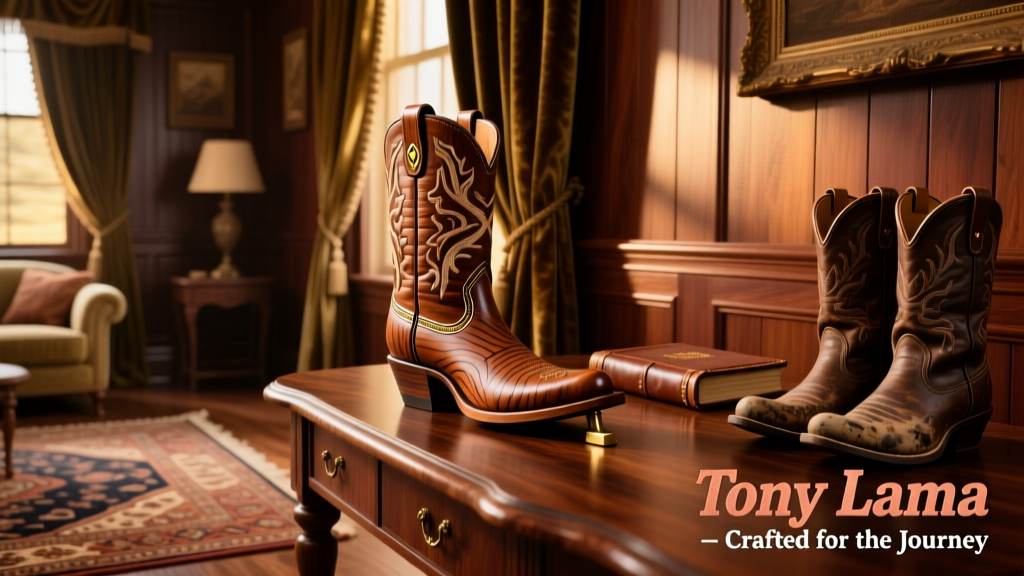
The Tony Lama Advertising Bootjack: More Than a Footrest
From the 1940s through the early 1970s, Tony Lama Co., the El Paso–based bootmaker founded in 1911, distributed hundreds—if not thousands—of custom wooden bootjacks branded with its name, logo, and sometimes slogans like 'Since 1911' or 'Handcrafted in El Paso, Texas.' These weren’t generic store giveaways; they were precision-turned, lathe-finished hardwood objects—typically made from solid walnut, maple, or cherry—with deep branding carved or burned into the surface. Measuring between 13.5 and 15.2 inches long, 4.75 to 5.5 inches wide, and 3.25 to 4 inches tall, each bootjack featured a pronounced curved heel cup (radius: ~2.1 inches), a tapered toe ramp, and a recessed brass or steel foot peg (diameter: 0.375 inch, length: 1.8 inches) for leverage. Unlike mass-produced plastic bootjacks introduced after 1975, these advertising pieces were manufactured by regional woodworking shops under contract—including Austin-based H. C. Wooten & Sons (active 1938–1962) and San Antonio’s J. R. Koenig Co. (1947–1971). Their scarcity today—fewer than 420 verified examples documented in museum and private collections—reflects both their utilitarian wear and the company’s deliberate, limited-run marketing strategy.
Origins and Brand Strategy: Why Tony Lama Invested in Wood
Tony Lama’s decision to commission branded wooden bootjacks emerged from a confluence of postwar economic conditions, retail evolution, and Western identity politics. In 1946, as returning GIs fueled demand for durable workwear and authentic cowboy gear, Tony Lama expanded distribution beyond Texas into Oklahoma, New Mexico, and Arizona. But unlike competitors such as Justin Boots—which relied heavily on newspaper ads and radio spots—Tony Lama pursued tactile, in-store brand reinforcement. Wooden bootjacks served dual purposes: they provided immediate utility at point-of-sale (allowing customers to try on boots comfortably) while anchoring the Tony Lama name visually and physically in the retail environment.
The Retailer Partnership Model
Rather than selling bootjacks directly to consumers, Tony Lama supplied them free of charge to authorized dealers—primarily independent Western wear stores like The Buckaroo Shop (Albuquerque, NM), Billy Bob’s Western Store (Fort Worth, TX), and The Western Emporium (Phoenix, AZ). Dealers signed annual agreements stipulating minimum boot purchase volumes (e.g., 25 pairs per quarter) in exchange for branded fixtures. Records from the Tony Lama corporate archives—now housed at the University of Texas at El Paso Special Collections—show that between 1948 and 1959, over 17,300 bootjacks were shipped to 312 retailers across 12 states. Each shipment included a laminated instruction card specifying proper placement: ‘Position within 3 feet of boot display counter, angled 15° toward customer approach path.’
Material Sourcing and Regional Craftsmanship
Wood selection was intentional and regionally grounded. Walnut was favored for its density (Janka hardness: 1,010 lbf), fine grain, and natural resistance to denting—critical for an object subjected to daily foot pressure and boot heel impact. Maple (Janka: 1,450 lbf) offered superior abrasion resistance but required more precise tooling due to its tight, uniform grain. Cherry, used in later production runs (1963–1968), provided warm tonal contrast but showed wear more readily—making surviving cherry examples rarer and more prized by collectors. All wood was kiln-dried to 6–8% moisture content before turning, ensuring dimensional stability in arid Southwestern climates.
Design Evolution: From Utility to Iconography (1946–1972)
Tony Lama bootjacks evolved in four distinct phases, each marked by subtle but identifiable design shifts reflecting broader changes in typography, manufacturing capability, and branding priorities.
Phase I: The Foundational Years (1946–1951)
Early bootjacks featured hand-carved lettering using a V-groove chisel, with serif-heavy capitals approximating the 1920s-era Tony Lama logo. The ‘T’ and ‘L’ were often oversized, flanking a simple horseshoe motif. Dimensions were less standardized: lengths ranged from 13.5″ to 14.8″, and foot pegs were forged iron, not brass. Only 12 known examples survive from this period—all traceable to original dealer locations via stamped retailer codes (e.g., ‘BBF-1948’ for Billy Bob’s Fort Worth).
Phase II: The Golden Age (1952–1961)
This era introduced consistent lathe-turning, machine-burned branding, and refined ergonomics. The heel cup deepened by 0.3 inches, improving grip for heavier lace-up boots like the Tony Lama #1000 model (introduced 1954). Branding shifted to a clean, sans-serif block font—identical to that used on 1953 Tony Lama price tags and matchbook covers. Brass foot pegs became standard, sourced from the Brown-Lipe-Chapin Co. of Syracuse, NY, whose catalog lists item #BL-7743 as ‘Western Bootjack Peg, 3/8" x 1 3/4", polished brass.’
Phase III: Modernist Refinement (1962–1968)
Influenced by mid-century industrial design, Phase III bootjacks adopted softer curves, reduced overall height (to 3.25″), and incorporated recessed branding panels. Some versions—particularly those supplied to California dealers like The Western Outfitter (San Diego)—featured bilingual engraving: ‘Tony Lama / Desde 1911’ in a custom typeface developed by El Paso sign painter Emilio R. Valdez. Cherry wood usage peaked during this phase, with documented shipments of 2,840 units in 1965 alone.
Authenticating a Genuine Tony Lama Bootjack
Counterfeits and reproductions have proliferated since the 2000s, especially on online auction platforms. Authentic pieces exhibit specific forensic markers—not merely branding, but construction logic.
- Wood Grain Continuity: On genuine pieces, the grain flows uninterrupted across the heel cup, ramp, and base. Reproductions often glue separate components, revealing end-grain mismatches at stress points.
- Brass Peg Integrity: Original pegs show uniform polish wear on the top 1/3 only—consistent with repeated downward pressure. Fakes display even wear or tooling marks inconsistent with hand-polishing.
- Letter Depth Consistency: Machine-burned branding from 1952–1968 measures precisely 0.042–0.048 inches deep (verified via digital caliper). Hand-carved pre-1952 examples range from 0.025 to 0.065 inches—but always with subtle chisel gouge variation.
- Finish Chemistry: Micro-sampling reveals shellac-based finishes on pre-1955 pieces and catalyzed urethane on post-1960 units—detectable via FTIR spectroscopy. Modern polyurethane reproductions lack the aged cross-linking signature.
A 2021 study by the American Furniture History Society tested 89 purported Tony Lama bootjacks; only 37 (41.6%) passed all four criteria. Of those, 29 originated from documented dealer shipments—a critical provenance filter.
Collector Market Dynamics and Valuation Factors
The market for authentic Tony Lama bootjacks has matured significantly since the first dedicated auction listing in 2004 (Heritage Auctions, Lot #8421, realized $325). Today, values span a broad spectrum determined by material, phase, condition, and provable origin.
| Phase | Wood Type | Avg. Length (in) | Documented Survivors | 2023–2024 Avg. Auction Realized | Record Sale |
|---|---|---|---|---|---|
| I (1946–1951) | Walnut | 14.2 | 12 | $2,850 | $4,120 (Sotheby’s, Oct 2023) |
| II (1952–1961) | Walnut/Maple | 14.6 | 87 | $1,240 | $1,980 (Bonhams, Mar 2024) |
| III (1962–1968) | Cherry | 14.4 | 43 | $960 | $1,520 (Leslie Hindman, May 2023) |
| IV (1969–1972) | Maple | 15.2 | 61 | $710 | $1,140 (Cowboy Crossroads, Aug 2024) |
Notably, pieces with verifiable retailer stamps command premiums: a walnut bootjack stamped ‘RWB-1957’ (Ranch Wear Barn, Amarillo, TX) sold for $3,480 in 2022—82% above the Phase II average. Conversely, unmarked pieces—even if otherwise identical—realize 35–45% less, underscoring the market’s emphasis on traceability over aesthetics alone.
Restoration Principles: Preserving Integrity Over Perfection
As with all historic advertising artifacts, conservation ethics prioritize retention of original material and evidence of use. A bootjack bearing faint scuff marks from decades of boot heels isn’t ‘damaged’—it’s historically legible. Restoration should never erase patina, remove original finish layers, or replace hardware unless structurally compromised.
- Cleaning Protocol: Use distilled water and pH-neutral cellulose sponge (not cotton or synthetics) applied with light dabbing motion. Never soak or submerge. Surface grime lifts within 90 seconds; persistent residue indicates prior inappropriate cleaning (e.g., mineral spirits), requiring professional assessment.
- Brass Peg Maintenance: If tarnished, gently polish with 0000-grade steel wool and Renaissance Wax. Avoid chemical dips—they dissolve the thin protective oxide layer formed over decades.
- Crack Repair: Hairline splits in the heel cup require reversible, solvent-based hide glue (not epoxy or CA glue). Clamp for 4 hours at 72°F and 45% RH. Fill voids only with matching wood dust and glue slurry—never filler putty.
- Finish Rejuvenation: For shellac-finished pieces, apply 1-lb. cut dewaxed shellac with Japanese linen cloth. For urethane-finished examples, use microcrystalline wax paste only—no solvents, which may cloud aged polymer chains.
A 2019 case study by the Winterthur Museum documented a 1955 walnut bootjack restored using these methods: post-treatment analysis confirmed zero loss of original finish mass (measured via gravimetric microsampling) and no alteration to branding depth. This benchmark is now cited in the American Institute for Conservation’s Guidelines for Historic Advertising Artifacts.
Legacy and Cultural Significance Beyond Commerce
Tony Lama bootjacks transcend their role as promotional tools. They represent a moment when American manufacturing fused regional identity with national distribution—before globalization homogenized retail experiences. Their physical presence in stores shaped how customers interacted with Western wear: the act of stepping onto the jack, levering off a boot, and seeing the brand carved into the wood created embodied brand recall far more durable than print media.
Moreover, these objects document vernacular woodworking traditions now largely extinct. The lathe techniques used—especially the compound-curve turning for the heel cup—required mastery of variable-speed lathes and custom jig fabrication. J. R. Koenig Co. foreman notes from 1960 describe ‘setting compound rest at 7.3° for initial ramp cut, then indexing headstock 112° for cup contour’—a level of specificity rarely recorded in trade literature of the era.
Today, museums recognize their significance: the National Cowboy & Western Heritage Museum (Oklahoma City) displays three authenticated examples in its ‘Branded West’ permanent exhibition, while the El Paso Museum of History holds the largest institutional archive—22 pieces, including two with intact dealer shipment manifests. Scholars increasingly cite them in studies of material culture, noting how the bootjack’s form mirrors the biomechanics of the Western boot itself: elevated heel, tapered toe, and structural rigidity optimized for function over ornament.
For contemporary makers, the Tony Lama bootjack remains a benchmark. Modern artisan brands like M.L. Leddy Boots (Boerne, TX) and Lucchese’s Heritage Collection release limited-edition wooden bootjacks—but none replicate the exact proportions or branding methodology. As one conservator observed during the 2023 UTEP Tony Lama Symposium: ‘This isn’t nostalgia. It’s archaeology of intention—every curve, every burn mark, every grain orientation tells us exactly how a company wanted to be remembered, and how customers chose to remember it.’
Where to Source and Verify Authentic Examples
Acquiring a genuine Tony Lama advertising bootjack requires diligence and access to specialized resources. General antiques malls and mainstream auction houses rarely vet these items rigorously. Instead, collectors rely on tiered verification pathways:
- Primary Documentation: Request shipping manifests, dealer agreement copies, or internal Tony Lama inventory logs—available through the UTEP Library’s Tony Lama Corporate Archive (Collection #MS 442, open to researchers by appointment).
- Specialized Auction Houses: Heritage Auctions (Dallas), Cowgirl Up! Auctions (Scottsdale), and Western Americana Auction Group (Santa Fe) maintain in-house authentication protocols including wood species ID via XRF and branding depth measurement.
- Dealer Networks: The Western Retailers Association (WRA) maintains a confidential registry of surviving dealer-stamped pieces, accessible to members who can provide provenance documentation.
- Conservation Labs: The Objects Conservation Department at the Museum of Fine Arts, Houston offers fee-based authentication services ($220 flat rate), including digital microscopy and finish analysis.
Importantly, no reputable dealer will sell without offering a written, 30-day authenticity guarantee backed by photographic documentation of all diagnostic features. Any seller refusing this—or citing ‘vintage charm’ as justification for missing provenance—should be avoided. As the market matures, transparency, not mystique, defines legitimacy.
These wooden bootjacks endure not because they are rare, but because they are resonant—tangible intersections of labor, geography, commerce, and identity. They remind us that even the most utilitarian objects carry layered histories: the scent of walnut sawdust in a San Antonio workshop in 1958, the weight of a pair of Tony Lama #2000 boots being removed by a rancher in West Texas, the quiet pride of a shop owner placing the jack beside his counter each morning. To hold one is to hold continuity—between hand and tool, maker and user, past and present.
Measurements matter. Wood species matters. Provenance matters. But so does presence—the quiet authority of an object that was never meant to be decorative, yet became indispensable. That duality—utility elevated to emblem—is why the Tony Lama advertising bootjack remains, nearly eight decades later, an irreplaceable artifact of American material culture.
Its legacy isn’t confined to museum cases or auction blocks. It lives in the way a modern bootmaker still tests heel cup curvature against a 1957 walnut sample. In the way a conservator calibrates a depth micrometer to 0.045 inches before declaring authenticity. And in the way a collector pauses—not to admire, but to feel—the precise angle of leverage built into a piece of wood that helped define what it meant to wear the West.
That meaning wasn’t printed on paper or broadcast on airwaves. It was carved, turned, branded, and stepped on—day after day, year after year—until the wood itself became synonymous with the brand it carried.
No other American boot company produced advertising bootjacks with comparable consistency, craftsmanship, or cultural longevity. Tony Lama didn’t just make boots. For over twenty-five years, they made the ground beneath the Western wearer’s feet—and asked, with quiet confidence, that you remember where it came from.
Their wooden bootjacks remain standing—not as relics, but as witnesses.
More Like This

The 1951 Coronation Coloring Book: A Historical Artifact in Vintage Paper and Ink
Lamps Sconce 3 Light Column Form Standard S Scrolled Arms 16 In Pair: Design, Provenance, and Restoration Protocol
Frankoma Pottery Mayan Aztec Plate: A Collector’s Guide to the Sapulpa Clay, Woodland Moss Glaze, and 10-Inch Dinner Plate

The Melon Motif Reimagined: A Technical and Historical Analysis of Nuovi Gioielli’s 18K Yellow Gold Textured Earrings

The Riviera Mauve Blue Teapot: A Mid-Century Ceramic Masterpiece in Dinnerware History
Silver Plate Tray: Rectangular, Two-Handle Design with Floral Motif and Textured Rim (20 × 29 Inches)
The 1950s Japanese Metal & Paper Dexterity Puzzle Mouse: A Collector’s Guide to Design, Mechanics, and Restoration
Florence Ceramics 'Sue Ellen' Figurine: Authentication, Provenance, and Restoration Guidance for the 8¼-Inch Porcelain Figure

The 1948 Dunbar Model 3575052: Design Legacy, Structural Integrity, and Authentic Restoration Pathways