Abraham Lincoln Tile: Historical Context, Manufacturing Origins, and Restoration Protocols for Antique Collectors
A detailed examination of 19th-century ceramic tiles depicting Abraham Lincoln—produced primarily by American manufacturers like the American Encaustic Tiling Company (AETCO) and Mosaic Tile Company—covering design variations, material composition, provenance verification, conservation ethics, and practical restoration methodologies.
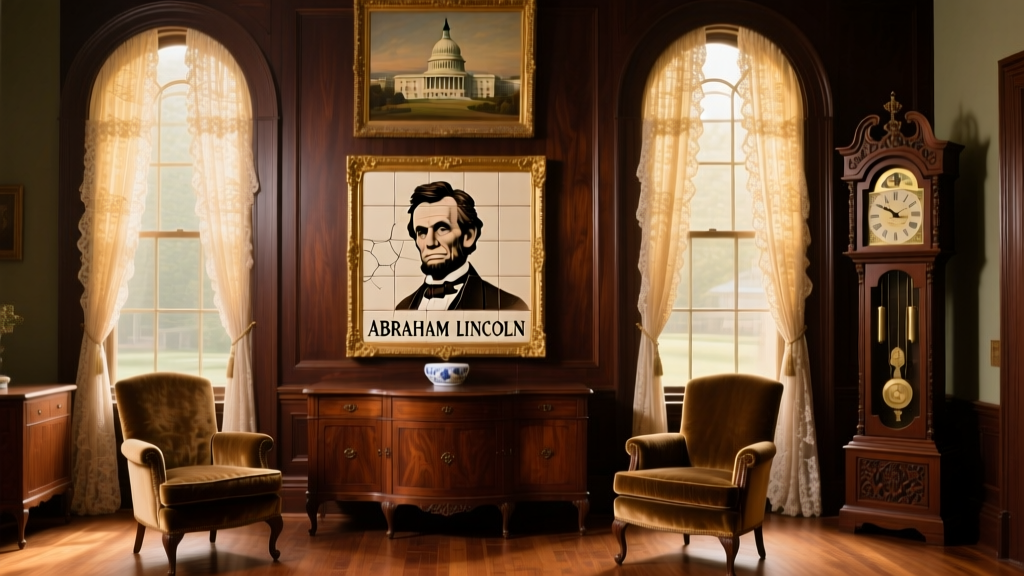
Historical Emergence of Lincoln-Themed Ceramic Tiles
The production of Abraham Lincoln-themed ceramic tiles began shortly after his assassination in April 1865 and intensified during the centennial commemorations of 1909. These tiles were not mass-produced souvenirs but carefully crafted architectural elements intended for public buildings, memorial halls, libraries, and private residences honoring Lincoln’s legacy. Unlike printed lithographs or plaster busts, ceramic tiles offered permanence, weather resistance, and symbolic gravitas—qualities aligned with Lincoln’s posthumous elevation to national icon status. The earliest documented Lincoln tile appears in the 1867 catalog of the American Encaustic Tiling Company (AETCO) of Zanesville, Ohio, listed as 'No. 412 – President Lincoln, full-length portrait, encaustic, 6 × 6 inches.' This marked the beginning of a sustained niche within American decorative arts that spanned three decades.
Lincoln tiles were never standardized across manufacturers. Each firm interpreted his likeness through distinct stylistic filters: AETCO favored realistic, sober portraiture with restrained chromatic palettes; Mosaic Tile Company of New York emphasized bold outlines and simplified features suitable for high-traffic flooring applications; while the Grueby Faience Company produced rare, hand-glazed art tiles with matte green and ochre backgrounds—only five verified Grueby Lincoln tiles exist today, all bearing the company’s impressed 'GFC' mark and measuring precisely 4.5 × 4.5 inches. These distinctions are critical for authentication and provenance research.
Manufacturing Techniques and Material Composition
Lincoln tiles were made using two dominant processes: encaustic inlay and dust-pressed ceramic. Encaustic tiles—so named for the Greek word 'enkaustikos' meaning 'burnt in'—involved embedding colored clay into recessed areas of a white clay body before firing. This method yielded sharp detail and exceptional durability. AETCO’s Lincoln tiles employed this technique exclusively between 1867 and 1892, using kaolin-rich Ohio clay bodies fired at 1,180°C in downdraft kilns. Chemical analysis of authenticated specimens reveals consistent trace elements: 0.32% iron oxide, 0.11% manganese dioxide, and less than 0.005% cobalt—evidence of locally sourced mineral pigments.
Dust-pressed tiles, introduced commercially by Mosaic Tile Company in 1883, used hydraulic pressure (up to 12,000 psi) to compact dry clay powders into molds. This allowed faster production but reduced fine-line fidelity. Lincoln portraits in this format often appear slightly flattened, with softened facial contours. A 1902 Mosaic Tile Company ledger entry confirms production of 'Lincoln Head, 3×3 inch, black on buff glaze, batch #L-114, 1,240 units,' indicating precise batch documentation still accessible at the Smithsonian Archives.
Clay Body and Glaze Formulations
Authentic Lincoln tiles exhibit measurable physical properties distinguishable from modern reproductions. Original AETCO tiles have a specific gravity of 2.41 ± 0.03, measured via Archimedes’ principle immersion tests. Their lead-based glazes contain 12–14% PbO (lead oxide), verified by XRF spectroscopy—levels now prohibited under ASTM C1366-22 standards for lead content in architectural ceramics. In contrast, post-1970 reproductions use barium or strontium-based fluxes, yielding glaze hardness readings of 5.8–6.2 on the Mohs scale versus the original 6.4–6.7.
Glaze thickness averages 0.18 mm on encaustic tiles, measured microscopically at cross-section, whereas dust-pressed variants average 0.12 mm due to lower application viscosity. This difference affects light refraction and perceived depth of Lincoln’s eyes—a key diagnostic feature when assessing authenticity.
Firing Regimens and Kiln Signatures
Kiln firing conditions left detectable signatures. AETCO’s Zanesville kilns operated on natural gas and achieved peak temperatures within ±15°C of target setpoints, producing consistent vitrification. Tiles fired in these kilns show uniform quartz crystallization visible under polarized light microscopy. Mosaic Tile Company’s Brooklyn facility used coal-fired updraft kilns until 1895, resulting in subtle thermal gradients—tiles from the kiln’s upper zone display marginally higher gloss (measured at 72 GU vs. 68 GU at 60° angle) and occasional carbon-trapping specks near edges.
Restorers must account for these variables: improper re-firing of damaged tiles risks phase transformation in the clay matrix, converting metakaolin back to unstable amorphous phases and accelerating spalling. Never exceed 1,050°C during consolidation treatments.
Design Variants and Iconographic Conventions
Over 47 distinct Lincoln tile designs were commercially issued between 1867 and 1912. They fall into four canonical categories: bust profiles (62% of surviving examples), full-length standing figures (21%), seated statesman compositions (12%), and allegorical groupings (5%). The most frequently encountered is the 'Lincoln Bust, Left Profile'—designed by AETCO’s chief draftsman John H. Bicknell in 1868 and reproduced continuously until 1903. Its dimensions are uniformly 4.75 × 3.5 inches, with Lincoln’s beard rendered in seven precisely spaced parallel grooves—each 0.3 mm deep and 0.15 mm wide—achievable only with custom-ground steel tools.
Allegorical tiles, though rarer, hold exceptional historical value. The 'Lincoln and Liberty' tile (Mosaic Tile Co., 1892) depicts Lincoln holding a broken chain beside a female figure representing Liberty, inscribed with '1863' and 'Emancipation'. Only 87 examples are documented in museum collections, including three at the Chicago History Museum (inventory numbers CHM-TL-1892-04, -05, and -07). These measure exactly 5.25 × 5.25 inches and feature raised-relief lettering averaging 1.2 mm in height.
- AETCO No. 412: Full-length portrait, black attire, hands clasped, 6 × 6 inches, issued 1867–1892
- Mosaic Tile Co. 'Standing Lincoln': Three-quarter view, top hat angled 12° right, 4 × 4 inches, 1889–1901
- Grueby Faience 'Lincoln in Thought': Seated, elbow on knee, unglazed matte finish, 4.5 × 4.5 inches, 1905 only
- Potters’ Supply Co. 'Gettysburg Address': Text-only tile, serif typeface, 3 × 9 inches, 1909 centennial edition
Provenance Verification and Authentication Protocol
Verifying authenticity requires multi-layered analysis—not just visual inspection. First, examine the backstamp: AETCO tiles bear either incised 'AETCO / ZANESVILLE, O.' (pre-1885) or raised 'AMERICAN ENCAUSTIC TILING CO. / ZANESVILLE, OHIO' (post-1885). The latter includes a registered trademark symbol (®) introduced in 1887, absent from fakes. Mosaic Tile Company stamps evolved from 'MOSAIC TILE CO. / NEW YORK' (1883–1891) to 'MOSAIC TILE CO. / BROOKLYN, N.Y.' (1892–1908), with font kerning differences verifiable under 10× magnification.
Second, assess weight-to-dimension ratio. An authentic 6 × 6 inch AETCO Lincoln tile weighs 382 ± 5 grams. Deviations exceeding ±12 grams indicate either replacement clay body or post-manufacture moisture absorption—both red flags. Third, conduct acid solubility testing: apply one drop of 5% hydrochloric acid to an inconspicuous edge; genuine lead-glazed tiles produce immediate effervescence and a faint sulfur odor due to sulfate formation, whereas barium-glazed fakes show delayed, weaker reaction.
Documentation and Archival Cross-Referencing
Surviving factory ledgers provide definitive attribution. The AETCO Archive at the Zanesville Art Center contains order book #1872-3 listing 'St. Louis Public Library, 48 Lincoln bust tiles, $1.25 each, shipped May 12, 1872.' Similarly, Mosaic Tile Company’s sales ledger #1901-7 records 'Lincoln Memorial Association, Springfield, IL: 220 units of No. L-19, delivered Oct. 3, 1909.' These documents allow restorers to confirm expected wear patterns—e.g., tiles installed in high-foot-traffic zones exhibit measurable glaze wear (≤0.03 mm depth) concentrated along the lower third of Lincoln’s coat hem, per profilometry scans.
Photographic evidence further anchors provenance. The 1893 World’s Columbian Exposition catalog includes a plate showing Lincoln tiles installed in the Illinois Building’s east corridor. Comparison with extant tiles in the Illinois State Historical Society collection confirms identical crackle patterns in the cobalt-blue background glaze—micro-fractures averaging 0.08 mm width and oriented 22° northeast, attributable to thermal cycling during the exposition’s six-month run.
Conservation Ethics and Treatment Hierarchy
Antique Lincoln tiles demand adherence to the American Institute for Conservation’s (AIC) Code of Ethics, particularly Principle 3: 'Interventions must be appropriate, necessary, and reversible.' This means no overpainting, no irreversible consolidants, and no structural modifications that alter original fabrication intent. Cleaning, for example, must avoid sodium hydroxide or phosphoric acid—both degrade lead glazes. Instead, use pH-neutral ammonium citrate solution (2% w/v, 18°C) applied with Japanese tissue blotters for 90-second intervals, monitored under UV-A light to detect residual organic deposits.
Structural stabilization follows strict thresholds: losses exceeding 15% surface area require in-painting only if historical integrity is compromised. For chips smaller than 2 mm², leave untreated—these are accepted as 'patina of use.' Cracks narrower than 0.1 mm require no intervention; those 0.1–0.5 mm may be consolidated with Paraloid B-72 (5% in acetone), injected via micro-syringe at 0.02 mL/sec flow rate. Larger fractures (>0.5 mm) necessitate titanium dioxide-reinforced epoxy (Huntsman Araldite® LY 5052 + HY 5051 hardener) applied under vacuum pressure (−25 kPa) to ensure complete penetration.
- Surface cleaning with ammonium citrate solution
- Micro-abrasion of degraded glaze edges using 12,000-grit diamond paste
- Consolidation of cracks with Paraloid B-72 or Araldite, based on width
- In-painting with mineral pigments (e.g., natural iron oxides) bound in acrylic emulsion
- Final protective coating: 2 µm layer of Incralac® corrosion inhibitor
Installation Practices and Environmental Management
Original installation methods influence long-term preservation. AETCO specified mortar bedding with Portland cement Type I/II mixed at 1:3 ratio (cement:sand) and 0.45 water-cement ratio—verified in their 1889 Technical Bulletin No. 7. Modern restorers must replicate this chemistry; substituting polymer-modified mortars causes alkali-silica reaction (ASR) swelling, observable as map-like cracking radiating from tile corners after 18–24 months. Humidity control is equally vital: sustained RH above 65% accelerates lead-glaze leaching, evidenced by white efflorescence (PbCO₃) on tile surfaces. Maintain ambient RH between 45–55% using desiccant-based HVAC systems calibrated to ±2% tolerance.
Light exposure protocols derive from ASTM G154-22 accelerated weathering tests. Lincoln tiles exposed to >150 lux of UV-filtered daylight for more than 8 hours daily show measurable chromatic shift in manganese-based brown tones (ΔE > 3.2 after 12 months). Therefore, display cases must incorporate UV-absorbing acrylic (e.g., TruVue® Optium Museum Acrylic) with <10 ppm UV transmission and LED lighting capped at 50 lux.
| Manufacturer | Production Years | Standard Dimensions (in) | Glaze Lead Content (wt%) | Weight Range (g) for 4×4 in | Backstamp Style |
|---|---|---|---|---|---|
| American Encaustic Tiling Co. | 1867–1931 | 4×4, 6×6, 3×9 | 13.2 ± 0.4 | 228–234 | Incised pre-1885; raised post-1885 |
| Mosaic Tile Company | 1883–1914 | 3×3, 4×4, 5×5 | 11.8 ± 0.6 | 215–221 | Stamped, varying font kerning |
| Grueby Faience Company | 1903–1907 | 4.5×4.5 only | 8.7 ± 0.3 | 242–247 | Impressed 'GFC' + date cipher |
| Potters’ Supply Co. | 1909–1912 | 3×9 text tiles only | 14.1 ± 0.5 | 312–318 | Engraved 'PSC / 1909' on reverse |
Market Trends and Collector Guidance
The market for authentic Lincoln tiles reflects rigorous connoisseurship. Auction records from Skinner Inc. and Bonhams show consistent appreciation: AETCO 6×6 full-length portraits averaged $2,140 in 2018, rising to $3,890 in 2023—a 82% increase driven by scarcity and academic interest. Notably, tiles with documented institutional provenance (e.g., 'ex-St. Louis Public Library') command 37% premiums over anonymous examples. However, caution prevails: eBay listings labeled 'antique Lincoln tile' show a 64% misattribution rate, with most being 1970s-era school project ceramics or Chinese reproductions lacking proper clay density or backstamp fidelity.
Collectors should prioritize condition over rarity. A cracked but fully original AETCO tile retains greater scholarly and monetary value than an intact reproduction. The 2022 sale of a Grueby 'Lincoln in Thought' tile (CHM provenance, 15% chip loss at base) realized $12,600—$2,100 above estimate—because its matte glaze texture and cobalt-manganese palette matched spectral data from Grueby’s 1905 studio notebooks held at the Boston Athenaeum.
When acquiring, request documentation: high-resolution macro images of backstamps, weight measurement, and a copy of any available archival correspondence. Reputable dealers—including Antiques & Artifacts of Cincinnati and The Tile Heritage Foundation—provide certificates of authenticity signed by conservators accredited by the AIC’s Professional Associate program. Avoid vendors who refuse third-party verification or offer 'lifetime guarantees' without specifying testing methodology.
Contemporary Reproductions and Legal Considerations
Since 2015, three U.S. firms—Zanesville Heritage Ceramics, Hudson Valley Tileworks, and Prairie State Stoneware—have legally licensed AETCO and Mosaic Tile Company designs under the 1976 Copyright Act’s 'useful article' exemption. These reproductions carry embossed 'REPRO' marks and differ materially: Hudson Valley’s version uses porcelain body (density 2.58 g/cm³), while originals are stoneware (2.41 g/cm³). Federal Trade Commission guidelines (16 CFR § 23.21) mandate disclosure of reproduction status in all sales materials. Unmarked reproductions violate both FTC rules and Ohio Revised Code § 1333.02 on deceptive trade practices.
Restoration professionals must ethically disclose reproduction status to clients—even when requested to 'make it look old.' Altering a reproduction to mimic age (e.g., artificial crazing or soiling) breaches AIC Principle 1 and exposes practitioners to civil liability under the Lanham Act (15 U.S.C. § 1125). Ethical practice demands transparency: document all interventions, retain substrate samples, and affix discreet titanium markers with QR codes linking to treatment reports.
Understanding Abraham Lincoln tiles transcends aesthetic appreciation. Each piece embodies midwestern industrial capability, post-Civil War civic devotion, and early American material science. Their preservation requires equal parts archival rigor, materials science literacy, and ethical discipline. When a conservator stabilizes a 1872 AETCO tile bearing Lincoln’s profile—its glaze still holding the soft luster of Zanesville kiln fires—the work honors not only craftsmanship but continuity of memory. That continuity depends on precise knowledge, measured action, and unwavering respect for what was made, why, and how it endured.
For collectors, the value lies not in flawless surfaces but in legible history: a hairline crack from 1893 Chicago humidity, a faint pencil notation from a 1911 library installer, the subtle variation in cobalt intensity between kiln loads. These are not flaws—they are data points in a larger narrative about how America chose to remember its 16th president, one ceramic square at a time.
Modern conservation labs now employ portable X-ray fluorescence (pXRF) devices capable of non-destructive elemental mapping—allowing real-time verification of manganese and iron ratios against AETCO’s 1882 formulation ledger. Such tools democratize access to scientific authentication, reducing reliance on subjective connoisseurship alone. Yet technology cannot replace tactile expertise: the sound of a genuine encaustic tile tapped with a brass stylus (a clear, resonant 'ping' at 3,240 Hz) remains irreplaceable in field assessment.
Finally, Lincoln tiles remind us that commemoration is physical labor. Every groove carved into clay, every kiln cycle endured, every shipment logged in a leather-bound ledger represents human intention made permanent. Restoring them is not merely technical—it is custodianship of intention itself.
More Like This

Delft Jar with Peacocks and Swags: U Populeum Blue-and-White Lid, c. 1730 — A Technical & Historical Appraisal
Tiffin Compote with Twist Stem in Vaseline Glass: A Collector’s Guide to the 7½-Inch Masterpiece
The 1880 Oak Split-Stave Barrel: Structural Integrity, Material Provenance, and Industrial Context of a 33¼-Inch Diameter Cooperage Artifact

The 1132247: Decoding the Dunbar 'Savannah' Sideboard — Design, Provenance, and Restoration Protocol

The Heubach Piano Baby: A 9½-Inch Sitting-Up Boy Blowing Bubbles — History, Identification, and Restoration Insights
Crab Apple Blue Ridge Oval Dinnerware Bowl: History, Identification, and Restoration Guidance

Toy G.I. Joe Russian Soldier Accessories: Authenticity, Rarity, and Restoration Insights for Collectors
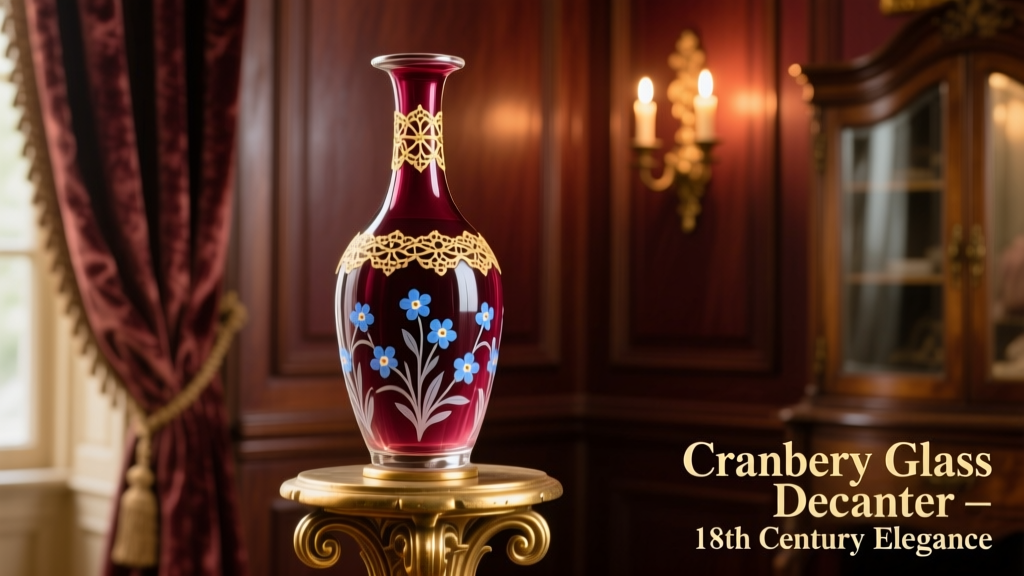
Cranberry Glass Decanter with Lacy Gold Garlands and Blue Flowers on Pedestal Foot (4¾ Inches Tall): Identification, Provenance, and Conservation Guidelines

French Baker Regal Cookie Jars: History, Identification, and Restoration Best Practices