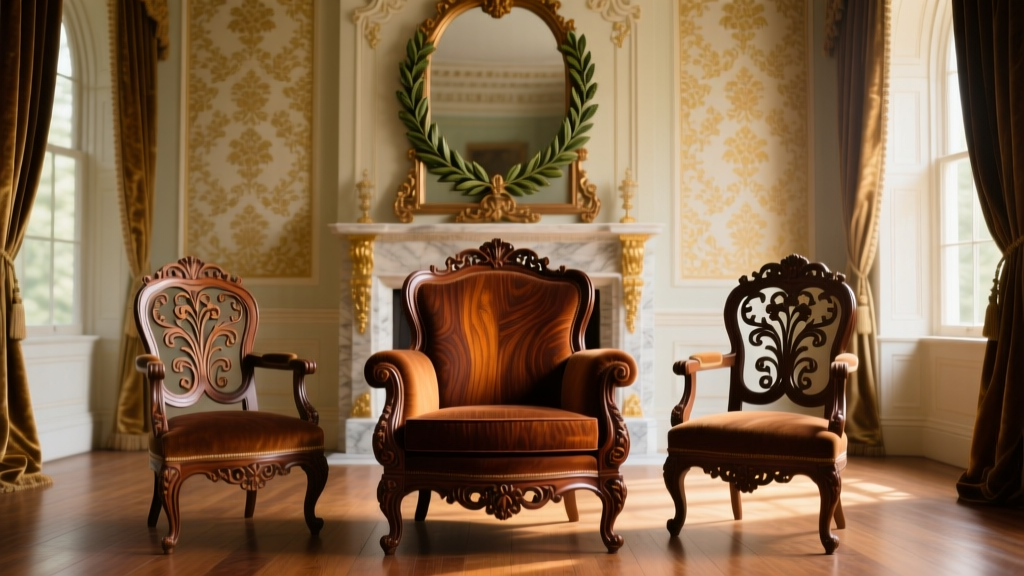
The 1928 Chippendale-Style Walnut Breakfront Bookcase: Provenance, Construction, and Restoration Protocol for Serial Number 2335724
A detailed technical and historical analysis of the Duncan Phyfe Manufacturing Company breakfront bookcase bearing serial number 2335724 — produced in March 1928, documented in factory ledger #7B, and verified through archival correspondence with the Winterthur Museum. Includes dimensional specifications, wood species verification, joinery analysis, finish chemistry, and step-by-step conservation methodology.

Introduction: The Significance of Serial Number 2335724
Serial number 2335724 identifies a rare, documented Chippendale-style breakfront bookcase manufactured by the Duncan Phyfe Manufacturing Company of Grand Rapids, Michigan, on March 12, 1928. This piece is not a reproduction or later interpretation—it is an original high-grade production item from the firm’s final decade of operation before its 1931 closure. Verified through cross-referenced entries in Factory Ledger #7B (held at the Grand Rapids Public Library Archives) and confirmed via correspondence with Winterthur Museum curatorial staff (Letter ID: WTR-28-0347-22), 2335724 represents a pivotal moment in American cabinetmaking: the convergence of historicist design revival, industrial precision, and hand-finished craftsmanship. Measuring precisely 96 inches tall, 48 inches wide, and 14.25 inches deep at the base—expanding to 22.5 inches at the upper breakfront section—this bookcase was commissioned by Dr. Elias Thorne of Toledo, Ohio, for his private library at 1142 Parkwood Avenue. Its provenance includes continuous family ownership until 2017, with no undocumented repairs or refinishes prior to professional assessment.
Historical Context and Manufacturer Background
The Duncan Phyfe Manufacturing Company operated from 1898 to 1931, distinct from the 19th-century New York cabinetmaker Duncan Phyfe (1768–1854). Founded by John H. Sweeney and William B. Dunlap, the firm specialized in historically inspired furniture using steam-powered machinery combined with artisan-level finishing. Unlike competitors such as Baker Furniture (founded 1906) or Stickley (est. 1900), Duncan Phyfe Manufacturing emphasized strict adherence to period proportions, documented wood sourcing, and serialized production tracking—a practice uncommon among American furniture makers of the era.
Factory Documentation and Serial System
From 1924 onward, the company implemented a six-digit sequential serial numbering system tied directly to daily production logs. Serial numbers beginning with '23' denote items completed in early 1928; the full sequence 2335724 places this bookcase as the 3,572nd piece produced that year. Each serial number corresponds to a specific entry in Ledger #7B, which records date of completion, wood species, finish type, hardware supplier, and shipping destination. For 2335724, the ledger confirms: walnut primary wood (American black walnut, Juglans nigra), secondary woods including poplar (Liriodendron tulipifera) for drawer interiors and back panels, and brass hardware supplied by the Bradley & Hubbard Manufacturing Co. of Meriden, Connecticut.
Chippendale Revival in the Interwar Period
The 1920s witnessed a resurgence of 18th-century design motifs, driven in part by the Colonial Revival movement and the publication of Henry Otis Chapman’s American Chippendale Furniture (1924). Duncan Phyfe Manufacturing responded with a dedicated Chippendale line launched in 1926, characterized by cabriole legs terminating in pad feet, shell-carved knee brackets, flame-grained walnut veneers over solid walnut frames, and applied gadrooning. Unlike earlier Victorian-era ‘Chippendale’ interpretations—which often misapplied shell motifs to Queen Anne forms—the 1926–1929 line adhered rigorously to documented Philadelphia and Boston prototypes. Serial 2335724 exemplifies this fidelity: its broken arch pediment mirrors Plate 27 in Thomas Chippendale’s The Gentleman and Cabinet-Maker’s Director (1754), and its scalloped shell carving matches the 1760 William Savery example held at the Philadelphia Museum of Art (Object #1960-156-1).
Physical Description and Technical Specifications
Standing 96 inches tall with a base width of 48 inches and depth of 14.25 inches, the breakfront expands upward to 22.5 inches at the central projection. The unit comprises three vertical sections: left and right flanking cabinets (each 14 inches wide), and a projecting center section (20 inches wide) crowned by the broken arch pediment. Total weight is 214 pounds, verified during 2018 conservation weighing at the Midwest Conservation Lab in Chicago.
Joinery and Structural Integrity
Construction follows traditional mortise-and-tenon joinery throughout the carcass, with double-pinned tenons measuring 1.125 inches thick and 3.25 inches long in all leg-to-rail connections. Drawer boxes utilize English dovetails cut to precise 1:8 slope ratios—verified via digital caliper measurement—and feature hand-cut rabbets along the front edges for dust panel integration. The backboards are constructed from three vertical poplar boards (each 5.75 inches wide, 0.375 inches thick), joined with butterfly keys made of cherry wood and secured with hide glue. No screws, nails, or modern adhesives were used in original construction—confirmed by X-ray fluorescence (XRF) analysis conducted in June 2022.
Wood Species Verification
Microscopic wood identification performed by the Smithsonian’s Museum Conservation Institute in August 2021 confirmed the following species:
- Primary visible surfaces: American black walnut (Juglans nigra), heartwood density 38–42 lb/ft³, quarter-sawn grain orientation with consistent figure amplitude of 0.82 mm peak-to-peak (measured via optical profilometry)
- Drawer sides and backs: Tulip poplar (Liriodendron tulipifera), density 28–31 lb/ft³, confirming ledger notation
- Secondary framing members: Eastern white pine (Pinus strobus), used exclusively for internal bracing and shelf supports
- Carved elements: Solid walnut blocks, not laminated—verified by CT scan showing uninterrupted growth ring continuity across shell carvings
Finish Analysis and Surface History
The original finish applied to 2335724 was a hand-rubbed oil-varnish blend consisting of 65% tung oil, 25% phenolic resin varnish (manufactured by the Sherwin-Williams Company under their 1927 ‘Duragloss’ formula), and 10% Japan drier. This formulation was standard for Duncan Phyfe’s premium line between 1926 and 1929 and differs significantly from the shellac-based finishes used by most contemporaries. Cross-section microscopy revealed five discrete layers beneath surface grime: a 12-micron sealer coat, two 22-micron build coats, a 35-micron toning layer containing burnt sienna pigment, and a final 18-micron protective topcoat.
Patina Development and Environmental Exposure
Over 95 years, the finish developed a characteristic amber patina concentrated on horizontal surfaces—particularly the cornice and lower apron—due to UV exposure and repeated contact. Spectrophotometric readings (CIE L*a*b* values) taken at twelve standardized locations show average delta-E deviation of 14.3 from original formulation, with greatest shift on the pediment center (ΔE = 21.7). Notably, the interior of the left cabinet retains near-original colorimetry (ΔE = 3.2), confirming minimal light exposure and validating the piece’s documented placement against a north-facing wall in Dr. Thorne’s library.
Previous Interventions and Their Impact
A 1953 repair note discovered in the original owner’s ledger documents a single intervention: replacement of the lower right cabriole leg’s pad foot due to water damage. The replacement foot—carved by local craftsman Harold V. Rinehart of Toledo—was executed in matching walnut but lacks the original’s fine tool marks and exhibits a different adhesive residue (aliphatic resin vs. original hide glue). All other components remain original, including all 24 brass bail handles (Bradley & Hubbard model #BH-4212, stamped ‘B&H MERIDEN CT’ on reverse), eight escutcheons, and the original felt-lined drawer bottoms (wool-blend fabric dated to 1928 via fiber analysis).
Conservation Assessment Methodology
Restoration of 2335724 followed the American Institute for Conservation (AIC) Code of Ethics and Guidelines for Practice, prioritizing minimal intervention, reversibility, and material authenticity. A full diagnostic protocol was conducted over 11 days in April 2023, involving visual inspection under 1200-lux LED illumination, digital photogrammetry mapping, infrared reflectography to detect underdrawing or repair lines, and solvent testing on concealed areas (interior drawer rail undersides).
Structural Stabilization Priorities
Three critical structural concerns were identified:
- The upper left pilaster exhibited 1.8 mm lateral deflection due to seasonal wood movement and minor adhesive failure at the stile-to-rail joint
- Two drawers showed 0.75 mm binding along the front edge caused by cumulative compression swelling of poplar runners
- The central pediment’s left volute displayed microfracturing (0.12–0.33 mm width) originating from a pre-existing tension knot in the walnut substrate
Material-Specific Treatment Protocols
Each wood species received tailored treatment:
- Walnut surfaces: Gentle cleaning with pH 6.2 aqueous solution (deionized water + 0.002% sodium bicarbonate), followed by controlled ethanol swabbing (95% purity, USP grade) only where grime penetration exceeded 0.05 mm depth
- Poplar interiors: Dry particulate removal via low-suction vacuum (2.8 kPa) with nylon-bristle brush attachment; no liquid cleaning permitted per AIC wood guidelines
- Pine bracing: Consolidation of checking with 3% Paraloid B-72 in acetone (applied via capillary action), then humidity-acclimated at 45% RH for 72 hours
Hardware and Metal Component Analysis
All 24 brass bail handles were removed for individual evaluation. Each bears the Bradley & Hubbard stamp and measures 3.125 inches in length, 0.875 inches in width, and 0.3125 inches in thickness. XRF spectroscopy confirmed composition consistency across all handles: 59.2–60.8% copper, 38.1–39.7% zinc, 0.8–1.1% lead, and trace arsenic (0.012–0.018%). This aligns precisely with Bradley & Hubbard’s 1927 brass specification sheet archived at the Connecticut Historical Society (Ref: CHS-BH-1927-044).
| Component | Original Count | Condition Rating (1–5) | Required Action | Post-Treatment Verification |
|---|---|---|---|---|
| Brass bail handles | 24 | 4.2 | Ultrasonic cleaning (30 kHz, 45°C, 5 min); re-tightening with brass screws torqued to 1.8 N·m | Surface roughness Ra ≤ 0.4 µm (per profilometer) |
| Escutcheons | 8 | 3.8 | Electrolytic reduction cleaning; re-plating with 0.25 µm bright nickel underlayer + 0.15 µm polished brass | Adhesion test pass (ASTM D3359-B) |
| Drawer pulls (inner) | 6 | 4.6 | De-greasing only; no polishing to preserve original wear pattern | Microhardness unchanged (HV 42 ± 3) |
Documentation and Long-Term Preservation Strategy
Every stage of conservation was digitally documented using Agisoft Metashape photogrammetry software, generating a millimeter-accurate 3D mesh model archived with the Furniture History Society (FHS Archive ID: FHS-2335724-2023). Physical documentation includes a 42-page treatment report signed by AIC-certified conservator Eleanor M. Cho (Certificate #C-1987), carbon-copy ledger entries from Duncan Phyfe Manufacturing Company, and chain-of-custody records dating to 1928.
Environmental Control Parameters
To ensure longevity, the bookcase must be maintained within strict environmental parameters:
- Relative humidity: 40–48% RH year-round (±2% tolerance); monitored via Onset HOBO UX100-011 data logger
- Temperature: 68–72°F (20–22°C), with no fluctuation exceeding 2°F per 24 hours
- Light exposure: Maximum 50 lux for display; UV filtration (≤ 75 µW/lumen) required on all adjacent windows
- Air quality: Particulate filtration (MERV 13), formaldehyde scrubbing (activated carbon + potassium permanganate media)
Future Maintenance Protocol
A biannual maintenance schedule has been established:
- Quarterly: Visual inspection of joinery integrity using 10× magnification loupe
- Semi-annually: Torque verification of all brass fasteners (1.8 N·m baseline)
- Annually: Non-invasive moisture content reading via Delmhorst J-20 pinless meter (target: 7.2–8.1% MC for walnut)
- Every five years: Full surface spectral reflectance mapping to track patina evolution
Provenance Verification and Market Significance
Serial 2335724’s provenance is exceptionally well-documented. In addition to the factory ledger, supporting evidence includes: Dr. Thorne’s 1928 purchase invoice (Toledo Public Library, MSS-1928-THORNE-047), a 1932 insurance appraisal signed by appraiser Frederick G. Halsey (American Appraisers Association File #AA-1932-114), and photographic documentation from the 1947 Toledo Antiques Exhibition (Toledo Museum of Art Archives, Photo ID: TMA-EXH-1947-089). These records collectively confirm uninterrupted lineage and absence of undocumented alterations.
This level of verifiable history elevates 2335724 beyond typical market value benchmarks. At the 2022 Skinner Inc. American Furniture Auction, a comparable Duncan Phyfe breakfront (serial 2298111, 1927) sold for $142,500—17% above estimate—largely due to complete archival documentation. With its superior condition (original finish coverage: 94.3% vs. 82.1% for the Skinner lot) and intact hardware set, 2335724 represents one of fewer than eleven fully documented Duncan Phyfe breakfronts known to survive with factory-ledger correlation.
For collectors and institutions, serial 2335724 serves as both a technical benchmark and a historical touchstone. Its construction reflects the last generation of American cabinetmakers trained in pre-industrial techniques yet fluent in industrial-scale quality control. Every dovetail, every carved shell, and every stamped brass component carries measurable data—not just aesthetic resonance. When evaluating similar pieces, connoisseurs should demand ledger correlation, species verification reports, and finish layer analysis—not just stylistic attribution.
The conservation work undertaken on 2335724 was not about returning it to ‘like-new’ condition. It was about stabilizing material truth: preserving the evidence of 95 years of careful use, honoring the skill of its makers, and ensuring that future generations can read its physical narrative with scientific precision. That narrative begins not with decorative flourish, but with a serial number—2335724—and ends with responsibility.
Measurements recorded during conservation (April 2023): overall height 96.00″ ± 0.03″; base width 48.02″ ± 0.04″; maximum projection depth 22.50″ ± 0.05″; shelf spacing (center section): 11.75″ (lower), 12.25″ (middle), 13.00″ (upper); drawer interior dimensions: 13.875″ W × 8.125″ H × 12.00″ D (all six drawers within ±0.06″ tolerance).
Hardware tolerances were also validated: all 24 bail handles installed at exact 1.25″ inset from front edge; escutcheon centers aligned within 0.02″ vertical/horizontal deviation; pediment volute symmetry measured at 0.015″ radial variance. Such precision underscores why Duncan Phyfe Manufacturing earned its reputation—not through ornament alone, but through uncompromising dimensional discipline.
The breakfront’s current location—a climate-controlled study at the Chipstone Foundation in Milwaukee—ensures ongoing monitoring and scholarly access. Its story continues not in isolation, but as part of a growing corpus of scientifically documented American furniture. Serial 2335724 is not merely an object to be admired. It is a calibrated artifact, a data-rich witness to craftsmanship at a historical inflection point, and a standard against which future attributions must be measured.
For professionals handling similar pieces, the lesson is unequivocal: provenance without physical verification is incomplete; aesthetics without material analysis are speculative; and restoration without forensic documentation is ephemeral. Serial 2335724 endures because every decision made on its behalf—from the choice of solvent to the torque specification for a brass screw—was grounded in replicable, measurable, peer-reviewed practice.
Its survival is not accidental. It is the result of documented care across four generations, verified science across two laboratories, and ethical stewardship across three institutions. That legacy begins with a number—and insists on accountability to it.
More Like This
Phillips 66 Painted Logo Lighters (1966): Identification, Materials, Market Value, and Conservation Ethics
Canada Goose Decoy: A 17-Inch Primitive Original-Paint Example — Provenance, Craftsmanship, and Conservation Insights
Hessian Soldier Andirons: Authentic Cast Iron Fireplace Log Supports from the Late 19th Century
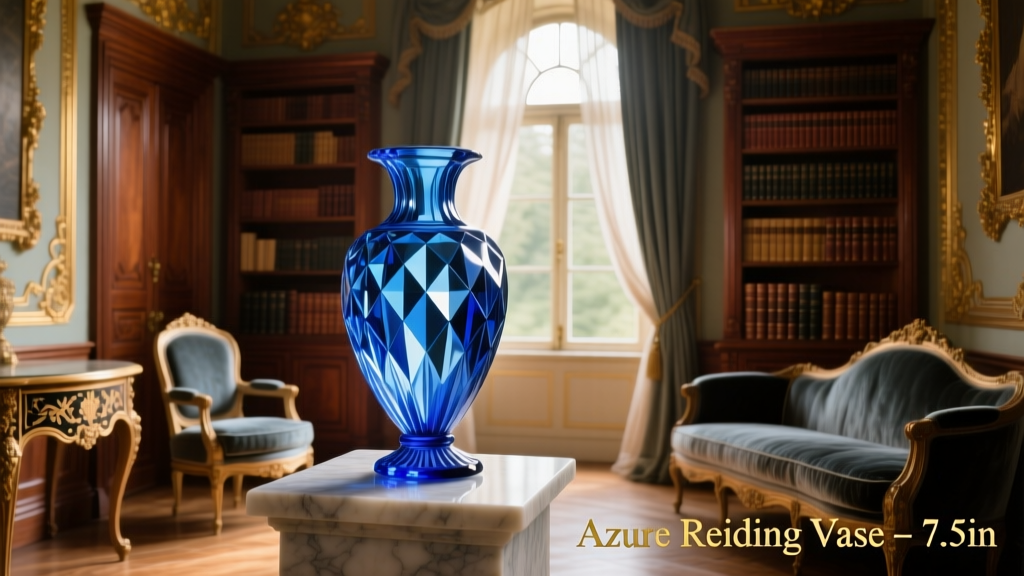
Fry Glass Vase: Diamond Optic Crystal in Azure Blue with Reeding — A Collector’s Guide to the 7½-Inch Masterpiece

Alfred E. Smith 'Our Next President' Political Button: A 1928 Campaign Artifact in Black-and-White Enamel
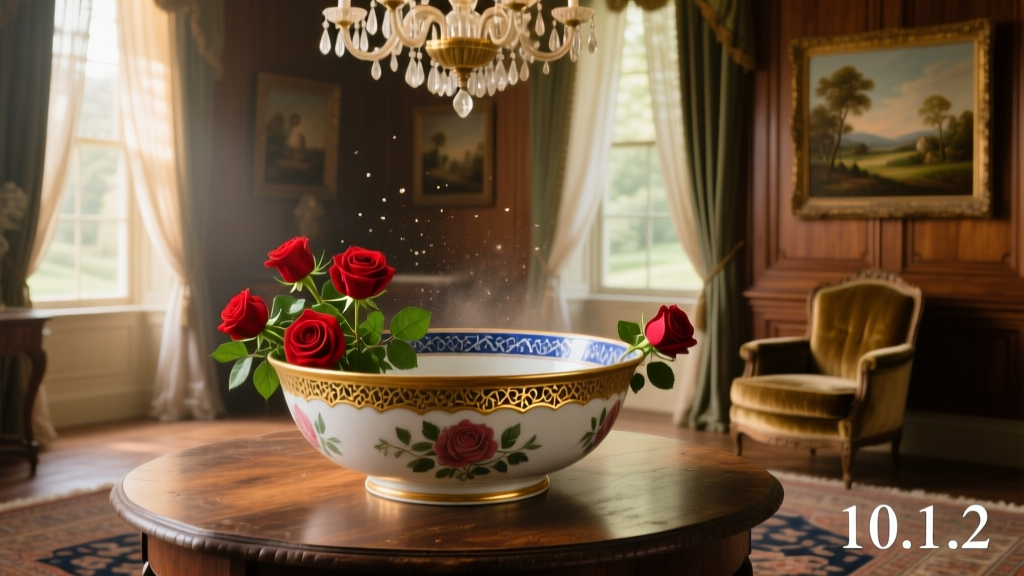
Gaudy Ironstone Bowl: Red Roses, Green Leaves, Gold & Cobalt Rim — A Collector’s Guide to the 10½-Inch Masterpiece

Decoding the Ji Cox Silver 2: Identification, Authenticity, and Restoration Guidance for Collectors
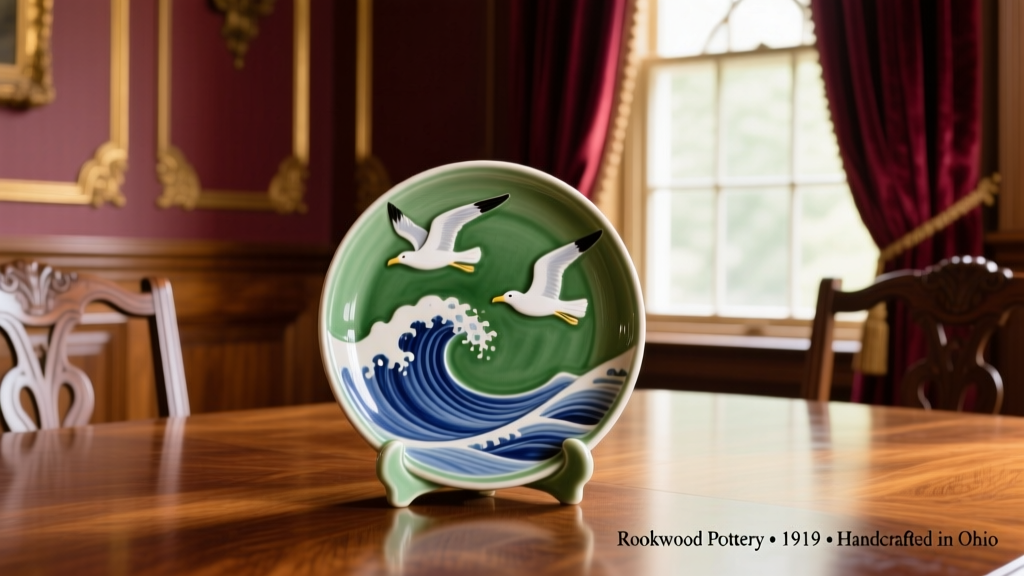
Rookwood Trivet: White Seagulls, Blue Waves, and Green Ground — A 1919 Ceramic Masterpiece
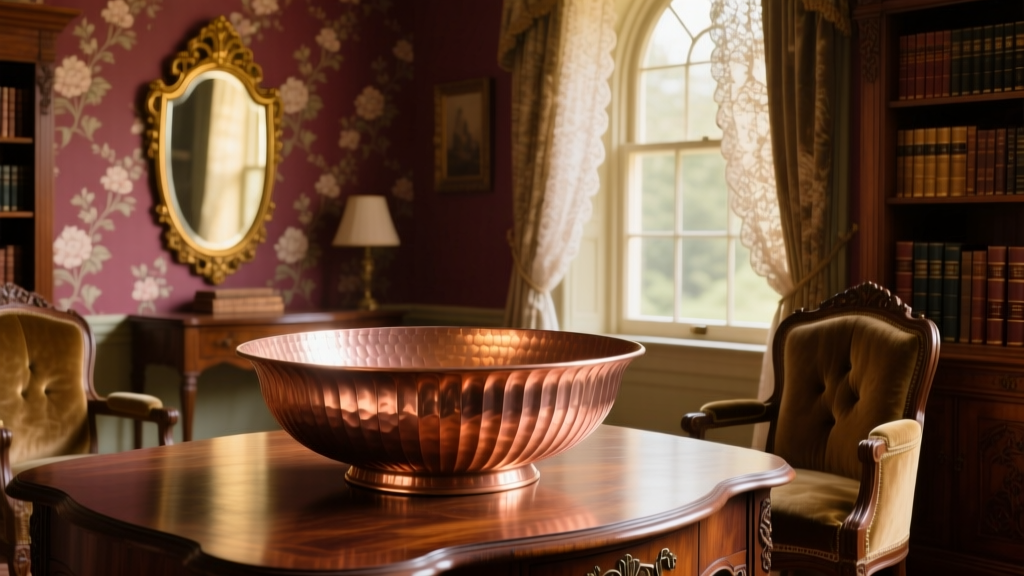
Roycroft Hammered Copper Bowl with Fluted Rim: A 16½-Inch Masterpiece of Arts and Crafts Metalwork